
Sam Neill announced in April that his body was free of cancer. The scan results had come back clean, and the 78-year-old actor told Australian broadcaster 7News: “There is no cancer in my body, that’s an extraordinary thing.” Three months later, he was dead.
Neill died on Monday, July 13, in Sydney, Australia, at age 78. His family released a statement that did not specify a cause of death, saying only that “the loss was sudden and unexpected but blessed by the fact that Sam remained cancer free.” Within 24 hours, people close to him began to fill in what the official statement left out.
Neill had pneumonia before his death, according to Rima Te Wiata, who appeared opposite him in the 2016 comedy Hunt for the Wilderpeople. Te Wiata told the New Zealand Herald that Neill was not scared of dying but that he would be “annoyed” by it. “I think he would be like: ‘For goodness’ sake, I got over my cancer. And now look, now I get pneumonia. What next?'” she said. Te Wiata did not offer more detail.
What Those Close to Him Said
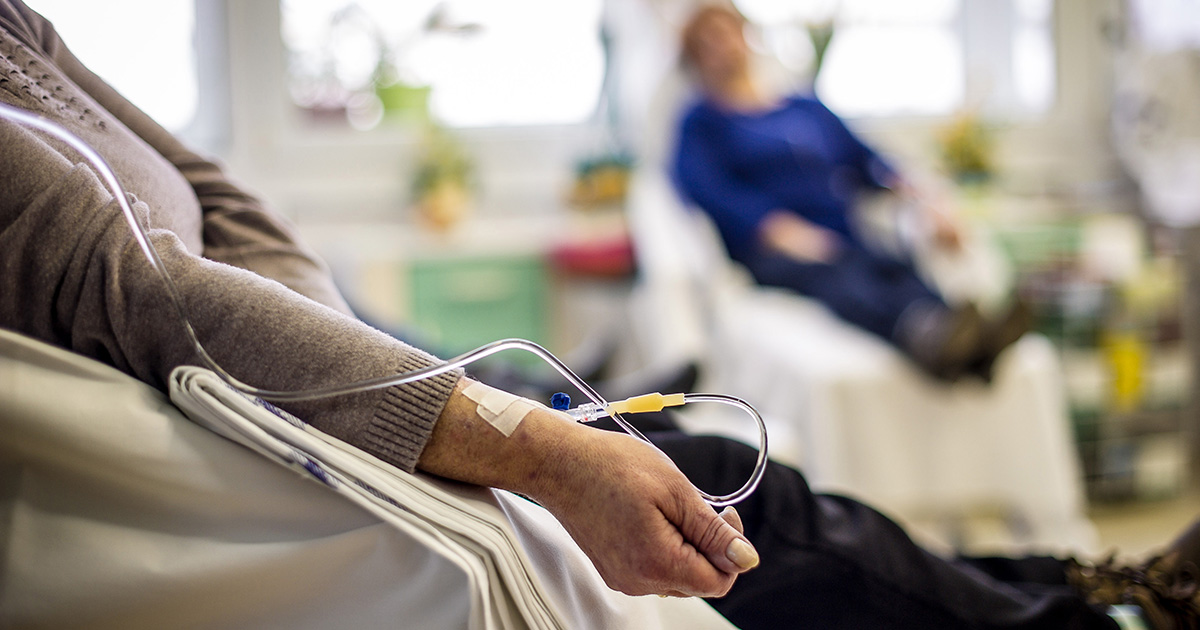
Laura Tingle, a journalist for the Australian Broadcasting Corporation who dated Neill for several years, told ABC Radio Sydney that “his poor old body just sort of got a bit exhausted.” She revealed that he had been sick for “the last couple of weeks,” and that “everybody who loved him has been willing him on from near and far, but I think it was just a bit too much to recover from one more time.” She added: “He’d had a lot of chemo and a lot of immunotherapy and, thankfully, it finally cleared him of the blood cancer that he had, but that left him pretty compromised in terms of his immune system.”
Beating cancer is not the same as being well. The treatments that clear a body of malignant cells can leave the immune system so depleted that something a healthy person fights off in a week becomes life-threatening. His family’s statement, as NBC News reported, described his death as “sudden and unexpected,” with friends noting his immune system had been left compromised by months of treatment.
His family’s statement said he “was surrounded by family and passed with the dignity that has characterized his whole life,” and expressed “their deepest gratitude to the staff at St Vincent’s Private Hospital for their incredible care.” A private service for family and friends will be held in New Zealand. No public celebration of life is planned.
Sam Neill’s Pneumonia and the Cancer Battle That Came Before It
Neill was diagnosed with angioimmunoblastic T-cell lymphoma (AITL) in 2022. The Cleveland Clinic describes AITL as a rare blood cancer that occurs when T cells, a type of white blood cell central to the immune system’s ability to fight infection, malfunction and spread uncontrollably. Neill first realized something was wrong when he noticed swollen glands while doing press for Jurassic World Dominion. He soon learned he had Stage 3 blood cancer.
He went public with the diagnosis in 2023. In a conversation with The Guardian that year, he was typically direct about it. “I can’t pretend that the last year hasn’t had its dark moments,” he said.
Chemotherapy kept the cancer manageable for a period before it stopped working. Today.com reports that Neill then tried CAR T-cell therapy, a type of immunotherapy treatment that trains the body’s immune cells to identify and kill cancer cells, and found success. “I’ve just had a scan just now and there is no cancer in my body, that’s an extraordinary thing,” he said. He announced in April 2026 that he was cancer-free after undergoing the clinical trial in Australia.
The same treatments which cleared the cancer had left his immune system in a compromised state, as Tingle described it. He spoke on Australian broadcaster 7News advocating for the CAR T-cell therapy clinical trial focused on his type of lymphoma, telling the network he was cancer-free and adding: “I’m very, very excited that this can happen.” He quipped it was time he made another movie. That was in April. He was dead by July.
The Man Behind the Character
NPR described Sam Neill as “a smoothly elegant and versatile actor whose career moved from art film to blockbuster,” from dodging velociraptors in Jurassic Park to playing Holly Hunter’s husband in The Piano. He was 78.
Born in 1947 in Northern Ireland, Neill emigrated to New Zealand at the age of 7. After college, he took the lead in Sleeping Dogs in 1977, the first feature made in New Zealand in more than a decade.
In 1990, Neill appeared in The Hunt for Red October, the first adaptation drawn from Tom Clancy’s Jack Ryan thrillers, playing an officer on the Russian submarine commanded by Sean Connery’s Captain Marko Ramius. His highest level of fame came with Jurassic Park, playing paleontologist Alan Grant, summoned to an island off Costa Rica where a theme park has been built around herds of cloned dinosaurs. He co-starred alongside Laura Dern, Jeff Goldblum, and Richard Attenborough.
On the small screen, Neill played the malign Chester Campbell in Peaky Blinders and Thomas Jefferson in the four-hour CBS miniseries Sally Hemings: An American Tragedy. He earned an Emmy nomination for his performance in the title role of the 1998 miniseries Merlin and another as narrator of 2017’s Wild New Zealand. Over his career, he accumulated more than 150 acting credits.
Away from the screen, Neill was a vintner who, under his Two Paddocks brand, produced pinot noir and riesling wines from his winery in the Central Otago region of New Zealand’s South Island. In early 2026, he released a short documentary opposing a proposed fast-track, industrial goldmine in New Zealand’s Central Otago region. He had been awarded many accolades throughout his career, including the Officer of the Order of the British Empire in 1991 and a knighthood from New Zealand in 2022.
His memoir, Did I Ever Tell You This?, came out in March 2023, the same year he received his knighthood in recognition of his “outstanding contribution to film.”
Tributes From Co-Stars and World Leaders
Laura Dern, who starred alongside Neill in Jurassic Park, called him a “beloved lifetime friend” as well as “a true and noble gentleman, wrapped up in my dream leading man.”
CNN reported that Australian Prime Minister Anthony Albanese said Neill had “earned a special place in Australian hearts,” calling him “wry and dry, thoughtful and laconic” and saying he “fought illness with the same dignity, humor and conviction that gave strength to his every performance.”
New Zealand Prime Minister Christopher Luxon mourned Neill as “one of the greats,” writing that he “started out when there was barely a film industry to speak of” and that “for more than fifty years he took New Zealand stories to the world and his talents helped make our film industry into what it is today.”
Fellow New Zealand actor Karl Urban said Neill was “an inspiration for many who followed in his trailblazing footsteps. A beautiful man, a national treasure who gave so much to New Zealand and to the world.”
When he was presented with the Screen Legend Award at the 2025 New Zealand Screen Awards, Neill accepted with characteristic self-deprecating charm: “If you stick around long enough, you probably qualify, and I’ve been just sort of sticking around.”
Read More: Sam Neill Dies at 78 — Cancer-Free Diagnosis Just Months Before His Passing
The Timing
He had done it. Four years of chemotherapy, the misery and the uncertainty, then a cutting-edge clinical trial that worked when nothing else could. The scans came back clear. He made a joke about getting back to making movies. And then, three months later, a lung infection that his exhausted immune system could not hold off.
Rima Te Wiata described Neill as “a very steady, peaceful, grounded man.” He talked about his cancer diagnosis in public not to elicit sympathy, but because he wanted to advocate for the CAR T-cell trial that had helped him. His last public act, in early 2026, was a documentary opposing industrial mining in the hills he loved.
His body was cancer-free but compromised, cleared of one threat and left open to another. Tingle put it plainly: it was just a bit too much to recover from one more time.
Disclaimer: This information is not intended to be a substitute for professional medical advice, diagnosis, or treatment and is for information only. Always seek the advice of your physician or another qualified health provider with any questions about your medical condition and/or current medication. Do not disregard professional medical advice or delay seeking advice or treatment because of something you have read here.
AI Disclaimer: This article was created with the assistance of AI tools and reviewed by a human editor.