
A 2,000-year-old bronze computer. A Neolithic temple older than agriculture. Lines drawn across a desert floor so large they only make sense from the sky. These objects exist. They were found in the ground, studied under X-ray machines, carbon-dated, argued over in peer-reviewed journals. Archaeologists have explanations for most of them, carefully assembled from evidence and published in academic journals. What those explanations often lack is the drama that headlines prefer.
The phrase “mainstream history refuses to explain” usually means one of two things. Either mainstream archaeology has already explained the artifact, or scientists are still working on incomplete evidence. These are thirteen of the most genuinely fascinating bizarre archaeological finds ever dug up, carved out, or stumbled across. Here is what we actually know about each of them.
The Antikythera Mechanism
In 1901, sponge divers working off a Greek island pulled something from a shipwreck that nobody knew how to categorize for another fifty years. The mechanism was discovered by divers exploring a sunken wreck near the Aegean island of Antikythera. Although shoebox-sized, it had broken into fragments and eroded, but contained a complex series of intricately tooled gears. Decades of research established that it dates from the second century BCE and functioned as a hand-operated analog computer. Exterior dials connected to the internal gears allowed users to predict eclipses and calculate the astronomical positions of planets on any given date.
The pseudoarchaeological reading of this is that it proves a lost advanced civilization, or outside intervention, because the ancient Greeks couldn’t possibly have built it. They did. The device is firmly rooted in Greek mathematical and astronomical tradition and has been the subject of continuous international research. In 2024, the University of Glasgow brought an unexpected tool to the question. Astronomers used statistical modeling techniques originally developed to analyze gravitational waves to establish the likely number of holes in one of the broken rings, and their results provided fresh evidence that the component was most likely used to track the Greek lunar year. The device is extraordinary. It is not inexplicable.
Göbekli Tepe
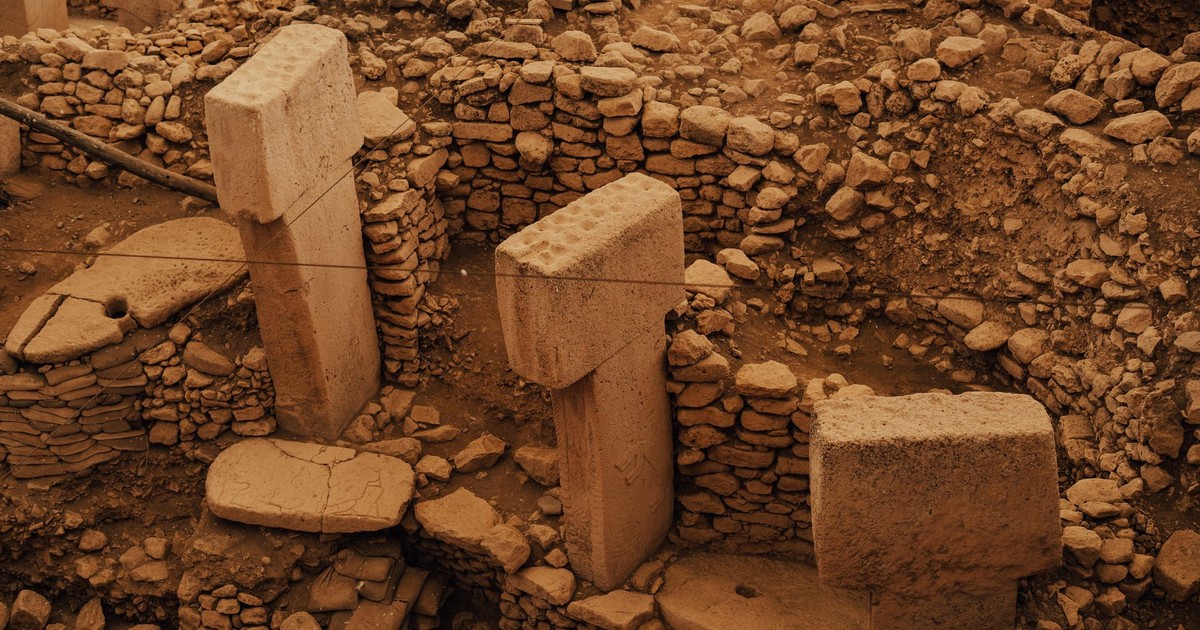
Göbekli Tepe could be the first known temple in the world, proposed as a religious center in the Neolithic, making it at least 6,000 years older than Stonehenge. The discovery challenges the idea that agriculture was the first step toward civilization. The enormous T-shaped pillars at the site, some reaching heights of up to 5.5 meters, are the oldest examples of monumental architecture discovered to date. They were carved from flint at a time when metal tools were not yet used.
The fringe reading of Göbekli Tepe is that hunter-gatherers couldn’t have organized something this sophisticated, so the builders must have been survivors of a lost advanced civilization, perhaps Atlantis. Actual archaeology shows that hunter-gatherers were considerably more socially complex than the old textbook version allowed. The site is reshaping the field by proving that humans were capable of organized monumental construction before they were farming. So far, only about 10% of the site has been excavated, and it is likely to take around 150 years to excavate the full site. Geophysical surveys indicate that a substantial number of additional enclosures remain buried, and ongoing excavations continue to expand what is known about the site’s scale and layout. According to Daily Sabah, the 2025 dig season concluded with the discovery of a human statue, with clearly defined head and torso characteristics, unearthed between Enclosures B and D.
The Nazca Lines
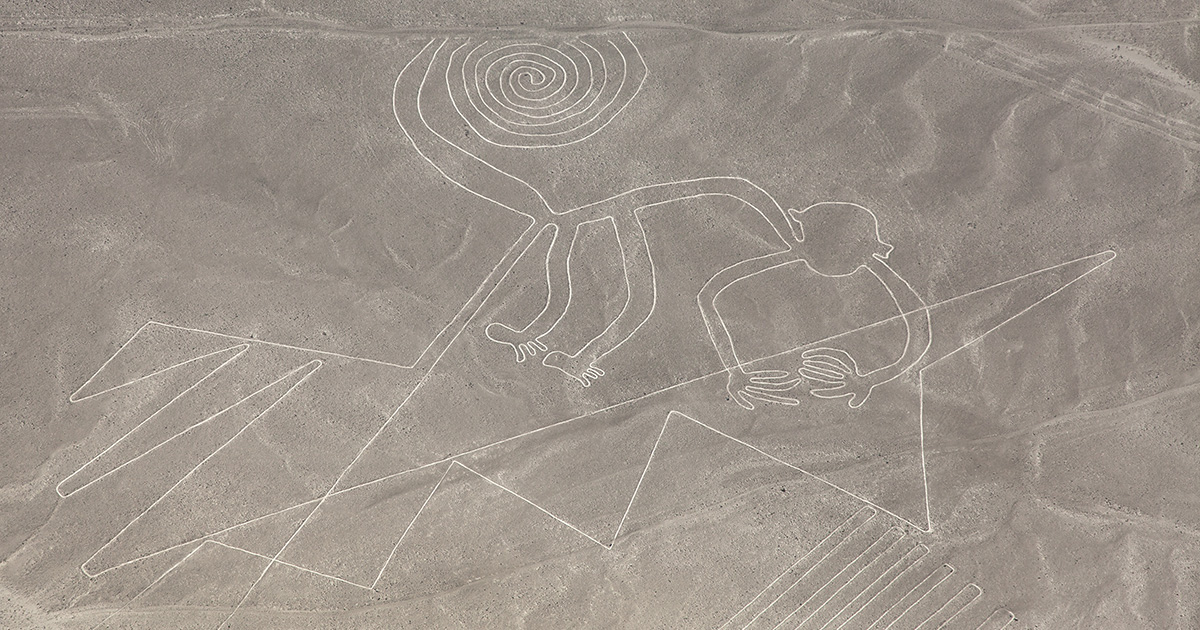
The lines etched into the desert floor of southern Peru range from simple straight tracks running for kilometers to enormous animal figures: a spider, a hummingbird, a monkey with a spiraling tail. The oldest argument against the Nazca people having made them themselves is that they could only have designed the figures by viewing them from the air. In fact, the basic surveying techniques needed to scale up a drawing from a small model to a large ground-level design were well within the capability of any organized ancient community. Rope, stakes, and simple geometry are sufficient.
In 2024, researchers employed an AI model trained to spot faint lines in satellite images of the desert to identify 303 newly discovered geoglyphs. These new figures are older, smaller, and less distinct than the previously known ones. Once the model identified various figures, the team traveled to the locations to confirm the illustrations’ existence, spending more than 2,600 hours manually inspecting the sites, capturing drone photography and conducting field inspections. The findings, published in PNAS, suggest many of the smaller figures were positioned near walking paths and intended to be seen by people on the ground, not from the air at all.
The Baghdad Battery
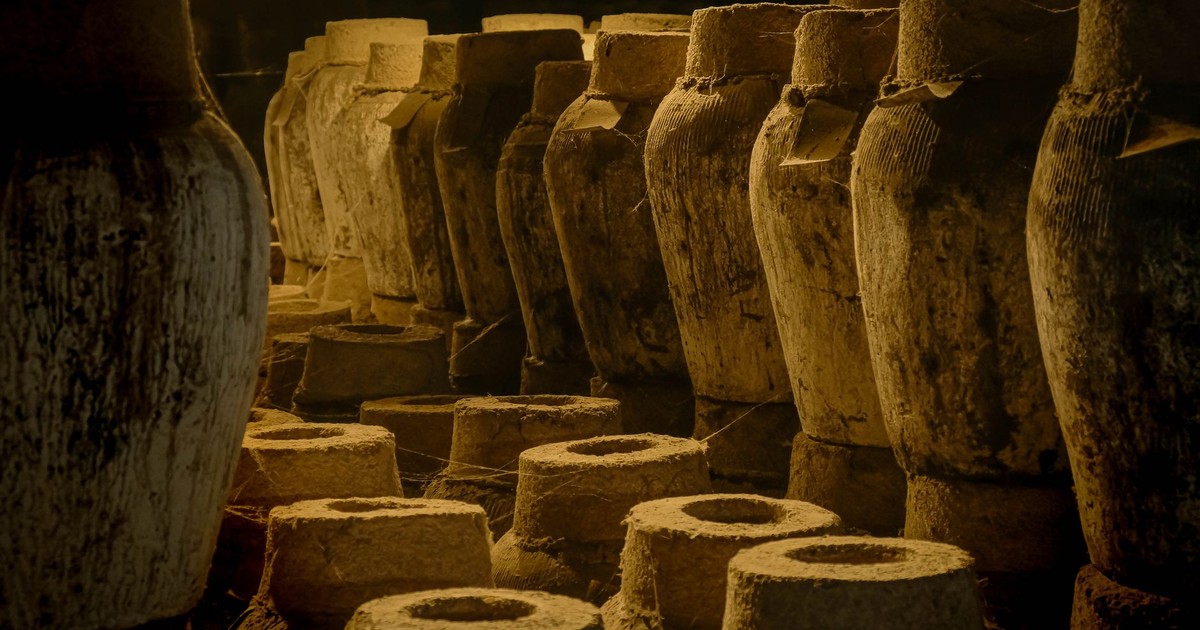
Found near Baghdad in the 1930s, the so-called Baghdad Battery is a clay jar containing a copper cylinder surrounding an iron rod, dated by most scholars to the Parthian or early Sasanian period. Some researchers believe it could have functioned as a primitive battery, possibly used for electroplating. When filled with an acidic liquid such as vinegar or grape juice, it does produce a small electrical voltage. That much has been demonstrated. What has not been demonstrated is that the ancient Parthians had any electrical circuit to connect it to, any electrolyte-dependent activity they were running, or any written record of using electricity for anything. The most likely explanation, still debated, is that it was a storage vessel, perhaps for sacred scrolls.
The Piri Reis Map
The Piri Reis Map, drawn by Ottoman admiral and cartographer Piri Reis in 1513, has intrigued researchers due to its depiction of the coastline of South America and what some believe to be Antarctica. The map includes details that were not officially discovered until centuries later. This has led some to speculate about ancient seafaring civilizations or extraterrestrial influences on early cartography.
The identification of the southern landmass as Antarctica is contested by cartographers. Piri Reis himself noted in his annotations that he compiled the map from around twenty source maps, some of them ancient. The southern landmass almost certainly represents a speculative “Terra Australis,” the hypothetical southern continent that cartographers had been placing on maps for centuries before Antarctica was actually found. The coastal shapes match Antarctica only if you apply generous interpretive latitude and ignore the scale inconsistencies. What the map does prove is that 16th-century Ottoman cartography was sophisticated and well-informed.
The Voynich Manuscript
The Voynich Manuscript is an illustrated codex written in an unknown script and language. Carbon-dated to the early 15th century, the manuscript contains detailed drawings of plants, celestial bodies, and human figures. The script has eluded decipherment, and the origin and purpose of the manuscript remain enigmatic. Some researchers consider it a hoax, while others propose it contains hidden knowledge.
Hundreds of cryptographers, linguists, and AI researchers have applied themselves to the manuscript since 1912 and nobody has cracked it. Some statistical analyses suggest the script has internal structure consistent with a real language. Others conclude the letter-frequency patterns are too uniform to represent natural speech and point toward a constructed system or an elaborate cipher. What nobody credible argues is that it represents alien communication or lost Atlantean knowledge. The most likely explanations cluster around either a sophisticated medieval cipher, a constructed language, or a very elaborate forgery. The honest answer, as of 2026, is that we don’t know.
Sacsayhuamán
The Inca fortress walls above Cusco, Peru, are built from stones some of which weigh more than 100 tons. The Sacsayhuamán wall is a megalithic structure built with enormous stones that fit together with remarkable precision without the use of mortar. The joints are so tight that a sheet of paper cannot be inserted between them. The claim most often attached to Sacsayhuamán is that Inca technology could not have moved or shaped these stones, so outside knowledge or intervention must explain it.
Spanish colonial chroniclers documented the methods in considerable detail. Large labor forces organized under the Inca system of mit’a (rotating communal labor obligation) moved stones on earthen ramps, wooden sledges, and rope systems, with teams of hundreds working simultaneously. Experimental archaeology has repeatedly demonstrated that these methods work. The precision of the joins is real and impressive. What produced it was patient, skilled labor, not lost technology.
The Shroud of Turin
The linen cloth bearing the image of a man consistent with crucifixion wounds has been argued over since the 14th century. Radiocarbon dating in 1988 placed the cloth’s origin between 1260 and 1390 CE, squarely in the medieval period. Proponents have challenged those results on grounds of potential contamination. Subsequent textile analysis has confirmed the weave pattern is consistent with medieval European linen production. The image itself has never been satisfactorily explained by conventional photographic or artistic techniques, and that genuine uncertainty is what keeps the debate alive. But “unexplained by current imaging science” is a different claim from “proof of resurrection.”
The Saqqara Bird
This small wooden artifact, discovered in a 2,200-year-old Egyptian tomb, has sparked debate over whether the ancients understood the principles of flight. With a wingspan of seven inches, the bird resembles a glider rather than a mere toy. Some aeronautical experts believe it might have been a rudimentary model used to study aerodynamics. However, when a full-sized replica was tested, it failed to achieve stable flight. Most archaeologists agree it likely served as a ritual object or weather vane, but its true purpose remains speculative. The missing tail fin that would make it aerodynamically functional is telling. Ancient Egyptian art includes thousands of bird carvings. This one has a more aerodynamic profile than most, but that does not make it a prototype.
The Costa Rica Stone Spheres
At four sites in a region of the Costa Rican rainforest called the Diquís Delta, someone placed a series of large, perfectly round stone orbs. Archaeologists believe these date back to a civilization that lived in the region between 500 BC and AD 1500. After years of research, about 300 of these stone spheres have been uncovered across the ground. They range in size from a few centimeters to over two meters in diameter and are made from gabbro, a coarse-grained igneous rock. The claim that they are “perfectly spherical” and therefore beyond ancient craftsmanship is inaccurate. Measurements show they are very close to spherical, but not perfect. Skilled stone workers, given enough time and appropriate tools, can produce such shapes by the same way a child uses to roll clay, through gradual rotation against an abrasive surface. Their purpose, likely ceremonial or status-related, remains uncertain but their manufacture does not.
Pacal’s Sarcophagus Lid
The limestone lid covering the tomb of the seventh-century Maya ruler K’inich Janaab’ Pakal, found at Palenque in Mexico, shows a figure surrounded by elaborate carved imagery. In the 1960s, Erich von Däniken described it as a man operating a spaceship. The sarcophagus lid was described by von Däniken as a depiction of a spaceship’s cockpit, part of a broader fringe narrative about ancient extraterrestrial intervention. Maya scholars read the same image as a king descending into Xibalba, the underworld, along the world-tree, a motif that appears consistently across Maya art and religious texts. Every element von Däniken identified as spacecraft controls corresponds to a documented Maya symbolic convention. Reading it as a rocket requires ignoring the entire iconographic system it was produced within.
The Baigong Pipes
The Baigong Pipes, located in China, are mysterious tube-like structures embedded in ancient rock formations. Their origins and purpose remain unknown, leading to varied theories. Some suggest they are remnants of an ancient advanced civilization or even evidence of alien technology, while others propose natural geological formations. Chinese scientific teams who analyzed the pipes found that they are primarily composed of iron oxide, silicon dioxide, and calcium oxide, composition consistent with fossilized tree roots or plant matter. Trees and plant roots trapped in sediment can be replaced over millennia by mineral deposits, leaving hollow or solid tube-like structures that closely resemble manufactured pipes. The “alien” explanation was generated by a 2002 tabloid article and has not been supported by any peer-reviewed study.
The Baalbek Megaliths
At the site of Baalbek in Lebanon, the podium of the Roman temple complex rests on enormous limestone blocks. Three of them, the so-called Trilithon, each weigh approximately 800 tons. A fourth block still in the quarry, known as the Stone of the Pregnant Woman, is estimated at around 1,000 tons. The fringe claim is that no ancient technology could move such stones. Roman engineering routinely moved massive weights using cranes, capstans, and lever systems organized with mathematical precision. Archaeological evidence from the site shows ramp systems, quarrying marks, and tool evidence entirely consistent with Roman period construction methods. The engineering challenge is immense by any standard. That doesn’t make it impossible.
Read More: Earth’s Greatest Mysteries Science Still Can’t Solve
What “History Can’t Explain” Actually Means
These bizarre archaeological finds keep proving human beings more capable, more organized, and more intellectually sophisticated than a previous generation of scholars assumed. The ancient Greeks built an analog computer for tracking the moon. Neolithic hunter-gatherers coordinated large-scale labor to raise 20-ton pillars in a circle. A pre-Inca civilization scratched hundreds of animal figures into a desert floor over several centuries, and we are still finding new ones. None of that requires visitors from elsewhere. The people who were already here turn out to have been remarkable enough.
SEO_TITLE: 13 bizarre archaeological finds that mainstream history refuses to explain SOCIAL_TITLE: 13 bizarre archaeological finds that defy easy explanation FOCUS_KEYWORDS: bizarre archaeological finds, ancient mysteries, unexplained artifacts, ancient civilizations, Antikythera mechanism, Göbekli Tepe, Nazca Lines META: From the Antikythera Mechanism to the Nazca Lines, these thirteen bizarre archaeological finds reveal how remarkable ancient humans truly were. SUGGESTED_CATEGORY: History & Archaeology
Disclaimer: This information is not intended to be a substitute for professional medical advice, diagnosis, or treatment and is for information only. Always seek the advice of your physician or another qualified health provider with any questions about your medical condition and/or current medication. Do not disregard professional medical advice or delay seeking advice or treatment because of something you have read here.
AI Disclaimer: This article was created with the assistance of AI tools and reviewed by a human editor.