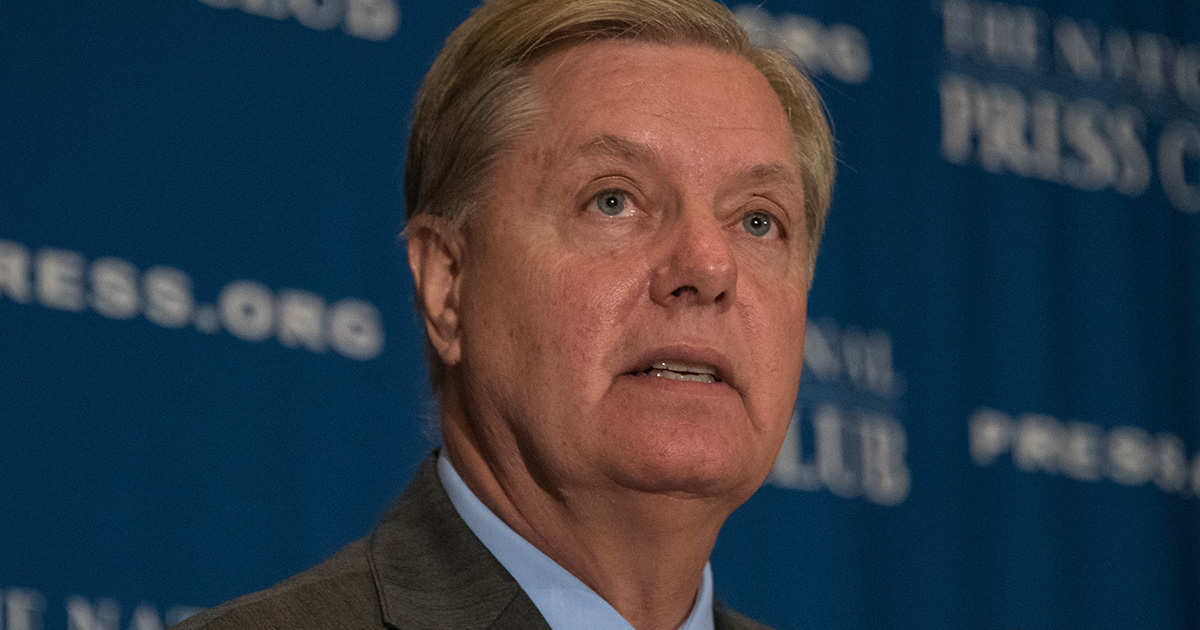

On the evening of July 11, 2026, Sen. Lindsey Graham called not 911 but his scheduler. He told her he was having chest pains and needed to do something about it. She asked whether he had already called for help. He said no, that was the reason he was calling her. She dialed 911 immediately, then raced to his Capitol Hill home. By the time she arrived, responders had already knocked the door down and were working on him.
Graham was 71. He had returned from Kyiv hours earlier. He was dead before midnight.
The phone call has pulled into view the final hours of one of the Senate’s most restless figures, a man who, by multiple accounts, knew he felt unwell that night and chose to wait. Multiple witnesses describe a senator more focused on his unfinished legislative agenda than on the warning his own body was sending.
The Chain of Events: Saturday Night, July 11, 2026

From Kyiv to Capitol Hill
Graham had been in Kyiv on his tenth visit to Ukraine since Russia’s full-scale invasion, where he met with President Volodymyr Zelensky on July 10 to discuss Ukraine’s air defense and progress on a Russian sanctions bill. He also visited the factory of Skyfall, a Ukrainian drone manufacturer. Graham had spoken to the media on Friday, standing in front of tanks, to discuss an agreement to punish Russia in what is now known to have been his final public appearance.
After returning to Washington, Graham called Trump on Saturday night. Trump told NBC News’ “Meet the Press” that Graham “sounded a little tired, but perfect,” and the president said Graham had called specifically to discuss the SAVE America Act. Trump added that “other than being tired, he was fine,” and described Graham as “like a member of the family to me.” Trump later said their conversation “could’ve been his last call.”
The Phone Call That Triggered 911
After hanging up with the president, Graham spoke with another person and complained he was feeling unwell. When the person urged him to seek medical attention immediately, Graham said he would do so Sunday morning after his scheduled appearance on NBC’s “Meet the Press.” Graham then joked: “I can’t die now,” before adding, according to Axios, that he still needed to finish the Russia sanctions, get Iran sorted out, and broker Israeli-Saudi normalization.
Hours later, he was dead.
Graham then made the call that set the emergency response in motion. Sen. Tommy Tuberville of Alabama, whose former staffer was out at a restaurant with Graham’s scheduler that evening watching the World Cup soccer match, described what happened when Graham’s call came in. “Lindsey called, called basically, said, ‘Listen, I’m having chest pains. You know, I need to do something,'” Tuberville told reporters, relaying the account of those involved. Graham’s scheduler asked if he had called 911 and Graham responded, “No, that’s the reason I called you.” The scheduler dialed 911 immediately, then headed to Graham’s address. “By the time she got there, 911 had knocked the door down, and they were working on him,” Tuberville said.
Citing recordings of emergency dispatch calls, Forbes reported that D.C.’s Fire and EMS responded Saturday evening to reports of someone facing chest pains at Graham’s address on South Capitol Street. The 911 call was made by an unidentified woman who was not at the residence. Emergency crews mentioned needing to force their way into the home because the door was deadbolted and no one answered their knocks. A later radio dispatch from the residence mentioned that responders were attempting CPR on a person who had suffered from “cardiac arrest.” Emergency responders had been dispatched around 8:30 p.m. ET.
The Cause of Death: Aortic Dissection Explained
What the Medical Examiner Found
Francisco Diaz, D.C.’s chief medical examiner, said in a statement Sunday that his office’s preliminary findings indicate “aortic dissection due to arteriosclerotic cardiovascular disease” as the cause of Graham’s death. The death certificate remained pending until all toxicological and microscopic testing was finalized.
Graham’s father died of a heart attack in his late 60s, just a few years younger than the senator was at his death. Other risk factors for aortic dissection include high blood pressure, tobacco use, and a family history of aortic aneurysms. Reports also indicated Graham had dealt with blood pressure issues since his 40s.
How the Condition Kills
Aortic dissection involves a tear in the body’s main artery. Dissections can cause immediate cardiac arrest, often proving unsurvivable even with rapid medical care.
Aortic dissections are rare, affecting an estimated five to 30 people per million, according to the American Heart Association. There are generally two types. Type A is the more common and more dangerous form, because the tear occurs in the section of the aorta leaving the heart. Type B happens in the descending aorta, further down the chest, and can be treated with medication and monitoring.
An aortic dissection typically happens suddenly, often without warning. “It’s not something that is slowly progressing over time,” said Dr. Barbara Hamilton, an assistant professor of cardiac surgery. “There isn’t this insidious, creeping, on-off chest pain that’s been lingering. When it hits, it’s usually a 10 out of 10 pain.”
About half of the people who suffer an aortic dissection will die before receiving any emergency care. For others, receiving care quickly is critical. Emergency surgery to repair the artery needs to happen within the first couple of hours. The underlying arteriosclerotic disease, or hardening of the arteries, is typically caused by factors like high blood pressure. Diagnosing aortic dissection is also challenging because it mimics other conditions, and standard heart tests conducted in the ER may not detect it. A CT scan is typically required to confirm the diagnosis.
Graham’s profile fit the classic picture: a man in his early 70s with cardiovascular disease and a family history of heart disease.
Who Was Lindsey Graham, and What Did He Leave Behind?
A Career Built Around Perpetual Motion
The 71-year-old represented South Carolina in the Senate for 23 years. He was known above almost everything else for his foreign policy hawkishness, his bipartisan dealmaking on national security issues, and his near-total commitment to the job at the expense of almost everything else.
Tuberville put it plainly. “Lindsey basically worked himself to death,” he said. “Most of us have families. He didn’t have any family, and if we had a couple of days off, he went to that airport. He went somewhere to try to work out something for our country.”
Graham never married nor had any children, although he did adopt his sister Darline after joining the military so she could access his military benefits. Lindsey considered Nordone to be his closest family member after both their parents died within 15 months of one another in the 1970s.
In the weeks before his death, he had been laying the groundwork for Saudi-Israel normalization, briefing Trump’s envoys and pressing multiple regional leaders. He had visited Ukraine 10 times since Russia’s invasion in 2022 and co-sponsored tough sanctions legislation against Russia. His death prompted an immediate outflow of tributes from top Ukrainian officials, including President Zelensky, who called him “a true champion of freedom and the values that make our world safer.”
Graham was a fixture on news programs and a major face of the Republican Party. He had been scheduled for what would have been his 64th appearance on “Meet the Press” on Sunday morning, the very appearance he told his acquaintance he intended to keep, even as he felt unwell.
Senate Mourning and a Desk Draped in Black
Graham’s death rocked the Senate, where emotional tributes rolled in throughout Monday, the upper chamber’s first day back in Washington since recessing for the Fourth of July. Senate Majority Leader John Thune said the “halls of the Senate already feel empty without him.” Graham’s desk on the Senate floor, where the late Sen. John McCain had once sat, was draped with a black veil and adorned with a glass bowl of white roses.
NATO Secretary General Mark Rutte said Graham “was a powerful advocate for America who believed strongly in the NATO Alliance and was actively working to bring an end to Russia’s war against Ukraine.”
Congressman Jim Clyburn, the only Democrat representing South Carolina in Congress at the federal level, said their “political relationship was sometimes partisan and passionate, but always pleasant and productive on behalf of the people of South Carolina.”
The Hawley Question: Calls for a Full Autopsy
Not every response was purely elegiac. In a Fox News interview on Monday, Missouri Sen. Josh Hawley called for a full toxicology report and autopsy. “I absolutely think there should be a full toxicology report, autopsy, the whole thing. Nobody had been a greater advocate of taking on Putin than Lindsey Graham. Nobody had been tougher on the Iranians over time than Lindsey. He had a lot of enemies in the world.”
Tuberville rejected any conspiratorial reading. “He was very well known, he was very smart, he knew foreign relations, and there’s no conspiracy theory here,” he said. Law enforcement sources confirmed to multiple news outlets that there was no evidence of foul play in Graham’s death.
Succession: Darline Graham Nordone Steps In
South Carolina Gov. Henry McMaster on Monday appointed Darline Graham Nordone, the sister of Sen. Lindsey Graham, to serve the rest of the late Republican senator’s term, which ends in early January. The announcement came after President Donald Trump recommended her for the temporary position.
“I recommended, to Governor Henry McMaster, Lindsey Graham’s wonderful sister, Darline, to serve as interim Senator from the Great State of South Carolina,” Trump wrote on Truth Social. “This would be a fabulous tribute to Lindsey, who loved her dearly!” Nordone concluded her remarks by addressing her brother directly. “Now, to Lindsey,” she said, “I miss you more than I can even put into words, but I’m going to do this. I got it.”
When sworn in, Graham Nordone became South Carolina’s first female senator. Graham was running for reelection at the time of his death, and several potential candidates have indicated their interest in seeking a full, six-year term by running in a special primary election on Aug. 11.
Graham Nordone is the commissioner for the South Carolina Commission for the Blind, a state agency that provides services to empower individuals who are blind or have low vision. She attended the College of Charleston, where she studied sociology and earned a bachelor of science degree in 1989.
The Last Call
The sequence of events on the night of July 11 is now substantially confirmed by multiple independent accounts. Graham spoke to Trump. He told at least one other person he felt unwell. He declined to seek immediate medical attention, planning instead to appear on television first. Then, when his symptoms became acute enough that he could no longer set them aside, he called not 911 but his scheduler, the same person who, for years, had helped manage the relentless pace of a working life with almost no off switch.
Whether the chest pains had been building for hours before he called, whether he recognized at some level how serious it was and still kept moving forward, whether the “I can’t die now” comment was bravado or denial, none of that can be answered. What’s left is the outline: a man who defined himself entirely through his work, who treated every trip, every phone call, and every Sunday morning TV appearance as something that could not be postponed, right up until the moment when postponing it was no longer an option.
His legislative priorities, Russia sanctions, Iran policy, Israeli-Saudi normalization, now sit without their most vocal champion in the upper chamber. The toxicology results and final death certificate remain pending. The Senate seat he held for more than two decades is temporarily occupied by his sister, who never sought public office and who has promised simply to honor the work he left behind.
Disclaimer: This information is not intended to be a substitute for professional medical advice, diagnosis, or treatment and is for information only. Always seek the advice of your physician or another qualified health provider with any questions about your medical condition and/or current medication. Do not disregard professional medical advice or delay seeking advice or treatment because of something you have read here.
AI Disclaimer: This article was created with the assistance of AI tools and reviewed by a human editor.