

On July 13, 2026, U.S. District Judge Kathleen M. Williams voided the judicial proceedings in a lawsuit brought by President Donald Trump against the Internal Revenue Service, ruled the entire proceeding fraudulent, and referred multiple attorneys to their state bar associations for potential discipline. The president had sued the IRS over a 2019 tax return leak. The judge found the lawsuit amounted to collusion. At the center of her 56-page ruling was the January 6 slush fund, a $1.776 billion pot of taxpayer money that critics across both parties had condemned as a political payoff dressed up as a legal settlement.
The ruling arrived one day before Acting Attorney General Todd Blanche, Trump’s former personal criminal defense lawyer and the man who signed the most controversial provisions of the deal, was scheduled to appear before the Senate Judiciary Committee for his confirmation hearing as the nation’s top law enforcement officer.
The Leak That Started Everything
Trump sued the IRS in January 2026, accusing the agency of not properly safeguarding his financial information and allowing a former contractor to access his tax returns and disseminate them to media outlets. That contractor was Charles Littlejohn. Littlejohn had obtained the tax returns of some of the wealthiest Americans, including Elon Musk and Florida Senator Rick Scott, and leaked them to the press. Reports in The New York Times and ProPublica found the country’s richest people paid little to no income tax.
In 2023, the Justice Department charged Littlejohn with unauthorized disclosure of tax returns. Prosecutors claimed he had intentionally applied for a job with the IRS to release Trump’s tax returns because he believed the president was “a threat to democracy.” The DOJ case record confirms that on January 29, 2024, Littlejohn was sentenced to five years in prison after pleading guilty to one count of disclosing tax return information without authorization, among the longest sentences handed down in a leak investigation. He is currently appealing his sentence.
The underlying grievance was real, and the legal harm Trump suffered from the leak was genuine. Judge Williams herself suggested that if Trump had brought the lawsuit “in a timely fashion while he was a private citizen,” the case might have been resolved within months. “But that is not what happened,” she wrote. “Instead, President Trump did not pursue his claims until he once again occupied the White House and had appointed his former lawyer, and the former lawyer of persons who are putative beneficiaries of the ‘Anti-Weaponization Fund’ to prominent positions in the DOJ.”
The Lawsuit, the Settlement, and the $1.776 Billion Fund
Trump, his two eldest sons, and the Trump Organization sued the IRS and Treasury in January 2026 over the 2019 leak of his tax returns by an IRS contractor. The lawsuit sought $10 billion in damages. The settlement emerged while Williams was in the process of determining whether the litigation could even move forward.
The settlement had two components. Forbes reports that Trump struck an agreement with the IRS in late May to create an “anti-weaponization” fund to provide payments to those who claimed to have been wronged by the government, and that in a later move Blanche signed a memo to “forever bar and preclude” the government from taking any action related to Trump’s past tax returns, a protection that also extended to his businesses and family members.
The fund’s dollar figure itself drew pointed commentary from the bench. In a footnote, Williams wrote that “even the Fund amount, $1.776 billion, speaks of a ‘branding’ effort rather than a deliberate and thoughtful calculation of damages,” a reference to the year 1776 and the Declaration of Independence. The fund was premised on paying out claims from January 6, 2021, and the classified documents case, the judge noted. Even Republican lawmakers decried it, leading to the Trump administration saying it had abandoned plans for the fund, and a separate judge also blocking it from moving forward. The administration abandoned the fund in June under bipartisan pressure, but the audit-immunity provision remained in place.
How the Case Was Reopened
Williams’ order came in response to a brief filed by 35 former judges calling on her to reopen the case, which Trump and the IRS had settled before she could rule on whether the parties were actually adverse to each other, given Trump’s position as president and head of the executive branch, which includes the IRS.
In late May, Williams ordered the plaintiffs to respond to “grievous” accusations from the 35 former federal judges who said the deal was premised on deception. They argued the court had been deceived. She had effectively been sidestepped when Trump and the DOJ moved to settle before the case was fully reviewed. She had already asked the parties to explain how they were adversaries, a requirement in lawsuits, along with courts being asked to weigh in only when there is a true controversy.
The answer they gave did not satisfy her.
The Core Legal Finding: “Never Adverseness Between the Parties”
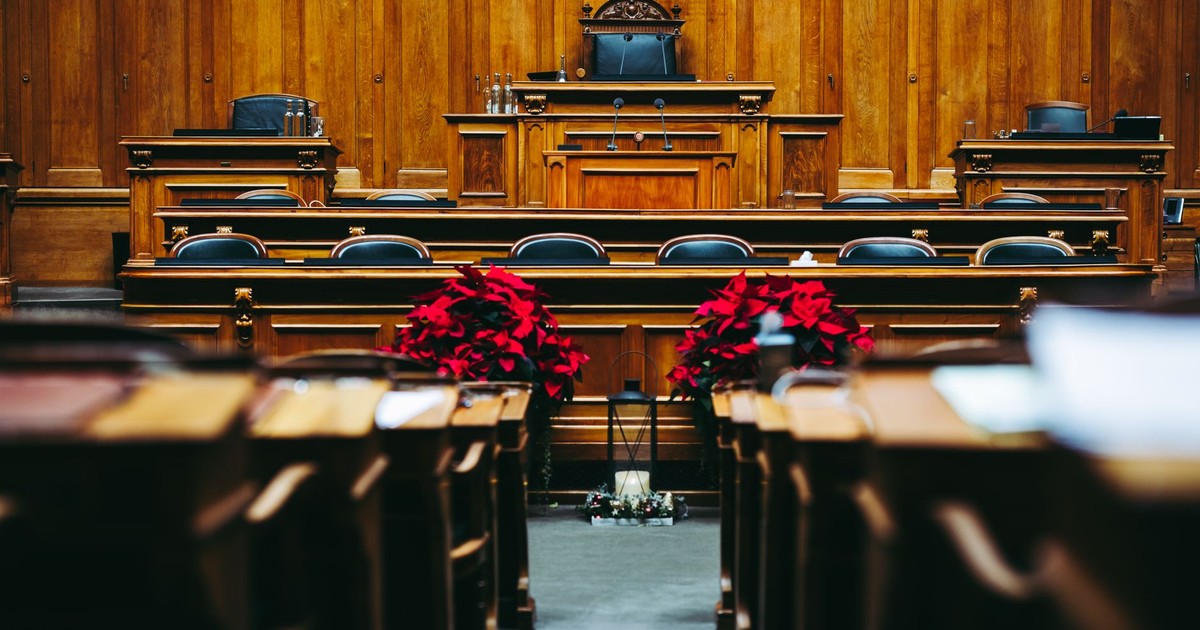
Under Article III of the Constitution, federal courts can only adjudicate genuine disputes between genuinely opposing parties. That requirement has a name: the “case or controversy” doctrine. It exists to prevent courts from serving as rubber stamps for decisions already made in private. When a president controls both the agency being sued and the lawyers nominally defending it, no genuine dispute exists.
Judge Williams found that the January 6 slush fund lawsuit amounted to collusion, as the two parties were never truly adverse to one another. She wrote in her 56-page filing: “In sum, the facts before this Court demonstrate there was never adverseness between the Parties; there was never a case or controversy; and there was never a question as to who would prevail.”
The judge specifically called out Acting Attorney General Todd Blanche, Trump’s former personal attorney. Williams cited public comments made by Blanche about the fund and pinpointed a statement that “demonstrates his confidence that he could speak for, and bind, both sides of this matter.” This certitude, she concluded, “supports the conclusion that the Parties worked in tandem and were never actually adverse.”
Williams wrote that the suit was “brought to manipulate the judicial process” and found that Trump’s $10 billion case against the IRS was “brought for an improper purpose: to gain the imprimatur of judicial legitimacy for a ‘settlement’ that had no viable basis in law or fact.” She barred the Justice Department, IRS, and Trump from citing or using provisions of the deal in judicial, administrative, regulatory, or other proceedings. The president and his two older sons, who were plaintiffs alongside Trump, “acted in bad faith,” she concluded.
The DOJ’s Abdication of Its Own Obligations

Williams reserved particular criticism for how the Justice Department handled its role as nominal defendant. In a functioning lawsuit, the DOJ represents the interests of the United States government against any plaintiff, including the president. Williams’ 56-page opinion blasted the department’s behavior, arguing that its response to the case disregarded DOJ policies and potentially the law, while also finding that the DOJ “remained conspicuously absent and silent when serious questions about this matter have been raised.”
Williams wrote: “In abdicating its responsibility to zealously defend the interests of the United States, the Government entered into a ‘settlement’ that deviated from its litigation posture in similar actions, disregarded DOJ policies, and accomplished objectives beyond those authorized, as well as those specifically prohibited, by law.”
The DOJ attorneys on the defense side had previously represented some of the very people who stood to benefit from the fund, including January 6 defendants pardoned by the president. Rather than stepping aside because of those prior representations, they signed on to a settlement involving staggering sums of money that would potentially benefit their former clients.
Williams additionally found that the tax amnesty order signed by Blanche alone “directly contravenes” a federal law barring presidents and other executive branch leaders from influencing tax audits. She wrote that “acquiescing to any such demand is wholly incompatible with the duties of DOJ attorneys (as well as CEO Frank Bisignano for the IRS) to enforce the law and protect the public interest,” raising the prospect that the order is unconstitutional as well.
If the amnesty provision is unconstitutional on its face, no future administration, including a Democratic one, would necessarily be bound by it. Even before Williams’ ruling, it was unlikely that the Blanche amnesty order would have stopped a future Democratic administration from investigating Trump, given the dubious legal ground it stood on.
Sanctions, Bar Referrals, and Monetary Consequences

Attorney Discipline
Williams barred the parties from referring to the “settlement agreement” or using its provisions in official proceedings, essentially voiding it, and ordered both monetary and non-monetary sanctions. She referred Trump’s attorney Alejandro Brito to the Florida Bar for potential disciplinary action and directed a copy of her order to be included as part of disciplinary proceedings already ongoing against Acting Attorney General Todd Blanche and Associate Attorney General Stanley Woodward. The judge also blocked a second lawyer, Daniel Epstein, from practicing in the Southern District of Florida for a year.
Monetary Sanctions
Williams found monetary sanctions warranted, though she did not name an amount. The outside groups and former judges who challenged the deal have two weeks to ask that Trump and his lawyers cover their attorneys’ fees.
The referral to Blanche’s bar association, New York, landed at a particularly consequential moment. The developments came just two days before Blanche was scheduled to appear before the Senate Judiciary Committee for his confirmation hearing as permanent attorney general.
The Blanche Confirmation: A Direct Collision

The confirmation of Todd Blanche as permanent attorney general was already on shaky ground before Williams issued her order. CBS News reports that Democrats were expected to grill Blanche over what they characterized as politicized prosecutions, the department’s handling of the Jeffrey Epstein files, and his prior advocacy for the nearly $1.8 billion “anti-weaponization” fund. The Monday ruling handed them direct, judicial ammunition for each line of questioning.
Blanche had served as acting attorney general since Trump ousted Attorney General Pam Bondi in April. His confirmation as permanent AG was not assured. Republicans held a majority on the Judiciary Committee, but the unexpected death of Senator Lindsey Graham left them with just one vote to lose. Blanche told a House panel that “we are not moving forward with the fund, period.” But several Republicans sought further guarantees.
The Republicans’ Problem
Some of the most significant resistance came from within Blanche’s own party. Senator Bill Cassidy signed on to a brief opposing the settlement fund in court and sent a letter with Senator Cory Booker seeking information about the portion of the settlement providing Trump legal immunity from tax inquiries. Senator Thom Tillis, a potential swing vote on the Senate Judiciary Committee, stated: “It’ll be an issue if the weaponization fund isn’t effectively dead by the confirmation hearing. Because I still have a real problem with it being out there.”
Blanche backtracked from the fund proposal but gave no indication he intended to scrap the part of the agreement offering immunity on past IRS audits. Democrats pointed to his flat refusal to put his reversal in writing as an indication that he could devise an alternative.
The White House Response
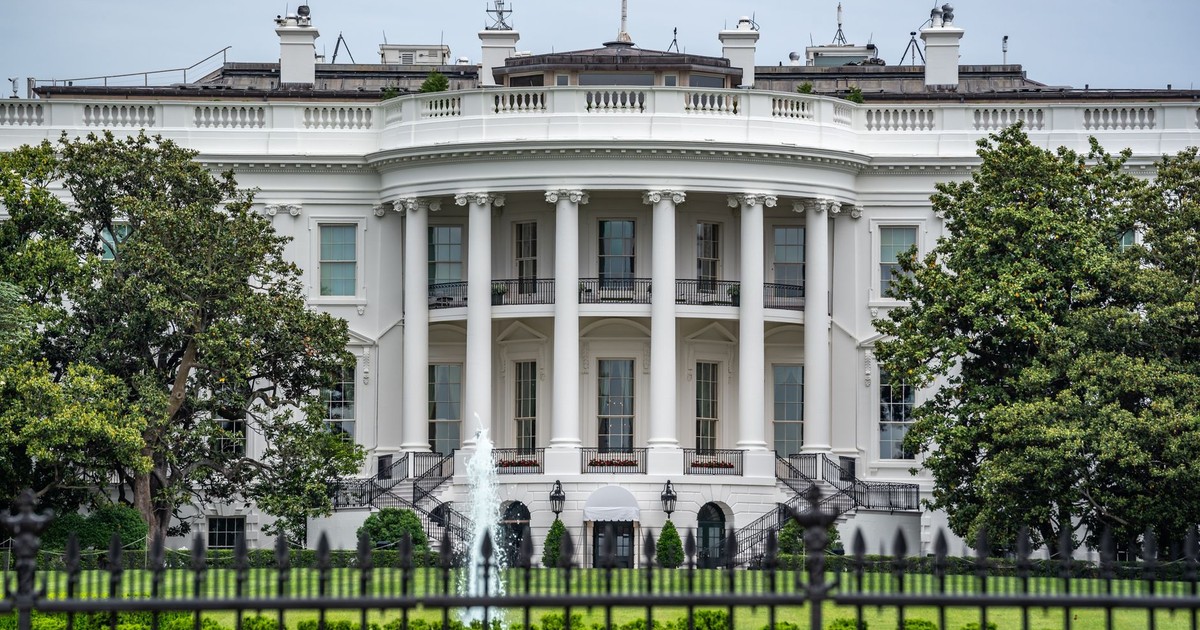
The Trump White House and its legal team offered a narrow, backward-looking defense. A spokesperson for Trump’s legal team said: “The IRS wrongly allowed a rogue, politically-motivated employee to leak private and confidential information about President Trump, his family, and the Trump Organization to the New York Times, ProPublica and other left-wing news outlets, which was then illegally released to millions of people.”
The statement did not address Williams’ core finding, that the lawsuit was a vehicle for self-dealing rather than a legitimate legal claim. Trump has denied being involved with the creation of the settlement but praised it and defended the $1.8 billion fund even after his administration abandoned it. The DOJ issued a brief statement rejecting the collusion characterization, calling the judge partisan, but did not address the specific legal findings in the 56-page order.
The lawyers who represented the 35 former judges who triggered the reopening of the case responded differently. “The court’s opinion is a resounding victory for the rule of law,” said attorneys Norm Eisen and Matt Platkin in a statement.
Williams closed her opinion by invoking John Adams. She evoked Adams’ warning that “Facts are stubborn things” in her conclusion. “Thus, whatever may be the Parties’ wishes, inclinations, or the dictates of their passion, they cannot alter the state of the facts or evade the rule of law,” she wrote.
What the Ruling Does, and Does Not, Do

Williams did not explicitly void the private contractual provisions of the settlement. In a footnote, she pointedly wrote that the question of “whether a private agreement” between both sides is valid and enforceable “is not before this court.”
The court voided the judicial proceedings and stripped the settlement of any legal standing or enforceability in official proceedings. But it stopped short of unilaterally nullifying any underlying private agreements between the parties. Whether those survive, and whether the IRS audit immunity holds in practice, remains an open legal question that will likely be tested in future proceedings under a different administration.
It is also unclear to what extent Williams’s order will block the “anti-weaponization” fund entirely. Though the DOJ pointed to the settlement as a rationale for establishing the fund, the department had the power to do so without outside suits. The administration could, in theory, attempt to re-establish some version of the fund through executive action alone, without leaning on the now-voided settlement as justification. Whether that would survive legal challenge is a separate question.
What the Record Now Shows
Judge Williams’ ruling establishes something that legal scholars will cite for years: a federal court’s formal, documented finding that a sitting president used the judicial system not to resolve a genuine dispute, but to manufacture the appearance of legitimacy for an agreement he had already reached with himself.
Article III of the Constitution has always required a real dispute between real adversaries before a federal court can act. That requirement exists to prevent the government, or any powerful actor, from using courts as rubber stamps for decisions already made in private. Williams said so clearly, and the 56-page record behind her conclusion makes that finding difficult to dismiss as partisanship alone.
Blanche’s confirmation hearing proceeds with a judicial ruling now in the record that directly implicates his conduct, refers him to the New York bar, and characterizes the actions he oversaw as an abuse of legal process. Whether Republican senators who were already skeptical will use that record is a different calculation, one of political survival rather than legal analysis.
What cannot be undone is the ruling itself. The January 6 slush fund has now been found, by a federal court, to have had no legitimate basis in law or fact. The $1.776 billion figure, chosen for its patriotic symbolism rather than any damages calculation, has been specifically called out as window dressing on a deal that had already been made before anyone walked into a courtroom. The lawyers who signed their names to it are now answering to their bar associations. And the attorneys who were supposed to be defending the United States government instead helped engineer the deal they were nominally opposing.
A court has now said, in writing, that the president sued himself, that his lawyers helped him do it, and that the whole arrangement was dressed up to look like something it wasn’t. The facts, as John Adams would have recognized, remain stubbornly what they are.
AI Disclaimer: This article was created with the assistance of AI tools and reviewed by a human editor.