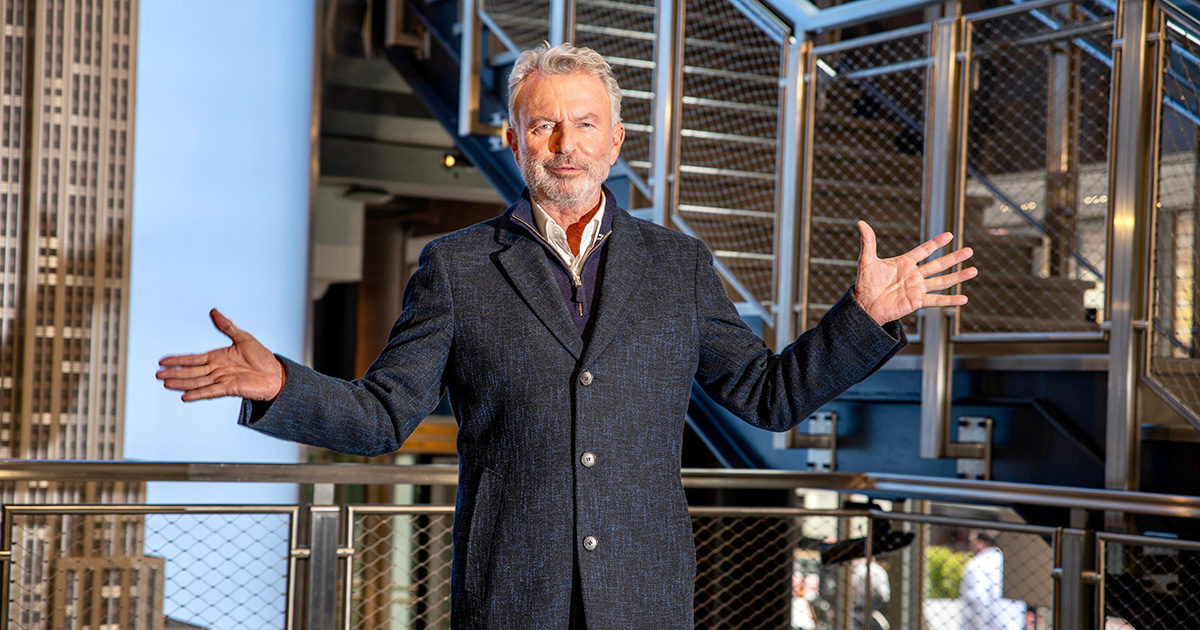
Sam Neill died on Monday, July 13, in Sydney, Australia, at 78. Three months earlier, he had told an Australian television program that there was no cancer left in his body. His family’s statement confirmed it: the cancer was gone. What took him, in the end, was something else entirely.
His family posted a statement to social media: “It is with immense sadness that the whānau of Sam Neill share the news of his passing,” using the Māori word for extended family. “The loss was sudden and unexpected but blessed by the fact that Sam remained cancer free.” No official cause of death was given. Co-star Rima Te Wiata, who appeared alongside Neill in the 2016 comedy “Hunt for the Wilderpeople,” told the New Zealand Herald that Neill had been suffering from pneumonia before his death. “I think he would be like: ‘For goodness sake, I got over my cancer. And now look, now I get pneumonia. What next?'” she said.
A man who fought one of the rarest blood cancers in modern medicine to a standstill was taken by something else before the world had fully absorbed his recovery.
The Diagnosis: A Rare and Aggressive Blood Cancer
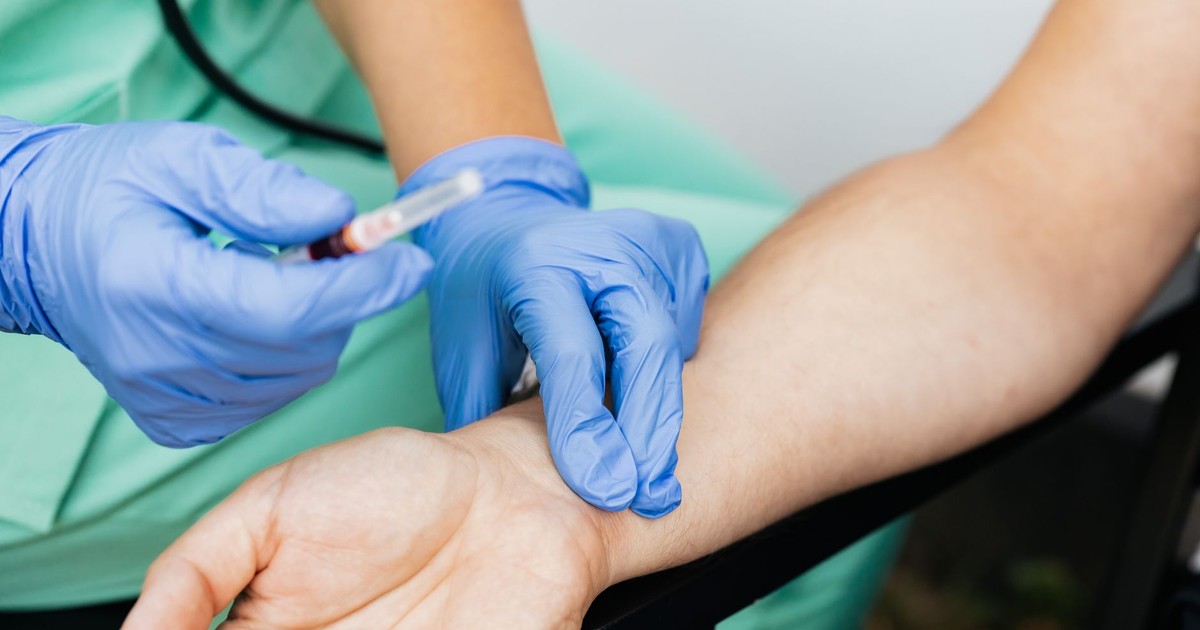
In 2023, Neill disclosed he had been diagnosed with angioimmunoblastic T-cell lymphoma, a rare type of non-Hodgkin lymphoma. The diagnosis had come in early 2022, after experiencing swollen glands while promoting “Jurassic World Dominion.”
He was in the middle of a press tour when his body sent a signal. He “noticed the glands seemed to be up in my neck region, but gave it very little thought.” His doctors had initially “assured me that my lumpy glands were due to undetected COVID, and they’d be hanging around for a little while.” But his glands continued to grow bigger, which eventually prompted him to investigate further.
A PET scan (a type of imaging test that detects abnormal cell activity throughout the body) changed everything. As Neill wrote in his memoir: “Within a few days, I was lying on a hospital bed having all kinds of chemicals draining into my system, killing everything aboard. For therapeutic reasons. To be cured of a thing I didn’t know I had just a few days ago. Yep, suddenly things are different, this is some serious s—.”
Angioimmunoblastic T-cell lymphoma, or AITL, is not a cancer most people have heard of. According to the Lymphoma Research Foundation, it is “a rare, often but not always, aggressive (fast-growing) form of peripheral T-cell lymphoma.” AITL accounts for approximately 1 to 2 percent of all non-Hodgkin lymphoma cases. The disease may present with enlarged lymph nodes, fever, fatigue, weight loss, or skin changes, signs that can easily resemble infections or autoimmune conditions.
The Treatment: Chemotherapy, a Near Miss, and CAR T-Cell Therapy
Neill went through four rounds of chemotherapy. “After my first chemo, it took only a little over two weeks for the hair to disappear completely from the top of my head,” he wrote in his memoir. He didn’t manage the story from behind a publicist. He wrote about it directly, in a book he began partly because he thought he might not survive long enough to finish it.
Faced with an uncertain future, Neill began writing his memoir as a way to document his life and remain occupied during treatment. The book, “Did I Ever Tell You This?”, was published in March 2023. In it, he wrote plainly: “The thing is, I’m crook. Possibly dying. I may have to speed this up.”
Chemotherapy brought him into remission initially, but then stopped working. His cancer continued to grow. “The chemo stopped working. I was at a loss, and it looked like I was on the way out, which wasn’t ideal obviously,” Neill recalled. He added that he only had one option left: CAR T-cell therapy.
CAR T-cell therapy (short for chimeric antigen receptor T-cell therapy) is a form of immunotherapy that re-engineers a patient’s own immune cells to hunt and destroy cancer cells. It involved him having bi-weekly infusions. It is expensive, not universally available, and still relatively new as a treatment for blood cancers. Beyond sharing his story and raising awareness about the disease, Neill actively fought to ensure that Australians had access to this treatment, working alongside a fellow survivor named Geoff Nyssen and medical foundation Snowdome to push state and federal governments to fund CAR T-cell therapy for blood cancer patients.
He had signed a contract with a drug company agreeing to receive free treatment if he was still alive after four months, a detail he shared publicly without self-pity or theater.
The Cancer-Free Announcement
In an interview in April with Australia’s 7NEWS, Neill revealed that he was cancer free. “I’ve been living with a particular type of lymphoma for about five years, and I was on chemotherapy and the pretty miserable business, but it was keeping me alive,” he told the outlet. When the chemotherapy stopped working, “I was at a loss and it looked like I was on the way out, which wasn’t ideal obviously.” He then tried CAR T-cell therapy and found success. “I’ve just had a scan just now and there is no cancer in my body, that’s an extraordinary thing,” Neill said.
This was not a celebrity declaring themselves “in remission” in a carefully worded press release. It was a man who had written openly about thinking he was dying, who told The Guardian in 2023 that he was “not afraid to die” but that it would “annoy” him, because he wanted another decade, wanted to see his grandchildren grow, wanted to watch the olive trees on his farm come into their own. He got the scan result. He said it out loud on television. And then, three months later, he was gone.
A Career of Five Decades
Neill’s death prompted a flood of remembrance from across the film industry. Sam Neill was a versatile actor whose career of more than 50 years was highlighted by his three appearances in the blockbuster “Jurassic Park” and “Jurassic World” franchises. He starred in dozens of films and television series over his genre-spanning career, including the Oscar-winning film “The Piano,” but is most widely known for playing Dr. Alan Grant in Steven Spielberg’s “Jurassic Park.”
His breakthrough came in 1993, when he played Dr. Alan Grant in “Jurassic Park,” which for a period was the highest-grossing film ever made. The role made him a household name globally, but Neill was already a well-regarded actor long before that. After college, he took the lead in “Sleeping Dogs” in 1977, the first feature-length 35mm film produced entirely in New Zealand and a landmark that launched the country’s modern film industry. His other film roles included playing a Soviet submarine officer who memorably dreams of a home in Montana in “The Hunt for Red October” and an investigator in director John Carpenter’s “In the Mouth of Madness.”
On television, Neill played the malign Chester Campbell in “Peaky Blinders” and Thomas Jefferson in the four-hour CBS miniseries “Sally Hemings: An American Tragedy.” On Apple TV+, he appeared in “Invasion,” playing Oklahoma Sheriff John Bell Tyson. He earned an Emmy nomination for his performance in the title role of the 1998 miniseries “Merlin” and another as narrator of 2017’s “Wild New Zealand.”
He was awarded Officer of the Order of the British Empire in 1991 and a knighthood from New Zealand in 2022. When he was presented the Screen Legend Award at the 2025 New Zealand Screen Awards, he accepted the honor with characteristic self-deprecating charm: “If you stick around long enough, you probably, you know, qualify, and I’ve been just sort of sticking around.”
At one point, he was even touted as a replacement for Roger Moore in the “James Bond” franchise. Where other actors of his era projected stardom as a kind of force, Neill wore his authority so lightly that the camera had to look twice to catch it, which may be exactly why the people who worked with him kept coming back.
Tributes From Around the World

Laura Dern, his “Jurassic Park” co-star, called him a “beloved lifetime friend” in a tribute on Instagram. “He was a true and noble gentleman, wrapped up in my dream leading man.” Steven Spielberg, who directed three of Neill’s most recognizable performances, said he “adored making all the ‘Jurassic’ movies with him. Along with Laura Dern and Jeff Goldblum, we will always have our ‘Jurassic’ family, and Sam will never be forgotten by us or his many millions of fans around the world.”
Nicole Kidman called Neill “one of the greats, a joy to be around.” “We met when I was just 18 and he took me under his wing and we stayed friends for life. He was charming, kind, funny and intelligent,” she said in a statement to the Sydney Morning Herald. The pair first worked together on the 1989 Australian thriller “Dead Calm.” Cillian Murphy, who worked with Neill on “Peaky Blinders,” said he “admired him and adored him in equal measure.”
New Zealand Prime Minister Christopher Luxon mourned Neill as “one of the greats.” “He started out when there was barely a film industry to speak of,” Luxon wrote. “For more than fifty years he took New Zealand stories to the world and his talents helped make our film industry into what it is today.” Australian Prime Minister Anthony Albanese said Neill had “earned a special place in Australian hearts,” and that he “fought illness with the same dignity, humor and conviction that gave strength to his every performance.”
The Life Beyond the Camera

Sam Neill spent the non-filming portions of his life on a New Zealand farm in Central Otago, on the South Island. He started his own organic winery, Two Paddocks, back in 1993, with a mission to produce a good pinot noir that his friends and family would enjoy.
He was a vocal environmental activist. In early 2026, he released a short documentary opposing a proposed fast-track industrial goldmine in New Zealand’s Central Otago region.
Neill was married twice and is survived by his two sons and two daughters. He named the animals on his farm after famous friends, occasionally reporting their fates on social media with dark humor. Discussing the habit in a 2019 interview, he said: “I love to name as many of my animals as possible after my friends. It doesn’t always end well. Meryl Streep was killed by a ferret recently.”
What Sam Neill’s Cancer Journey Leaves Behind
The Sam Neill cancer death prompted a conversation that his own advocacy had already started: about rare blood cancers, about who gets access to the treatments that work, and about what it means to face a fatal diagnosis with openness rather than managed silence.
In the months before his death, Neill had advocated for access to newer cancer therapies. His public discussion of lymphoma brought attention to a rare disease that remains unfamiliar to many people outside the hematology community. His willingness to speak candidly about treatment, remission, uncertainty, and life after diagnosis resonated with patients and families experiencing similar circumstances.
AITL remains one of the least known and most difficult-to-treat blood cancers. A man who could have said nothing chose instead to write about the hospital bed, the failed chemotherapy, the contract he signed with a drug company agreeing to free treatment if he was still alive after four months. He didn’t sanitize anything. He just described what was actually happening, and that turned out to be enough.
Neill told The Guardian in 2023: “I can’t pretend that the last year hasn’t had its dark moments.” He didn’t pretend. He said he was possibly dying. He said the chemo was keeping him alive and then stopped working. He said the new therapy gave him back a scan with no cancer in it. And when his family announced his death, they made sure the world knew that, at the end, the cancer had lost. He was gone, but not to the disease he had spent four years fighting.
The Person, Not the Icon
He named his ducks after Meryl Streep. He made pinot noir in a valley on the South Island. He went on television and said, with what sounded like genuine wonder, that there was no cancer left in his body. He had told CNN in 2023: “It’s been a very happy, surprising life. I never expected to have a career in film at all, or even as an actor. But it kind of happened, and no one’s more surprised than me.”
The Sam Neill cancer death is not, in the end, a story about dying from cancer. His family was emphatic about that. He had beaten it. What took him came from somewhere else, and the speed of it meant there was no last chapter to write, no final interview, no prepared statement. Just the scan from three months ago, and the family’s insistence that the world know he was still cancer free when he left.
Disclaimer: This information is not intended to be a substitute for professional medical advice, diagnosis, or treatment and is for information only. Always seek the advice of your physician or another qualified health provider with any questions about your medical condition and/or current medication. Do not disregard professional medical advice or delay seeking advice or treatment because of something you have read here.
AI Disclaimer: This article was created with the assistance of AI tools and reviewed by a human editor.