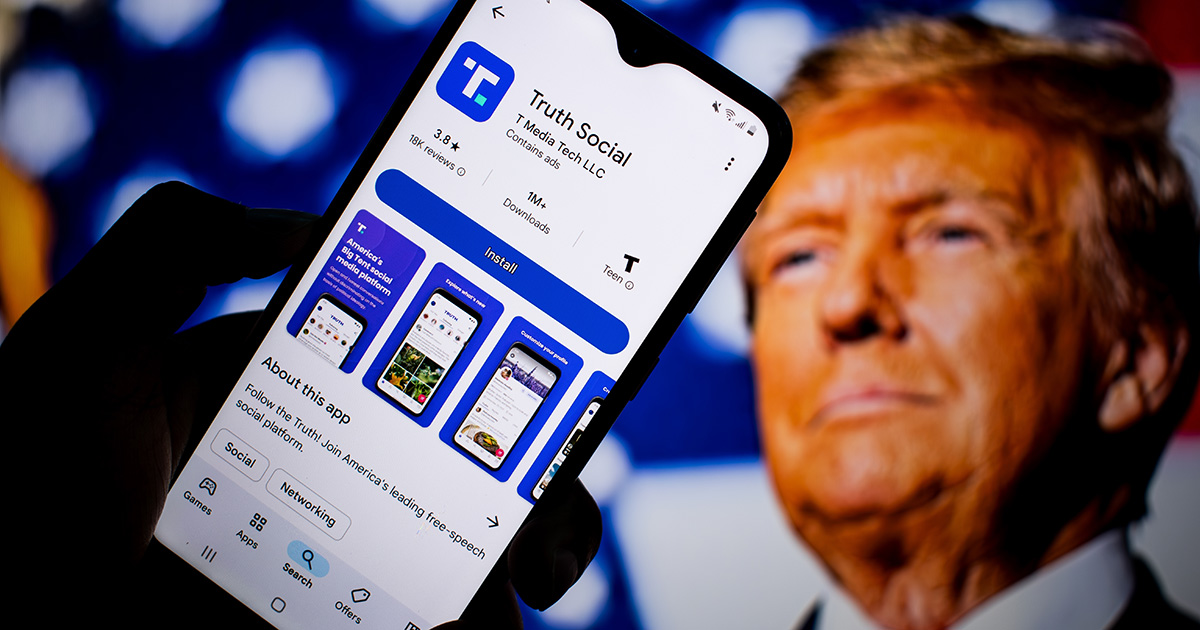

The phrase “is dead!” stopped people cold when Trump’s Truth Social post about Lindsey Graham was shared across social media on Sunday morning. One user called it the eulogizing equivalent of shouting the news across a parking lot. Another referenced The Wizard of Oz. Someone else wrote: “I can’t believe he made a whole tweet about someone else without changing the subject back to himself.” And that, in its way, was almost a compliment.
The full post read: “Senator Lindsey Graham, one of the greatest people and Senators I have ever known, is dead! He was always working, and was a true American Patriot. Lindsey will be greatly missed!! DETAILS AND ARRANGEMENTS TO FOLLOW. So sad! President DONALD J. TRUMP.” The exclamation point after “is dead” was the phrase that broke through, two keystrokes that collapsed the whole spectacle of political friendship into something blunter than anyone had bargained for.
The Truth Social post was only the beginning of several days of public statements, television appearances, and policy pivots that together told a stranger story than any single sentence could. Trump and Lindsey Graham’s relationship was never simple, and even in death, it wasn’t going to start being now.
A Death That Came Out of Nowhere
Graham died on Saturday after what his office called a “brief and sudden illness,” two days after his 71st birthday and just one day after returning from a visit to Ukraine. According to dispatch audio reviewed by Fox News Digital, EMS were called to Graham’s D.C. home on Saturday evening after reports of a person suffering from chest pains. About 25 minutes later, radio transmissions confirmed CPR was underway and that the patient had gone into cardiac arrest.
The D.C. medical examiner’s office released preliminary findings on Sunday confirming that Graham died of aortic dissection due to arteriosclerotic cardiovascular disease. An aortic dissection happens when there is a tear in the inner layer of the body’s main artery, a sudden, catastrophic event that can prove fatal within minutes and leaves almost no warning.
Graham had just been in Ukraine to meet with Ukrainian President Volodymyr Zelenskyy, who said the senator had visited his country 10 times during the years since Russia invaded in February 2022. Zelenskyy said: “Lindsey was a true defender of freedom and the values that make our world safer.” The tributes from world leaders came fast and from all directions.
Israeli Prime Minister Benjamin Netanyahu called Graham a “beloved friend” and said “America has lost a great patriot.” Former President Biden wrote on X that even though he and Graham “disagreed often, and sometimes loudly,” they both agreed on the “profound importance of public service,” noting: “Lindsey and I served together in Congress for over a decade, and worked closely on many issues throughout the years.”
Graham’s family posted a statement on social media early Sunday saying they “appreciate prayers at this time and asks for privacy during this incredibly difficult period,” with no additional details about the circumstances surrounding the Saturday night death of the prominent South Carolina Republican, a former Air Force lawyer who served in Congress for three decades.
The Posts That Had Everyone Talking

The early-morning Truth Social post was striking enough on its own, but Trump wasn’t finished. In a later post, Trump declared that flags across the U.S. be raised at half-staff for Graham, writing: “In honor of the remarkable life and achievements of Senator Lindsey Graham, a dear friend of mine, and a truly great man, who achieved so much for our Country, and his beloved Home State of South Carolina, I am ordering all American Flags throughout the United States lowered to Half Mast until Saturday evening at 6 P.M.”
That post landed differently from the first one. Warmer. More considered. People weren’t quite ready to let the “is dead!” go. The contrast between the two posts only sharpened the question of which version of Trump’s grief, if you could call it that, was the real one.
Then came Sunday morning’s appearance on Meet the Press, where Trump spoke to host Kristen Welker about a phone call he’d had with Graham just hours before the senator died. Trump said he spoke with Graham earlier Saturday night, saying the late senator had just landed from Ukraine and told the president, “We’re all set for the SAVE America Act.” Trump said it could have been Graham’s last call, adding that he could not “believe it” when a member of Graham’s office called the president early Sunday morning to notify him of the senator’s death.
Trump told Welker: “I thought Lindsey would be living forever,” adding that Graham was set for a “big victory” in November’s elections, where he was primed to secure his fifth term in the Senate.
That, too, would have been a perfectly fine tribute, the shock of it, the “I just can’t believe it” quality of sudden loss. Except Trump then did something that made people’s heads tilt again.
The SAVE America Act Pivot
Trump used the death of Graham to push his controversial voting legislation while remembering his steadfast ally. He told Welker that he and the late senator had spoken about the Safeguard American Voter Eligibility Act, known as the SAVE America Act, over the phone Saturday, just hours before Graham’s office announced he’d died. Trump called Graham’s death “a big blow to the SAVE America Act.” The bill, which would require proof of citizenship to register to vote, passed the House in February 2026 but failed in the Senate, where Republican amendment attempts fell short in votes in April and June 2026.
The pivot raised eyebrows across the political spectrum. Graham had barely been dead 12 hours, and yet the president’s public grief was already doing legislative work.
Then, on Fox & Friends on Monday morning, it got odder still. Fox & Friends hosts struggled to keep Trump on message as he rambled during what was supposed to be a tribute to his late ally. Trump called into the show on Monday morning to pay further homage to Graham before quickly veering off topic. After calling him a “nice guy,” bigging up his political chops and jesting about his golf game, Trump said Graham was a big supporter of the SAVE America Act, then began ranting about all manner of things, including terminating the filibuster, voter ID, Spencer Pratt, and California gubernatorial hopeful Steve Hilton.
Trump also revisited Graham’s break with him after the January 6 Capitol riot in 2021, giving him a friendship score of “99 out of 100” because of that disagreement. The president then claimed Graham called him 40 minutes after making those 2021 comments to say he had changed his mind.
Later that same Monday, the president spoke publicly for the first time since the death, and the late senator went unmentioned entirely. Trump “just delivered his first speech after the death of his allegedly dear friend Lindsey Graham, which happened less than 48 hours ago,” independent journalist Aaron Rupar wrote on X. “He didn’t mention him once.”
The Strangest Part Was Also the Most Honest
The Trump Lindsey Graham relationship was itself one of the stranger political friendships of the last decade. It began as open warfare and somehow ended with the two men talking on the phone the night one of them died.
During the 2016 Republican primary, Graham called Trump “a jackass,” a “race-baiting, xenophobic religious bigot,” and warned he would destroy the Republican Party. During a political rally in 2015, Trump read Graham’s phone number aloud to a crowd of hundreds. That prompted a viral video in which Graham dramatically destroyed a series of flip phones, smashing one with a meat cleaver and another with a golf club, then using lighter fluid, a blender, and toaster oven to pulverize others before tossing one off the roof.
The pair later bonded over golf and what Graham described as a mutual and irreverent sense of humor. Trump and Graham began so frequently hitting the links together that the senator started seeing it as something of a career builder, leaning heavily into the kind of over-the-top flattery Trump relishes. Sen. Tim Scott told ABC’s “This Week” that “their true friendship could only be seen behind the curtain” and that the relationship was strengthened by spending more than 100 hours golfing together.
The two found common ground on judicial appointments, national security, and foreign policy, with Graham becoming one of Trump’s most reliable allies in the Senate. He became a frequent White House visitor, a regular golf partner, and a public defender of the president during some of his biggest political battles.
Then came January 6, 2021. After the Capitol riot, Graham said he had finally had enough: “Trump and I, we’ve had a hell of a journey. I hate it to end this way. Oh my God, I hate it. From my point of view, he’s been a consequential president. All I can say is count me out. Enough is enough.”
It wasn’t, of course. Graham realized that his party’s future was inextricably tied to Trump and quickly reverted back to being a staunch defender. By May 2021, just four months after the riot, Graham was on the record saying: “Can we move forward without President Trump? The answer is no. I’ve determined we can’t grow without him.”
The January 6 reversal, and Trump’s retelling of it in the days after Graham’s death, captures something real about both men. Trump scored Graham 99 out of 100, docking the one point for a moment of conscience that Graham himself walked back within the hour. Graham, for his part, spent the final years of his life working his way back into the good graces of a man he had once called unfit for office.
Graham had also been one of the chief backers of Trump’s war in Iran, having advocated for years for direct confrontation between Washington and Tehran. In the days before he died, he was in Kyiv, pressing Ukraine’s case on Capitol Hill’s behalf, carrying a foreign policy brief that Trump himself had complicated views on. Trump told CNN host Jake Tapper that the late senator wanted to keep the war between Ukraine and Russia going. “I wanted to see the war with Ukraine end very quickly. I think he was more into keeping it going, frankly,” Trump said Sunday on “State of the Union.” A compliment and a disagreement, folded into a eulogy, delivered while the senator was barely cold.
What Happens to Graham’s Senate Seat
Graham had won 57% of the GOP vote in South Carolina’s primary in June and was up against Democrat Annie Andrews in November. His death prompted a scramble to fill a rare open Senate seat, with Republican names like Reps. Nancy Mace and Russell Fry circulating as possible replacements.
South Carolina Gov. Henry McMaster ultimately announced that he would appoint Graham’s sister, Darline Graham Nordone, to finish the late senator’s term, after Trump said it “would be a fabulous tribute to Lindsey, who loved her dearly!”
The Odd Truth Underneath All of It

The reaction to Trump’s posts says something about where public expectations have landed after years of watching this president communicate in real time. Nobody was surprised that he posted something in the early hours of the morning. Nobody was surprised that the tribute detoured into voting legislation, golf commentary, and a feud score settled in his own favor. The surprise, if anything, was the “is dead!” and the exclamation point, two keystrokes that somehow collapsed the whole spectacle of political friendship into something blunter than anyone had bargained for.
Graham spent the last years of his life in a relationship that required a particular kind of flexibility. He called Trump unfit, then ran the phone number gag, then destroyed the flip phones, then spent more than 100 hours on golf courses with the man, then said “count me out” on the floor of the Senate, then said “I’ve determined we can’t grow without him” four months later. He was hawkish on Iran while Trump was skeptical. He championed Ukraine while Trump remained cool on Zelenskyy’s requests. He died hours after landing from Kyiv, phone still warm from a call that Trump would describe, on national television, as possibly Graham’s last.
The friendship was real. The complications were real. The tribute, the “is dead!”, the SAVE America Act pivot, the friendship score of 99 out of 100, the Monday speech where Graham went unmentioned, was probably as honest a picture of that relationship as any polished eulogy could have been. That’s the thing about people who are genuinely complicated: when they die, the tributes don’t quite get to be simple either.
Disclaimer: This information is not intended to be a substitute for professional medical advice, diagnosis, or treatment and is for information only. Always seek the advice of your physician or another qualified health provider with any questions about your medical condition and/or current medication. Do not disregard professional medical advice or delay seeking advice or treatment because of something you have read here.
AI Disclaimer: This article was created with the assistance of AI tools and reviewed by a human editor.