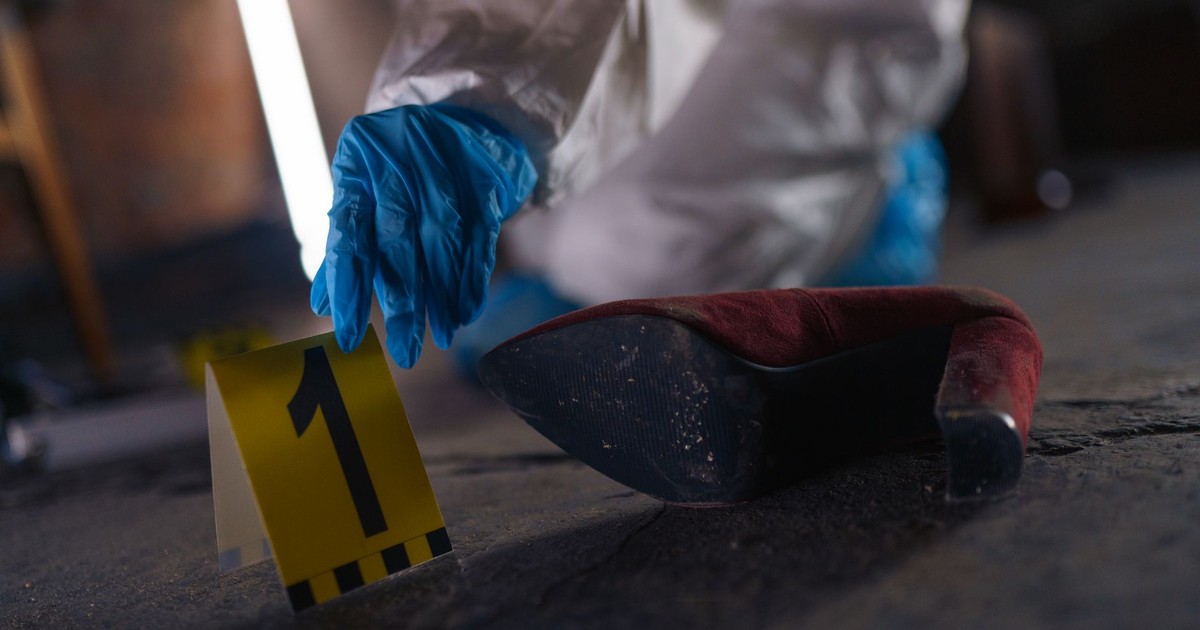

The morning a case officially closes is rarely the morning it stops being a problem. Investigators sign off, files go into storage, and somewhere in a courthouse basement a box sits with the word “resolved” printed on the outside. But the resolutions don’t always hold. Some cases get reopened. Some never really close at all, because the explanation that went into the record was the best guess available at the time, and best guesses aren’t always right.
What’s striking about the cases that endure isn’t that they’re dramatic, though many are. It’s that each one has a specific detail that refuses to be explained away. A padlock locked from the outside when the only key was found underneath the body. A piece of paper in a dead man’s pocket with two words of Persian poetry printed on it. Nine sets of footprints walking away from a tent and into the dark, and then stopping. The evidence exists. The explanation is what’s missing.
Forensic technology has advanced enormously in the decades since most of these cases were first investigated. DNA profiling, digital forensics, satellite imaging, advanced toxicology screening, tools that didn’t exist when some of these mysterious unsolved deaths occurred are now routine. They have solved some cold cases. But not all of them. And the thirteen on our list have resisted everything thrown at them.
The Dyatlov Pass Nine (1959)
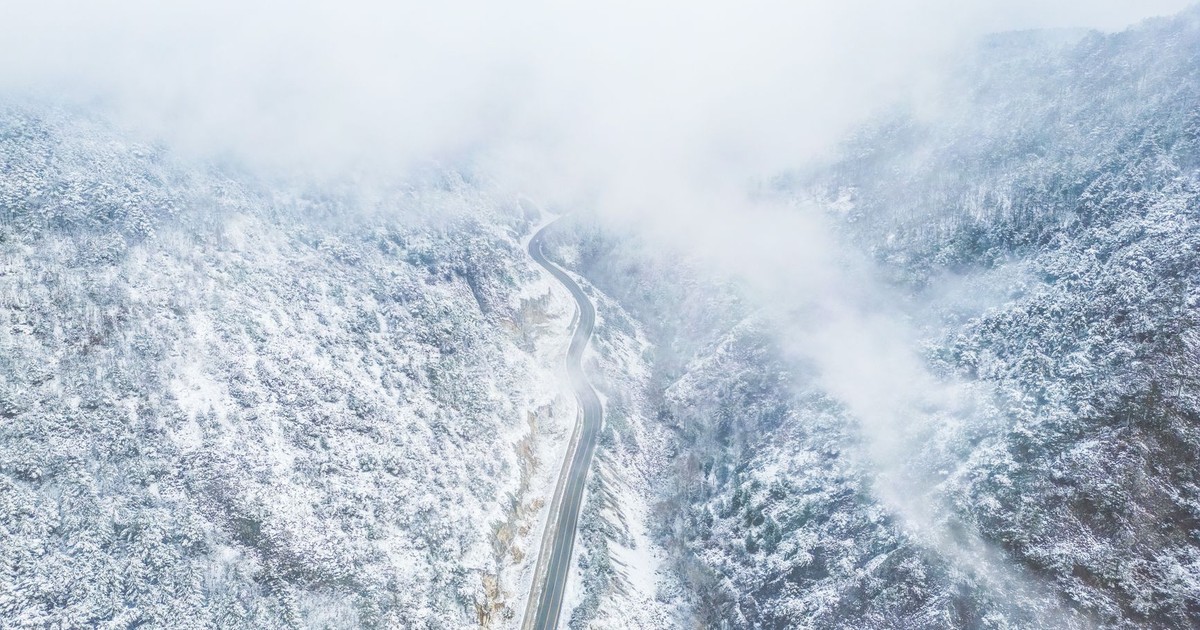
On January 27, 1959, a ten-member group consisting mostly of students from the Ural Polytechnic Institute, led by 23-year-old Igor Dyatlov, set off on a 14-day expedition to Gora Otorten mountain in the northern Soviet Sverdlovsk Oblast. The route was classified Category III, the riskiest designation, with temperatures falling as low as minus 30 degrees Celsius. One member, Yuri Yudin, turned back after falling ill. He never saw his classmates again.
When the rescue team eventually found the group’s tent on the slopes of Kholat Syakhl, translated as “Death Mountain,” it was badly damaged, slashed open from the inside, with nine sets of footprints leading away from it barefoot and in socks. Among the final four bodies discovered months later, when the snow melted, one had a fractured skull, another a twisted neck, two were missing their eyes, and one of those was also missing her tongue. Some of the hikers had suffered chest fractures comparable to injuries sustained in a car crash. Traces of radiation were found on some of their clothing.
Soviet authorities closed the case after three months, concluding a “compelling natural force” had caused the deaths. A Russian federal investigation in 2020 and a subsequent study by researchers from ETH Zurich and EPFL, published in a 2021 study in Communications Earth & Environment, both pointed to a slab avalanche as the most likely cause. But even that theory doesn’t fully explain every detail, including why one hiker was missing her tongue, and the Dyatlov Pass case may never be fully closed.
The Somerton Man (1948)
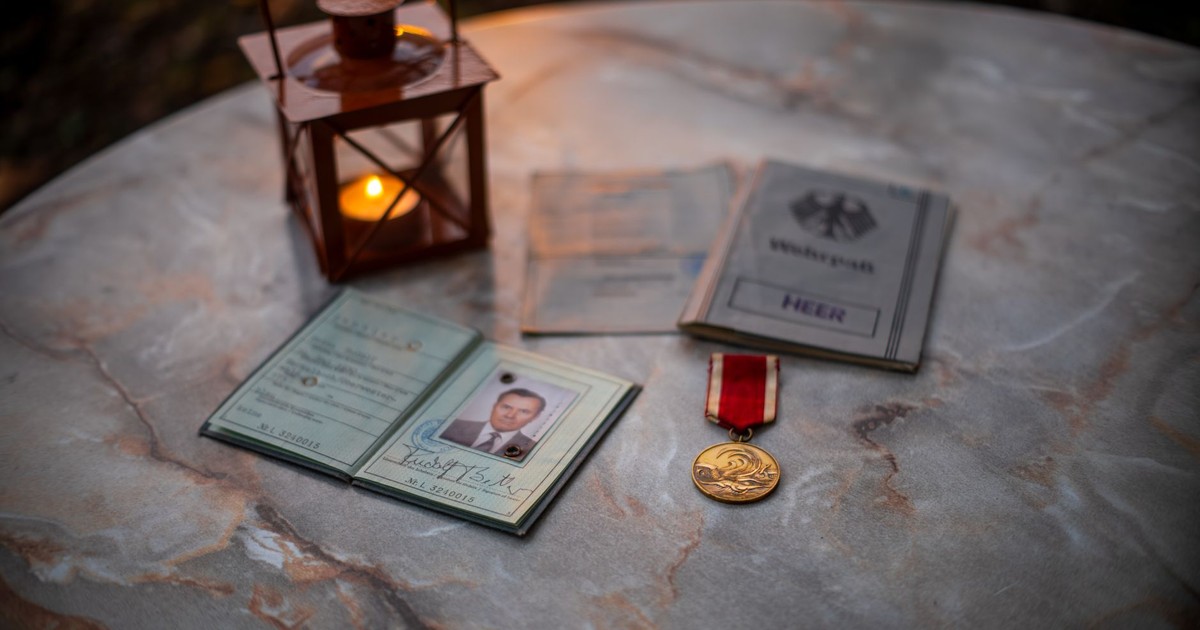
On the morning of December 1, 1948, a well-dressed man was found dead on Somerton Beach in Adelaide, South Australia, carrying no identification, with all the labels in his clothing systematically removed. The only clue was a piece of paper found in a hidden fob pocket with the words Tamám Shud printed on it, Persian for “It is ended.”
The paper was traced to a book of Persian poetry found in a nearby parked car, from which the last page had been torn. Scribbled in the book was the phone number of a local woman who, when questioned, claimed she did not know the man. Also scribbled inside were a few lines of cryptic text no one has ever deciphered. The coroner concluded the man had been poisoned. No one ever came forward to identify him. In 2022, a CNN report detailed how Professor Derek Abbott of the University of Adelaide claimed he had identified the Somerton Man as Carl “Charles” Webb, an electrical engineer born in 1905, based on DNA extracted from hair trapped in a plaster death mask. South Australia Police have not verified the finding, and the cause of death remains unknown.
Elisa Lam (2013)

On January 26, 2013, Elisa Lam, a 21-year-old Canadian college student, checked into the Cecil Hotel in downtown Los Angeles. Early in her stay she was moved from a shared room to a private one due to “odd behavior.” She was last seen alive on January 31 and was reported missing by her parents on February 8.
Weeks later, guests at the hotel complained of weak water pressure and a strange odor. When maintenance workers inspected one of the four 1,000-gallon water tanks on the roof, they discovered her decomposing body. For Lam to have entered the tank alone, she would have needed to reach the hotel roof undetected, climb a 10-foot ladder on the side of the tank, and open a heavy lid. When found, her body was naked, while her clothes were in the tank with her. The roof was supposed to be restricted to hotel employees, accessed via an interior staircase with a locked, alarmed door that was said to be working.
The Los Angeles County coroner’s office initially ruled Lam’s cause of death “undetermined,” then later changed the finding to “accidental due to drowning, with bipolar disorder listed as a significant condition.” The elevator footage released by the LAPD, in which Lam appears to press multiple floor buttons, peer into the hallway, and gesture at something outside the camera’s frame, remains one of the most widely studied pieces of security footage in recent true-crime history. To this day, no one knows exactly how she ended up in that tank.
Marilyn Monroe (1962)

Marilyn Monroe was found dead on August 5, 1962, in her home in Los Angeles, a bottle of sleeping pills beside her bed. Authorities ruled the death a barbiturate overdose and a probable suicide. In a 2012 interview conducted by People magazine, forensic pathologist Cyril Wecht said he would not have signed the case out as a probable suicide — he would have ruled it accidental — and argued that the dual lividity pattern noted in the autopsy developed after authorities transported her body face-up to the coroner’s office, raising questions about the timeline and the handling of the scene.
Reports that Robert F. Kennedy was the last to see Monroe alive, having allegedly visited her the night of her death, also aroused suspicion, and the case was reopened in 1982. Controversy continues to surround her death due to the mishandling of evidence, discrepancies in witness statements, and a lack of clarity in the original investigation. No charges were ever brought. The file was closed without resolution.
Jimmy Hoffa (1975)

James Riddle Hoffa, the Teamsters’ union president from 1957 to 1971, wielded enormous influence and formed shadowy alliances with the Mafia. In the mid-1970s, it was revealed that the Teamsters’ largest pension fund had been robbed of hundreds of millions of dollars. Two weeks later, Hoffa vanished.
He was last seen at a Detroit-area restaurant, the Machus Red Fox, after telling his family he had a meeting with two acquaintances. Despite widespread belief in a Mafia-arranged murder, the case remains unsolved. Both suspects questioned by the FBI, “Tony Jack” Giacalone and “Tony Pro” Provenzano, denied any meeting was planned. Hoffa was declared legally dead in 1982. His body has never been found. The FBI has excavated several sites over the decades, most recently in 2023, each time finding nothing. He has now been missing for over 50 years.
The Zodiac Killer’s Confirmed Victims (1968 – 1969)

The Zodiac Killer confirmed at least five victims in Northern California between 1968 and 1969. Over two years, Zodiac himself claimed responsibility for 37 lives, although law enforcement could confirm only five, and none after 1969. The killer contacted newspapers directly, offering details only the actual perpetrator would have known, and threatening to escalate violence if the letters weren’t published.
What makes these deaths particularly unresolvable is not just the killer’s identity but the deliberate construction of ambiguity around the crimes. Coded ciphers sent to newspapers were only partially solved. The last confirmed cipher, known as the Z340, went uncracked for 51 years until a team of amateur codebreakers and a software developer solved it in December 2020. The identity of the sender has still never been established.
Betsy Aardsma (1969)

On November 28, 1969, a 22-year-old graduate student named Betsy Aardsma was stabbed to death in the stacks of Pattee Library at Penn State University. She was stabbed a single time through the heart with a small-bladed knife. The little bleeding that did occur was masked by her red dress, meaning no one even noticed she had been stabbed until she reached the hospital.
Approximately one minute after she was stabbed, two men told a desk clerk “somebody better help that girl” and left the library. They were never identified. Local investigative journalists and two independent authors have since published testimony and reports strongly indicating that Penn State geology professor Richard Haefner may have been responsible. Haefner was never charged with her murder. He died in 2002. Records pertaining to the case remain sealed under Pennsylvania’s Open Records Act, though Pennsylvania State Police are still actively seeking information.
Gareth Williams (2010)

Gareth Wyn Williams was a Welsh mathematician and junior analyst for GCHQ on secondment to MI6 when he was found dead in suspicious circumstances in Pimlico, London, in August 2010. His naked, decomposing remains were found in the bath of his flat’s en-suite bathroom, inside a red sports bag that was padlocked from the outside. The padlock key lay inside, under Williams’s body. Investigators found no fingerprints, no usable DNA, no sign of struggle, no forced entry, and no evidence the flat had been cleaned to destroy traces.
The inquest found that his death was “unnatural and likely to have been criminally mediated.” A subsequent Metropolitan Police re-investigation concluded it was “probably an accident.” The two official findings directly contradict each other. After a forensic review completed in November 2023, police confirmed no new DNA, no new suspects, and no fresh lines of enquiry. Two senior British police sources confirmed that some of Williams’s work concerned Russia, and that he had been helping the US National Security Agency trace international money-laundering routes used by Moscow-based crime groups. Whether that work cost him his life remains, officially, unknown.
Ricky McCormick (1999)

Ricky McCormick’s murder in St. Charles County, Missouri, remains one of the FBI’s most prominent unsolved cases. McCormick’s body was found dumped in a field in 1999, with two encrypted notes discovered in his trouser pockets. Both the FBI’s own Cryptanalysis and Racketeering Records Unit and outside cryptographers brought in to assist have never been able to decipher the codes. “We are really good at what we do,” FBI analyst Dan Olson said in a public statement, “but we could use some help with this one.”
The notes, written in a cipher no agency has cracked in over two decades, are believed to potentially reveal where McCormick was in the days before his death and possibly identify his killer. No one has been charged. No motive has been established. The only physical evidence in the case is two pages of handwritten symbols that nobody can read.
The Black Dahlia, Elizabeth Short (1947)
On January 15, 1947, the body of 22-year-old Elizabeth Short was found in a vacant lot in Los Angeles. She had been killed elsewhere, the body meticulously cleaned, drained of blood, and cut precisely in half at the waist before being posed at the scene. The surgical precision of the mutilation led investigators to theorize the killer had medical or anatomical training. More than 150 people confessed to the murder in the weeks following its discovery, none credibly. Over 500 suspects were investigated across the following decades. The case has never been solved.
JonBenét Ramsey (1996)

On December 26, 1996, six-year-old JonBenét Ramsey was found strangled in the basement of her family’s Boulder, Colorado home, hours after her mother discovered a ransom note on the staircase. The note demanded $118,000, precisely matching John Ramsey’s annual bonus that year. JonBenét’s parents were investigated and publicly scrutinized for years. A 2008 DNA test identified an unknown male profile on her clothing, one that matched neither parent, and the Boulder DA formally cleared the family. That unidentified DNA has never been matched to anyone. The case remains open.
The Dyatlov-Adjacent Case: Valentina Utochkina (1990, Siberia)
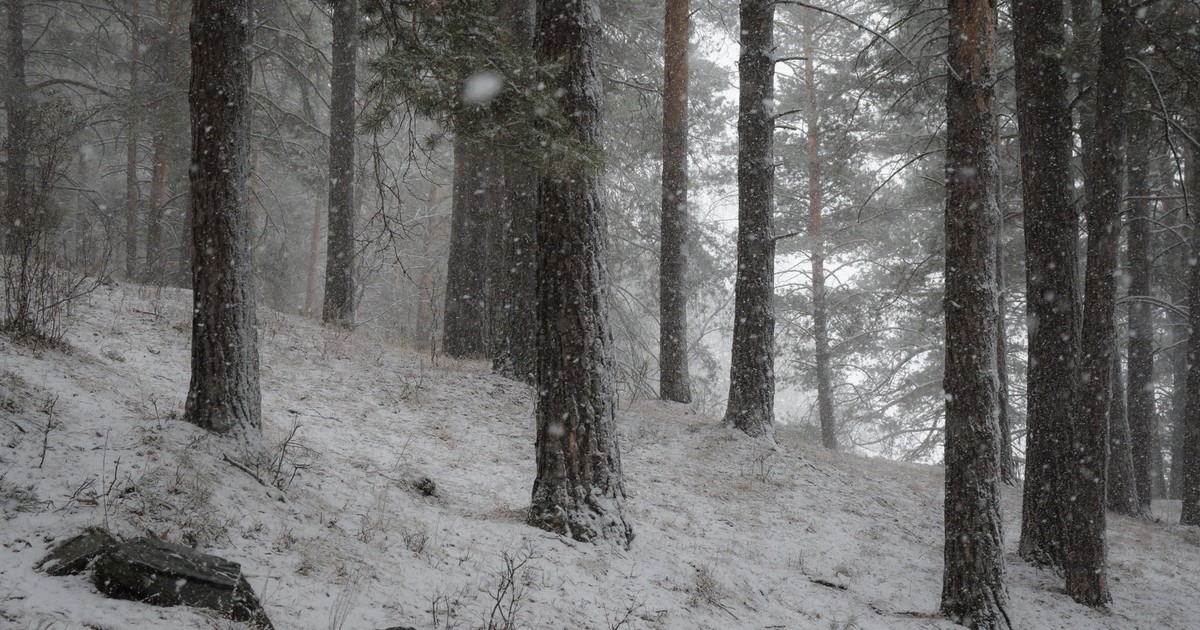
Less globally known but structurally similar to the Dyatlov Pass case, the 1990 death of a group of Russian hikers in the same Ural mountain region has attracted renewed attention from researchers. One hiker, Valentina Utochkina, was found dead with injuries inconsistent with the official explanation of an accident. Like the 1959 case, investigators cited extreme weather as the cause, no criminal investigation was pursued, and families of the deceased were denied access to the autopsy documents for decades. The case has never been independently reviewed.
The Oslo Plaza Woman (1995)
In May 1995, a woman in her mid-twenties checked into the Oslo Plaza Hotel under the name “Jennifer Fairgate.” She provided no credit card. Days later, a security guard knocked on her door to request one, heard a loud noise, and went to get the head of security. When the door was opened, she was found dead with a gunshot wound to the head, a pistol lying on the bed. The gun had no serial number and had been wiped clean of prints. Her luggage contained no identification, no labels on her clothing, and no personal documents of any kind. Interpol distributed her description internationally. No one claimed her. Norwegian police eventually concluded she had shot herself, but have never established who she was, where she came from, or why she was in Oslo. In 2016, Norwegian broadcaster NRK produced a documentary that renewed international interest in the case, generating thousands of tips. None identified her.
D.B. Cooper (1971)

On November 24, 1971, a man using the name Dan Cooper hijacked a Northwest Orient flight from Portland to Seattle, extorted $200,000 in cash, and then parachuted from the rear of the aircraft somewhere over the Pacific Northwest. He was never found. In 1980, a small bundle of deteriorating bills from the ransom was discovered on a riverbank near Vancouver, Washington, but no further trace of Cooper, dead or alive, has ever surfaced. The FBI officially suspended its active investigation in 2016 after 45 years, stating it was redirecting resources to other priorities. The hijacking remains the only unsolved case of air piracy in American aviation history.
Read More: 14 Of The Most Bizarre True Crime Stories
What the Evidence Left Behind
The impulse is to assume that unsolved means merely unfinished, that with enough time, enough technology, enough determined investigators, every mystery resolves. What these thirteen mysterious unsolved deaths suggest is something more uncomfortable: some cases were never going to close, because the evidence that would have closed them was lost, destroyed, withheld, or never collected in the first place.
The Dyatlov Pass hikers died in a location so remote that the first rescue team didn’t arrive until 26 days after the incident, by which point any crime scene had been buried under fresh snowfall. Gareth Williams worked in a world where his employers had a direct institutional interest in minimizing what the public would learn about his death. Betsy Aardsma was stabbed in a room full of people who didn’t realize what had happened until she had stopped breathing. Elisa Lam’s case was hampered partly by the fact that nobody thought to look inside the water tanks when police dogs searched the Cecil Hotel roof.
Some of these patterns are about failure, of institutions, of early forensic work, of witnesses who didn’t come forward. Others point to something harder to resolve: the people most likely to know what happened had every reason to say nothing. The Zodiac Killer stopped communicating in 1974, which means either he died, or he simply decided to stop. D.B. Cooper jumped out of a plane at night over a forested mountain range and may well have died on impact, taking the only answer with him. The Somerton Man arrived on a beach already dying, already stripped of every identifying feature, and left behind nothing but a torn-out page of Persian poetry and a phone number belonging to a woman who claimed not to know him.
What stays with you, across all thirteen cases, isn’t the mystery itself. It’s the specificity of what was left behind. A rolled-up scrap of paper in a hidden pocket. A padlocked bag in a bathtub. Nine pairs of footprints walking away from a tent into minus-thirty-degree darkness. The evidence is all there. The explanation is the thing that isn’t.
Disclaimer: This information is not intended to be a substitute for professional medical advice, diagnosis, or treatment and is for information only. Always seek the advice of your physician or another qualified health provider with any questions about your medical condition and/or current medication. Do not disregard professional medical advice or delay seeking advice or treatment because of something you have read here.
AI Disclaimer: This article was created with the assistance of AI tools and reviewed by a human editor.