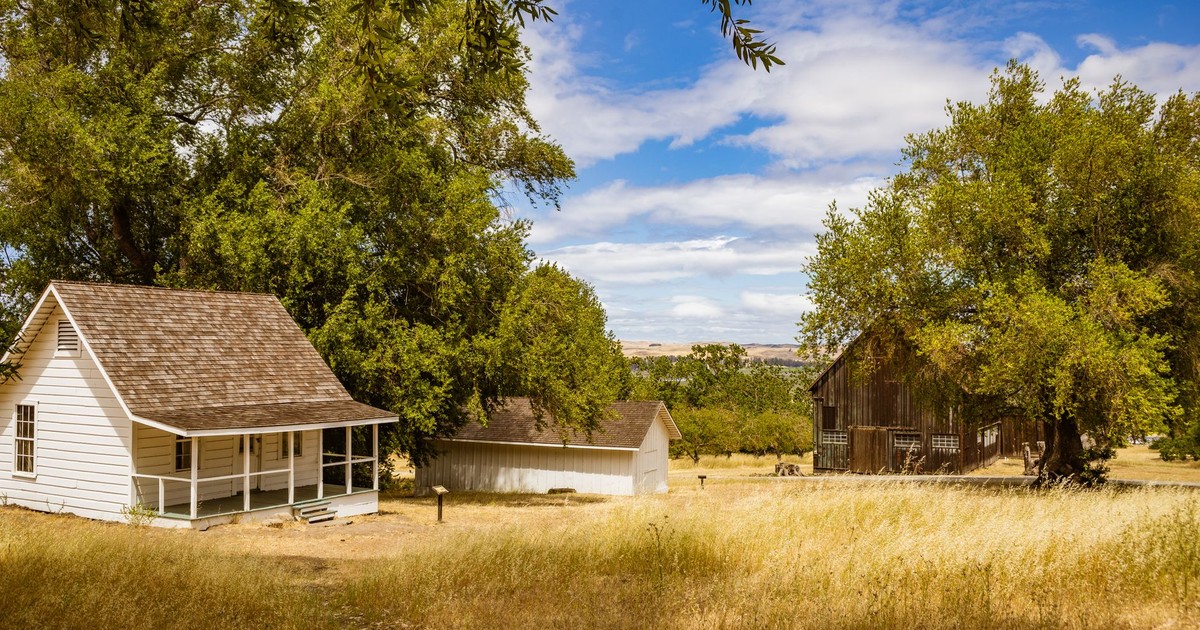

The original NBC series wrapped its nine-season run in 1983, and for 43 years, Michael Landon’s Charles Ingalls had the last word on what life on the prairie looked like. More than four decades after that final episode aired, Laura Ingalls Wilder’s beloved semi-autobiographical novels have been adapted for television once again. Netflix’s version dropped on July 9, 2026. The sets are brighter. The cast is larger. The history is thornier. And the Ingalls family, beloved as they are, now have to share the screen.
The 1974 show was built around a specific gravitational pull: the relationship between Pa and Laura, the moral certainties of Walnut Grove, and the reassuring weekly rhythm of a problem arriving and getting solved inside 60 minutes. Netflix’s Little House on the Prairie adaptation is part family drama, part epic survival tale, and part origin story of the American West.
Closer to Wilder Than to Landon
Showrunner Rebecca Sonnenshine has been clear that the Netflix series is not a reboot of the 1970s classic. Instead, it’s grounded in the book series, with its first season adapting the 1935 novel Little House on the Prairie, which follows the Ingalls’ journey to start a homestead just outside the town of Independence. The NBC show took enormous liberties. It invented characters, compressed timelines, and relocated much of the action to a fictionalized Walnut Grove, Minnesota. Landon’s Charles was more a moral beacon than a historical figure.
The Netflix adaptation is more aligned with the book version. Alison Arngrim, who played Nellie Oleson in the 1974 series, put it clearly: “The television show we made was a beautiful, comforting fairytale, but the books were about real, hard-knocks survival. Netflix isn’t trying to recreate Michael Landon’s magic; they are trying to capture Laura’s reality.”
This return to the source material fundamentally alters the DNA of the narrative. Where Michael Landon envisioned a pastoral utopia built on Judeo-Christian family values, Wilder’s actual text recorded the harrowing vulnerability of a family completely at the mercy of nature. By stripping away the layered filters of 1970s television production—the soft focus lighting, the idealized Hollywood frontier costuming, and the neatly wrapped episodic resolutions—Netflix uncovers a story that feels entirely fresh precisely because it is old. The new series treats Wilder’s text not as a sacred script for childhood nostalgia, but as a complex historical blueprint waiting to be deconstructed.
A Grittier, More Honest Frontier
This shift in focus means viewers should prepare for a version of the frontier that is significantly less sanitized than the 1974 series. While Michael Landon’s Little House frequently leaned into wholesome, episodic moral lessons, the new adaptation embraces the unrelenting and often harrowing stakes of 19th-century homesteading. Disease, extreme weather, and the sheer psychological toll of isolation are treated with modern dramatic weight rather than being neatly resolved in a one-hour runtime.
In the books, the threat of starvation is a quiet, constant baseline, and a single ruined crop is not a minor setback but a life-threatening catastrophe. The Netflix adaptation visualizes this desperation with tactile intensity. The wind sounds louder; the winter looks colder; the mud feels thicker. When malaria hits the family in the early episodes, the gloss is completely stripped away. There is no swelling orchestral music to reassure the audience that everything will be fine by the commercial break. Instead, the camera lingers on the physical toll of the wilderness, capturing the sweat, the delirium, and the terrifying realization that they are miles away from medical help.
Furthermore, the series doesn’t shy away from the complex historical realities of the era. The 1935 novel Little House on the Prairie takes place on occupied Osage land—a historical truth that the 1970s series largely sidestepped or romanticized. Showrunner Rebecca Sonnenshine’s adaptation actively expands the narrative scope to include Indigenous perspectives, offering a layered, multi-faceted look at the American West that reflects contemporary historical understanding rather than mid-century nostalgia.
Confronting the Myth of the Empty West
By addressing the Osage presence directly, the Netflix adaptation rectifies the most significant omission of the 1974 series. In the original TV show, the frontier was frequently framed as an empty, pristine wilderness waiting to be tamed by industrious white settlers. When Indigenous characters did appear, they were often treated as monolithic symbols—either existential threats or noble tragic figures passing through the background of the Ingalls family’s lives.
The 2026 adaptation actively subverts this trope. The narrative explicitly acknowledges that the land Charles Ingalls is staking his claim upon is not empty, but is the ancestral home of the Osage Nation, who are concurrently navigating the pressure of illegal white encroachment and forced government treaties. By introducing prominent Osage characters with their own distinct internal lives, political strategies, and familial bonds, the show shifts from a insular family drama into a sweeping historical tapestry.
This dual-perspective storytelling creates a palpable dramatic tension. The audience is invited to root for the Ingalls family’s survival while simultaneously recognizing that their success is structurally tethered to a system of colonial displacement. Charles Ingalls is no longer just a heroic patriarch building a house with his bare hands; he is an unwitting foot soldier in a complicated geopolitical land grab. This nuance doesn’t make the Ingalls family unlikable, but it does make them human, grounding their story in the messy contradictions of American history.
Reimagining the Ingalls Family Matrix
The shift toward historical realism also extends to how the internal dynamics of the Ingalls family are portrayed. In the 1974 iteration, Caroline “Ma” Ingalls (played by Karen Grassle) was the ultimate matriarchal anchor—patient, endlessly forgiving, and fiercely dedicated to keeping a pristine home in the middle of a dirt-floor cabin. Caroline was the emotional shock absorber for the family’s hardships.
In the Netflix version, Ma is given a far more complex psychological profile. The isolation of the prairie is not something she bears with silent, saintly fortitude; it is a heavy burden that actively wears on her mental health. The show explores the profound loneliness of a woman uprooted from her community, her church, and her extended family, left to raise children in a landscape that feels actively hostile to her civilized sensibilities. Her relationship with Charles is charged with realistic marital friction, born from the immense pressure of his high-stakes gambles on new land.
Similarly, Laura herself is reimagined. While she retains the fierce independence and tomboy spirit that made her a generational icon, she is also allowed to be deeply flawed. She is stubborn, occasionally resentful of the brutal chores demanded of her, and acutely aware of the dangers surrounding them. Her signature bond with her father is still the emotional heart of the series, but it is tested by the realities of Pa’s stubbornness. Charles is no longer a flawless patriarch who always knows the right answer; he is a man driven by a desperate, sometimes reckless desire to provide for his family, making mistakes that have genuine consequences for his wife and daughters.
The Evolution of the Prestige Western
Ultimately, Netflix’s take honors the spirit of Laura Ingalls Wilder’s writing by leaning into the grit required to survive it. It trades the comforting, sun-drenched predictability of Walnut Grove for a vast, unpredictable landscape where survival is never a guarantee. This approach aligns the show with the modern landscape of prestige television, which favors serialized moral ambiguity over the tidy episodic structures of the past.
Audiences in 1974 sought comfort in Little House on the Prairie as an escape from the political turmoil of the Watergate era and the economic anxieties of the decade. They wanted a window into a simpler, more righteous past. The audience of 2026, however, expects historical dramas to interrogate the past rather than idealize it. Viewers are drawn to stories that show the full, unvarnished spectrum of the human experience under extreme pressure.
By leaning into the historical grit, the structural violence of the frontier, and the deep psychological realities of its characters, Netflix has transformed Little House on the Prairie from a nostalgic childhood memory into a gripping, relevant epic. It reminds us that the true story of the American West was never a fairytale—it was a fierce, complicated, and deeply human fight for survival.
Disclaimer: This information is not intended to be a substitute for professional medical advice, diagnosis, or treatment and is for information only. Always seek the advice of your physician or another qualified health provider with any questions about your medical condition and/or current medication. Do not disregard professional medical advice or delay seeking advice or treatment because of something you have read here.
AI Disclaimer: This article was created with the assistance of AI tools and reviewed by a human editor.