

Texas is the second-most populous state in the country, and it sends more of its residents to other states than anywhere else in America. According to a January 2026 Texas Tribune report, Texas supplied the most new residents of any U.S. state to nine other states in 2024, despite having the biggest population growth this decade. That’s not a contradiction – it’s simply what happens when nearly 32 million people live somewhere and some of them decide it’s time for a change.
In 2024, about 483,500 people left Texas for another state, while 556,200 moved in from elsewhere in the U.S. Texas still comes out ahead on net, but the outflow is real and it’s growing. Rising property taxes, brutal summers, strained infrastructure, and shifting job markets are all part of what pushes people out.
Where do they go? The top three destinations account for a significant chunk of departures: California, Florida, and Oklahoma. But the full picture stretches across 14 states, and each one tells a different story about what people want when they finally pack up the truck.
1. Florida

Florida draws Texans in the largest raw numbers. No state income tax, warm weather year-round, and a coastline that Texas, for all its size, simply doesn’t have. For former Texans who want southern culture, a business-friendly environment, and heat – but want to add an ocean to the mix – Florida is the obvious landing spot.
In a recent exchange of residents, about 21,221 Texas households moved to Florida, and those departing Texans earned an average adjusted gross income of $114,175, notably higher than the Floridians heading the other direction. The Texans moving to Florida aren’t fleeing financial hardship. They’re making a deliberate lifestyle upgrade, and they’re arriving with money to spend.
The Tampa Bay area, Orlando, and the Space Coast around Melbourne have all absorbed significant numbers of former Texans drawn by tech job growth and relatively lower housing costs compared to South Florida. Florida’s own housing market has tightened considerably, and homeowners insurance costs in coastal areas have reached the point where some transplants are discovering the tradeoffs faster than they expected.
2. California

The direction of this one surprises people. Texas-to-California migration runs counter to the dominant narrative of the last decade, when the story was always about Californians flooding into Texas. But the data is clear. According to TAMU PERC’s analysis of American Community Survey data, California and Florida emerge as the leading destinations for departing Texans, with California drawing 42,279 of them.
Who makes this move? Largely, people who came to Texas from California in the first place and eventually decided the trade wasn’t worth it – or young professionals in creative fields, tech, and entertainment who find that Texas doesn’t have the industry infrastructure they need. Los Angeles and the Bay Area continue to concentrate certain industries in ways that no Texas city has yet matched.
California’s cost of living is genuinely punishing, and the state’s income tax tops out at 13.3%. But for high earners in the right industry, those numbers can be offset by compensation packages that simply don’t exist at the same scale elsewhere. The Texans moving to California tend to know exactly what they’re signing up for financially, and they’ve decided the career trajectory is worth it.
3. Oklahoma

Oklahoma ranks as the third most popular destination for people leaving the Lone Star State. It’s right next door, it’s significantly cheaper, and for many Texans – particularly those in the northern part of the state around Dallas and the Red River corridor – it barely feels like leaving.
Oklahoma has one of the most affordable costs of living in the country, with median home prices around $175,000 in many markets. For a family that bought a house in suburban Dallas five years ago and watched the property tax bill triple, that kind of affordability is not abstract. Oklahoma City and Tulsa both offer genuine urban amenities at a fraction of what those same things cost in Austin or Houston.
Oklahoma shares a lot of DNA with Texas: the food, the landscape, the general political and social atmosphere. For families making a practical financial decision rather than a lifestyle reinvention, it’s the path of least resistance.
4. Colorado

Colorado draws Texans who are specifically done with the heat. Along with Georgia, Illinois, Washington, Louisiana, Arizona, and Arkansas, Colorado attracts tens of thousands of former Texans per year. Denver, Colorado Springs, and Fort Collins have all built strong tech and healthcare job markets over the past decade.
Colorado does have a 4.4% flat income tax, unlike Texas’s zero, but it compensates with housing that, outside of Denver’s most desirable neighborhoods, can still undercut Austin and Dallas prices. After years of 100-degree summers with no end in sight, moving somewhere that gets genuine winters and fall foliage matters.
Remote work has made this move more viable than it used to be. A Texan who works for a Dallas company but can log in from anywhere is free to land in Boulder without taking a pay cut. That freedom has driven a substantial portion of Colorado’s inbound migration from Texas since 2020.
5. Georgia

Atlanta now hosts the headquarters of companies like Delta, Coca-Cola, and CNN, and the broader metro area has become a major hub for film and television production, financial services, and logistics. For Texans in those industries – or those chasing the lifestyle of a major Southern city with genuine culture and diversity – Atlanta has the receipts.
The Southeast broadly has become a dominant destination cluster for Americans in motion, and Georgia sits near its center. Rising real estate and insurance costs in Florida have pushed some movers to look further up the coast toward cities like Atlanta and Charlotte.
Georgia also carries a meaningful tax advantage for retirees. Residents 65 and older can exclude up to $65,000 per person in retirement income from state taxes; those ages 62 to 64 qualify for a $35,000 exclusion. For older Texans who’ve built up significant retirement savings and want to stretch those funds further, that’s a real financial reason to make the move.
6. Tennessee
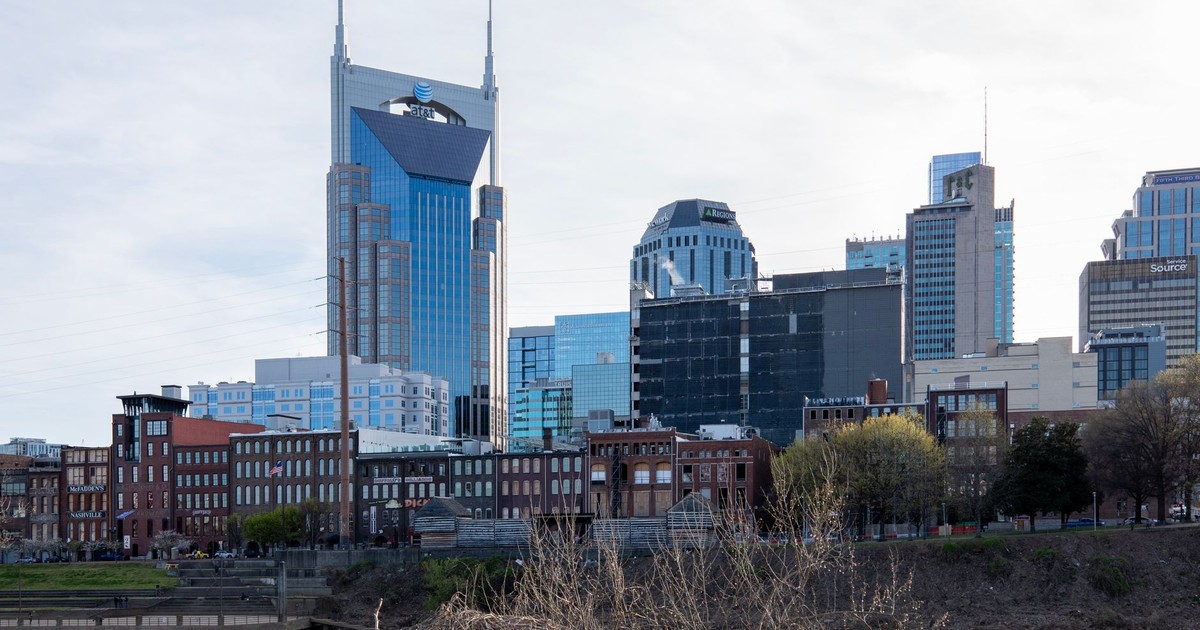
Tennessee has been one of the hottest migration destinations in the entire country for five consecutive years, and Texans are a significant part of that story. According to the North American Van Lines 2025 report, Tennessee, North Carolina, and South Carolina have consistently been among the top inbound states since 2020. Nashville in particular has developed a gravitational pull that goes well beyond its reputation as a music city.
Florida, Tennessee, and Texas draw the most domestic migration of the no-income-tax states specifically because they combine that tax advantage with large metropolitan job markets and more temperate climates than the northern no-income-tax states. Tennessee’s flat 0% income tax on earned wages (the Hall Tax on investment income was fully repealed as of January 1, 2021) is a draw for high earners, and the healthcare and tech job markets around Nashville and the Knoxville corridor have expanded rapidly.
The cost of living is lower than Texas in most categories, and the Smoky Mountains offer a natural beauty that is genuinely different from anything the Lone Star State can provide.
7. North Carolina

The Research Triangle – Raleigh, Durham, and Chapel Hill – has developed into a genuine tech and biomedical hub, home to major operations from Apple, Google, and dozens of pharmaceutical companies. Charlotte has built one of the strongest banking sectors outside of New York.
Former vacation towns have seen an influx of full-time residents driven by remote working, while cities like Charlotte appeal strongly to people in tech, finance, and healthcare. The cost of living is lower than Texas across most of the state, housing remains more affordable than comparable Texas metros, and the Atlantic coastline is close enough for regular weekend trips.
8. South Carolina

Myrtle Beach has attracted an enormous wave of full-time residents in recent years, many of whom started as vacationers and decided to stay. The low country around Beaufort, Bluffton, and Hilton Head draws retirees at a remarkable rate, offering coastal living, excellent golf, and a pace of life that Texas’s largest cities have made increasingly difficult to find.
In 2023, the state welcomed over 72,000 net newcomers, and while it remains a favorite for retirees, South Carolina is increasingly attracting younger generations, with about 30% of new residents being Gen Zers drawn by a strong job market.
For Texans in that younger demographic – those who came to Austin or Houston for the tech boom but are now priced out of homeownership – South Carolina’s housing market offers a more realistic path to owning something. The state’s income tax has been on a legislative trajectory toward reduction, which adds to its financial appeal for high earners.
9. Arizona

Arizona feels familiar to most Texans: it’s hot, it’s expansive, it has a similar spirit of outdoor living and personal freedom, and it doesn’t carry state income tax at the rates that coastal states do. The difference is the landscape – trading the Hill Country for red rock canyons – and the Phoenix metro’s particular brand of Sun Belt growth, which has been ferocious.
The 2024 Census Bureau state-to-state migration flows confirm that Texas was the top source of new residents for Arkansas, California, Colorado, Illinois, Louisiana, Mississippi, New Mexico, and Oklahoma – and Arizona draws significant Texan outflow as well, as part of the broader Sun Belt reshuffling. Scottsdale, Chandler, and Gilbert have all developed into affluent suburban areas with strong school systems that appeal to Texas families making a deliberate choice to trade one warm-weather state for another.
Tucson draws a different crowd: retirees, University of Arizona employees, and outdoor enthusiasts who want desert hiking and cooler temperatures at elevation. The cost of living in most of Arizona runs meaningfully below the Phoenix metro’s pricier suburbs, and remote workers who can live anywhere have found Sedona and Flagstaff increasingly attractive for their natural environments.
10. Illinois

Illinois is a high-tax, often-struggling state whose largest city has been losing population for years. And yet Texans move there in real numbers. Texas was, in fact, the top source of new residents for Illinois according to the 2024 Census migration flows. Chicago is one of the four or five genuinely world-class cities in the United States, and nothing in Texas quite replicates what it offers.
Chicago’s architecture, its food scene, its cultural institutions, its public transit system, its proximity to Lake Michigan – these things attract Texans who have decided that city living at the highest level is worth the trade-offs in state tax burden. A Chicago summer is one of the best urban experiences in America. The city’s financial services, legal, and healthcare sectors offer career ladders that simply don’t exist at the same scale in Dallas or Houston for certain specializations.
11. Washington State
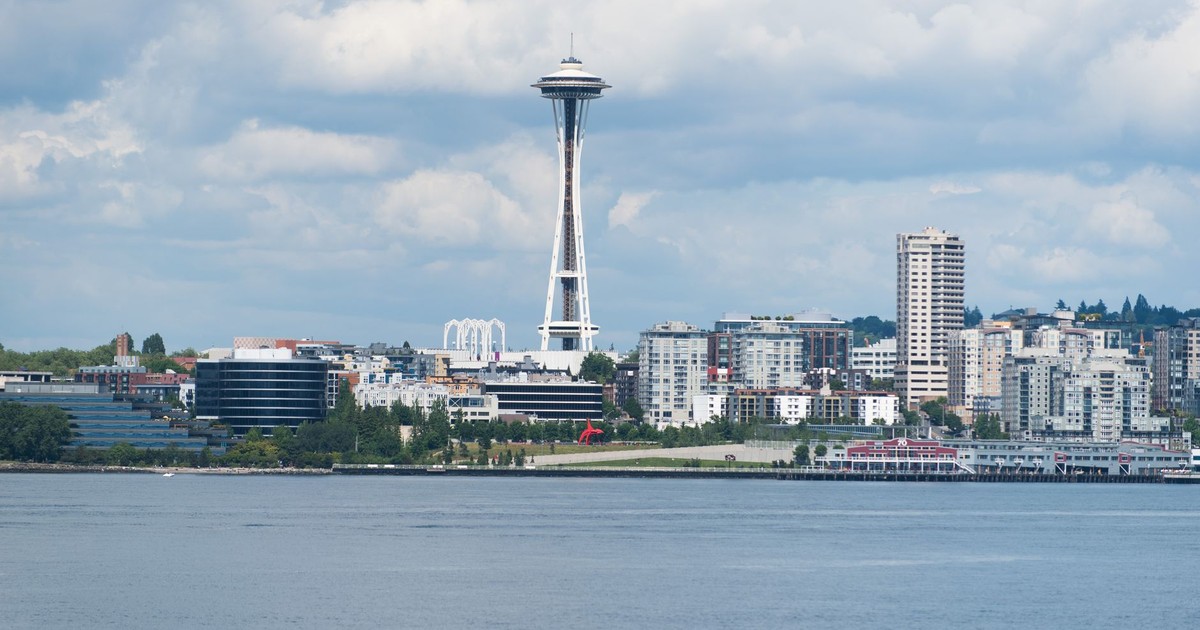
Seattle and its surrounding Puget Sound metro draw Texans primarily through the tech industry. Amazon, Microsoft, Boeing, and a dense ecosystem of supporting companies create a job market that, for software engineers, data scientists, and aerospace professionals, is hard to replicate elsewhere. Washington State also has no state income tax, which softens the blow of its considerably higher housing costs relative to most Texas cities.
The Pacific Northwest lifestyle – surrounded by mountains, forests, and water – represents one of the sharpest quality-of-life pivots available from Texas. Texans who move to Seattle or Bellevue are typically making a conscious choice to trade heat and sprawl for cool gray skies and outdoor access.
12. Louisiana

Louisiana is Texas’s next-door neighbor to the east, and migration between the two states has always run heavily in both directions. Texas was the top domestic source of new residents for Louisiana in 2024 according to Census migration flows. The Texans heading there tend to cluster around New Orleans and the Baton Rouge corridor, drawn by culture, food, and cost.
New Orleans is one of the most culturally distinctive cities in the entire country – its music, its cuisine, its architecture, and its annual calendar of events represent something no Texas city attempts to replicate. For Texans in creative fields, hospitality, or academia (Tulane, Loyola, and LSU all have strong programs), New Orleans offers a lifestyle that can feel like a genuine revelation after years in suburban Texas.
Housing in New Orleans proper remains relatively affordable by the standards of other major cultural cities, and the proximity to Texas makes family ties easy to maintain. The Gulf Coast lifestyle, with fishing, boating, and fresh seafood as year-round activities rather than seasonal ones, also appeals to a specific type of former Texan who wanted more water access than the state’s landlocked majority provides.
13. Virginia

Virginia draws Texans in government, defense, consulting, and technology – the specific industries concentrated in the Northern Virginia corridor around Arlington, Alexandria, and Tysons Corner. The federal government and its contractor ecosystem represent the largest employer cluster in the state, and for Texans with security clearances, defense backgrounds, or careers in federal consulting, Virginia is often less a choice than a career requirement.
Virginia Beach ranks among the top five retirement cities for 2026, combining coastal living, quality healthcare, low crime, and tax-friendly policies, with a well-developed senior services infrastructure. The state’s combination of natural beauty – the Appalachian Trail runs through its western edge, and the Atlantic coast is accessible from the east – with serious economic infrastructure makes it one of the more complete options for Texans making a career-driven move.
Virginia also sits within easy reach of Washington, D.C., which means access to world-class museums, cultural institutions, and international restaurants that are a genuine step up from most of what Texas offers outside its largest cities.
14. Arkansas

According to the 2024 Census migration data, Texas was the top domestic source of new residents for Arkansas – a fact that might surprise people who don’t think of the two states as natural migration partners.
Arkansas has one of the lowest costs of living in the country, and that single fact explains a substantial portion of the Texan inflow. Housing prices in Fayetteville, Bentonville, and Rogers – the fast-growing northwest corner of the state anchored by the Walmart headquarters and its vast supplier and tech ecosystem – have risen, but they remain dramatically lower than comparable Texas markets.
The Ozarks offer outdoor scenery that genuinely competes with anything in the southern United States, and Fayetteville’s college-town energy, fed by the University of Arkansas, gives the northwest corner of the state a vibrancy that outsiders consistently underestimate. For Texans making a financially motivated move who don’t want to sacrifice quality of life entirely, this corner of Arkansas has become an increasingly serious answer.
Read More: These 10 American Cities Have Special Perks for Retirees Who Move There
The Real Pattern

Almost none of these 14 destinations represent a drop in quality of life for the Texans who land there. They represent a trade of one set of advantages for another. The Texans moving to California want career scale. The ones going to Oklahoma want financial breathing room. The ones heading to Tennessee or North Carolina want their money to work harder without giving up Southern culture. The ones bound for Chicago want the city that Texas can’t be.
Texas sent more residents to other states than any other state in the country in 2024, and that’s partly just a function of its size. With nearly 32 million people, the raw volume of departures is going to be large regardless of the rate. But the pattern also reflects something real about what Texas has become. The state that once attracted people with affordable land and no income tax has, in its largest metros, become genuinely expensive.
The Texans packing up aren’t giving up on a good life. Most of them are chasing a different version of one – and the data suggests they’re finding it.
AI Disclaimer: This article was created with the assistance of AI tools and reviewed by a human editor.