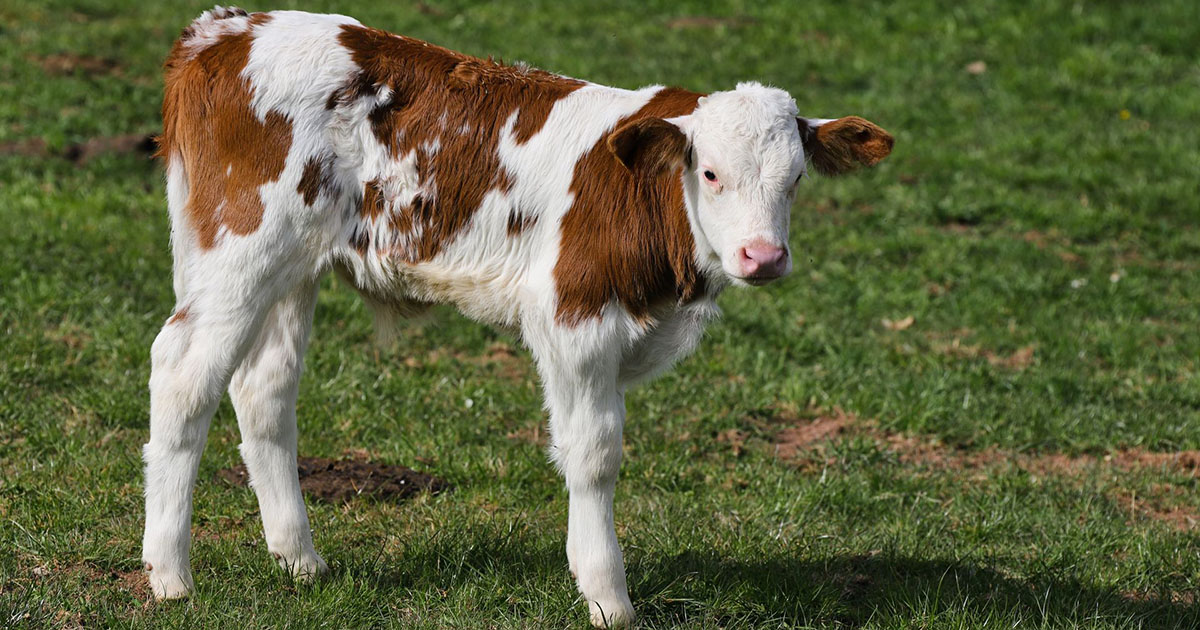

The most talked-about moment at Trump’s Great American Trump state fair this past week wasn’t a fireworks display or a rousing speech. It was a cow. A fifteen-year-old girl named Piper Stolipher brought her calf to the National Mall and named it Melania, explaining to reporters that she and her classmates came up with the name while seeking patriotic themes for the nation’s 250th anniversary, saying, “We thought Melania would be a good idea because it’s the first lady’s name, and the hair colors kind of match.” The internet, predictably, lost its mind.
But the cow was almost a footnote compared to everything else that went wrong. An event that promised a national celebration delivered something considerably more complicated, and considerably emptier, than anyone had envisioned.
The 16-day event, which opened Wednesday with remarks from Trump, is part of the nation’s yearlong celebration of America’s 250th anniversary. Organizers promoted the fair as a patriotic showcase featuring all 50 states, family attractions, live entertainment, and exhibits celebrating the country’s history and culture. The pitch was genuinely ambitious. The reality, according to photographs, reporters, and even some of Trump’s own supporters who made the trip to Washington, was something else entirely.
What the Fair Actually Looks Like
The fairgrounds include just a few main attractions, like a 110-foot Ferris wheel and a plywood “Triumph Arch” modeled after a monument Trump has proposed near Arlington National Cemetery. Visitors expecting a traditional state fair will find few familiar staples, as there are no roller coasters, midway games, or carnival rides, and no classic foods like funnel cakes or corn dogs.
The centerpiece of the fair is the booths where each state gets to showcase its industries, traditions, and hometown heroes. Visitors can salsa dance in Puerto Rico, milk a cow in Michigan, walk through an orange-scented citrus grove in Florida, practice their lasso skills in Wyoming, pick up Mardi Gras beads in Louisiana, send a postcard from West Virginia, and peruse a Waffle House menu in Georgia. On paper, that sounds charming. In practice, some booths feature only the requisite poster board with a state’s name and some illustrated state symbols, and one or two empty chairs.
The state fair quickly faced problems, including power outages and melting ice cream. The 110-foot Ferris wheel shut down for a couple of hours due to lack of power. The following day, workers in the food hall had their entire ice cream shipment melt due to ongoing electrical problems. A vendor at one of the water stations told The Washington Post that the water was “room temperature, just so you know. There’s no ice yet.”
Photos circulating throughout the weekend appeared to show large stretches of the fairgrounds sitting mostly empty. In one of the most striking images, captured Saturday by the Associated Press, musician Jason Hershey is seen performing at the David’s Tent Christian worship space in front of rows of empty seats, with seemingly only two people in attendance. Another image shows just a small group of visitors inside a large tent examining an automotive exhibit.
The Attendance Dispute
Trump, true to form, saw things differently. On Truth Social, he wrote: “The Crowd was incredible last night, packed to the brim – At least 45,000 people were there, with a huge Television and online audience.”
NBC News disputed the president’s attendance estimate, reporting that roughly half of the crowd of more than 1,000 wore Trump’s slogans or likeness on their clothes. For them, America’s 250th birthday was secondary to an opportunity to see the president.
Attendance at Trump’s “Great American State Fair” has become a political flash point. Political commentator Harry Sisson reshared a photo posted by White House spokesperson Karoline Leavitt showing her standing in front of a largely empty lawn, writing: “Karoline Leavitt just accidentally proved how empty Trump’s state fair is. You can’t make this stuff up.”
Disputes over attendance have followed Trump throughout his political career, with the president frequently pointing to crowd sizes as evidence of his popularity while critics have challenged those claims. The issue first became a defining controversy of his presidency after his 2017 inauguration, when then-White House press secretary Sean Spicer said it had drawn “the largest audience ever to witness an inauguration,” a claim widely disputed using transit data and aerial imagery.
Actor Dean Cain, defending the fair on Fox News, insisted there were thousands of people there and called anyone questioning the numbers “anti-American.” Transportation Secretary Sean Duffy, in his opening speech, had already set the tone by saying the military bands were “way better than those libtards that canceled on us,” before declaring Trump the greatest U.S. president since George Washington. Cain had posted a photo showing “the view from atop the Ferris wheel at the Great American State Fair.” The photo looks down over the National Mall toward the Washington Monument, showing the fairgrounds lined with white exhibition tents and scattered groups of people walking or standing across a large central lawn, with no obvious crowding visible from the vantage point.
How It Fell Apart Before It Even Opened
The attendance drama is really the second act of a story that started falling apart weeks before the first hot dog was served. Most of the artists pulled out, saying they’d felt misled by organizers. They thought they were performing at a nonpartisan celebration of the nation’s birthday and had not been informed that Freedom 250 was an organization closely tied to Donald Trump.
Six of the nine originally announced musical acts pulled out of the Great American State Fair. Several performers, including Bret Michaels and Martina McBride, claimed the event was not as nonpartisan as they were initially led to believe. Young MC, Morris Day & The Time, and The Commodores also withdrew shortly after being announced.
Bret Michaels, despite being notably associated with Trump, pulled out citing the event’s divisiveness and his growing safety concerns. “When this opportunity was originally presented to my team,” Michaels wrote on Instagram, “it was described as a celebration of our country through music.”
Trump’s response to the performers walking out was, characteristically, a counterpunch. After the musicians pulled out, he declared a new slate of performers and a “Rally to end all Rallies!” on Truth Social, writing: “We don’t want singers with no talent, but big fees to put you to sleep, we’ve told them all to stay home.” The replacement lineup leaned heavily on perennial Trump favorites Lee Greenwood and Christopher Macchio.
The opening concert was ultimately replaced with a more rally-style event headlined by President Trump, with music from the United States Marine Band. During the opening, Transportation Secretary Sean Duffy began his speech by saying, “Round of applause for our military band and singers, way better than those libtards that canceled on us.”
The States That Said No
The performer walk-outs were embarrassing enough. The state-level boycotts added a different kind of sting. Ten states did not officially participate, with some citing concerns over costs and others expressing concerns over the fair’s ties to Trump.
Freedom 250 was created through an executive order, in what critics see as Trump’s attempt to bypass a decade-old nonpartisan commission that Congress had created for that same purpose. That original commission, America250, had spent years planning the anniversary celebrations before the Trump administration launched its own competing vision.
Some states estimated their participation costs at $100,000, though others were much higher. Sarah Hansen, director of the Maine Semiquincentennial Commission, told NPR that its cost estimates were “half a million dollars or more,” which she said was not feasible for the state, “given the federal government’s refusal to provide any funding.”
Oregon’s governor’s office was more direct. A spokesperson told CNN that the state declined the invitation “due to both the cost of participating in the Fair and growing concerns that the event in Washington D.C. is shaping up to be a more partisan affair than originally presented.”
North Carolina’s booth gained national attention on Friday after an apparently “unapproved image” depicting the Confederate flag was put on display. “A display of the Confederate flag was removed from North Carolina’s booth after Gov. Josh Stein condemned the vendor for putting it up.” “On Friday, we became aware of an unapproved image in a video displayed inside the North Carolina Pavilion,” a spokesperson for the booth said in a statement. “As soon as we were made aware, we immediately removed the video and began reviewing how it occurred.”
The Cow Named Melania
Back to Piper Stolipher and her calf. The Future Farmers of America exhibit was, genuinely, one of the few moments of the Trump state fair that cut through the noise with something approaching warmth. A fifteen-year-old girl, her West Virginia calf, and a name chosen because the hair colors matched. The centerpiece Ferris wheel, which was supposed to offer free rides with views of the Mall, operated only “intermittently due to a faulty generator,” with workers acknowledging the ride’s unreliability as frustrated fairgoers waited in line. The cow, at least, showed up.
An event designed as a grand statement of national unity, celebrating 250 years of the republic, became most memorable for an impromptu bovine tribute to the First Lady. Several states declined to participate altogether, citing taxpayer costs, sponsorship challenges, or concerns that the supposedly nonpartisan celebration had taken on an overtly political tone. The ones that did show up often sent skeleton crews, posters, and empty chairs.
“I feel like this is kind of more of a reflection of how divided we are,” said Josh White, a high school history teacher visiting from Vermont. He was at the fair. He paid attention. And he said what most people were thinking, in one sentence.
Read More: Is Donald Trump Is the Most Corrupt President in US History?
What’s Left to Come
The Great American State Fair will run through July 10, and Trump has promised to speak again on July 4 as part of what Freedom 250 is billing as a record-breaking fireworks spectacular. About 851,000 fireworks are planned for the July 4 show, a number that would eclipse what is usually the biggest annual July 4 show in the U.S. The spectacle, at least on that front, is real.
But the fairgrounds story is already written. An event that could have been a genuine, once-in-a-generation national moment ran into the same fault line that splits almost everything political right now: the moment it was branded, half the country stepped back. Performers didn’t want their names on it. States didn’t want their budgets attached to it. Attendees who did show up, including longtime Trump supporters, told reporters they’d expected something more.
Charles DeJesus, a three-time Trump voter from Pennsylvania, had been planning to attend the fair since first hearing about it six months ago. Every account of his visit suggests what he found wasn’t quite what he’d imagined. From 45,000 down to about 1,000, from a national celebration to a partisan rally with empty seats and melted ice cream – the numbers tell the story plainly enough without anyone needing to editorialize about them.
The cow named Melania, shipped in from West Virginia, looked fine throughout.
AI Disclaimer: This article was created with the assistance of AI tools and reviewed by a human editor.