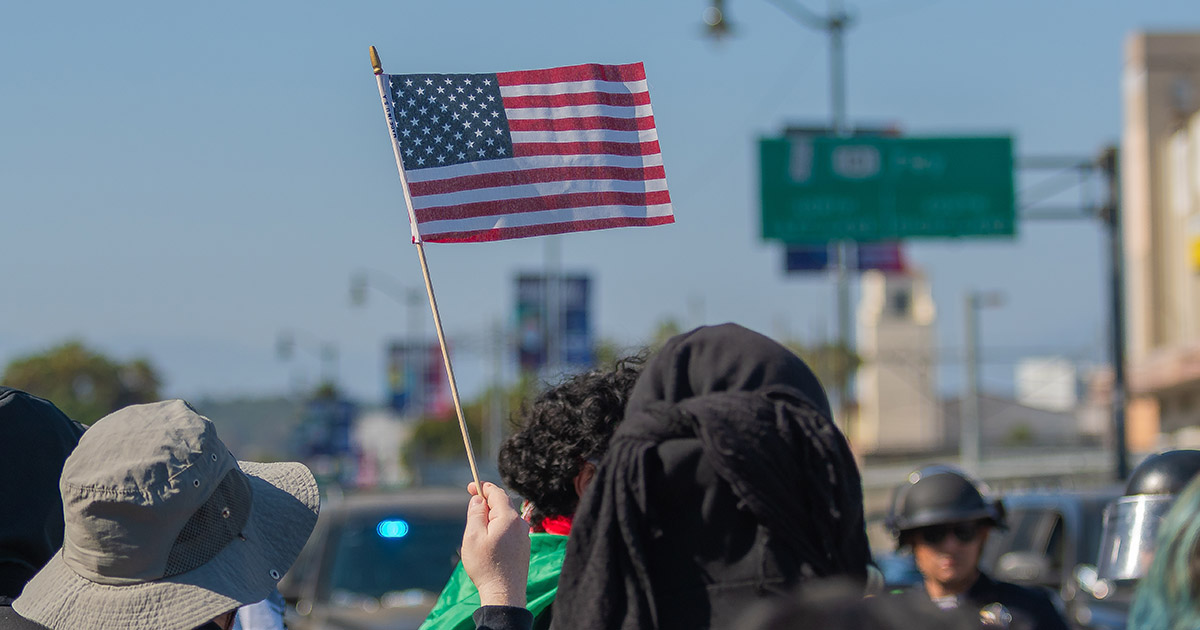

The ruling on June 25, 2026 did not arrive with much legal drama, at least not on paper. The question the Supreme Court agreed to answer was, in the majority’s framing, almost mundane: does a person standing on the Mexican side of the U.S. border count as someone who has “arrived in” the United States? The answer, delivered 6-3 by the court’s conservative majority, was no. That single syllable rewrote decades of how America’s asylum promise actually functions, and the consequences will be felt by people who never read a Supreme Court opinion in their lives.
The case, Mullin v. Al Otro Lado, had been working its way through the courts since 2017, when a binational legal aid organization called Al Otro Lado and a group of asylum seekers filed suit challenging a border practice known as “metering.” The policy is simple in execution and sweeping in effect: border agents physically block people from stepping onto U.S. soil at official ports of entry, sending them back to wait in Mexico. No foot on American ground means no legal right to apply for asylum. No application means no screening. Thousands were denied the right to seek asylum, forcing them to languish in hazardous conditions in Mexico or return to the peril they had fled.
June 25 delivered a second extraordinary moment beyond the ruling itself. Justice Sonia Sotomayor spent 10 minutes reading aloud from her 35-page dissent, a step reserved for cases where a justice feels the majority has done something genuinely wrong. When she finished, Justice Samuel Alito, who had written the majority opinion, responded from the bench, an almost unprecedented move. Alito suggested that Sotomayor had blindsided him with the oral dissent and let his frustration show. The exchange gave the public a rare, unfiltered view of a court that is clearly, and deeply, divided.
What “Metering” Actually Means
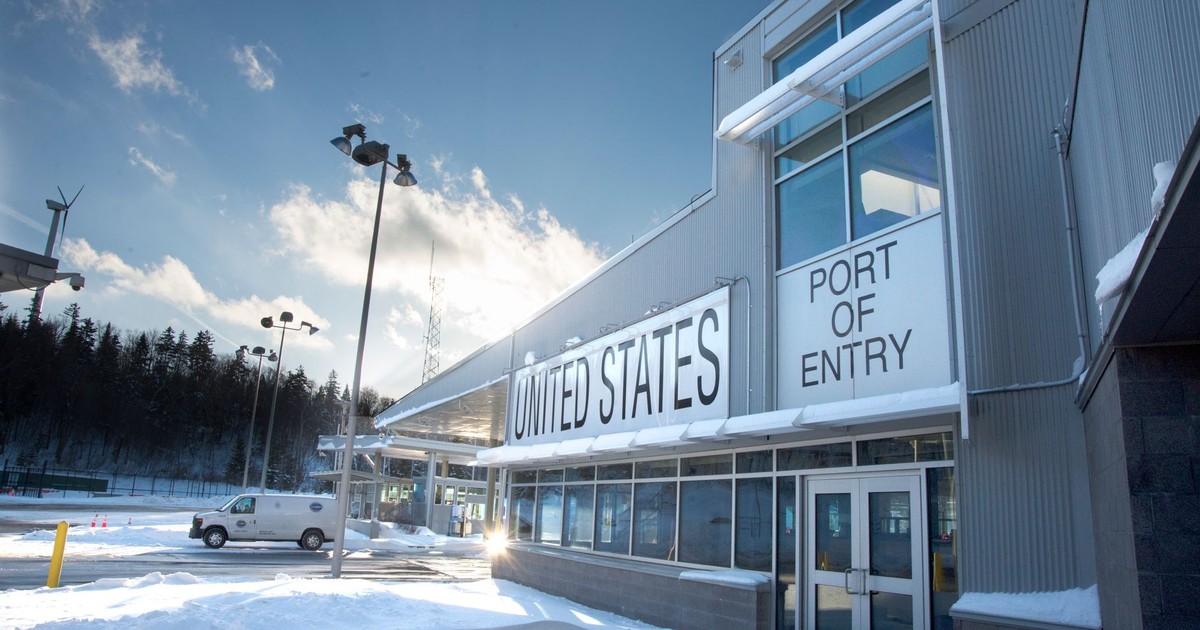
Asylum is a form of legal protection available to people fleeing persecution in their home countries if they meet certain criteria. Under U.S. law, an asylum seeker who “arrives in” the U.S. is entitled to apply for asylum and generally cannot be removed from the country until their asylum application is processed. That right to apply has been a cornerstone of both domestic immigration law and America’s post-World War II commitments under international refugee law.
Metering exploits the gap between arriving at the border and arriving in the country. The practice was first implemented by the Obama administration in 2016 in response to a surge of migrant arrivals at a single port of entry in southern California. It was then used during Trump’s first term to limit the number of asylum seekers at the U.S.-Mexico border, but was rescinded by President Biden in November 2021. The second Trump administration, rather than simply reinstating the policy through executive action, wanted something more durable: a Supreme Court ruling that the policy never violated the law in the first place.
The Trump administration contended that the lower court’s ruling “deprives the Executive Branch of a critical tool for addressing border surges and preventing overcrowding at ports of entry.” That argument won. In the majority opinion, Justice Samuel Alito pointed to the provision of the Immigration and Nationality Act that says a foreigner who “arrives in the United States” may apply for asylum. “The wisdom of the policy of metering alien arrivals at the southern border is not before us,” Alito wrote. “We decide only that an alien standing in Mexico does not ‘arrive in the United States’.” The ruling reverses a lower court’s decision that had found the practice illegal.
The Trump administration now holds a standing legal authority to operate metering whenever it chooses. The policy is not currently reinstated, though the administration has indicated it wants the option available should border conditions worsen, and the ruling gives it the legal authority to restart it at will.
The Dissent That Stopped the Courtroom
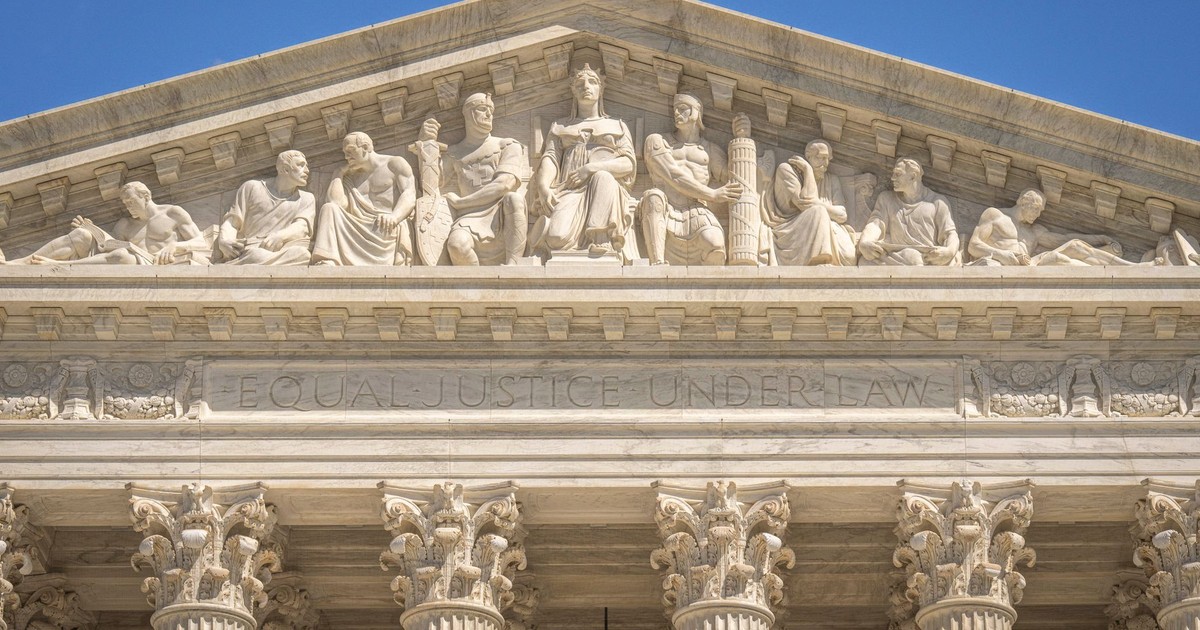
Justice Sotomayor’s dissent, joined by Justices Kagan and Jackson, declared that the court’s decision “blesses the Executive Branch’s decision to slam the door shut on all who are fleeing persecution, despite the detailed inspection and asylum system that Congress enacted and commands.”
Her dissent drew on history to make the case. She invoked the MS St. Louis, the ship that carried nearly 1,000 Jewish refugees from Nazi Germany in 1939 but was turned away by Cuba, Miami, and Canada before returning to Europe, where 250 passengers died. U.S. asylum protections, she argued, arose after World War II precisely to prevent that kind of turning away from ever happening at America’s door again.
Sotomayor argued that the majority’s “illogical interpretation is driven almost entirely by a fixation on a single word: ‘in,'” and that it failed to consider the “statutory context and history” of how the word is used. Her warnings about human consequences were pointed. She warned that “more people will be forced to walk along the US-Mexico border in dangerous conditions, trying to find a port that will inspect them,” and that more people would attempt to cross illegally, “and some will make it while others will not.” She also warned that an administration could now insulate itself from asylum claims simply by blocking access to U.S. soil.
Alito’s unscripted bench response defended the decision and noted that metering had been used as an operational tool under both Democratic and Republican administrations. That point is accurate. But critics argue it sidesteps whether the policy was ever lawful, which is precisely what the lower courts found, twice, before the Supreme Court reversed them.
The Second Ruling: TPS and the 700,000 Who May Be Next
The asylum ruling did not arrive alone. On June 25, 2026, the Supreme Court issued two 6-3 immigration rulings: one on the asylum turnback policy, and one on Temporary Protected Status.
The TPS program, in place since 1990, provides humanitarian relief to people from countries reeling from war, natural disasters, or other catastrophes. Recipients have legal status in the U.S. and can apply for work authorization for up to 18 months, subject to extensions. In the second case, Mullin v. Doe, the court overturned lower court decisions blocking the Trump administration’s move to end Temporary Protected Status for roughly 350,000 Haitians and 4,000 Syrians.
Former Homeland Security Secretary Kristi Noem concluded that Haiti and Syria no longer met any of the conditions for legal status, saying conditions in both countries had improved, even though the State Department currently tells Americans not to travel to either country, with both on its “do not travel” list.
Writing for the majority, Justice Alito said that judges overstepped their authority in second-guessing the administration’s decisions. The court also rejected a claim that the decision to remove protections for Haitians was discriminatory, with Alito adding that the law “expressly restricts” courts from reviewing DHS determinations on whether to terminate or extend TPS.
The ruling has implications that stretch well beyond Haitians and Syrians. As of the ruling, nearly 300,000 people still retain TPS that has yet to expire or be terminated by the Trump administration, including almost 200,000 Salvadorans who have had TPS for over 25 years and 50,000 Ukrainians who have had TPS since the outbreak of the war. They are now at further risk of losing their protections, as the Supreme Court has handed a green light to the Trump administration to make such decisions, safe in the knowledge that no court can stop them. Unless Congress acts to provide permanent legal status to TPS holders, hundreds of thousands are now vulnerable to losing work authorization and facing deportation.
A System Already Under Pressure
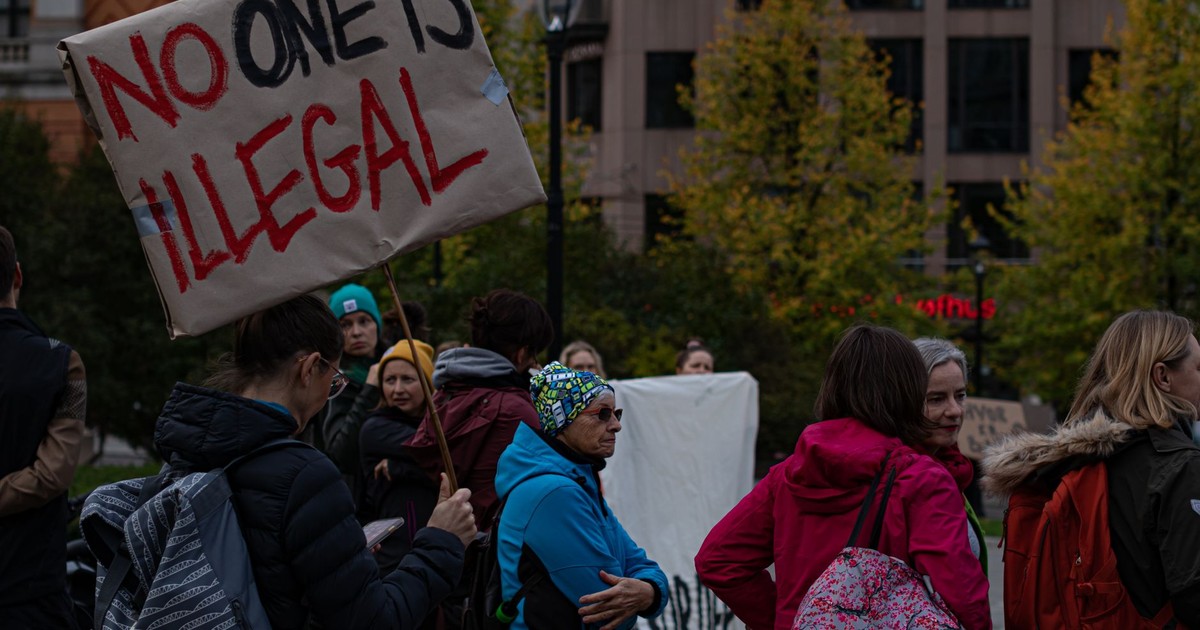
The rulings land on an immigration court system that was struggling well before June 25. According to TRAC Immigration data from Syracuse University, more than 3.2 million active cases were pending before U.S. immigration courts as of May 2026, with over 2.3 million of those being people who have already filed formal asylum applications and are waiting for hearings or decisions.
The workforce adjudicating those cases has shrunk sharply. According to SCOTUSblog’s March 2026 analysis of Executive Office for Immigration Review data, there were only 634 immigration judges spread throughout the country’s immigration courts in the 2025 fiscal year, a drop of 101 from 735 the year before, with only 557 judges working by the first quarter of 2026. The backlog at the Board of Immigration Appeals (the body that reviews judges’ decisions) increased by 58% from the end of September 2024 to the close of December 2025. At the start of 2026, nearly a quarter million cases were waiting at the BIA alone.
Also earlier in 2026, in Urias-Orellana v. Bondi, a unanimous Supreme Court ruled that federal appellate courts must defer to immigration judges on asylum decisions. Although that decision may sound technical, it puts more responsibility on decision-makers who are stretched thin by mounting caseloads, while making it harder for migrants to ask federal appellate courts to overturn asylum denials.
The asylum system that June 25 exposed is one where the front door has been narrowed by the Supreme Court’s asylum restrictions, the hallways are jammed with millions of pending cases, and the number of people trained to sort through them keeps falling. Anyone waiting for an appointment in Tijuana, or camped on a bridge in Ciudad Juárez, is not a legal abstraction. They are at the intersection of all three.
U.S. Customs and Border Protection has at times claimed that metering was required because of capacity constraints. But Justice Sotomayor’s dissent cited lower court findings that CBP officers routinely turned away asylum seekers despite available processing capacity, and raised concerns, echoed by courts, that the practice incentivized migrants to cross the border illegally because waiting in Mexico for months was simply too dangerous.
Reinstating the policy could produce the opposite of orderly border management, sending more people toward unauthorized crossings rather than fewer.
The Law on Paper, and the Law in Practice
The ruling in Mullin v. Al Otro Lado does not create a new policy. It creates a permission structure. The ruling effectively overturns immigration laws that, for more than a century, have required government officials to inspect all people presenting themselves at designated ports of entry. And since Congress enacted asylum into U.S. law more than 45 years ago, that inspection requirement had ensured that the government did not send vulnerable people back to danger without giving them an opportunity to seek protection.
Kelsi Corkran, Supreme Court Director of Georgetown Law’s Institute for Constitutional Advocacy and Protection and the attorney who argued the case, called the decision “an affront to congressional authority over immigration matters with devastating humanitarian consequences,” and said “the ball is now in Congress’s court to enact legislation correcting the Court’s error.”
Al Otro Lado’s executive director said the decision would mean a “hardening of borders to keep out the most vulnerable” that is “sure to result in many more lives lost.” The White House called both rulings a “tremendous win” for the Trump administration.
Both assessments can be true simultaneously, which is part of what makes this particular moment so hard to absorb.
The Weight of Two Words

Everything in this case ultimately hinges on whether a person standing at the threshold of U.S. soil, blocked from stepping across by a federal agent, has “arrived in” the country. The majority said no. The dissent said that reading guts the asylum system Congress deliberately built.
What the ruling confirms is something the history of metering already suggested: that asylum protections under U.S. law can be reduced not by repealing the law but by controlling access to the geographic trigger that activates it. Keep people in Mexico, and the statute never fires. The legal architecture stays intact on paper while becoming unreachable in practice.
That is not a loophole the court accidentally found. Justice Sotomayor’s dissent argues it is a loophole the majority chose to bless, and she wasn’t wrong that the stakes go beyond immigration enforcement. Earlier in 2025, the justices also ruled that agents could question a person on their immigration status solely based on their race, a series of decisions that, taken together, mark a significant recalibration of who the legal protections in U.S. immigration law actually protect. The legal text hasn’t changed. The ground beneath it has.
AI Disclaimer: This article was created with the assistance of AI tools and reviewed by a human editor.