

Most people think of retiree relocation benefits as a simple tax break, a slightly cheaper grocery bill, or a sunnier forecast. The real picture is more interesting than that. A growing number of American cities are dangling perks so specific and so substantial that they’ve begun actively recruiting retirees the way companies recruit talent: with cash grants, property tax reductions, free outdoor recreation packages, senior-focused community programs, and in some cases, the promise that the state won’t touch a dollar of your pension, Social Security, or 401(k) withdrawal.
About 1 million people move every year following their retirement. Most of them end up in Florida or North Carolina out of habit or hearsay. But the cities making the smartest offers to retirees right now aren’t always the obvious ones. Some are mid-sized towns with serious healthcare infrastructure. Others sit inside states that have quietly built the most retirement-friendly tax codes in the country. A few are offering financial incentives so generous they’d make a financial planner do a double take.
The difference between a tax-friendly state and a high-tax state can mean $5,000 to $15,000 per year in savings on a typical retiree income of $60,000 to $100,000. That’s not a rounding error. That’s a vacation every year, a car paid off early, or a meaningful addition to what you leave behind. The ten cities below each bring something distinct to the table, whether that’s a formal retiree relocation benefits package, a no-tax-on-retirement-income policy, strong healthcare density, or a combination of all three.
1. Sarasota, Florida

Sarasota continues to be an ideal destination for retirees seeking stunning beaches, cultural amenities, and outstanding healthcare facilities, boasting performance halls, waterfront parks, and world-renowned hospitals. The cultural calendar here is genuinely impressive for a city its size, with a symphony, multiple theater companies, an internationally recognized circus arts center, and one of the best art museums in the South.
Florida offers no income tax and no estate tax, a huge retiree community, and a warm climate year-round. The real cost is hurricane exposure and a property insurance market in crisis. The homestead exemption is a practical number worth doing the math on before you commit. For a home assessed at $400,000, you’re only being taxed on $350,000 of its value, which adds up meaningfully over a decade.
Healthcare infrastructure is robust, with one of the highest concentrations of Medicare Advantage plans in the country. Sarasota specifically has a higher-than-average density of specialists per capita, which matters more in your 70s than it does in your 50s. The main honest trade-off here is hurricane exposure and a property insurance market that has become considerably more expensive in recent years. If you’re buying near the coast, factor that in carefully.
2. Knoxville, Tennessee

Among the cities consistently appearing on 2025 and 2026 best-places-to-retire lists that combine urban amenities with a workable tax profile, The Right Retirement Plan highlights Pittsburgh for its UPMC healthcare system, neighborhoods with real character, and affordable cost of living – noting that Pennsylvania exempts all retirement income at retirement age. Tennessee makes the same list for similar reasons. The state levies no income tax on wages, Social Security, pensions, or investment income, with the Hall Tax on dividends and interest fully repealed in 2021. Property taxes are among the lowest in the nation at a 0.64% effective rate, and the cost of living runs 10 to 15% below the national average outside of Nashville proper.
Knoxville sits at the gateway to the Great Smoky Mountains, which is less of a brochure line and more of an actual logistical advantage: with a median home value in the mid-$300,000s, Knoxville is a vibrant, lively town for culturally engaged retirees. The University of Tennessee presence keeps the city younger and more engaged than many small metro areas, with public lecture series, arts programming, and sporting events year-round.
The summers are genuinely hot and humid, so if you’re imagining a mild-weather retirement all four seasons, this isn’t it. But for retirees who want their dollars to stretch further inside a city with real amenities, Knoxville is consistently underrated.
3. Pittsburgh, Pennsylvania
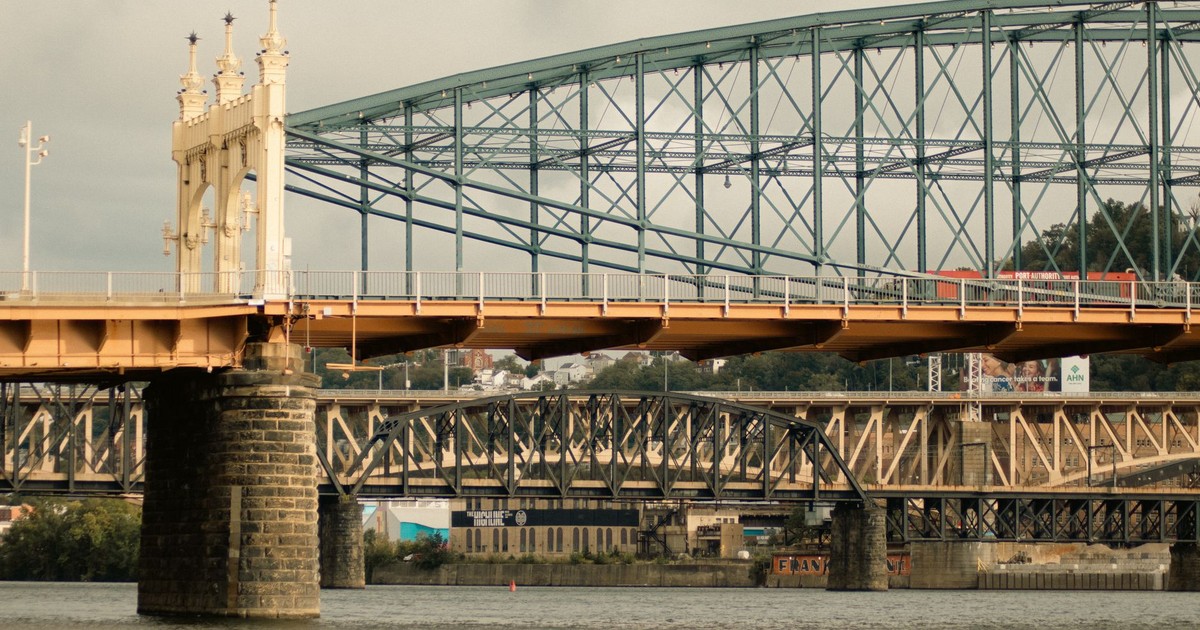
Pennsylvania’s tax treatment of retirement income is one of the most straightforward of any state in the country. Pennsylvania exempts all retirement income at retirement age. That means 401(k) withdrawals, pension payments, and IRA distributions all land in your account with zero state income tax applied. Social Security is similarly untouched.
Pittsburgh has the UPMC healthcare system, neighborhoods with real character, and an affordable cost of living. UPMC is not a local clinic – it’s a $26-billion integrated health system with more than 90,000 employees and a national reputation in specialties like cardiology, oncology, and transplant medicine. For retirees who prioritize access to elite healthcare over beach proximity, that’s a real differentiator.
The city has also undergone a significant quality-of-life transformation over the past two decades. The steel industry collapse that defined Pittsburgh’s 20th-century reputation has given way to a university and medical research economy, a walkable downtown with a genuine restaurant scene, and housing costs that would be unthinkable in comparable coastal cities. The combination of retirement income tax exemption and healthcare infrastructure puts Pittsburgh in a category most retirees don’t think to look at.
4. Asheville, North Carolina

Asheville, North Carolina, offers a Blue Ridge setting, four mild seasons, an independent arts and food scene, and growing healthcare access. North Carolina exempts Social Security income from state taxation. The arts economy here is genuinely local: independent galleries, a nationally recognized craft brewing scene, farm-to-table restaurants that have been doing it since before it was a trend, and live music most nights of the week.
Asheville is a close-knit community with abundant cultural activities. Retirees enjoy its temperate weather, outdoor activities, independently owned eateries, and a flourishing arts community, and compared with many beachfront retirement locations, Asheville is more affordable too. The Blue Ridge Parkway runs through the area, giving retirees access to hundreds of miles of hiking, cycling, and scenic drives essentially from their backyard.
The one genuine friction point: Asheville’s housing market has tightened considerably as its reputation has grown. It’s still more affordable than comparable cultural destinations, but the window where you could find a bargain without really trying has mostly closed.
5. Charleston, South Carolina

Charleston, South Carolina, offers a historic walkable core, a coastal lifestyle, and a $15,000 senior retirement income deduction. That deduction is not an abstract tax policy number. For a retiree drawing $50,000 a year from a pension, it means the first $15,000 of that income is simply not taxed at the state level.
Charleston’s history, beaches, and relaxed lifestyle are some of the reasons it is considered one of the best retirement cities in the South. The Medical University of South Carolina, located right in the city, provides access to academic medicine and specialist care that rivals much larger metros.
The walkability of Charleston’s historic core is an underappreciated practical benefit for retirees. Being able to manage daily errands, restaurants, and social life on foot or by bicycle keeps life manageable and connected in a way that car-dependent suburbs simply don’t. The honest caveat: Charleston’s coastal location means genuine hurricane risk, and property insurance costs have risen sharply in the Carolinas. Anyone buying waterfront or near-waterfront property should spend real time with those numbers before committing.
6. Sioux Falls, South Dakota – A Retiree Relocation Benefits Case Study

South Dakota rarely appears in the first wave of retirement destination conversations, which is part of why it keeps showing up on ranked lists. Most states do not tax Social Security income whatsoever. Some, like Texas and Florida, have no income tax at all. South Dakota falls in that same no-income-tax column, according to SmartAsset, which means retirees maximize income from pensions, IRAs, and Social Security without a state-level haircut.
While Sioux Falls may not seem like a populous city, the community has plenty to offer retirees. The city’s cost of living is 5.8 percent below the country’s average, and healthcare costs are also lower in the state. For a retiree on a fixed income, a nearly 6% structural reduction in day-to-day costs, combined with zero state income tax, creates a financial picture that’s genuinely hard to replicate in more celebrated retirement markets.
The winters are legitimately cold. There’s no softening that. But Sioux Falls has invested heavily in indoor amenities, an active arts community, strong senior centers, and a healthcare infrastructure built around Sanford Health, one of the largest rural health systems in the U.S. For retirees who prioritize financial health and strong medical access over climate, Sioux Falls delivers a package that few cities can match at its price point.
7. San Antonio, Texas

San Antonio offers a low cost of living within a major metro, no state income tax, and a walkable River Walk and King William district. Texas’s zero income tax policy means retirement account distributions, Social Security, and pension income all stay entirely in your pocket. That’s a meaningful retiree relocation benefit for anyone moving from a high-tax state.
San Antonio is also significantly more affordable than its Texas counterparts. While Austin has become eye-wateringly expensive and Dallas draws a similarly high price tag, San Antonio remains a genuinely large American city with cultural depth, major sports, a world-class zoo, several university campuses, and a live music scene, at a cost of living that still makes financial sense for retirees. The River Walk gives the downtown core something many Sunbelt cities lack: a pedestrian-friendly, socially active public space that people actually use.
The healthcare infrastructure is strong, anchored by the South Texas Medical Center, which consolidates more than 45 medical facilities and research institutions in one northwest district of the city. San Antonio is ideal for retirees desiring an active retirement life, with entertainment, parks, cultural festivals, and great food.
8. Lexington, Kentucky

Lexington, Kentucky, offers horse country living, an affordable cost of living, Kentucky’s $31,110 pension exclusion, and the University of Kentucky Medical Center. That pension exclusion is notable because it applies across pension types, meaning a retiree drawing from a government pension, a private-sector defined benefit plan, or a similar income source can exclude the first $31,110 from Kentucky state income tax entirely.
Lexington sits at an unusual intersection of small-city atmosphere and serious institutional resources. The University of Kentucky brings a medical center with nationally ranked programs in cardiology, orthopedics, and cancer care. It also keeps the city culturally lively in ways that a comparable-sized city without a major research university simply wouldn’t be. The arts calendar, the restaurant scene, and the access to continuing education through UK’s programs all benefit retirees directly.
Horse country isn’t just an aesthetic observation either. The Bluegrass region surrounding Lexington is one of the most physically beautiful settings in the Eastern United States, and the rolling landscape supports an outdoor life that’s genuinely accessible for retirees who aren’t looking for extreme terrain.
9. Tulsa, Oklahoma

Most lists of retirement cities overlook Tulsa entirely. That’s changing. Supported by the George Kaiser Family Foundation, Tulsa Remote has grown from 70 remote workers when it launched in 2018 to more than 3,400 participants by 2025. Those accepted into the program receive a $10,000 grant to help with relocation to Tulsa, Oklahoma.
While Tulsa Remote was initially designed to attract working professionals, the program’s structure is open enough that retirees who meet basic eligibility criteria have been able to participate, and the city’s overall affordability makes it one of the most financially rational retiree relocation destinations in the country. According to program leadership, 70 percent of participants remain in Tulsa after completing the program – a sign this isn’t just a cash incentive that people grab before leaving.
Oklahoma has no state income tax on Social Security benefits, and the overall cost of housing and daily living in Tulsa sits well below national averages. The Art Deco downtown, the Philbrook Museum of Art, and the Gathering Place riverfront park give the city a cultural footprint that surprises most first-time visitors. For retirees who are open to somewhere genuinely off the beaten path, Tulsa offers a combination of cash incentive, walkable downtown, and very low cost of living that’s hard to argue with.
10. Great Falls, Montana

Nestled between four mountain ranges and home to an international airport, Great Falls has plenty of incentives for people looking to retire there. The location alone is remarkable. You’re within driving distance of Glacier National Park, the Missouri River Breaks, and some of the best fly fishing and wildlife viewing in North America.
Montana has expanded its Property Tax Assistance Program to give more financial relief to people on a fixed income. The state also does not tax retirement income. That combination – a formal property tax assistance program targeted specifically at fixed-income residents plus zero state tax on retirement distributions – addresses the two largest ongoing financial pressures retirees typically face after healthcare.
Coupled with a low cost of living and plenty of scenic outdoor adventures, Great Falls makes for a strong retirement destination. The healthcare picture is solid too. Benefis Health System, based in Great Falls, operates one of the largest hospital networks in Montana and covers a wide range of specialties. For retirees who want a genuinely uncrowded way of life, access to extraordinary natural scenery, and a state government that has made a deliberate policy choice to protect fixed-income residents, Great Falls is worth a serious look.
Read More: U.S. States where the living is so good that people never leave
What the Numbers Actually Mean

As of 2026, there are just eight states that tax Social Security: Colorado, Connecticut, Minnesota, Montana, New Mexico, Rhode Island, Utah, and Vermont. The cities on this list are almost entirely located in states that leave Social Security income alone, which is where the real long-term financial math lives for most retirees. It’s not just the relocation grant or the welcome package. It’s the compounding effect of keeping more income every single year for the rest of your life.
One way many states help retirees limit the burden of property taxes is by offering exemptions or circuit breakers. The terminology varies by state, but exemptions, sometimes called homestead exemptions, typically allow seniors to protect part of their home’s value from property taxes, and they often have income limits so households earning more than a certain amount are not eligible. Those provisions don’t make headlines the way a $10,000 cash grant does, but they accumulate into significant money over time.
A retiree who moves to one of these cities in their mid-60s and lives there for 20 years isn’t just banking the initial perk. They’re benefiting from every year of lower taxation, every property tax circuit breaker, every Social Security exemption, and every program designed to keep fixed-income residents financially stable. The cities that have understood this aren’t just being generous. They’re competing for residents who will spend locally, contribute to civic life, and stay put. Retirees are, from a city’s perspective, an unusually stable and economically active demographic. The best deals on this list exist because the cities need you as much as you need them.
None of this means the decision is simple. A state with no income tax can still hit you with high property taxes and punishing insurance premiums. A city with world-class healthcare can still feel isolating if you don’t know anyone there. The financial case for a place is one column in a longer spreadsheet. But if you’re doing that spreadsheet honestly and including what your current state takes from your Social Security check every year, from your IRA withdrawals every year, and from the assessed value of your home every year, the gap between a well-chosen relocation and staying put gets wide enough to be a real conversation. Most people never run those numbers until after they’ve already decided to stay. Running them before costs nothing.
AI Disclaimer: This article was created with the assistance of AI tools and reviewed by a human editor.