
The morning routine of a French king ought to be private. For Louis XIV, it was a ticketed event. Louis XIV formalized the lever du roi into two phases: the petit lever, limited to a small circle of trusted attendants for preliminary dressing and private consultations, and the grand lever, a more elaborate gathering where broader nobility entered to witness the completion of the king’s attire and present petitions. If you think your morning commute is rough, consider that some of history’s most powerful people spent their waking hours hosting an audience while getting dressed, taxing their subjects’ facial hair, or ordering staff to kiss their bedsheets for poison.
Royal courts have always been breeding grounds for the strange. Absolute power, total insulation from consequences, and a life in which no one is permitted to say “that’s a bit odd, Your Majesty” all tend to produce behavior that ranges from mildly eccentric to completely unhinged. Across centuries and continents, monarchs have built ghost palaces they never slept in, bathed so rarely they gave lice to their courtiers, and written fan letters to kings who had been dead for a hundred years.
These are 13 of the most spectacularly strange royal weird habits in recorded history – personal quirks, obsessions, and daily rituals that made it abundantly clear that wearing a crown is no guarantee of acting sensibly.
1. Louis XIV of France – The King Who Made Getting Out of Bed a Public Event
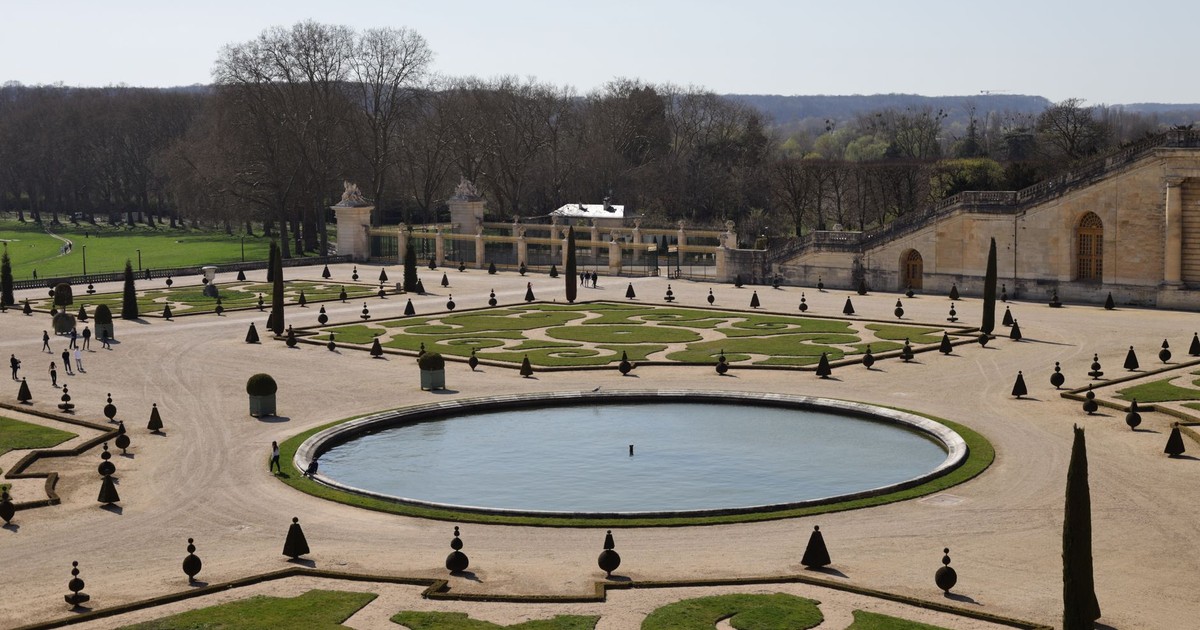
Every part of Louis XIV’s day was a performance: getting up (the lever), eating (the couvert), going to bed (the coucher). This wasn’t an affectation. Ceremonial and etiquette functioned for Louis XIV as an important instrument of rule and the distribution of power. Each act in the ceremony had an exactly graded prestige-value that was imparted to those present, and this prestige-value served as an indicator of the position of an individual within the balance of power between the courtiers – a balance controlled by the king and very precarious.
For the lever, a small group of privileged courtiers were admitted first, witnessing the king awaken as his valet and first physician approached the bed. Gradually, additional nobles entered according to strict hierarchy. Specific individuals were granted the honor of presenting the royal shirt, holding the mirror, or fastening a garter. Being chosen to hand Louis his nightshirt wasn’t a chore – it was one of the most coveted privileges at the most powerful court in Europe.
The Duke of Saint-Simon wrote of Louis XIV: “With an almanach and a watch, one could, from 300 leagues away, say with accuracy what he was doing.” The king’s day was timed to the minute to allow the officers in his service to plan their own work accordingly. From morning to evening his day ran like clockwork, to a schedule that was just as strictly ordered as life in the Court. The number of spectators, all male, was probably around 100. Every nobleman who stood in that bedchamber waiting to pass the king his breeches was simultaneously paying tribute and being watched. The performance went both ways.
2. Henry VIII of England – The Paranoid King and the Poison Testers
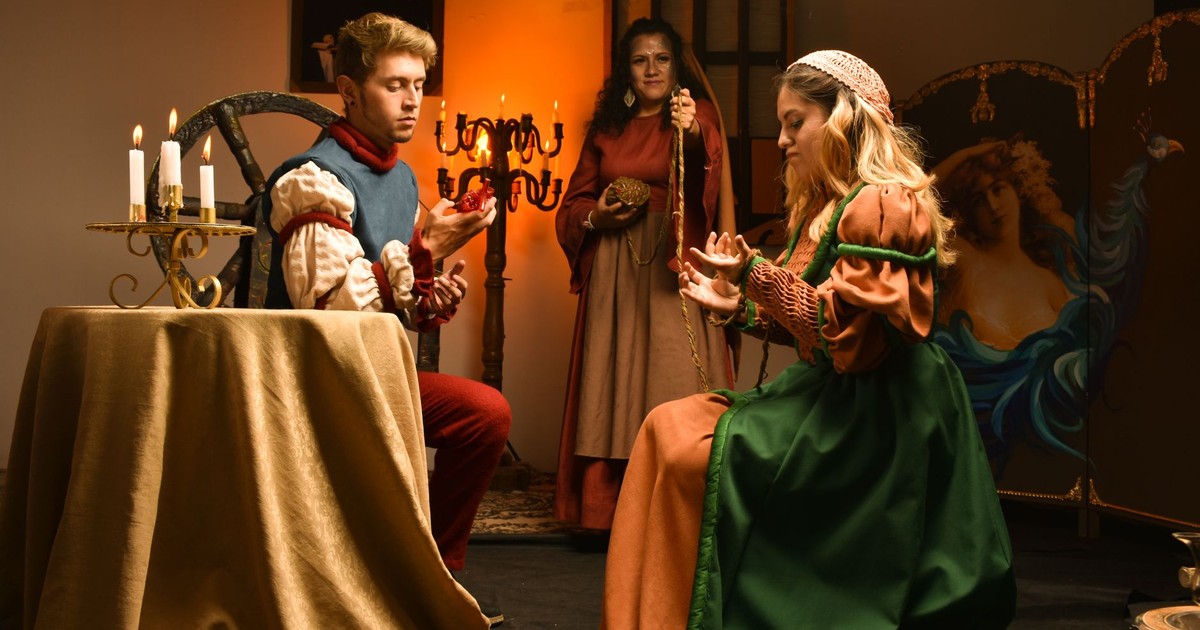
One of the oddest among the royal weird habits of Henry VIII was his extraordinary paranoia about being poisoned. Henry VIII’s gentlemen of the bedchamber kissed every part of his pillows and sheets they had touched while making his bed to prove they had not smeared poison on them. The chamber pot of his son, Edward VI, was tested before he used it, though we are not sure how.
Henry VIII had a set of household rules about how to make up his bed. He slept on a pile of eight mattresses and each night had a servant roll on the bed, to check for hidden enemies with daggers. After this the servant would kiss the places he had touched, sprinkle the sheets with holy water and make the sign of the cross over the bed. The job title doesn’t appear in any career guide, but royal “taster” and “kisser” were genuine court positions during Henry’s reign, filled by men whose professional lives depended on not being killed by whatever they were inspecting.
Henry’s fear wasn’t entirely irrational. Court poisoning was a genuine political tool in 16th-century Europe, and the king was terrified of sweating sickness, a deadly epidemic that is nearly forgotten today. But his response to that fear went well past reasonable precaution into something closer to ritual compulsion. He surrounded himself with an apparatus of human shields for objects most people touch without a second thought – and apparently slept more soundly for it. Whether the kissed pillows actually provided any protection against assassination is a question history doesn’t answer.
3. King Ludwig II of Bavaria – The Moon King Who Slept All Day
Ludwig II began to lose himself in the fantasy worlds depicted in Wagnerian myth. Ludwig II of Bavaria flipped the entire concept of royal routine upside down. He slept through the day and came alive at night, ordering elaborate midnight dinners served for one in his fairy-tale castles. Guests were rarely invited. He preferred his own company, always. He styled himself the “Moon King,” a deliberate inversion of Louis XIV’s “Sun King” title, and took the metaphor completely literally.
Ludwig reportedly spent hours wandering his palace grounds alone after dark, sometimes in elaborate costumes inspired by medieval legends and Wagner operas. His nocturnal sleigh rides through the Bavarian Alps, dressed in 18th-century livery, were a regular occurrence. Ludwig rarely dined with others and preferred elaborate solo meals served via pulley systems or secret tunnels.
He also wrote fan letters to Louis XIV, centuries after the French king’s death. His bed at Linderhof took four years to carve and features gold thread embroidery. Writing correspondence to a man who had been dead for 150 years is a habit that would concern most people. For Ludwig, it was Tuesday. His castles, including the famous Neuschwanstein, were built as fantasy escapes from reality – and have since become some of Bavaria’s most profitable tourist destinations, effectively repaying the debts that once led to his political downfall.
4. Peter the Great of Russia – The Tsar Who Taxed Beards and Pulled Teeth
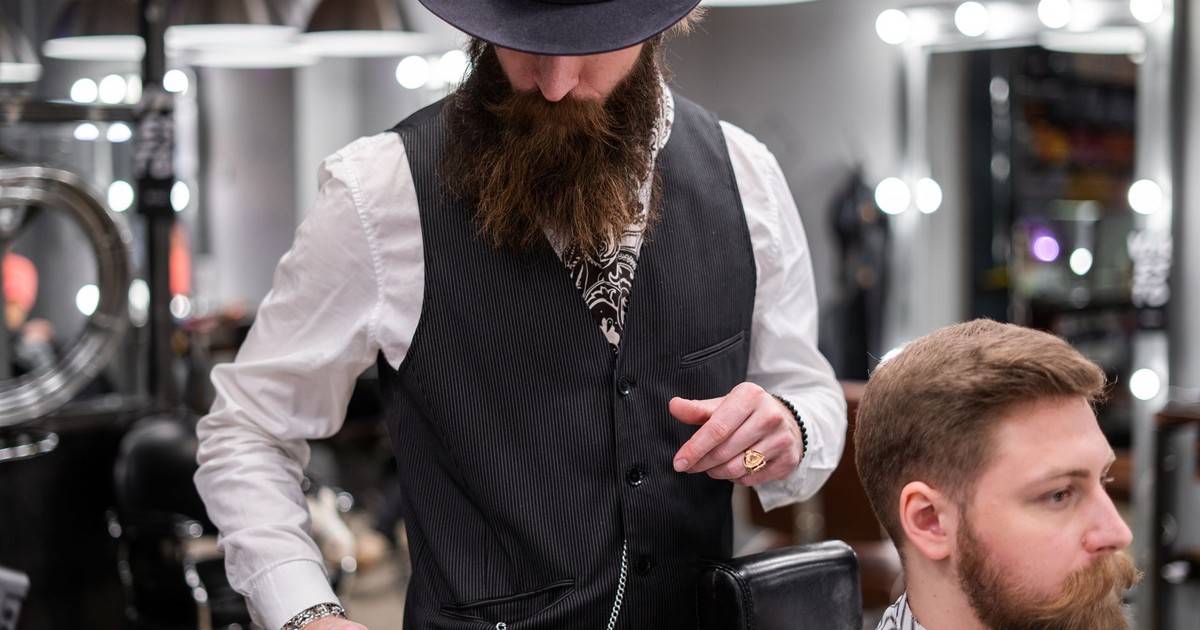
Peter the Great founded the city of St. Petersburg and placed a tax on wearing your beard long. The beard tax, introduced in 1698 after his return from a tour of Western Europe, wasn’t merely eccentric – it was a forced modernization campaign. Any Russian man who wanted to keep his beard had to pay an annual fee, and was given a copper token to carry as proof of payment. Those who couldn’t or wouldn’t pay had their beards shaved off on the spot.
The Tsar’s personal habits were just as unusual as his policies. He had a morbid fascination with medicine and surgery, and kept a personal collection of anatomical specimens and tools he had accumulated on his European travels. He also reportedly enjoyed performing amateur dentistry on courtiers and servants, whether they needed it or not. An absolute conviction that the rules applied to everyone else ran through everything he did. He dragged Russia into a new century by sheer force of personality, and in the process made life considerably more uncomfortable for everyone in his orbit – particularly those with full beards and healthy teeth.
5. Queen Victoria – Forty Years of Mourning, One Pair of Gloves

Queen Victoria kept wearing black for 40 years after Prince Albert died and reportedly had his shaving water and freshly ironed clothes brought in daily for years after his death. Albert died in 1861. Victoria didn’t stop mourning him until her own death in 1901. Every day for four decades, staff laid out a dead man’s clothes as though he might dress for breakfast at any moment.
The ritual extended to nearly every aspect of court life. A cast of Albert’s hand was kept on her desk. His portrait hung above the space on the bed where he had slept. Every night, a servant laid out his clothes for the following morning. This was not an early version of grief counseling – it was an immovable, institutionalized dedication to loss that she maintained with the same discipline she applied to affairs of state.
Victoria is often remembered as formidably competent, and she was. She woke up at 5 a.m. daily and answered state papers before breakfast. The same iron will that made her one of the most effective monarchs of the 19th century was the thing that locked her into 40 years of daily rituals around a man who was no longer there. That discipline and that grief came from the same source – a personality that committed to things completely, and never let go.
6. Caligula – The Roman Emperor Who Made His Horse a Senator
According to the ancient historian Suetonius, the Roman emperor known as Caligula loved one of his horses, Incitatus, so much that he gave the steed a marble stall, an ivory manger, a jeweled collar and even a house. Another chronicler, Cassius Dio, later wrote that servants fed the animal oats mixed with gold flakes.
According to legend, Caligula planned to make the horse a consul, although ancient sources are clear that this did not occur. According to historian Aloys Winterling, author of “Caligula: A Biography” (2011), insanity isn’t the only logical explanation for such behavior. Winterling makes the case that many of the emperor’s wackier stunts, including his treatment of Incitatus, were designed to insult and humiliate senators and other elites. By bestowing a high public office on his horse, Caligula aimed to show his underlings that their work was so meaningless an animal could do it.
Whether the horse was loved or used as a tool to humiliate the political class, the result was the same. Rome’s most powerful man was regularly dining with an animal eating gold, and the Senate had to sit there and pretend this was fine.
7. Qin Shi Huang – The Emperor Who Drank Mercury to Live Forever

Qin Shi Huang, who reigned from 221 to 210 BCE, is famous for unifying China and initiating the construction of the Great Wall of China. During his lifetime, he became obsessed with achieving immortality and sought the elusive elixir of life.
The search produced increasingly desperate remedies. Qin Shi Huang became obsessed with finding an elixir of life, a potion for immortality. The court alchemists and doctors devoted day and night to finding potions for the Emperor, many of them containing quicksilver (mercury). Slowly, the ironic effect of the potions resulted in the death of the Emperor, rather than preventing it. A man who spent his reign hunting for immortality appears to have been killed by the cure itself.
His obsession shaped the entire apparatus of his court. Alchemists had the ear of the emperor in a way that generals and ministers sometimes did not. Expeditions were dispatched to distant provinces on the strength of rumors about miraculous plants. And all the while, the emperor was steadily consuming what were essentially industrial quantities of a heavy metal. The Emperor also ordered the construction of a gargantuan tomb for himself, in case the immortality treatment failed. Plans for the Emperor’s tomb included flowing rivers of mercury, cross-bow booby traps to thwart would-be plunderers, and replicas of all the Emperor’s earthly palaces. He was clearly hedging his bets on the immortality question.
8. King James I of England – The King Who Never Washed

The 17th century British King James I was said to never bathe, causing the rooms he frequented to be filled with lice. He wouldn’t even wash his hands before eating. He’d only lightly rub his fingertips on a moist napkin.
This wasn’t entirely out of step with the times. Full baths were not prescribed for daily or even monthly cleanliness among the upper classes; they were used medicinally, with contemporary medical textbooks holding that bathing risked opening the pores to infection – scrubbing one’s hands with cloths was the suggested healthy alternative. Queen Elizabeth of England took a bath only once a month – and that made her a fastidious bather. Queen Isabella of Spain, for example, bragged that she’d bathed only twice in her entire life. James reportedly outdid both of them.
The courtiers of James’s era had no modern understanding of germ theory, but they could tell when someone smelled catastrophically bad and was sharing his lice with the room. That James remained king despite this is perhaps a testament to the insulating power of monarchy, which has historically protected men from feedback that ordinary social life would have delivered much more swiftly.
9. Empress Elisabeth of Austria – The Queen Who Spent Hours on Her Hair

Empress Elisabeth of Austria, known as Sisi, was obsessed with her appearance and would spend hours each day maintaining her long hair, which reached down to her ankles. Her fixation on her appearance was seen as eccentric by her contemporaries. Her lady-in-waiting was required to collect every strand of hair that fell during combing and present them to the empress for inspection – if too many had fallen out, the hairdresser faced her displeasure. The ritual was not vanity in the casual sense; it was a daily performance of control over the one domain she felt truly her own, at a court where she had almost no political agency and a mother-in-law who organized every other aspect of her existence.
Sisi’s obsession extended well beyond her hair. She maintained a strict exercise regimen – bars installed in her apartments, daily gymnastic routines – at a time when aristocratic women were expected to be decorative and sedentary. She kept her weight at around 50 kilograms (110 pounds) throughout her adult life despite being 5’8″, monitored it obsessively, and ate almost nothing at public meals. By any modern clinical standard, the behaviors she exhibited suggest a serious eating disorder. At the time, people simply said she was very disciplined about her appearance.
10. King Charles III – The Monarch With Ironed Shoelaces
King Charles III avoids eating meat or fish two days per week and also goes completely vegan one day of the week – a habit that stems largely from his decades of focus on climate change and a conclusion that mass farming and consumption of livestock can have a devastating impact on the environment.
The food habits get more specific from there. King Charles III tends to skip lunch. Instead of a midday meal, he opts for an invigorating breakfast and has been candid about his admiration for fresh fruit and seeds, preferably locally sourced, as a start to the morning. His valets iron his shoelaces before he puts them in, squeeze exactly the right amount of toothpaste onto his toothbrush each morning, and arrange his desk items in a configuration that must be maintained exactly as he prefers. He is also reported to travel with a private basement ATM.
The precision extends to his public duties. In a typical year, Charles carries out around 500 engagements, some 200 jointly with Queen Camilla – which means that the apparatus of ironed laces and arranged desk items is reproduced in hotel suites and palaces across the world, every time, by a team of staff who travel specifically for this purpose. Most people find it easiest not to overthink the shoelace situation.
11. King Friedrich Wilhelm I of Prussia – The Army Built From Giants
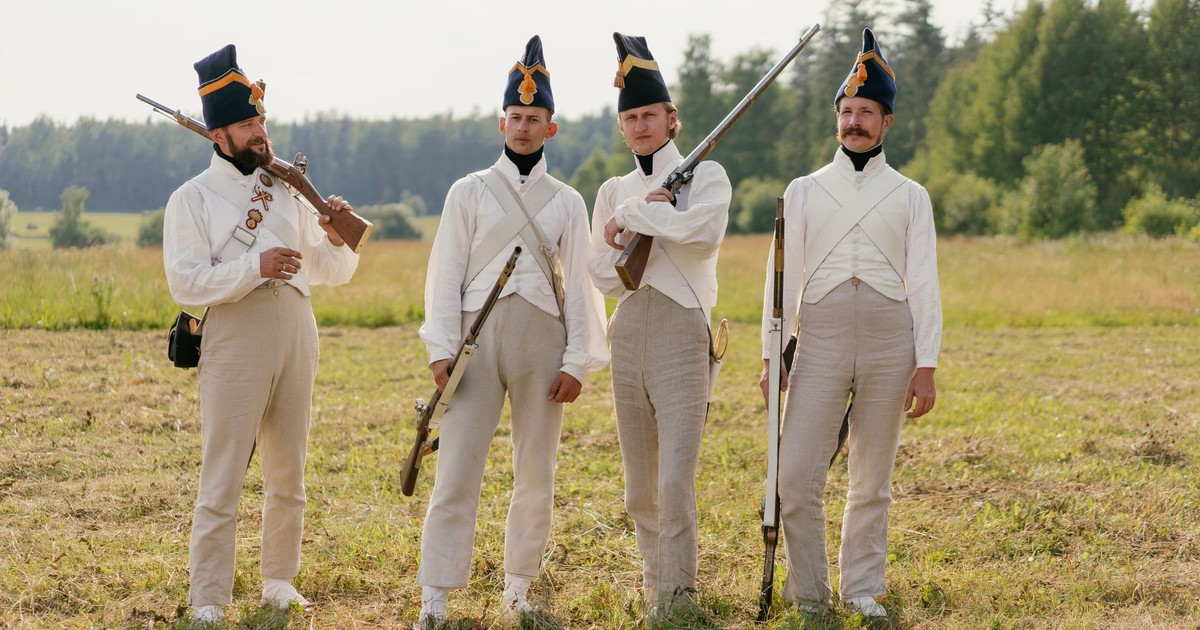
Friedrich Wilhelm I ruled Prussia from 1713 until his death in 1740. During this time he grew the Prussian Army from 38,000 to over 80,000. He also had a preoccupation with developing his own personal regiment of unusually tall soldiers, known formally as the Grand Grenadiers of Potsdam – widely known as the “Potsdam Giants” – with one criterion for joining: you had to be at least six feet tall.
Six feet was an extraordinary height in early 18th-century Europe. Wilhelm pursued his giants with a collector’s fervor, offering payments to countries that sent him tall men, pressuring foreign diplomats to locate candidates, and reportedly attempting to breed the tallest soldiers with the tallest women in an early and entirely misguided attempt at engineering a race of giants. Rulers across Europe sent him tall soldiers as diplomatic gifts, knowing he valued them more than gold.
The regiment was never seriously deployed in battle – they were too precious, and Wilhelm was too attached. He is said to have visited them every morning, sketching their portraits, measuring them, and reportedly weeping when they were ill. The Potsdam Giants were somewhere between an army and a personal obsession, between a military unit and a very large, very expensive collection of human beings who were paid to be tall in his vicinity.
12. Queen Elizabeth II – The Handbag That Ran the Room

Queen Elizabeth II often used her signature leather handbag to send signals to her staff members when she was out on official royal engagements. According to royal historian Hugo Vickers, the Queen would move her handbag from one arm to the other to signal that she was finished speaking with someone and would like her staff to help move the conversation along.
The system was more elaborate than a single signal. If the bag went to the floor, that was a different message entirely – reportedly a sign to her ladies-in-waiting that she needed rescuing from the conversation within the next few minutes. The handbag never left her hand at public engagements, and photographs from decades of royal duties confirm that it was almost always there, in exactly the same position, on the same arm. It was simultaneously an accessory, a prop, and an operational communications device.
This habit operated in plain sight for decades without most people catching on. Foreign dignitaries, prime ministers, and presidents shook her hand and posed for photographs while her staff received coded instructions from the position of a leather bag. The restraint required to maintain that – the discipline of saying nothing aloud when you want to leave, relying instead on a movement so small most observers don’t notice it – is, in its own way, quite remarkable.
13. Queen Elizabeth I – The Woman Who Painted Her Face With Lead
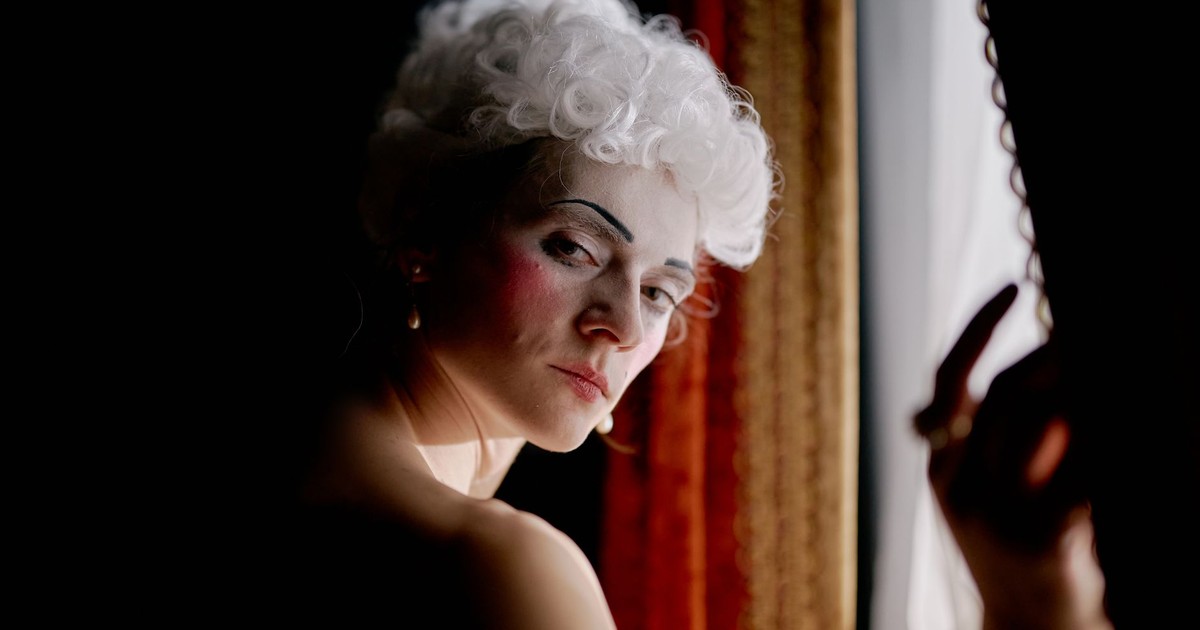
Queen Elizabeth I of England was known for her distinctive pale complexion, which was considered fashionable at the time. She used a cosmetic product called Venetian ceruse to achieve this look, which contained toxic lead. During the Elizabethan era, women wore a kind of makeup called Venetian ceruse, which was a skin whitener made of lead. Queen Elizabeth I would renew her ceruse every morning upon waking, without washing off the previous day’s application.
The Venetian ceruse wasn’t a secret. It was widely used among aristocratic women of the era, and the risks – skin damage, hair loss, the gradual darkening of the complexion it was meant to lighten – were well observed if not understood. Elizabeth kept using it regardless. By the end of her reign, contemporary accounts describe her face as heavily painted, her hair largely lost, and her teeth blackened by sugar – a separate consequence of the Tudor diet that the lead paint complicated further by damaging her gums.
The habit is often presented as a peculiarity of its time, which is partly true. But Elizabeth’s relationship with her appearance was also deeply political. The image of the Virgin Queen – white-faced, red-haired, imperious – was as carefully controlled as any modern political brand. The lead paint was part of a visual argument she was making about power and purity, maintained at genuine physical cost, for the entirety of her reign. The face that stared down from court portraits across Europe was slowly poisoning the woman behind it.
What Ties Them All Together
The instinct is to read these royal weird habits as evidence of eccentricity, isolation, or madness – and sometimes that’s accurate. But most of them make a strange kind of sense when you account for the conditions that produced them: absolute power, total insulation from normal social consequences, and a court culture in which no one with anything to lose was willing to say “perhaps not, Your Majesty.”
Henry VIII’s poison paranoia makes sense for a man who had executed two of his wives. Qin Shi Huang’s mercury elixirs make sense for a man who had unified China by force and had every reason to believe someone was plotting his death. Queen Victoria’s daily ritual with Albert’s shaving water makes sense for a woman who had built her entire emotional life around one person, lost him at 42, and had no template for what came next. Even Caligula’s horse-dining habit makes sense as a calculated act of contempt toward a Senate he despised.
The gap between royal lives and ordinary ones has narrowed considerably. But powerful, isolated individuals developing rituals and obsessions that the people around them are too afraid to question – that particular pattern hasn’t gone anywhere. The scale is different. The shoelace ironing is more benign than the mercury. The rest of it will look pretty familiar.
AI Disclaimer: This article was created with the assistance of AI tools and reviewed by a human editor.