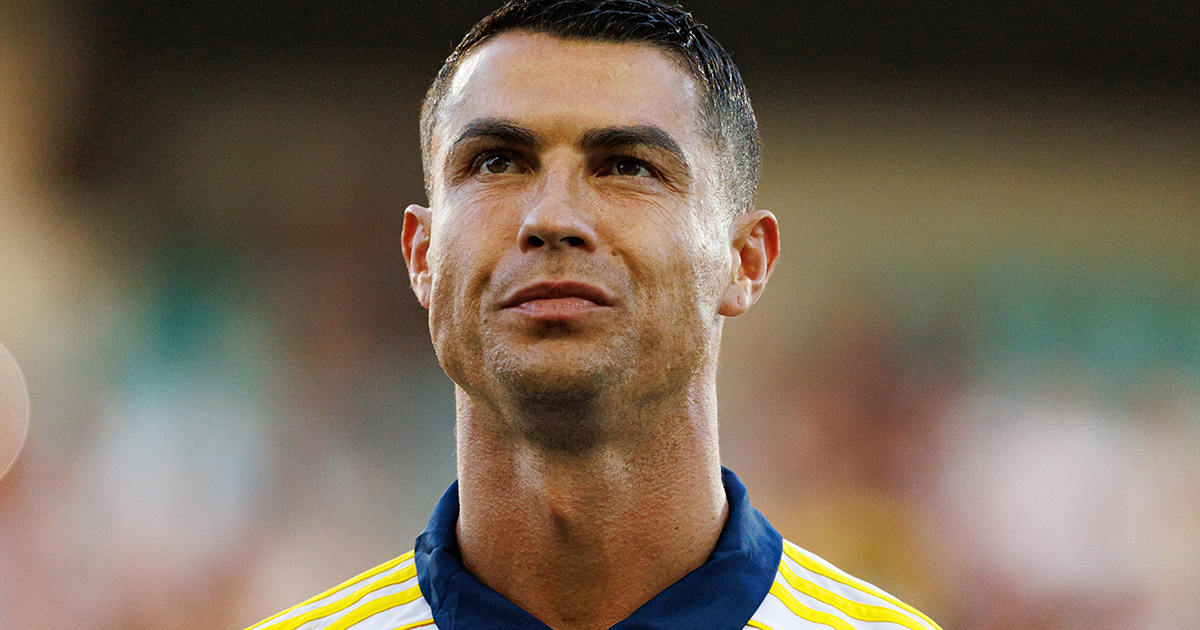

The last time Cristiano Ronaldo scored at a World Cup before Tuesday, he was 37 years old, converting a penalty in Qatar that made him the first man in history to score at five different tournaments. Four years on, everyone had a theory about whether he’d manage a sixth. Portugal’s opening draw with DR Congo had done nothing to silence his critics, and the calls for coach Roberto Martínez to bench him were getting louder by the day.
Then came Uzbekistan. And six minutes into the match, the argument was over.
Ronaldo made history on Tuesday by becoming the first player to score in six different World Cups, finding the net in Portugal’s 5-0 win over Uzbekistan. He was 41 years old. The crowd at Houston Stadium roared. And somewhere in the collective memory of football fans who have watched him since Germany 2006, the whole arc of the man suddenly snapped into place.
What Happened in Houston
The big win in Houston put Portugal on the brink of the knockout rounds and was a resounding response to the 41-year-old’s doubters. Portugal had looked flat in their opener. Ronaldo had limited service in the disappointing 1-1 draw with DR Congo, and when he did have two chances, he missed the target, igniting calls for coach Roberto Martínez to drop him.
Martínez stuck with him. Ronaldo nearly pounced after just three minutes, then swivelled on the six-yard box to meet a cross from João Cancelo and smash the ball beyond goalkeeper Abduvokhid Nematov. The former Manchester United, Real Madrid and Juventus ace pulled out his trademark “Siuu” celebration and let out a throaty roar in front of 68,777 fans.
Ronaldo had an opportunity for his second of the match in the 14th minute when Portugal was awarded a free kick just outside the Uzbekistan penalty box. With everyone in the building expecting him to take it, Nuno Mendes stepped up and curled a left-footed shot around the wall to make it 2-0. Ronaldo would get his brace before halftime. A counter-attack saw Bruno Fernandes feed a through ball between the Uzbekistan defense and find Ronaldo, who netted his 10th career World Cup goal, breaking a tie with Eusébio to become Portugal’s all-time leading scorer in the competition.
The Record in Full
By netting twice in Portugal’s 5-0 victory against Uzbekistan, Ronaldo became the first player to score in six different editions of the FIFA World Cup. With this achievement, he separated himself from Lionel Messi; before this match, the two had shared the record of five editions.
His FIFA World Cup goals now stand at 10, broken down as one in 2006, one in 2010, one in 2014, four in 2018, one in 2022, and two in 2026. The teams he has scored against: Spain three times, Ghana twice, Uzbekistan twice, and one each against IR Iran, Korea DPR, and Morocco.
At 41 years and 138 days, Ronaldo is the second-oldest player to ever score in a World Cup and one of only two players aged 40 or older to find the back of the net in the competition, alongside Cameroon’s Roger Milla, who was 42 years and 39 days when he scored in 1994. He is also the oldest player to record a multi-goal game in a men’s World Cup.
Ronaldo and Lionel Messi have become the only men in history to play in six World Cup tournaments. But Ronaldo stands alone in scoring in each edition, after Messi failed to score a goal at the 2010 World Cup in South Africa.
Twenty Years in the Making
Go back to Germany in the summer of 2006. Ronaldo was 21 years old, wearing the number 17 shirt for a Portugal side that had never previously reached a World Cup semifinal. His first World Cup goal came in a group-stage match against Iran. He converted a penalty in the 80th minute to give Portugal a 2-0 win, making him the youngest Portuguese player to score in a FIFA World Cup match, at 21 years and 132 days.
From there, each tournament added a single chapter. South Africa in 2010 brought one goal, against Korea DPR. Brazil in 2014 brought one more, a late winner against Ghana that ultimately wasn’t enough to prevent Portugal’s group-stage exit. Ronaldo had sustained an injury prior to the 2014 tournament and did not arrive in the best shape. Portugal suffered, losing 4-0 to Germany in their first match. He scored the goal that won them a game they were already out of. That was the tournament in a sentence.
Russia 2018 was different. Ronaldo was 33 years and 130 days old when he scored all three of his nation’s goals in their 3-3 group-stage draw against Spain. He opened the scoring with a penalty in the fourth minute, but Portugal’s lead didn’t last, as Diego Costa leveled for Spain in the 24th minute. Ronaldo found the net again before halftime, though Costa responded once more in the second half. Then, in the 88th minute, he curled a free-kick over the wall and into the top corner to complete the hat-trick and secure a point for Portugal. That point was ultimately the difference between Portugal advancing and not. He also scored a header against Morocco in the same tournament, bringing his tally to four goals across a single World Cup. No Portuguese player had ever come close to that.
Qatar 2022 delivered a moment with its own weight. Ronaldo became the first male football player to score at five different World Cups when he netted a penalty in Portugal’s 3-2 win against Ghana. It turned out to be his only goal at that tournament. Then he was benched for Portugal’s round of 16 demolition of Switzerland, sat out the quarterfinal defeat to Morocco, and ended the tournament without a trophy and without a definitive goodbye. What followed was four years of debate about whether he still belonged at this level.
What Ronaldo Said Afterward
He didn’t shy away from the week that preceded Tuesday’s game. “It was a very tough and difficult week, with public opinion being very harsh on all the players, especially on me and the coach,” he said. “But I don’t mind. I’ve been in this profession for 23 years now, and whenever things go well, Cristiano is doing great, but when they go badly, Cristiano is retired, he’s too old. It will always be like that.”
On the record itself, he was measured. Ronaldo told reporters after the game that he was delighted to see a huge improvement in his team’s performance. “I’m very happy. But for me, the most important thing is our work and the confidence we showed. The team performed really well and improved a lot,” he said. “Obviously, speaking personally, records are always nice, but my goal is always to help the national team achieve its objectives.”
And on the form that had deserted him in the opener against Congo, he was almost philosophical. “I always arrive. Sooner or later, I’m there. It’s about continuing the work.” He added that he truly believed God helps those who work hard.
How He Stacks Up Against the Greats
Ronaldo’s six consecutive World Cup scoring tournaments surpass the records of Pelé, Uwe Seeler, Miroslav Klose, and Messi. While those legends built remarkable World Cup scoring records across multiple tournaments, none managed to reach six editions with a goal.
Pelé scored in four different World Cups between 1958 and 1970 and remains the only player to win three World Cup titles. Klose, the previous all-time leading scorer at the tournament, spread his 16 goals across four editions. Messi has scored in five tournaments, and has 18 World Cup goals in total after a hat-trick in Argentina’s opener against Algeria and two more goals against Austria made him the all-time leading scorer in World Cup history. But the one-tournament gap in South Africa, where he went scoreless, means the six-edition record belongs to Ronaldo alone.
Tuesday’s game was the 230th of Ronaldo’s international career, the most in the history of the men’s game. His 10 World Cup goals make him Portugal’s all-time top scorer in the competition. The 20-year span between his first World Cup goal and his most recent is difficult to fully absorb. For context, a 2026 ESPN stat report noted that the gap of 22 years and 183 days between Uzbekistan’s youngest starter, Bekhruz Karimov (aged 18 years and 320 days), and Ronaldo (aged 41 years and 138 days) became the largest age gap between two starting players in a single FIFA World Cup match in the competition’s history.
What Comes Next for Portugal
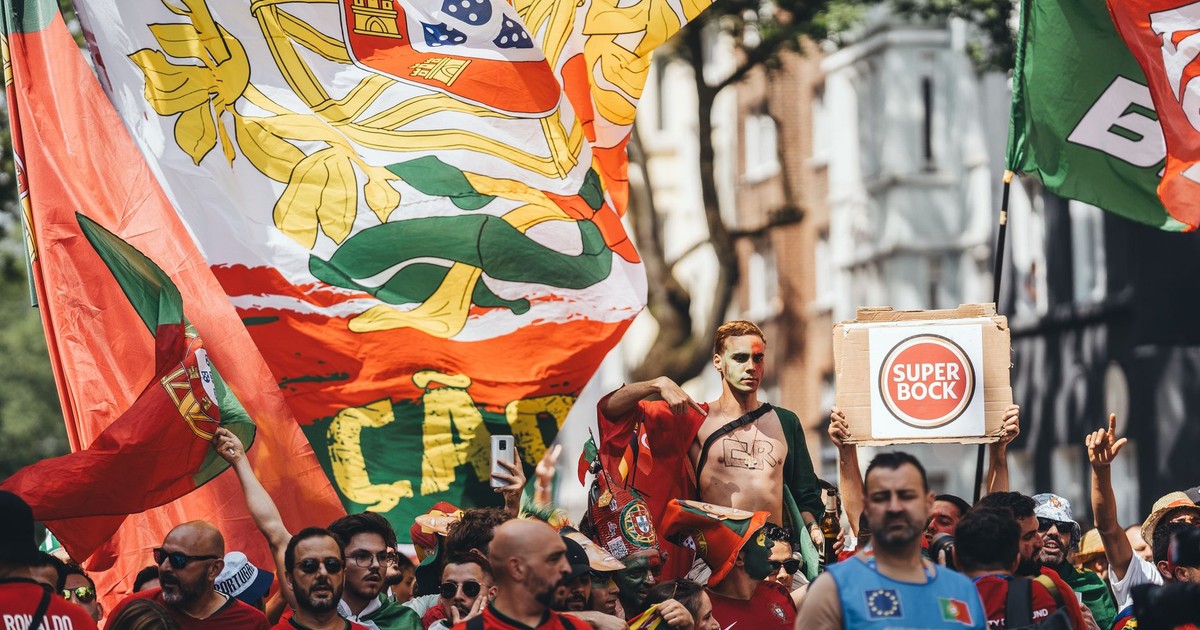
The victory moved Portugal to the top of Group K, one point ahead of Colombia. Portugal’s final group match is against Colombia, a result that will determine where they finish in the group heading into the knockout rounds.
This is likely to be Ronaldo’s final World Cup, after a glittering career that saw him win the European Championships with Portugal in 2016 and the Champions League five times, with Manchester United and Real Madrid. Portugal have never won the World Cup. Getting there with Ronaldo, in what is almost certainly his last chance, adds a layer to every remaining game that goes beyond statistics.
Ronaldo had several chances to move onto a hat-trick in the second half but was unable to find a third goal as Portugal secured their place on four points in the group. He’ll have another shot soon enough.
Read More: 10 Women So Dangerous They Changed the Course of History
The Last Act of a Long Story
Scoring at six consecutive World Cups means arriving at each one four years older, carrying more expectation and more scrutiny every time, and still delivering in the six minutes or sixty minutes you’re given. It means doing it at 21 in Germany and again at 41 in Houston, with injury-hampered tournaments, early exits, nights on the bench at 37, and a goalless opener at 41 that had people writing his sporting obituary in real time all sitting somewhere in between.
Goal tallies can be chased. Appearance records can be beaten by staying healthy and staying selected. But this particular record required something harder to manufacture: showing up at every major tournament across two full decades and scoring in each one. FIFA confirmed that no other player in the history of the competition has done it. Given that both Ronaldo and Messi are likely at their final World Cup, and no other active player is anywhere near five scoring tournaments, it may be a long time before anyone comes close.
After the final whistle on Tuesday, Ronaldo was named man of the match. He walked off the field at Houston Stadium having extended a record that didn’t exist until he created it. Portugal still have work to do. So does he. But for one afternoon in Texas, a 41-year-old made the case, again, that some arguments are best settled by just scoring the goal.
AI Disclaimer: This article was created with the assistance of AI tools and reviewed by a human editor.