

The argument isn’t over when to reload the dishwasher or whose turn it is to take out the trash. For people who operate at high cognitive intensity, the real disruption is something nobody in the room is doing on purpose. It’s the sound of a coworker chewing through a bag of chips two desks over. It’s the television murmuring in the next room. It’s the ringtone that goes off, gets silenced, then goes off again twelve seconds later. The argument that happens afterward is almost always about something else entirely.
There’s a reason certain sounds feel almost physically intrusive to some people while barely registering for others. The brain doesn’t process all incoming audio neutrally. It runs a constant triage, sorting sounds by urgency, meaning, and unpredictability, and some kinds of noise jump the queue regardless of whether you invited them in. For people with highly active cognitive processing, that sorting system is tuned finer. The sounds that others filter out in seconds keep landing.
Annoying sounds can disrupt concentration, interfere with task performance, and contribute to mental fatigue. Even when not actively attended to, salient or changing sounds in the environment can involuntarily divert attention. You don’t have to be listening to something for it to cost you. The distraction happens upstream, before conscious choice enters the picture. Here are the ten sounds that research and workplace acoustics data consistently identify as the most destructive to deep cognitive work.
1. Overheard Conversations

The single most consistently documented focus-killer isn’t traffic or construction. It’s another person talking nearby, and the reason is biological rather than a matter of willpower. Humans have processing capacity for roughly 1.6 conversations. When someone talks near you, that eats up one of those channels, leaving you with 0.6 to hear your own thoughts. You cannot train yourself to ignore speech, because your brain is wired to process language whether you want it to or not.
Speech noise is the top complaint of office workers about their offices, and one central reason is that speech enters readily into the brain’s working memory and is therefore highly distracting. Your auditory cortex does its job, which happens to be the exact opposite of what you need when you’re trying to draft something, solve a problem, or hold a complex idea in your head long enough to work with it.
Research by Dr. Gloria Mark at the University of California, Irvine found that after any interruption, including noise-driven ones, workers take an average of 23 minutes and 15 seconds to fully return to deep focus. A Jabra 2024 global survey of knowledge workers found that noise negatively affects the productivity and concentration of most workers, and that fewer than 10% of respondents say a loud environment is optimal for their work. Overheard conversation is the leading culprit inside that number.
2. Chewing and Eating Sounds

Chewing is the sound most frequently cited by people who identify as misophonia sufferers, a condition where specific sounds trigger intense emotional or physiological responses. But you don’t need a clinical diagnosis to lose your train of thought the moment someone opens a bag of popcorn across the table. The reaction is partly explained by the brain’s tendency to assign priority to sounds associated with other people’s bodies: they signal proximity, attention, and social context, all things the brain considers relevant even when you’re trying to ignore them.
Sensory processing sensitivity, a trait characterized by deeper processing of sensory information, has been linked to both intelligence and noise sensitivity. For people on that end of the spectrum, the lip smack or the crunch of a snack isn’t just mildly annoying. It registers with enough force to pull focus entirely away from the task, resetting whatever chain of thought was in progress. The sound is also difficult to predict: it starts and stops without warning, and unpredictability is itself cognitively costly, as complex and variable noise significantly reduces learning efficiency by disrupting cognitive processing and heightening mental fatigue.
If you’re in a shared space and someone is eating near you while you’re trying to do complex work, moving, using noise-canceling headphones, or timing your deep work to avoid lunch-adjacent hours is a genuine productivity decision, not a precious one.
3. Notification Pings and Alert Sounds

The ping of a phone or laptop notification has an almost adversarial relationship with focused thought. It was designed to capture attention, and it does its job even when the notification belongs to someone else’s device. Alert sounds are engineered to be exactly the kind of acoustically salient event the brain cannot comfortably ignore, and even when not actively attended to, salient or changing sounds in the environment can involuntarily divert attention.
A ping embeds a question even if you don’t look at the screen. Part of your processing capacity immediately wonders what it was. That partial redirection is enough to interrupt the kind of sustained, layered thinking that complex cognitive tasks require. Repeated interruptions compound: each one resets your re-engagement timer. Once distracted, it can take more than 20 minutes to regain focus, and workers who encounter distractions at a rapid rate rarely reach a state of flow.
Silencing your own phone is only half the answer. In shared environments, other people’s devices contribute to the same cognitive tax. Offices and households where deep work is genuinely valued tend to establish shared notification norms, not just individual ones.
4. Repetitive Bass or Low-Frequency Noise

The low thump of music from a neighboring apartment, the drone of a subwoofer through a wall, the persistent hum of an HVAC system at a certain frequency: these sounds are particularly insidious because they often sit below the threshold of conscious acknowledgment. You may not notice you’re hearing anything, but your body is responding anyway.
One of the most immediate effects of exposure to low-frequency sound is cognitive impairment, and studies have shown that prolonged exposure to low-frequency noise can negatively affect concentration, memory, and decision-making abilities. Bass-heavy or low-frequency environmental noise is very hard to block out physically. Standard earplugs attenuate higher frequencies more effectively, and because the sound is often felt as vibration as much as heard as audio, the cognitive cost persists even when subjective awareness of the sound is low.
For anyone who works from home in an urban environment or a building with shared walls, this is often the hidden tax they can’t quite name. The afternoon when nothing seems to be coming together, despite a clear schedule and a manageable task list, may well have a 60Hz neighbor as an uncredited contributor.
5. Television Left On in the Background

Background television is one of the most normalized ambient noise sources in home environments, and one of the most cognitively expensive. Unlike pure background noise, television produces something uniquely difficult for the brain to ignore: unpredictable speech with unpredictable emotional content. Laughter, raised voices, dramatic music, sudden silence: the audio track of a TV show is essentially a sequence of attention-grabbing events strung together by design.
Speech is variable, it has meaning, and the auditory cortex treats it as high-priority input. That’s the specific thing that kills focus, and it’s the specific thing acoustic treatment needs to target. Television delivers that variable, meaning-laden speech continuously, for as long as it’s on. Even a show you’ve seen a dozen times contains enough novelty in its audio to keep pulling attention sideways.
The habit of leaving a television on “for company” or “just as background” is understandable, but the cognitive cost for anyone trying to do genuine thinking work in that environment is real and measurable. People who work from home and find their productivity mysteriously lower than expected often underestimate how much of that gap is the TV they insist isn’t bothering them.
6. Construction and Power Tool Noise – The Annoying Sounds Concentration Needs Limits On

The jackhammer outside, the drill from a renovation two floors up, the leaf blower that arrives every Tuesday morning without warning: construction and power tool noise hits every criterion for maximum cognitive disruption. It’s loud, it’s irregular, it carries the acoustic profile of urgent events, and there’s nothing you can do about it.
Research examining the impact of different noise types on cognitive performance found that complex noise and steady noise have meaningfully different effects on attention, mental workload, and mental fatigue, and that complex noise significantly reduces learning efficiency, notably impairing accuracy and reaction time. Construction noise is the archetypal complex noise: its timing, pitch, and intensity are all unpredictable, which means the brain cannot build a stable model of it to push into the background.
The German Association of Engineers caps intellectual work environments at 55 decibels. Most open offices hit 60 to 70 decibels, a gap that sounds small but represents a doubling of perceived loudness, costing clarity, creativity, and cognitive output every day. Active construction sites routinely exceed 85 decibels. For anyone trying to do complex analytical or creative work near a building site, noise-canceling headphones with a strong passive seal are not optional equipment.
7. Loud Phone Calls – Especially One-Sided Ones
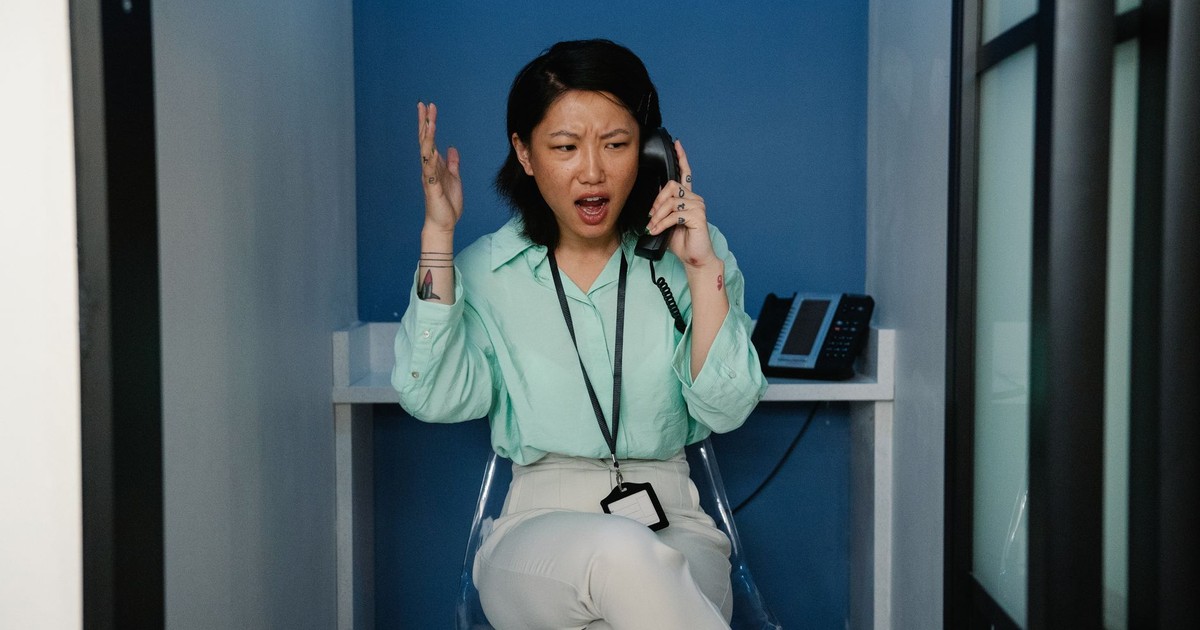
Anyone who has tried to concentrate near someone on a speakerphone call knows the specific torture of one-sided conversation. The brain processes the half it can hear and automatically tries to infer the other half. That inference attempt is involuntary and cognitively expensive, and it runs continuously for as long as the call does.
Overhearing a one-sided call is actually more disruptive than a two-person dialogue in the room, because the missing half creates a continuous prediction error. Your brain knows something is incomplete and keeps attempting to fill the gap. Noise sensitivity is a stable trait that is independent of noise exposure, and among individuals exposed to the same noise, those with high sensitivity are more likely to pay attention to the noise, interpret it negatively, and react emotionally, compared to those with low sensitivity.
Open-plan offices where calls are taken at desks, and homes where a household member works from the kitchen on speakerphone, are environments where this plays out every day. The person on the call rarely registers that they’re disrupting anyone, partly because they’re absorbed in the conversation and partly because one-sided calls feel normal to the person generating them. To everyone else in earshot, they are not normal at all.
8. Snoring

For people who share a bedroom with a snorer, the concentration issue isn’t really about concentration at the desk. It’s about what happened the night before. Noise during sleep disrupts sleep stages, particularly slow-wave sleep, which is crucial for cognitive function. Slow-wave sleep is the deep restorative phase where the brain consolidates memory and repairs the neural infrastructure of attention. Night after night of disrupted slow-wave sleep produces a cumulative cognitive debt that no amount of morning coffee fully offsets.
The effect shows up as difficulty sustaining attention, reduced working memory capacity, slower processing speed, and lower tolerance for exactly the kind of ambient annoyances covered in this list. Chronic sleep disruption from snoring makes every other noise on this list worse, because the cognitive buffer that would normally absorb minor disruptions is already depleted.
If you find yourself increasingly irritated by sounds that used to roll off you, sleep quality is worth examining before you start shopping for noise-canceling headphones. They won’t help much if the real problem starts at 2am.
9. Repetitive Dripping, Ticking, and Appliance Hum
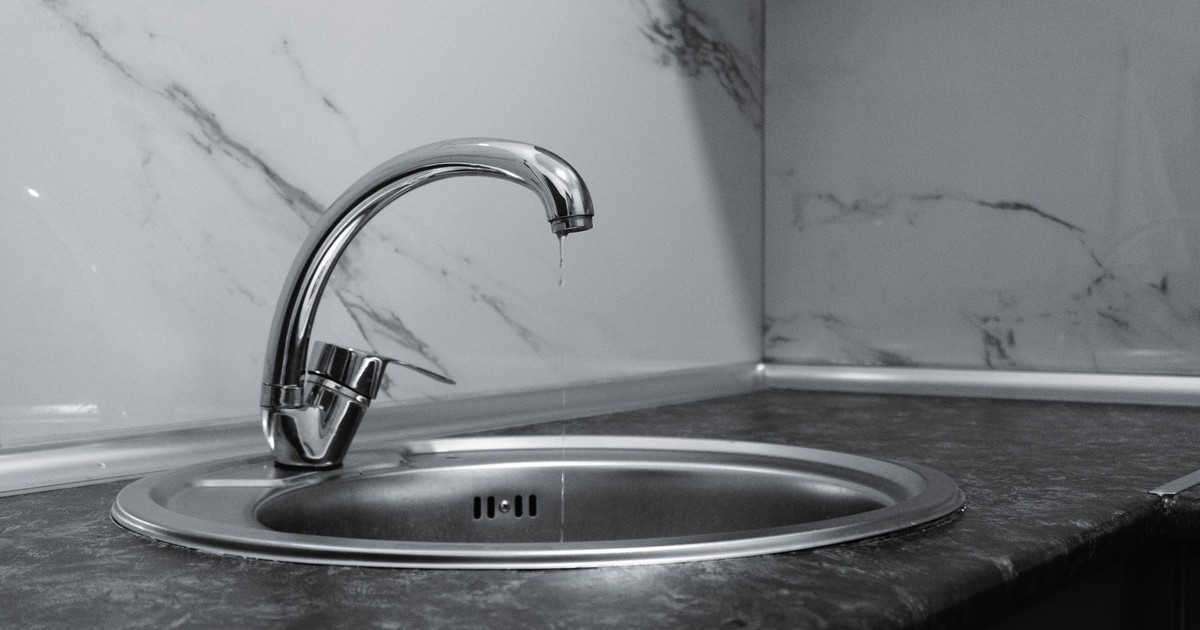
A ticking clock should be easy to ignore. It’s steady, it carries no meaning, and it’s often barely audible. And yet for a significant number of people, a ticking clock in an otherwise silent room makes sustained concentration almost impossible. Rhythmic, repetitive sounds interact with attention in a specific way: rather than being pushed into the background, they set an auditory beat that the attentional system keeps checking back in with.
Dripping faucets work the same way. The interval between drops is long enough to create anticipation and short enough to interrupt before a thought fully develops. Appliance hum at a consistent frequency locks onto a similar pattern. In highly intelligent individuals, the central nervous system may work overtime, constantly processing and analyzing incoming stimuli, and while this heightened awareness can be useful for problem-solving and creative thinking, it can also make filtering out unwanted noise considerably harder.
Fixing a dripping tap takes ten minutes. Removing a ticking clock from a workspace takes five seconds. These seem like trivial interventions, but for someone whose cognitive processing is fine-grained enough to register rhythmic sounds as persistent interruptions, they are among the highest-leverage improvements available.
10. Crowds and Ambient People-Noise

The collective murmur of a busy café, a crowded coworking space, or a full open-plan office floor is a form of noise that contains all of the most disruptive elements at once: intermittent speech, unpredictable volume spikes, emotional content from strangers’ conversations, and enough acoustic complexity to make steady filtering impossible. Nearly seven in ten employees say noise levels in their office are a source of dissatisfaction, making acoustic comfort one of the lowest-rated workplace attributes in modern surveys. Only about 32% of workers report being satisfied with office noise levels, and 77% express a clear preference for environments without ambient people-noise when they need to focus.
Crowd noise affects annoying sounds concentration differently depending on the type of work. Tasks that are largely automatic, repetitive, or don’t require holding complex information in working memory can coexist reasonably with background crowd noise. Tasks that require creative problem-solving, writing, analysis, or original thinking take a harder hit. Noise disrupts concentration, resulting in lapses in attention that compromise decision-making and reduce work efficiency.
The popular idea of the productive café worker, laptop open, headphones off, flourishing in the noise, tends to describe someone doing tasks that sit in the first category rather than the second. The writer on deadline or the analyst building a financial model in that same café is almost always wearing noise-canceling headphones. The environment doesn’t care what kind of work you’re doing. Your brain does.
Read More: People Who Are Happiest When It’s Raining Outside Usually Have 9 Highly Intelligent Traits
What to Do With All of This
The pattern across all ten of these sounds is the same: the brain was never designed to have a volume knob, and no amount of discipline or focus training changes the basic architecture of auditory attention. Unpredictable sounds pull focus whether you consent to it or not. Speech activates language processing regions whether you’re interested in what’s being said or not. Repetitive sounds set rhythmic hooks in the attentional system even when they’re quiet enough that you’d swear you weren’t noticing them.
Managing your cognitive environment isn’t a luxury habit for fussy people. It’s a basic condition for doing work that requires sustained, layered thinking. The people who dismiss sensitivity to these sounds as oversensitivity are usually either doing work that doesn’t require deep concentration, or they’ve accepted a permanent performance floor without examining what’s causing it.
Some of these patterns are harder to change than others. Shared office space, urban living, and households with different schedules all create noise conflicts that don’t have clean solutions. But knowing which sounds are genuinely disruptive, and why the disruption is neurological rather than temperamental, is where the honest accounting starts.
Disclaimer: This information is not intended to be a substitute for professional medical advice, diagnosis, or treatment and is for information only. Always seek the advice of your physician or another qualified health provider with any questions about your medical condition and/or current medication. Do not disregard professional medical advice or delay seeking advice or treatment because of something you have read here.
AI Disclaimer: This article was created with the assistance of AI tools and reviewed by a human editor.