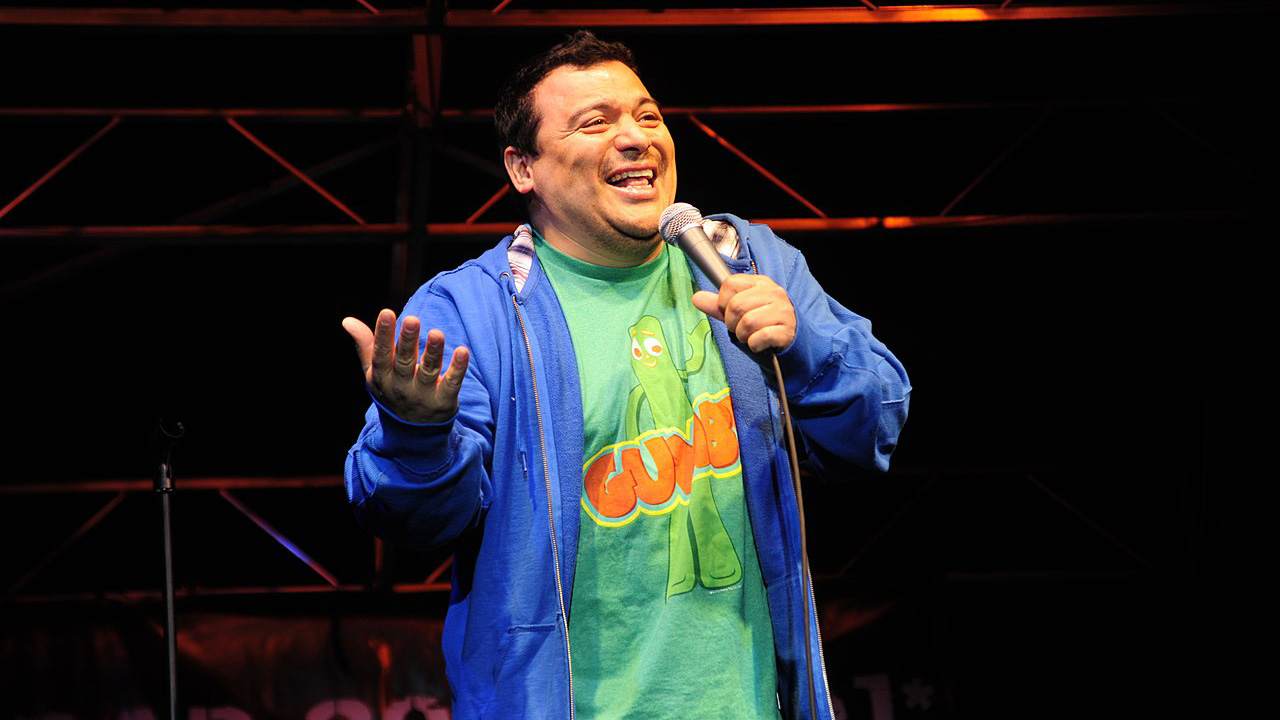

The argument that happens most reliably in California tax court isn’t about what a person owes. It’s about whether they thought the state would actually show up. Carlos Mencia apparently did not.
On June 18, 2026, law enforcement arrested the comedian at his Encino home on 12 felony counts of state tax evasion. The Carlos Mencia tax evasion case became the first filed by a newly created prosecutorial unit that the Los Angeles District Attorney had only just stood up the month before. The DA’s office chose a recognizable name to announce itself to the public. They got one.
The irony the DA reached for at the podium was almost too neat. On his Comedy Central show years earlier, Mencia had said on camera, “Maybe I’m different, but I think taxes are a good thing.” The DA did not let that one go unmentioned.
What the Charges Actually Say

The LA County DA’s office charged Mencia, also known as Ned Arnel Holness, with 12 felony counts of tax evasion: six felony counts of failure to file personal income tax with the intent to evade tax, and six felony counts of failure to file corporate income tax with the intent to evade tax. Mencia allegedly failed to file any taxes for tax years 2019 through 2024, with each count corresponding to one of the six years he allegedly failed to file on both his personal and corporate income.
Mencia allegedly failed to report approximately $3.3 million in personal income and approximately $5.4 million in corporate income for his company Nedlos Entertainment, Inc. He is also accused of owing more than $300,000 in taxes to the state of California: approximately $267,594 in personal income taxes and approximately $35,117 in corporate income taxes.
That $300,000 figure can seem low relative to the $8.7 million income total, but California’s state income tax rate, even at the upper brackets, doesn’t consume the full amount. If convicted as charged, Mencia faces up to 11 years and four months in state prison. He also faces civil penalties and interest on the taxes he didn’t pay, which would push the total amount owed considerably higher. Arraignment is scheduled for June 22 in Department 100 of the Van Nuys Courthouse. Mencia was arrested and remains in custody, with bail set at $250,000.
DA Nathan Hochman was specific at the news conference that the charges deal only with state tax obligations, adding that his office would be working with federal authorities to potentially pursue additional tax-related charges. The current indictment does not involve the IRS. That detail is worth sitting with, because it means what’s already been filed is likely only part of the picture.
Who Is on That Delinquency List
One detail from the DA’s press conference landed harder than most. Hochman described Mencia as “one of California’s biggest tax scofflaws” and said the comedian appears on the California Franchise Tax Board’s list of the state’s 500 largest tax delinquents in both personal and corporate income tax categories. That is not a list anyone stumbles onto accidentally. Earning a spot in the top 500 among all tax delinquents in one of the largest economies in the world requires sustained, deliberate non-filing at significant scale over years.
Hochman noted that Mencia had regularly paid taxes before 2019, which rules out the explanation that this was administrative chaos or a long-running oversight. Something changed in 2019. Prosecutors haven’t publicly specified what, and Mencia’s representatives had not responded to press inquiries at the time of publication.
This also isn’t Mencia’s first brush with federal tax authorities. Mencia and his wife Amy owe nearly $1.2 million for three years of unpaid federal income taxes, according to a lien filed by the IRS in Douglas County, Oregon. Documents show the couple owe $433,890 for unpaid taxes in 2013, $341,126 for taxes owed in 2014, and $386,335 for taxes owed in 2015. The current state charges represent the escalation of a pattern that tax authorities had been tracking for some time.
The Unit That Filed This Case First
The Mencia case isn’t just notable for who is involved. The Business Tax Fraud Unit was established in May 2026 as a specialized unit to strengthen the DA office’s ability to investigate and prosecute business tax-related offenses that undermine public trust, deprive government entities of critical revenue, and often exploit vulnerable individuals and businesses.
Being the unit’s debut case gives these charges a significance beyond the individual defendant. The DA’s office is signaling something about enforcement priorities, and they chose a high-profile name to make that signal as loud as possible. Hochman said he created the unit partly because of the federal government’s retreat from pursuing such cases. He noted that a previously active federal tax enforcement section no longer operates on the criminal side. The implication is clear: if federal enforcement has stepped back, Los Angeles County is stepping forward.
The case is being prosecuted by Deputy District Attorney in Charge Michele Hanisee of the Business Tax Fraud Unit and Head Deputy District Attorney Alex Karkanen of the Consumer Protection Division. It remains under investigation by the California Franchise Tax Board.
The Career That Got Him Here
Born Ned Arnel Holness in Honduras and raised in East Los Angeles, Mencia began doing stand-up in LA clubs in the late 1980s. By the early 2000s, he had become one of the most popular comics in the country. He hosted a Comedy Central show from 2005 to 2008 called “Mind of Mencia” and has been in comedy for more than two decades. The comedian currently lists 80 upcoming shows on his website, taking place at various venues across the country through 2026.
At his peak, the show made him one of the most recognizable Latino voices in American comedy. His material dealt heavily with race, class, and the absurdities of immigrant identity in the United States, delivered with a bluntness that either won audiences over completely or put them off entirely.
Then came a different kind of trouble. In February 2007, Joe Rogan confronted Mencia onstage, accusing him of stealing material from fellow comedians including George Lopez, Ari Shaffir, and Bobby Lee. Rogan referred to him as “Carlos Menstealia.” The confrontation was captured on video and spread widely online. Mencia defended himself against the accusations. His Comedy Central series ended in 2008, shortly after. Whatever the public verdict on that episode, Mencia never stopped performing. The 80 booked shows on his site, right up until the arrest, make clear he was still drawing audiences and still, apparently, earning at a level that put $8.7 million in unreported income on the books across six years.
What Happens Next
Mencia has not entered a plea. His attorney had not responded to media requests for comment as of the day of the arrest. None of the charges have been proven in court, and as the DA’s office itself noted in its official release, the defendant is presumed innocent unless and until proven guilty.
But the structure of what prosecutors have laid out is unusually detailed. Seventy-eight notices from the state tax board. Six consecutive tax years. Two categories of income, personal and corporate, each generating a separate charge for each year. That is not the profile of an oversight. It is the profile of a decision, repeated annually, not to engage.
DA Hochman put it plainly at the news conference: “Mr. Mencia has an income most people can only dream of, and like everyone else he is required to file his personal and corporate tax returns and pay his fair share.”
The DA’s office has been specific about what it wants the public to understand about this case: that it isn’t simply about one comedian’s taxes. It’s about whether California can and will pursue high-earning individuals who treat their state tax obligations as optional. The Business Tax Fraud Unit exists now. Mencia is its first case. The DA’s office has made clear they expect more to follow.
Read More: 14 Famous Tourist Spots That Cost a Fortune and Usually Disappoint Visitors
The Larger Ledger

There’s something worth noting about the gap between how we track public figures and what is actually happening in their financial lives. Mencia had 80 shows booked. He was still on the road. By any visible measure, he was working. And yet for six years, nothing was being reported to the state of California. The California Franchise Tax Board sent 78 demand notices over that period. Not one produced a return.
The case raises a question that goes well beyond Mencia: how often does financial non-compliance at this scale go unnoticed until a new enforcement unit decides to act on it? Hochman said the amount of tax violations in California runs “into the millions and millions and millions of dollars every year.” The Mencia arrest, for all the attention it draws because of his name, is one entry in a much longer column. What distinguishes it is that a newly created unit chose it as its first. That’s a deliberate statement about intent. And intent, in law, is exactly what the charges allege Mencia was exercising every year for six straight years. The court will decide whether that’s true. Until then, the arraignment date is June 22, bail sits at $250,000, and the California Franchise Tax Board has 78 pieces of paper that suggest this outcome was never a surprise.
AI Disclaimer: This article was created with the assistance of AI tools and reviewed by a human editor.