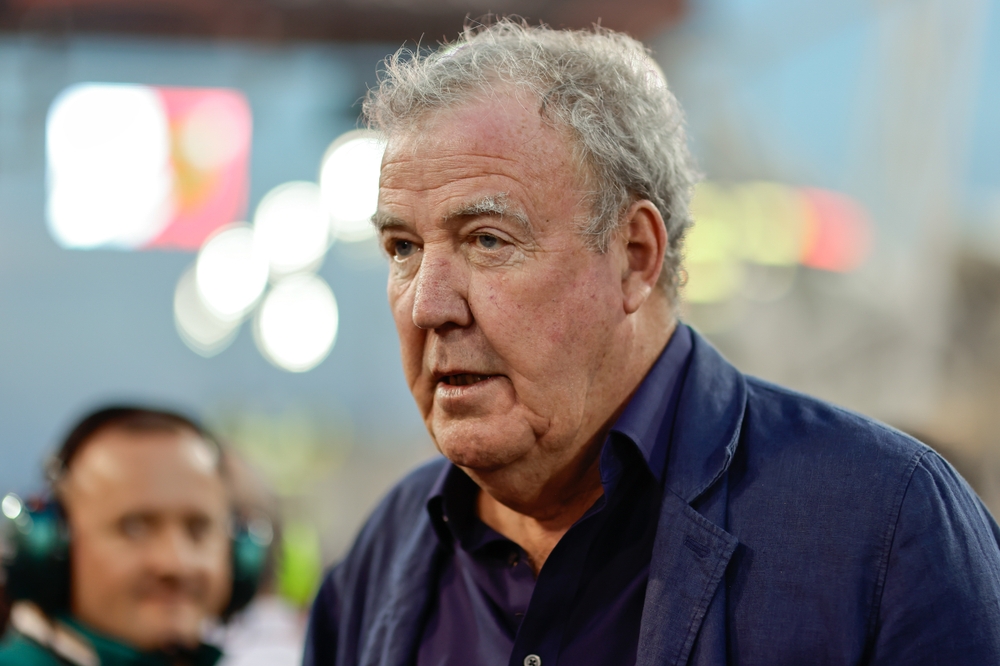

Jeremy Clarkson revealed something during the final two episodes of Clarkson’s Farm Season 5 that stopped viewers in their tracks. Midway through a conversation about the harvest with farm manager Kaleb Cooper and land agent Charlie Ireland, the 66-year-old leaned back and said simply: “I’ve got cancer.” No preamble. No softening. Just three words dropped into a discussion about crops.
When asked where the cancer was, Clarkson initially deflected, telling his co-stars its location was “of no concern of anybody,” before elaborating: “I had a biopsy, and it is cancer, and it is aggressive. But it’s really early.” Those two words – aggressive and early – sit at the heart of the Jeremy Clarkson cancer diagnosis, and of why it has resonated so widely beyond the show’s already enormous viewership. They sound contradictory. They are not.
Clarkson shared the news across Season 5’s final two episodes, released on Wednesday, June 17, 2026. The series, which has run since 2021 and turned the former Top Gear presenter into an unlikely agricultural icon, has always been willing to document the messier corners of his life. But this was not a failing crop or a planning dispute. This was a man telling his colleagues, on camera, that he didn’t know whether he would see them again.
The Diagnosis: What Clarkson Has Revealed
Clarkson told his co-stars he had been hoping to get the harvest done before seeking treatment, but the timeline didn’t cooperate: “It’s going to be slap bang in the middle.” The disruption to an already demanding farming season underlined just how abrupt the diagnosis had felt, even though he had known about it for several weeks before filming those scenes.
He said he had known “since May” and had undergone an operation to remove the cancerous section. He later confirmed the cancer was in his prostate, and that he had undergone a procedure: “The prostate, 10 percent of it is dead.” That procedure, removing roughly a tenth of the gland where the cancer was located, is a targeted surgical approach aimed at eliminating the affected tissue while preserving as much of the prostate as possible.
Asked when he would know whether the treatment had worked, Clarkson replied: “I won’t know whether it’s worked or not until November, probably.” That waiting period, months of uncertainty after surgery, is one of the harder realities of prostate cancer treatment that rarely gets discussed in public. The operation itself is almost never the end of the story.
Speaking from a hospital bed at the end of the Season 5 finale, Clarkson revealed he had experienced complications during treatment. “We started Season 5 with me in a hospital bed,” he said, “and here we are at the end of Season 5, and I’m back in a hospital bed.” He addressed viewers directly: “What I wanted to say was if this is all successful, I’ll see you for Season 6, and if it isn’t, I won’t.”
A Year of Serious Health Battles
The Jeremy Clarkson cancer diagnosis did not arrive in isolation. It is the second major health event Clarkson has faced within the span of roughly 18 months.
In October 2024, Clarkson revealed he had undergone emergency heart surgery, including the insertion of a stent, after he was suddenly taken ill after returning home from holiday. He described feeling clammy, with a tightness in his chest and pins and needles in his left arm. After several checks at the hospital, he was told he was not having a heart attack, but that he was “maybe” days away from death. One of the arteries feeding his heart with blood was completely blocked, and a second was heading the same way.
His doctor told him to stop working following the procedure, which had been prompted by a “sudden deterioration” in his health. He was also told that “a lot” of his current work would have “to go.” He ignored that advice. Season 5 of Clarkson’s Farm was filmed throughout 2025.
Clarkson himself drew the arc of that year in the Season 5 finale: “So we started the year and I had coronary heart disease and ended it with me with cancer.” It is a sentence that, spoken in the matter-of-fact cadence he is known for, lands harder than any dramatised version of those events could.
Clarkson had also, years before his own diagnosis, written publicly about prostate cancer awareness. He reflected on friends who had been struck with the disease, writing: “I’ve had too many friends go down with prostate cancer, and all it takes to get on top of the situation early is a moment or two of being a bit cross-eyed.” That column, written when he appeared to have a clean bill of health, reads differently now.
Prostate Cancer: The Scale of the Problem
The reason Clarkson’s disclosure carries weight beyond celebrity news is the sheer scale of the disease he has been diagnosed with. More than 56,000 men were diagnosed with prostate cancer each year in England between 2022 and 2024, according to provisional figures from Prostate Cancer UK. More than 10,000 men died from the disease each year in England between 2021 and 2023. That is one man dying from prostate cancer every hour.
Around 8 in 10 men diagnosed with prostate cancer in the UK survive their disease for ten years or more, according to Cancer Research UK. But that headline figure comes with an important qualification: it depends heavily on when the cancer is caught. Survival for prostate cancer is generally good, particularly if it is diagnosed early. Clarkson’s explicit statement that his cancer was “really early,” despite being described as aggressive, places him in a significantly more favorable statistical position than many of those 56,000 annual diagnoses.
Prostate cancer is the most diagnosed cancer in men aged over 45 in England, with higher risks linked to ageing, Black ethnicity, and family history. Dr. Tim Woodman, medical director for cancer services at Bupa, has noted that prostate cancer “really starts to pick up once you get into your 60s and peaks between 75 and 79.” Clarkson, at 66, sits squarely in the highest-risk demographic.
Prostate cancer incidence rates in the UK are projected to increase by 14% between 2024 and 2040, with around 85,100 new cases expected each year by that point, which makes the current limitations in screening infrastructure an increasingly pressing public health issue.
The Screening Gap: Why So Many Cases Are Caught Late
One of the most consequential details in Clarkson’s account is that he had a biopsy. Getting to a biopsy requires knowing something might be wrong in the first place. According to the NHS, prostate cancer often has no symptoms at all in its early stages, with urinary problems being the most common presenting sign. The NHS offers men over 50 a prostate-specific antigen (PSA) blood test every one to two years.
The PSA test detects a protein produced by the prostate gland. An elevated result doesn’t confirm cancer – it flags the possibility and triggers further investigation, usually an MRI and then a biopsy. There is currently no UK-wide prostate cancer screening program. PSA tests can detect early signs, but they have limitations. False positives can lead to unnecessary procedures. False negatives can provide false reassurance. The test is useful but imperfect, which is part of why routine national screening has been slow to arrive.
The NHS recently announced it would begin offering targeted screening to men most at risk. Men with BRCA2 genetic mutations, which significantly raise the risk of prostate cancer, will be tested every two years between the ages of 45 and 61 if they have a relevant family history.
The 2026 updated guidelines from the American Urological Association now provide revised guidance on prostate cancer screening, imaging and biomarker use, initial and repeat biopsies, and biopsy technique, incorporating new evidence on the use of MRI in biopsy-naive patients. The shift toward MRI-guided biopsy is a meaningful improvement in precision: rather than taking blind tissue samples across the whole gland, clinicians can target specific suspicious areas – which is consistent with the kind of focal treatment Clarkson described.
“Aggressive but Early”: What That Combination Actually Means
When Clarkson described his cancer as “aggressive” but “really early,” he was not being contradictory. Aggressiveness refers to the nature of the cancer cells – specifically, how fast they are likely to grow and spread. Early refers to the stage, meaning how far the cancer has progressed at the time of detection. One is about the character of the cells; the other is about how much time they’ve had.
An aggressive cancer caught early is, in many respects, a better clinical situation than a slow-growing cancer caught late. The cell type matters less than the stage when it comes to treatment options and outcomes. Clarkson’s description of having 10 percent of his prostate removed – specifically the section where the cancer was located – is consistent with a focal ablation approach, where only the affected portion of the gland is treated rather than the whole organ being removed. That approach typically carries a lower risk of the side effects associated with full prostatectomy.
Prostate cancer survival has increased significantly in the UK over the last 50 years. In the 1970s, fewer than 1 in 5 men diagnosed survived beyond ten years. By 2018, that figure had risen to around 8 in 10. Both better detection and more targeted surgical techniques – of the kind Clarkson appears to have undergone – account for most of that progress.
The Clarkson’s Farm Context: A Show That Documents Real Life

Clarkson has been filming Clarkson’s Farm, which follows him and his team running Diddly Squat Farm in Oxfordshire, since 2019. What sets the show apart from most celebrity-fronted documentaries is its willingness to sit with failure, uncertainty, and loss. Crops fail. Animals die. Business ventures collapse. And now, health crises unfold in real time.
This is also not the first time prostate cancer has appeared as a storyline within the show’s orbit. Gerald Cooper, the 74-year-old drystone waller who works alongside Clarkson on the farm, had already disclosed his own prostate cancer diagnosis in an earlier season, with Clarkson visibly shaken upon learning the news. Gerald was later confirmed to be cancer-free following his treatment. The show, almost inadvertently, has become a recurring platform for prostate cancer awareness at scale, reaching an audience that many formal health campaigns struggle to access.
There is also a documented case of a man who said that watching Clarkson, Hammond, and May joke about urinary symptoms during an episode of The Grand Tour prompted him to get checked himself – something he had never done before. He was 48. He had prostate cancer.
Season 6 of Clarkson’s Farm is due to air in 2027, and Clarkson’s closing words in the Season 5 finale made clear he is not certain he will be part of it. That honesty, whatever one thinks of the man or his career, is the kind of thing that makes people pick up the phone and make an appointment they have been putting off.
Read More: What Really Happens When You Spend a Day on a Dairy Farm
Key Takeaways
Jeremy Clarkson’s prostate cancer disclosure is, at its core, a story about timing. An aggressive cancer found early enough to treat with targeted surgery is a fundamentally different prognosis from the same cancer found a year or two later. The gap between those two outcomes is often determined by a single blood test.
The facts of this case are also a clear illustration of why the screening conversation matters, particularly for men in their 60s. Prostate cancer frequently produces no symptoms in its early stages. By the time it does, options narrow. Clarkson’s openness about his own biopsy, his treatment, and his uncertainty about the outcome carries more public health weight than a dozen awareness campaigns, precisely because it is specific, unvarnished, and attached to someone millions of men have watched for decades.
The second thread here is one Clarkson himself articulated in the Season 5 finale: coronary heart disease in October 2024, prostate cancer in 2025, two hospital beds bookending a single season of television. Both conditions are disproportionately common in men over 60. Both are more survivable when caught early. And both tend to develop without announcing themselves until they have been developing for some time. That is not a coincidence. It is a pattern, and it is one that a PSA test and a GP conversation can at least partially address.
Disclaimer: This information is not intended to be a substitute for professional medical advice, diagnosis, or treatment and is for information only. Always seek the advice of your physician or another qualified health provider with any questions about your medical condition and/or current medication. Do not disregard professional medical advice or delay seeking advice or treatment because of something you have read here.
AI Disclaimer: This article was created with the assistance of AI tools and reviewed by a human editor.