Five men arrested across four states. A network of at least 23 people identified through encrypted chats. A plot involving explosive drones, pre-positioned snipers, and a planned breach of the White House gate. What the FBI disrupted in the days before June 14, 2026 wasn’t a vague online threat that never got close to real. Investigators say it got very close.
The alleged plot targeted an event unlike anything the White House had hosted before: a full UFC fight card staged on the South Lawn, drawing one of the largest crowds ever assembled there. Security at presidential events is already some of the most layered in the world. The alleged conspirators, according to court filings, had been planning for months anyway.
What broke it open wasn’t a classified intelligence tip or a foreign intercept. It was a phone call from a mother in Ohio who thought something had gone wrong with her son.
How It Started: A Mother’s Phone Call

The investigation into the first named suspect began on June 10, when his mother contacted local law enforcement because of concerns about how he was acting, including his firearms purchases and online communications. His father told investigators that the 19-year-old had recently used $3,000 of his graduation money on camping gear, ballistic plates, a new shotgun, “lots” of ammunition, extra magazines, and plate carriers. His mother then told the FBI that her son had been communicating with an ultra-religious, anti-government group she believed were using religion to manipulate him.
That son was Tycen Proper, 19, of Danville, Ohio. He was arrested on charges of attempted murder of a federal officer and conspiracy to commit an offense against the United States after federal law enforcement thwarted the alleged attack at the UFC Freedom 250 event. During the investigation, family members said he had become “closed off” from family and raised concerns about statements, including sympathetic comments about Adolf Hitler and antisemitic comments on Facebook.
Proper told investigators that he began communicating with others via a TikTok group called “Vanguard of the Old” in March, whose members all said they wanted to protect the U.S. and believed the nation was headed in the wrong direction. His mother told the FBI her son had been meeting online with a group of people “who claimed to be ex-military and Christian-based,” who expressed ultra-religious and anti-government sentiments, specifically citing grievances about government corruption, the handling of the Epstein files, and data centers taking up water in communities. Members of the group believed that the United States needed to be torn down so that it could be rebuilt.
Proper told federal investigators on June 11 that he intended to “jump-start” a revolution in the U.S. with an attack on June 14 that would begin with drone bombings over the north side of the arena. What he told investigators that day would ultimately help the FBI dismantle an operation stretching across the country.
The Plan: Drones, Snipers, and a Second Wave
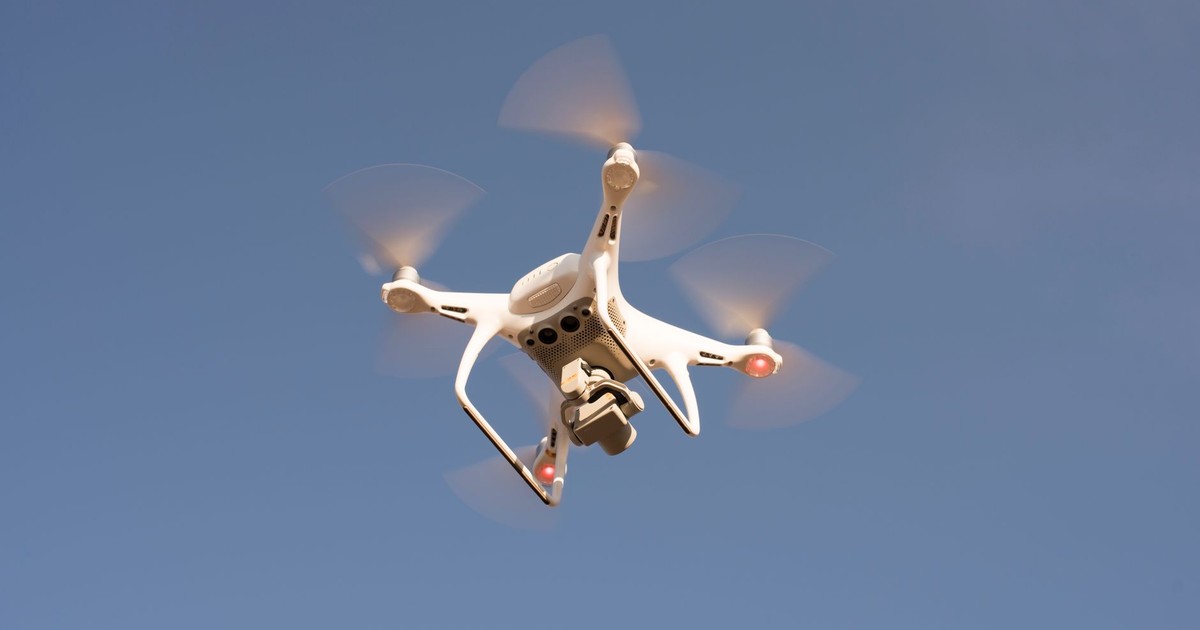
According to the Department of Justice, the conspirators allegedly planned to deploy drones armed with explosives in and around the UFC Freedom 250 event in order to force an evacuation, and then planned to deploy snipers to fire upon “high value targets” within the fleeing crowd. A “second wave” was then allegedly planned to storm the White House gate.
The operational detail in the court filings was specific enough to make clear this wasn’t aspirational posting. Court documents allege that suspect Daniel Eskridge told the group they needed $1,300 in funding and “5 teams of 3, each team consisting of 1 sniper, 1 tier one operator as support/lookout, and one drone operator.” Agents who searched Eskridge’s residence on June 13 recovered rifles, a shotgun, a pistol, and other tactical gear.
Communications among the group moved from TikTok to the encrypted messaging app Signal, where the FBI says they planned the attack in detail. There was one large chat with approximately 19 individuals dedicated to coordinating the attack, and smaller groups of four or five users. These smaller groups were broken up based on assigned roles, including shooters and shooting locations. Some members allegedly discussed using the Potomac River as an escape route following the attack.
The alleged targets were not random. Court records detail a plot to use small drones carrying explosives and snipers to target senior government officials and wealthy attendees, with specific potential targets including President Trump, Vice President JD Vance, Israeli Prime Minister Benjamin Netanyahu, and Elon Musk. Netanyahu did not attend the event. According to officials, the goal was to target “capitalist elites,” “billionaires,” or politicians who had received donations from the American Israel Public Affairs Committee (AIPAC).
The Five Men Charged
According to court filings, the five men charged are Tycen C. Proper, 19, of Danville, Ohio; Bryan Omar Roa, 24, of Calimesa, California; Michael Alan Thomas, 32, of Pinon Hills, California; Daniel K. Eskridge, 32, of Kidder, Missouri; and Abraham Hermosillo Alvarez, 31, of Omaha, Nebraska.
Alvarez was identified as the alleged architect of the operation. The FBI identified Alvarez as the individual using the name “Shepherd” in an encrypted chat app used to plan the attack, and assessed that he was responsible for planning, organizing, and directing the operation. Agents filed a request with TikTok to identify the user going by the handle @unitedworldwide444, and the platform provided investigators with Alvarez’s IP address, which was traced to his home in Omaha. Alvarez was then identified as the user going by “Shepherd” in the planning chats for the attack.
In an interview with law enforcement, Proper described a conspirator using the moniker “Shepherd” as the group’s chief organizer, and his cooperation proved critical. Proper “identified the online usernames of his co-conspirators” when he spoke to investigators while hospitalized in Ohio, and the FBI then used that data to track down Eskridge and Alvarez. A further review of another suspect’s social media revealed videos and pictures of him engaging in tactical training in remote locations. Phone messages showed Thomas and others exchanging maps of locations around Washington, D.C., where they were planning the attack and their escape.
Each of the five has been arrested and is being detained pending additional proceedings.
The Scale of the Investigation
The five charged men were only part of what investigators say is a broader network. An initial review of one suspect’s iPhone identified at least 23 Signal users discussing pre-operational activity. The investigation has stretched across at least 12 FBI field offices.
Fox News first reported that the individuals arrested are American citizens and that investigators do not believe there is a foreign nexus. Terrorism remains a persistent threat to U.S. citizens and interests, and in 2025, the Center for Strategic and International Studies found that domestic terrorism represented a greater threat to the United States than international terrorist organizations, with most domestic attacks carried out by lone actors or small groups holding a range of ideologies. The UFC Freedom 250 attack plot fits that pattern: a decentralized, online-recruited group of American men, radicalized through social media, operating not under any foreign flag but under their own grievances.
ABC News reported that FBI and Department of Homeland Security officials had warned in a bulletin earlier in June that the fights were “attractive symbolic targets,” though no credible threats were listed in that bulletin at the time. The threat didn’t surface in any intelligence file until a 19-year-old’s mother picked up the phone.
The Night Itself
For the thousands of people on the South Lawn, the evening unfolded as planned. The event kicked off with the Marine Band’s performance of the national anthem, sung by Zac Brown, and was capped off with a flyover by the Navy’s Blue Angels and Air Force Thunderbirds. In the main event, Justin Gaethje defeated the previously undefeated Ilia Topuria to win the UFC lightweight belt, with President Trump watching close by. More than 85,000 fans packed into the nearby Ellipse to watch the event on large-screen monitors.
U.S. Secret Service Deputy Director Matt Quinn described the plot as “a serious threat” at a briefing Tuesday morning, saying, while he couldn’t provide full details due to the active investigation: “They were planning to attack the Freedom 250.” Quinn added that there were still suspects at large and the investigation would continue until everyone had been identified.
FBI Director Kash Patel wrote in a post on X: “On June 10, FBI and our law enforcement partners became aware of a potential threat to the UFC America 250 event in Washington, D.C. involving individuals outside of the National Capital Region – and thanks to the rapid action of this FBI, our partners, and the Department of Justice in a multi-state operation, multiple individuals are now in custody and allegedly planned attacks were stopped cold.”
Read More: Trump Revealed Who He Really Is with Frivolous ‘America 250’ Cage Fight
What Stopped It
A surveillance program didn’t stop this plot. Neither did a classified tip from a foreign intelligence service. A mother in Ohio noticed her son had spent his graduation money on ballistic plates and rifles, and she made a call. From that single phone call, made four days before the event, the FBI built a multi-state case fast enough to arrest suspects before a single drone was launched.
The timeline is striking on its own terms. The threat became known on June 10. The event took place on June 14. In four days, the FBI identified a network of at least 23 people, executed search warrants, coordinated across 12 field offices, and took five suspects into custody. Court affidavits were filed across four criminal cases in four separate federal districts, detailing the alleged plot and the varying levels of involvement from the five defendants.
The alleged ideology behind the UFC Freedom 250 attack didn’t come from a foreign power. The court filings detail numerous grievances against the government and federal officials, including U.S. support for Israel, the handling of the Jeffrey Epstein files, and data centers. They came from a TikTok group, a few months of encrypted chats, and a belief that something dramatic enough would force a reset. The event on the South Lawn was supposed to be the spark. It wasn’t, and the reason traces back to one family who saw something change in someone they loved and made a call.
AI Disclaimer: This article was created with the assistance of AI tools and reviewed by a human editor.