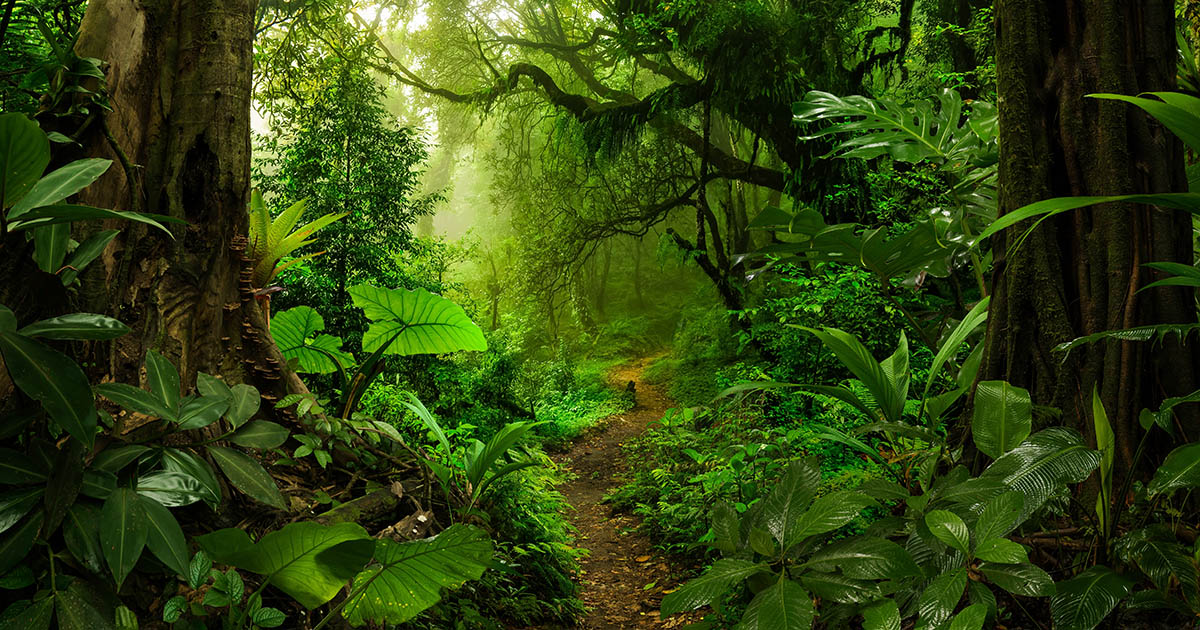

The Amazon rainforest is home to jaguars, anacondas, tapirs, and more than 40,000 plant species. And yet, for most of recorded scientific history, one of its own native dogs was barely more than a whisper. Field researchers with decades of experience in South American rainforests would go entire careers without laying eyes on one. The few photographs that existed were blurry, accidental, taken at night by cameras set up for other animals entirely. Scientists knew it was out there. They just couldn’t find it.
That changed earlier this year, when a landmark study published in March 2026 produced something that had never existed before: a substantial, detailed photographic record of the Amazon’s most elusive wild dog. Over 4,600 images. Nearly 600 confirmed sightings. And findings that turned decades of assumptions about the animal completely upside down.
The dog in question is the short-eared dog (Atelocynus microtis), known throughout Bolivia as the perro fantasma, or ghost dog. It is the only canid species found exclusively in the Amazon basin, and until very recently, almost nothing concrete was known about how it lived, where it slept, what it ate, or how many of them were left.
What the Ghost Dog Actually Looks Like
If you picture a typical wild dog – lean, long-legged, alert – the short-eared dog is almost the opposite. Camera trap images reveal a large head, small round ears, short legs, a long bushy tail, and a dark coat that ranges from reddish-brown to blackish gray. It also has partially webbed paws, something not seen in any other Amazonian canid. The overall effect is of an animal that seems to have been assembled from several different species’ parts – low to the ground, dense through the body, with a tail that brushes the forest floor as it walks.
With its slender build and low posture, it more closely resembles a jaguarundi than a typical dog. Its ears are short and rounded, unlike the upright shape seen in foxes or wolves. About the size of a fox, these jungle canines are incredibly difficult to spot. In terms of weight, the species is medium-sized, reaching around 9 to 10 kilograms.
The webbed feet are worth pausing on. They suggest a close relationship with water, which fits with what little naturalists had previously observed: the short-eared dog occasionally wades through flooded forest and, according to earlier accounts, feeds on fish. Earlier research indicated they primarily feed on fish, insects, and small mammals, and have also shown a tendency to scavenge the remains of larger animals. One captive individual studied by biologist Renata Leite Pitman, an affiliated scholar at Duke University’s Nicholas School who spent 14 years studying short-eared dogs and managed to fit tracking collars to only five of the animals, was considerably less fussy. In addition to meat and fish, this captive dog enjoyed a variety of fruits, including Brazil nuts, forest açaí, breadnuts, and eggfruits, leading Pitman to suggest that the ghost dog may play a role in spreading plant seeds through the forest – a finding that turns the animal from a mysterious loner into a potentially important participant in the Amazon’s ecology.
The 25-Year Hunt for a Photograph
Ghost dogs were first documented by travelers in 1883, but they were only studied in the early 2000s when they were finally tracked down. Even then, progress was agonizingly slow. Only four museum specimens of the short-eared dog exist in the world. The animal uses its keen sense of smell and hearing to actively avoid humans, which is part of why information about it has remained so scant. You’re more likely to see a jaguar walking these Amazonian trails, which is itself not a casual achievement.
What finally broke the logjam was camera trap technology. Between 2001 and 2024, researchers conducted 34 camera trap surveys in the Greater Madidi Tambopata landscape and the Llanos de Moxos biocultural landscape of Bolivia and southeastern Peru, resulting in 4,635 photographs depicting 594 independent short-eared dog events across 21 of 34 surveys. Published in March 2026 in Neotropical Biology and Conservation, the study was led by Dr. Robert Wallace and colleagues from the Wildlife Conservation Society in Bolivia. Wallace and his team called the ghost dog “perhaps the least known medium- to large-sized Neotropical mammal and potentially one of the scarcest canids” in the world.
The fact that the cameras captured it 594 times was not the only revelation. What the images showed about the animal’s behavior was just as striking.
The Dog That Wasn’t Nocturnal
For years, the working assumption among researchers was that the short-eared dog must be nocturnal. A secretive animal deep in a dense rainforest, almost never seen by people: that sounded like a creature of the night. The camera traps showed something completely different.
72 percent of all short-eared dog events happened during the day, with activity peaking between 6 a.m. and noon. The animal avoids people, but not by waiting for darkness. It’s mostly hidden because it lives deep in intact Amazon forest, specifically in the upland terra firme forest away from rivers and people. Terra firme refers to the higher, non-flooded forest interior – the densest, least accessible part of the Amazon, far from the riverbanks and forest edges where humans tend to travel.
Researchers summarized the finding bluntly: “The most surprising aspect of the results was that despite being an almost mythical beast, short-eared dogs are much more abundant than we had imagined.”
Based on camera-trap data, the team estimated a population density of around 15 dogs per 38.61 square miles, indicating they’re not as sparse as researchers had feared. The species is likely more abundant than larger carnivores like jaguars in the area, though less common than medium-sized carnivores such as ocelots. That puts the ghost dog in an unexpected position: not a critically dwindling species on the edge of extinction, but a surprisingly resilient one – as long as its habitat remains intact.
Wallace emphasized that the short-eared dog is native specifically to Amazonian forests, not Amazonian grasslands. “Our data shows that what it seeks the most is the forest itself, as it avoids transitional habitats leading to more open areas. It is a forest species,” he said.
Why That Habitat Is the Problem
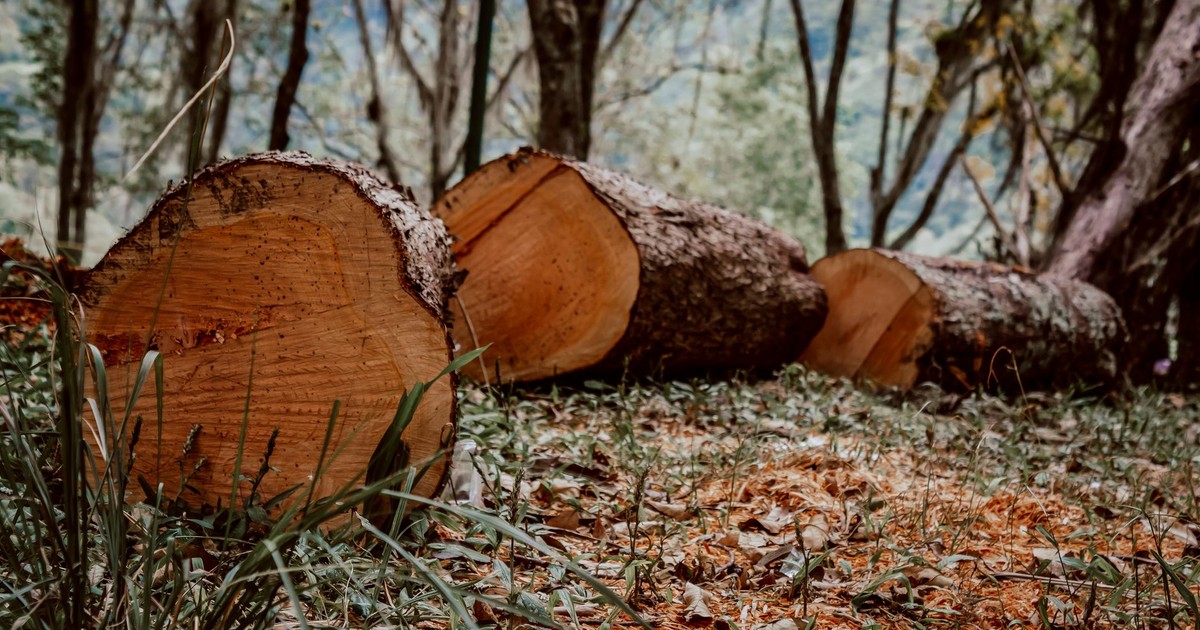
The reassuring news about population numbers comes with an immediate caveat. The ghost dog doesn’t just live in the Amazon. It lives in the deep, intact, high-quality interior of the Amazon, far from disturbance. That’s an increasingly rare address.
A 2020 study published in Royal Society Open Science found that at least 30% of the short-eared dog’s current habitat, spanning Amazonian Brazil, Bolivia, Colombia, Ecuador and Peru, could be lost or sharply degraded by 2027 based on predicted deforestation rates. That timeline is now less than a year away. Even though confirmed records of the short-eared dog span five countries, approximately 80% of its predicted current range falls within just two: Brazil, which holds 65%, and Peru at 14.7%.
In Bolivia, the ghost dog tends to appear in protected areas or Indigenous territories, which scientists say underscores the importance of these kinds of areas for biodiversity conservation. Remove those protections, and the dogs have nowhere to retreat. Unlike species that can adapt to fragmented or degraded forest, or that can cross farmland and roads, the short-eared dog appears to require continuous canopy, low human disturbance, and enough undisturbed territory to do whatever it does during those early-morning hours when it’s most active.
Camera trap records can also reveal how narrow a wild animal’s habitat range can be. Many species depend on a specific kind of forest structure, which may include continuous canopy, low disturbance, sufficient prey, and enough space to move without crossing farms, roads or settlements. For the ghost dog, this isn’t a hypothetical concern. As Wallace himself put it: “While we now know that this elusive canid is secretly thriving in the deep forests of Bolivia and Peru, its future relies entirely on our ability to protect its home.”
What 4,635 Photos Actually Tell Us
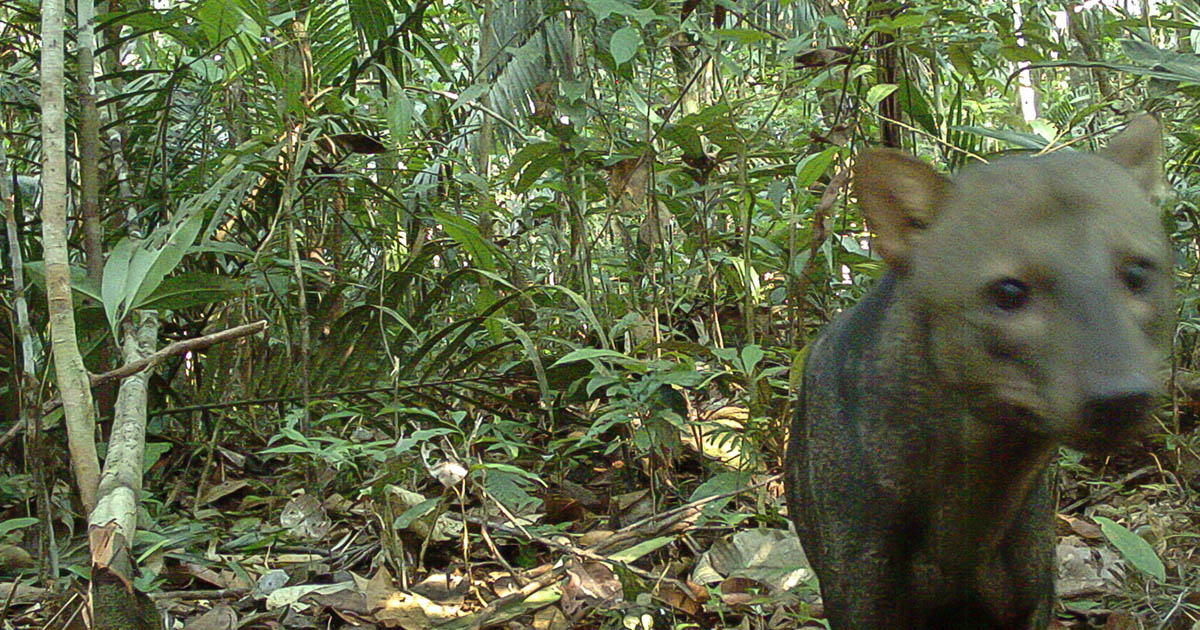
Beyond the headline numbers, the study offered something that decades of field observation simply couldn’t: a consistent, repeated look at a single species across multiple locations and years. Individual camera events captured the dog walking alone through the forest. Occasionally, they caught it with a companion. One remarkable series of images appeared to show a short-eared dog carrying its puppy through the forest – likely the first photographs of their kind.
The physical consistency across all those images confirmed that the ghost dog is genuinely its own distinct thing. The camera traps revealed a unique physical profile: a dark, dense coat ranging from blackish gray to reddish-brown, a large head with very small and rounded ears, short legs, and a long, bushy tail. The species also has partially webbed paws, a trait completely unique among Amazonian canids.
There are still significant gaps. Scientists still don’t know how the ghost dog communicates, how large its home range is across its full distribution, or what its social structure looks like beyond what one captive individual once taught a small team in Peru. The dogs are mostly loners and are cleverly opportunistic about shelter: rather than digging their own dens, they move into armadillo burrows when they need to rest. Whether that behavior holds across the broader population, or whether it was one dog’s personal preference, remains unknown.
Read More: 30 Scary Bugs and Animals We Are Glad Don’t Exisit in America
What the Ghost Dog Is Actually Up Against
The ghost dog’s story sits at a collision point. On one side, genuine scientific progress: a species that was essentially a rumor for over a century is now documented, photographed, and at least partially understood. The cameras worked. The patience paid off. As Wallace described it, the research offered “a wonderful example of how conservation technology and remote sensing – in this case the intensive use of camera traps – can provide substantial data on one of the least known species of the Amazonian rainforests.”
On the other side, that knowledge arrived at a moment when the habitat it depends on is disappearing faster than any camera trap network can compensate for. The Amazon isn’t being lost the way a single fire destroys a forest. It erodes gradually, roads and settlement lines pushing the intact interior further and further from everywhere. The ghost dog’s entire strategy for staying hidden – go deeper, stay in the forest, avoid the margins – works only if there’s enough interior left to retreat into.
What the 4,635 photographs actually captured isn’t just a rarely seen animal. It’s an animal that was always there, living its life at 6 a.m. in the upland forest, carrying its young through the undergrowth, sleeping in borrowed armadillo dens. The ghost was never a ghost. It was just in a part of the world that humans hadn’t gotten around to destroying yet.
AI Disclaimer: This article was created with the assistance of AI tools and reviewed by a human editor.