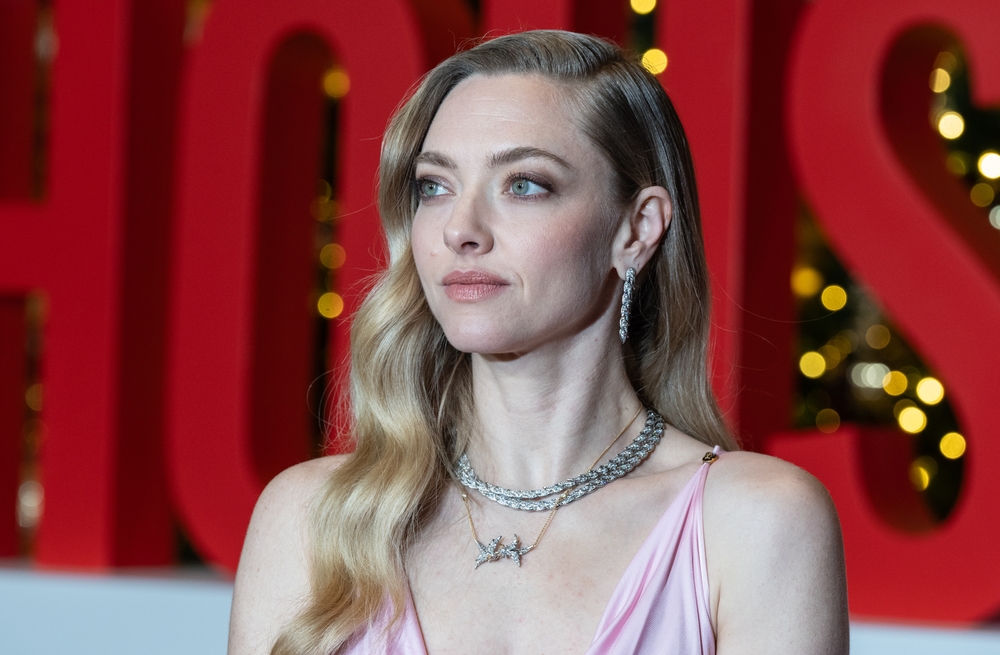
Two words from a comment section. That’s all it took for Amanda Seyfried to find herself at an airport with a bodyguard at her side, wondering how things had gotten so far out of hand.
The actress, 40, called conservative activist Charlie Kirk “hateful” in an Instagram comment after he was killed by a rooftop sniper while speaking at a Turning Point USA debate event at Utah Valley University in September 2025. The comment itself was brief, unremarkable in tone, and posted under a video that had already drawn thousands of responses. What followed was anything but brief.
Seyfried has since had to hire extra security for her safety and that of her family, despite repeated clarifications of her original statement. She’s now speaking openly about the experience, and about what it feels like to say something you believe to be true and watch it ignite something you didn’t see coming.
The Day Charlie Kirk Was Killed
Charlie Kirk, a conservative activist and close ally of President Donald Trump who played an influential role in rallying young Republican voters, was shot and killed at a Utah college event in what the governor called a political assassination carried out from a rooftop. Kirk was speaking at his “American Comeback Tour” when he was shot in the neck and killed.
The 31-year-old Turning Point USA founder was shot in the neck by an assassin’s bullet fired from a nearby rooftop, and a suspect, Tyler Robinson, 22, was arrested following a manhunt. Trump issued a proclamation ordering flags to be lowered to half-staff at all federal buildings, embassies, and consular offices until sunset on September 14, 2025.
Kirk was an influential ally of President Trump, known for holding open-air debates on campuses across the country. A conservative commentator and podcast host with millions of followers, he is best known as the founder of Turning Point USA, a nonprofit organization that sought to spread conservative ideas to students on U.S. campuses. The shooting immediately dominated headlines and social media, drawing tributes from across the political spectrum, condemnation of political violence, and, inevitably, division.
The Comment That Started Everything
Days after Kirk was fatally shot during a college speaking event in Utah on September 10, an Instagram video from the account @So.Informed highlighted several controversial remarks that Kirk had made about abortion, immigration, trans rights, and more. The video included multiple remarks denigrating Black women, villainizing immigrants and trans people, denouncing birth control, and one where Kirk dismissed the entire concept of “empathy.” Among the video’s 16,000 comments was one from Seyfried that said, “He was hateful.”
She was subsequently criticized for the comment, prompting the actress to clarify her remark in a separate Instagram post. “We’re forgetting the nuance of humanity,” Seyfried wrote in her statement. “I can get angry about misogyny and racist rhetoric and ALSO very much agree that Charlie Kirk’s murder was absolutely disturbing and deplorable in every way imaginable,” she added. “No one should have to experience this level of violence. This country is grieving too many senseless and violent deaths and shootings. Can we agree on that at least?”
Seyfried had also shared a post on Instagram that read, “You can’t invite violence to the dinner table and be shocked when it starts eating.” That second post drew its own wave of outrage, with critics accusing her of implying Kirk had brought his own fate upon himself. She later added context clarifying she didn’t want to add fuel to the fire, but by then the story had taken on its own momentum.
She admitted she had considered deleting her comment after receiving a flood of hateful messages. In the end, she did not delete it, and her family and friends became concerned for her safety.
“I Find Myself With a Bodyguard at the Airport”
In a new interview with British GQ, Seyfried revealed she had to hire a bodyguard in the wake of the furor. She described the moment she realized the situation had escalated beyond anything she’d anticipated. “I’m allowed to voice my feelings, and do it in a way that’s not unkind necessarily. But there’s just an outsized fear and hatred and impulse to bash and to tear down. And I experienced a very small fraction of that,” she said.
The word “fraction” is doing a lot of work in that sentence. If a fraction of the online hostility directed at Kirk’s critics was enough to require a security detail, the scale of what the rest of those 16,000 commenters faced is worth sitting with. The actress explained that the response left her concerned about her personal safety, leading her to have security support while travelling. She described the experience of seeing a bodyguard waiting for her at an airport as shocking.
She spoke directly about what the experience meant for how she wants to raise her children. “I want my kids to be able to feel safe to voice their opinions as long as they’re not harmful,” she continued. “So I’m like, ‘What do I do? What do I say?’ And then all of a sudden I find myself with a f*ing bodyguard at the airport and I’m like, ‘This is crazy.'”
Seyfried shares daughter Nina, 9, and son Thomas, 5, with her husband, actor Thomas Sadoski. The security threat wasn’t abstract for her. It was airport arrivals, kids in the car, ordinary life suddenly carrying a different weight.
No Apology, No Retraction
Despite the backlash, Seyfried has consistently defended her remarks and made clear that she has no intention of apologizing for expressing her views. In a December 2025 interview with Who What Wear, months before the British GQ piece, she said, “I’m not fing apologizing for that. I mean, for f‘s sake, I commented on one thing. I said something that was based on actual reality and actual footage and actual quotes. What I said was pretty damn factual, and I’m free to have an opinion, of course.”
The actress insisted that her comments about Kirk being “hateful” were based on real quotes and footage from his controversial interviews. Her position throughout has been consistent: she can hold two thoughts at the same time, that Kirk’s public record was a legitimate subject of criticism, and that his murder was horrific and unjustifiable. The problem, as she sees it, is that the sheer speed of an outrage cycle flattens every distinction you were trying to make.
Turning Point USA spokesperson Andrew Kolvet said Seyfried was free to say what she wanted, but “deserved whatever backlash she gets,” adding that “she’s a victim of her own algorithm and echo chamber.” It was a telling response: the logic being that speaking an opinion publicly while grieving a public death is somehow an act that warrants consequences. Seyfried’s position is that it isn’t. One side insists criticism of a public figure’s record is fair game. The other says the timing made it something darker. That gap has not closed.
The Broader Pattern She’s Part Of
Two words on a post, a viral screenshot, a tidal wave of anger that required physical security. What Seyfried went through has become recognizable across celebrity culture. Online audiences have developed a habit of treating public figures less like people and more like symbols. Every campaign becomes a statement. Every endorsement becomes a political position. Every advertisement becomes evidence in an argument nobody asked to join.
Seyfried also weighed in, in the same British GQ interview, on the controversy surrounding her The Housemaid co-star Sydney Sweeney and her American Eagle campaign. Sweeney’s 2025 campaign for the brand used the slogan “Sydney Sweeney Has Great Jeans,” which critics accused of playing on the word “genes” in ways they argued were racially charged. Seyfried said she understood how difficult things were for Sweeney during the fallout, describing her as being “between a rock and a hard place.” It’s a phrase that fits Seyfried’s own situation just as neatly. Say nothing about a politically charged event, and you’re accused of complicity in silence. Say something, and you’re in the airport with a bodyguard.
What’s distinct about Seyfried’s case is the specific context. Kirk’s assassination happened in a period of raw national feeling, and the line between criticizing a public figure’s record and being seen to celebrate his death was deliberately blurred by those who came after her. After the backlash grew, Seyfried shared another statement on Instagram to explain her position, saying she could disagree with certain positions while also believing that violence was wrong. In a calmer climate, that argument would be unremarkable. She had to make it anyway.
Read More: The Traits That Make You a Target for Toxic People
What “A Very Small Fraction” Actually Means
Seyfried said she experienced “a very small fraction” of the hostility that exists online, and she said it as a kind of self-aware qualifier, not a complaint about the severity of what came her way. She’s not claiming to be the main victim of anything. She’s pointing at something larger and more systemic, the sheer volume of organized anger that can descend on anyone who deviates from the expected script in a politically charged moment.
She did deviate. She didn’t issue a careful, PR-approved statement of condolence. She commented on a video about the content of a dead man’s public record. That her honest reaction to a public figure’s documented views required a follow-up clarification statement, a Who What Wear interview refusing to apologize, and eventually a GQ feature about traveling with security speaks to how completely the space for ordinary opinion has compressed. A person can hold two things at once, grief for a violent death and criticism of the ideology that animated the life lost, but the loudest corners of social media have no interest in that kind of ambiguity.
Seyfried said she believes in voicing her opinions without being unkind. She also now knows what it costs to try to do exactly that. Not an apology. Not a deletion. A bodyguard. Whether that represents a chilling of the broader culture, or just the particular temperature of one brutal news cycle, she’s living with both possibilities at once.
AI Disclaimer: This article was created with the assistance of AI tools and reviewed by a human editor.