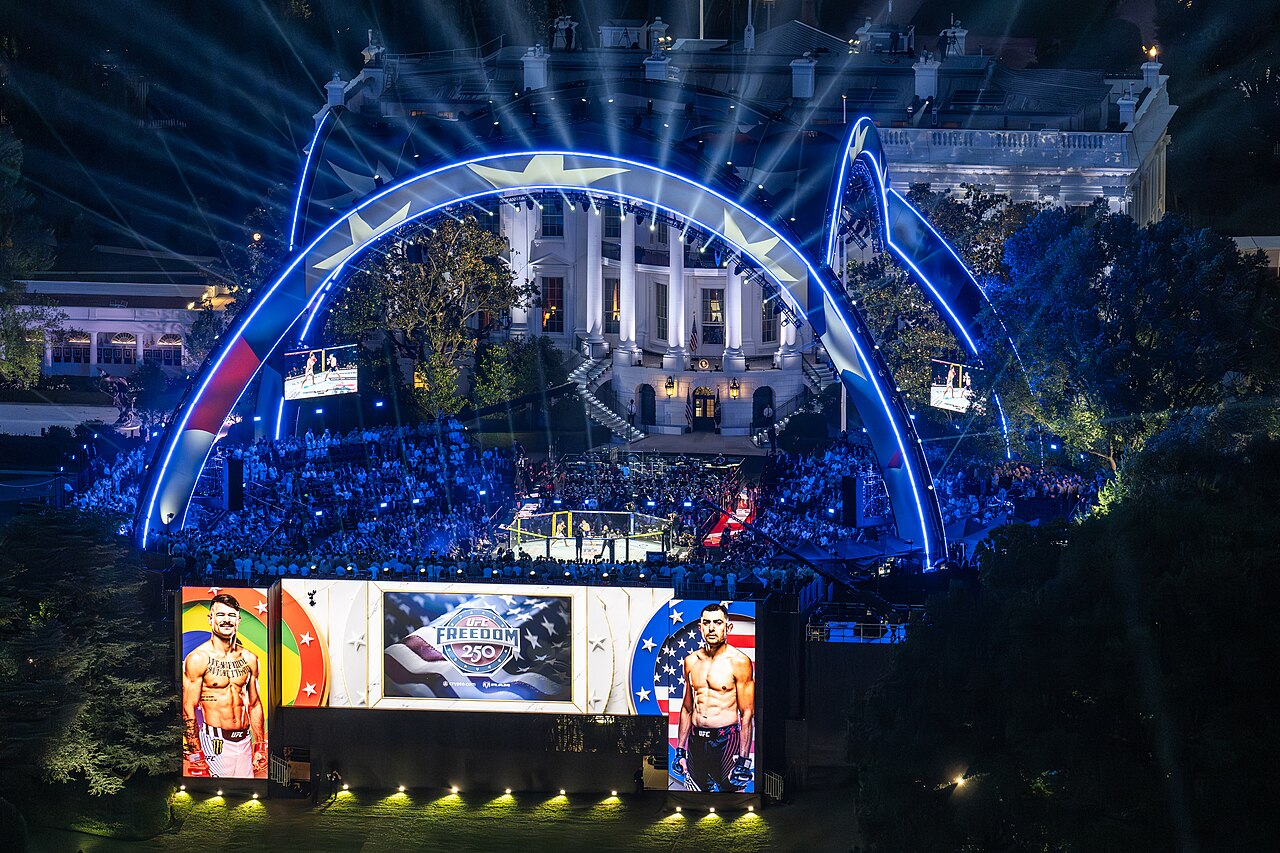

The White House Fight Night was a spectacle nobody had ever seen before, and Dana White says nobody will see it again. I believe he’s right to say never again, and not just because of the $60 million price tag.
What Actually Happened on the South Lawn
By the time Justin Gaethje pummeled his opponent to a finish and celebrated a championship win with a backflip off the top of the wire-mesh cage, then shook hands with President Donald Trump and even fist-bumped Melania, one thing was clear to the man running UFC. The White House Fight Night was, as events go, exactly what it promised to be: loud, patriotic, and impossible to top.
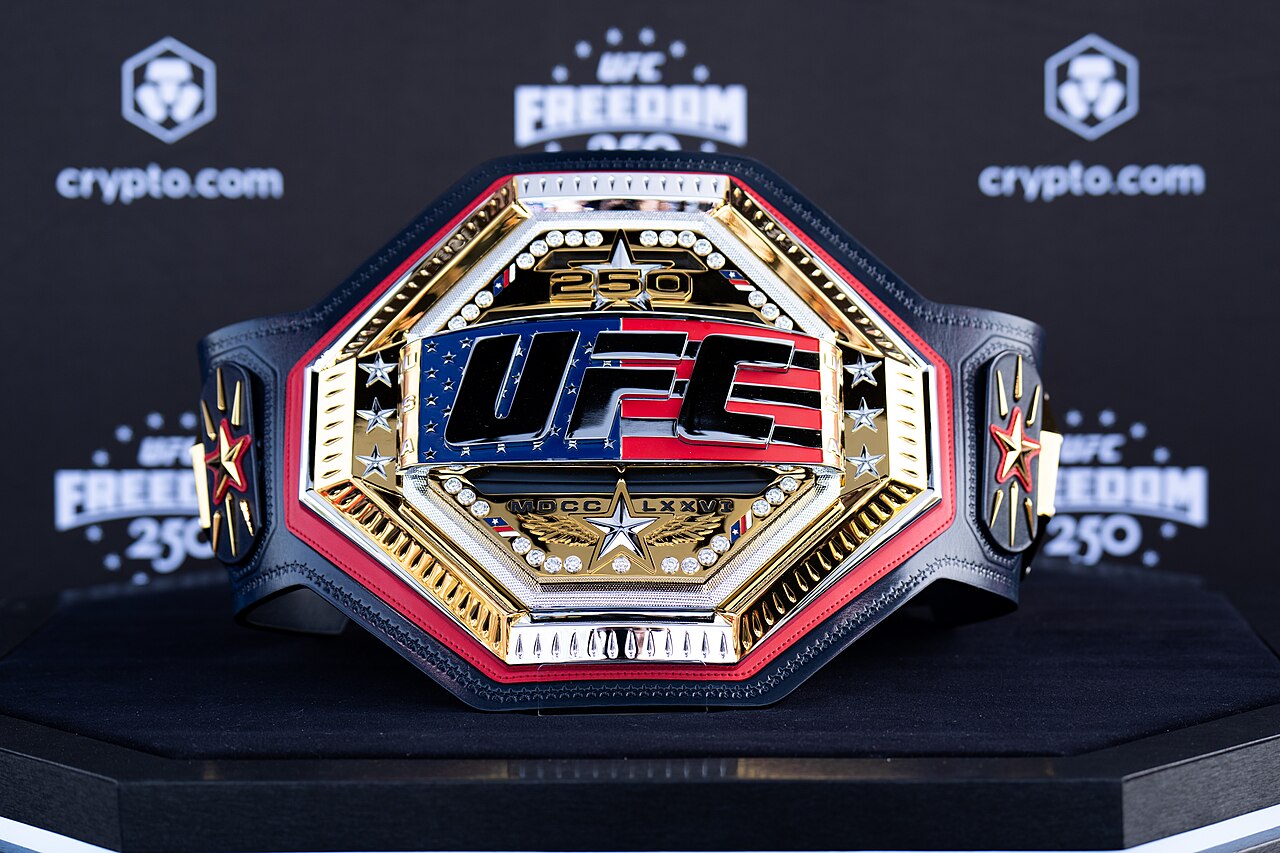
The UFC Freedom 250 card at the White House ended after midnight Monday morning with an upset victory by American Justin Gaethje over Ilia Topuria, giving Gaethje the lightweight title belt while handing Topuria the first loss of his career. For all the hand-wringing ahead of the card, the show delivered on the star-spangled smackdown that featured pulsating patriotism from the Marine Band, tributes to first responders, active military, and other White House-designated heroes. Gaethje and Ciryl Gane were crowned champions inside a cage set up in the open air on the South Lawn.
The all-male lineup toured the West Wing, the Oval Office, walked past presidential portraits, through the Roosevelt Room and the Cabinet Room, and the winners even got a meet-and-greet with Trump. As spectacle goes, it was genuinely extraordinary. And Dana White knows it. He said so himself, at length, at a press conference that ran until nearly dawn. He crowed about merchandise sales and streaming service subscriptions and how UFC surpassed its goals in every metric he could name.
So why am I glad he’s not doing it again? Because the event itself was a success that almost nobody seems interested in interrogating properly.
The Real Reason It Was a One-Off
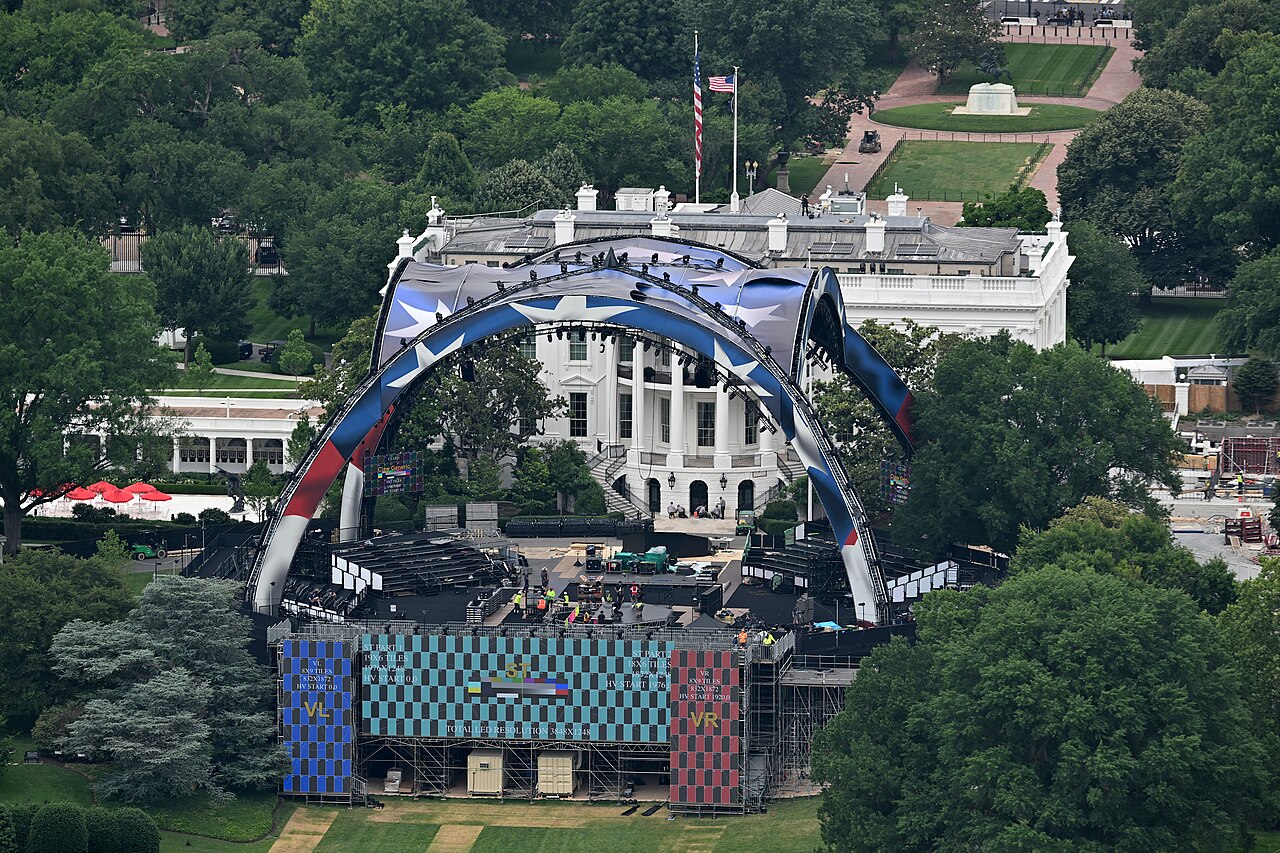
In my view, Dana White’s “never again” declaration is almost certainly sincere, but it’s being received as modesty when it’s actually a business calculation dressed up as a verdict.
According to ESPN, the constant headaches over weather concerns in the rare outdoors show, the logistics of construction of the cage and staging events at federal landmarks, and the soaring cost made Freedom 250 a one-off. UFC said it was footing the $60 million tab. “I’ll never do the Sphere again and we’ll never do this again,” White said. White had kept to what he insisted for months: that the White House card would be a “one-of-one” event and not the beginning of a trend, similar to how he viewed his promotion hosting the first sporting event at the Sphere in Las Vegas in 2024.
That’s a coherent business rationale. You do the impossible thing once, generate the headlines, blow past your metrics, and then return to somewhere you can control the variables. Outdoor fights, federal landmark logistics, unpredictable weather – these are genuine production nightmares. The weather, which threatened to create massive delays Sunday night, largely held off and turned into a pleasant Washington evening after a slight delay. Despite that, White made clear that he does not want to do more outdoor fights because of the uncontrollable variables.
None of this is surprising. The conversation has stayed almost entirely on the logistical level and drifted away from the substantive one.
The Problem With Calling It Apolitical
White has argued, repeatedly and consistently, that the event wasn’t political. White, a longtime friend and supporter of President Donald Trump, rejected the concern, noting that many presidents have had personal interests in various sports. “I mean, I don’t know how it would be too political other than it’s at the White House,” he said with a laugh. “I think George Bush was a big baseball fan, Obama was an NBA fan and Trump is a UFC fan. I don’t think that any of those guys being fans made any sport too political.”
That’s a reasonable-sounding argument. It also happens to be wrong.
Obama attending an NBA Finals game is not analogous to constructing a $60 million octagon on the South Lawn. The scale, the exclusivity, and the financial entanglement here are categorically different. A financial disclosure filed on May 12 with the U.S. Office of Government Ethics revealed that President Trump purchased between $15,001 and $50,000 worth of TKO Group Holdings stock on March 25, 2026, weeks before the White House Fight Night. TKO is the parent company of both the UFC and WWE.
TKO’s stock climbed roughly 8.86% in the seven days following the disclosure and the Freedom 250 announcement. Jordan Libowitz of Citizens for Responsibility and Ethics in Washington called the situation “one of the most significant conflicts of interest imaginable,” arguing that using the White House to promote a company in which you hold stock is textbook self-dealing.
The White House’s position is that the assets are held in a revocable trust managed by his sons and present no conflict of interest. That may be technically accurate as a legal defense. As an ethical one, it’s harder to accept. The trust structure doesn’t change who ultimately benefits when TKO’s share price rises.
The conflict extends beyond the event itself. The U.S. Department of State announced a new public-private partnership with UFC to advance sports diplomacy initiatives and develop educational programming related to mixed martial arts. The memorandum of understanding was executed between Secretary of State Marco Rubio and Dana White at the State Department, leveraging UFC’s global platform to engage key audiences and enhance cultural exchange programs. UFC athletes and coaches will serve as sports ambassadors through the Department of State’s Sports Envoy program, leading training clinics for young international athletes around the world.
That’s the federal government formally committing to promoting a privately held sports company internationally – one in which the president holds stock. The UFC has been formally integrated into U.S. foreign policy and its soft power strategy, which raises questions that go well past any single fight card.
The Moments White Wants You to Forget
No account of the White House Fight Night is complete without the moments that fell off the headline. UFC middleweight champion Sean Strickland was removed by authorities from the UFC Freedom 250 Fan Fest at the White House after previously having claimed that he had been barred from attending. In a post on X, Strickland shared an image of himself being escorted by numerous authorities away from what appeared to be the Freedom 250 Fan Fest on The Ellipse.
Strickland had been publicly vocal for weeks about his belief that his outspoken political views, particularly his criticism of Donald Trump’s relationship with Israel and comments about the president’s connections to Jeffrey Epstein, had resulted in him being excluded from the historic card. Whether that exclusion was officially sanctioned or not, the optics of the sitting middleweight champion being escorted away from an event held on public grounds because he’d criticized the president aren’t optics anyone should brush past lightly.
Then came Josh Hokit. Hokit had won a heavyweight bout when he walked over to Trump’s seat and presented the president a chain. Then, during an in-cage interview, Hokit ended his remarks with an insult of Michelle Obama. “Michelle Obama is a man, am I right America?” he said. The remark drew a mixed response at the White House. The claim is false and has circulated for years as an unfounded conspiracy theory targeting the former first lady. It was not the first time Hokit had made similar comments, having said something comparable at the close of a match in 2025.
President Trump was seen smiling briefly cage-side after the remark. The president and CEO of the UFC was pleased with how the organization’s event played out except for Hokit’s derogatory comments about former first lady Michelle Obama. That caveat is doing a lot of work. It’s easy to disapprove of a comment in the post-event summary when it’s already drawn international backlash. The harder question is what the culture of an event communicates when that comment gets cheers.
The Strongest Counterargument
The argument that Freedom 250 represented genuine, apolitical entertainment has real weight when you look at the fights themselves. Sunday night’s event, which coincided with President Trump’s 80th birthday and a slate of America 250 events set for this summer, combined sports and politics in a way never seen at the White House before. Plenty of fans who were there cared about the lightweight championship, not the politics. Many fans attending the event said they were more interested in the fights than the politics.
And the UFC’s journey to the White House South Lawn is, if you strip away the current administration’s fingerprints, genuinely remarkable. The UFC was once an ostracized organization that was almost bankrupted by Republican senators in the United States. For it to emerge into an organization befitting a competition on the South Lawn of the White House is quite an achievement in itself.
White also has a long-standing record of keeping politics out of his programming, at least rhetorically. His past arguments about keeping the octagon free from political messaging were consistent – until they weren’t. That inconsistency is worth naming.
Read More: Trump compares the White House UFC arena to the Eiffel Tower “Maybe we’ll never take it down”
Why “Never Again” Is the Right Call, for the Wrong Reasons
White’s logic for not repeating the White House Fight Night is financial: $60 million, outdoor production headaches, uncontrollable variables. He and President Trump had also discussed doing a fight for troops in 2027, but coordinating with the military to have fights on military bases takes time. There will be other blockbuster spectacles. The UFC machine doesn’t stop.
But “never again” is correct for reasons White hasn’t stated and probably won’t. The White House is not a venue. It is a symbol of public governance, and when it becomes a backdrop for a privately owned sports company whose parent stock is held by the sitting president – who just signed that same company into a formal State Department partnership – it stops being a fight night and starts being something else entirely.
White called it “a one-of-one.” In that, at least, we agree. The conflict-of-interest concerns, the exclusion of a sitting champion for apparent political reasons, the live broadcast of a false and degrading conspiracy theory about a former first lady – these didn’t fall into an otherwise clean event by accident. They are what happens when a promotion gets formally embedded in the political machinery of a sitting administration. Dana White has built something extraordinary from nothing, and the UFC product remains genuinely compelling. But the White House Fight Night proved something more than he probably intended: that once a sport becomes an official instrument of government, the thing it was built on starts to erode.
AI Disclaimer: This article was created with the assistance of AI tools and reviewed by a human editor.