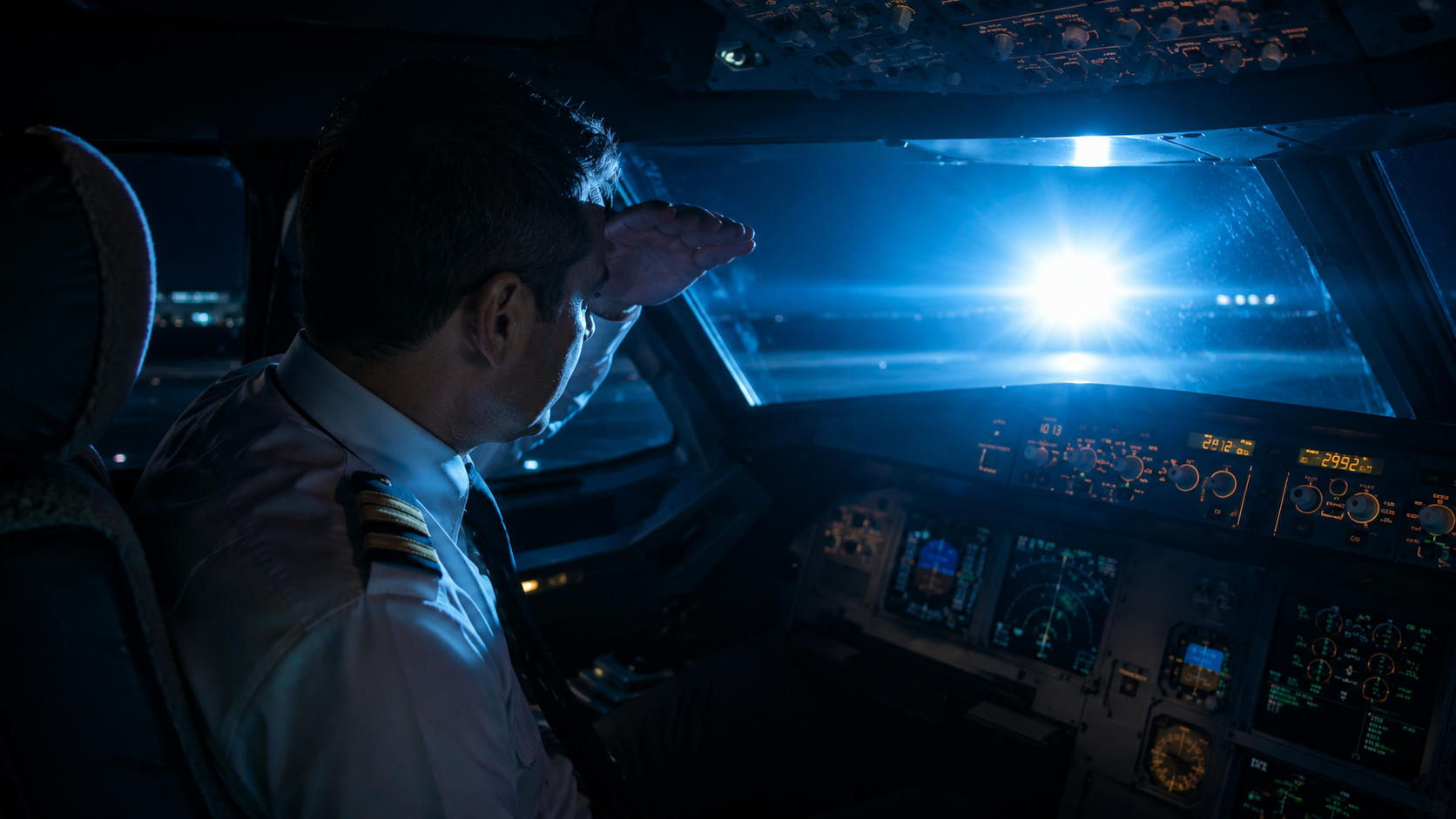

A commercial airline pilot has filed official safety complaints after powerful event lighting on the White House grounds allegedly blinded flight crews during a nighttime approach into Ronald Reagan Washington National Airport. The complaint did not involve a drone, a laser pointer, or a malfunctioning runway light. It involved a UFC octagon erected on the South Lawn of the White House, constructed to mark President Donald Trump’s 80th birthday. And according to the pilot who filed the report, what they experienced during final approach was worse than anything they had encountered in their career.
The pilot stated that the glare was “10 times worse than any laser illumination event” they had ever experienced. That comparison carries real weight in aviation circles. Laser strikes on aircraft are already a serious and federally prosecuted hazard. Shining a laser at an aircraft is a federal crime the U.S. vigorously pursues, as it distracts pilots from their safety duties and can lead to temporary blindness during critical phases of flight, such as takeoff and landing. For a trained commercial pilot to characterize broad-spectrum white event lighting as categorically more dangerous than that standard benchmark is not a casual complaint. It is a formal record of a safety event in one of the most scrutinized airspaces in the country.
Trump’s next walkout was to be the shortest of his presidency, from the Oval Office to the Octagon for the spectacle on the South Lawn billed as UFC Freedom 250. The mixed martial arts show, streaming on Paramount+, was timed for Trump’s 80th birthday and the celebration of the nation’s 250th anniversary. What followed, in the days before the Sunday night event, was a collision between the logistics of a $60 million sports production and the operational realities of one of the most constrained approach corridors in American aviation.
The Event: What Was Built on the South Lawn
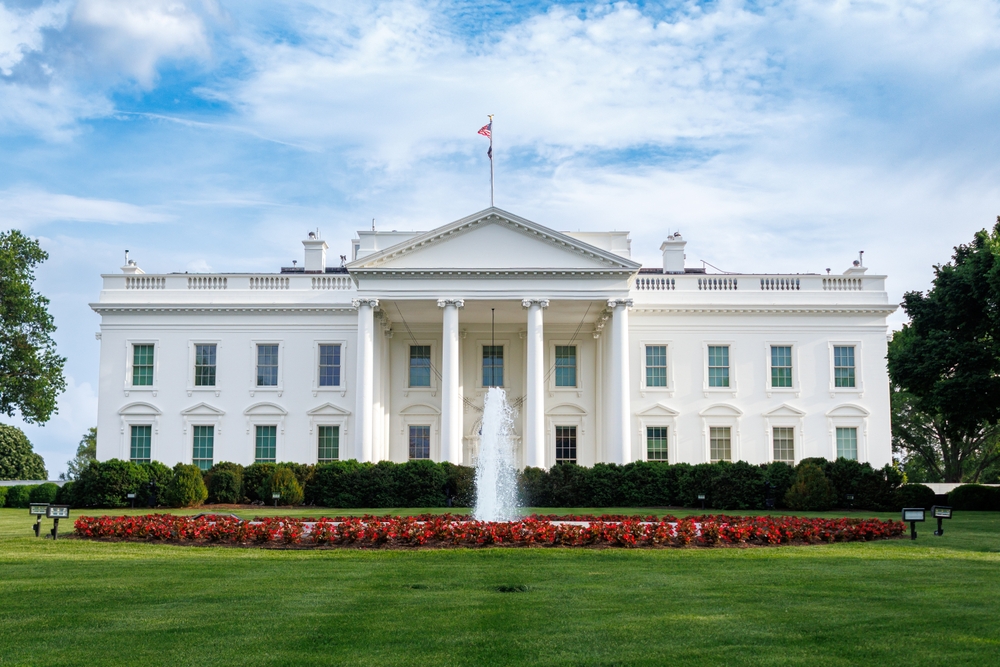
A massive temporary structure, referred to as “The Claw,” was already in place on the grounds. The 92-foot-tall, 600-ton fighting ring dubbed “The Claw” was erected on the White House’s South Lawn, taller than the White House itself, and drew comparisons to imagery from the movie Contact. The White House had to make room for the Claw, a four-sided mass that arcs more than 90 feet into the air and features lights, speakers, thick snakes of wiring, and four large screens so fans not seated right next to the Octagon could watch.
Surrounding the structure were risers filled with gray folding chairs forming a temporary arena expected to seat more than 4,000 people for the seven UFC fights staged on Sunday to celebrate the 80th birthday of President Trump and the 250th anniversary of the Declaration of Independence’s signing. Trump purchased up to $50,000 in UFC parent company TKO stock earlier this spring, while White’s company is selling VIP packages for $1.5 million each.
The government confirmed that “well over $60 million” had been spent and “tens of thousands of hours of labor” expended in preparation for the event. Court filings confirmed a price tag of more than $60 million, along with hundreds of trucks, nearly 900 contractors, enormous broadcast operations, and assistance from multiple federal agencies. The Trump administration told some outlets that no taxpayer funding was used.
Lighting tests were conducted in the days leading up to the event, with lights visible well above Washington, D.C., throughout the night sky. As darkness fell during tests, crews illuminated The Claw in red, white, and blue, with lights offering projections designed to make it appear as though the entire structure had been enveloped in a twirling stars and stripes pattern. Those tests, it turned out, were precisely what triggered the safety complaint.
The Pilot’s Report: What Happened on Approach
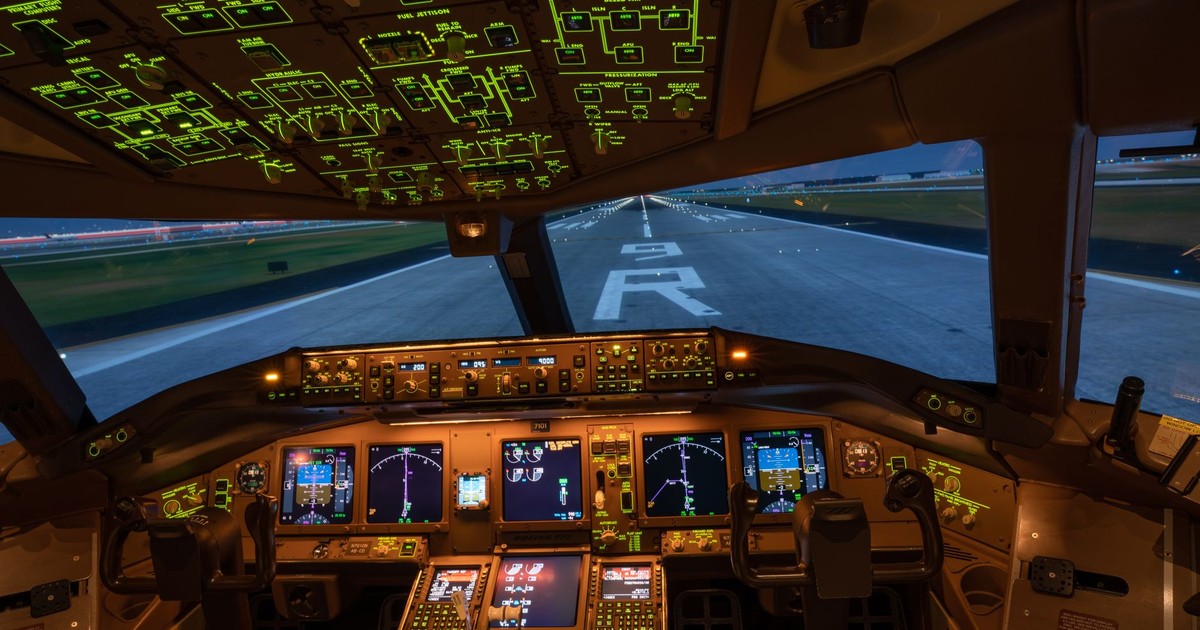
A commercial airline pilot filed aviation safety reports after powerful lighting used during the construction and testing of the UFC octagon on the White House grounds allegedly shone directly into their cockpit during a nighttime approach into Reagan National Airport, creating what the pilot described as one of the most severe visibility disruptions they had experienced in their career.
According to the pilot, the illumination occurred during the final stages of landing, a critical phase of flight during which crews rely heavily on external visual references. Final approach is the most demanding phase of any flight. Pilots are managing speed, descent rate, alignment, and the transition from instrument references to visual ones, all simultaneously, often at altitudes where there is little margin for anything to go wrong.
The pilot stressed the incident did not involve lasers, but said the effect was comparable, and potentially more dangerous, because of the proximity and intensity of the event lighting. Following the incident, the pilot filed reports with both the Federal Aviation Administration and NASA’s Aviation Safety Reporting System, a confidential program designed to allow aviation professionals to flag safety hazards without fear of penalty.
A local FAA office was also contacted by the pilot to report the incident. According to their account, FAA personnel advised them to contact the White House regarding concerns about the lighting. That response, if accurate, is striking. The FAA is the federal body responsible for aviation safety oversight in U.S. airspace. Directing a pilot’s safety complaint to a political office rather than opening a formal review is a departure from standard protocol that aviation safety experts and observers have noted with concern. The pilot’s account, and the FAA’s reported response directing them to the White House, raises serious questions about how event-related hazards near sensitive airspace are assessed, coordinated, and communicated before a major public spectacle goes ahead.
Why UFC Lights Blinding Pilots Near DCA Is Especially Serious
One of the Most Demanding Approaches in the United States
The airspace around Reagan National Airport is already recognized as some of the most sensitive and tightly regulated in the United States. That is not a formality. The airport’s approach procedures are genuinely unlike almost any other commercial airport in the country.
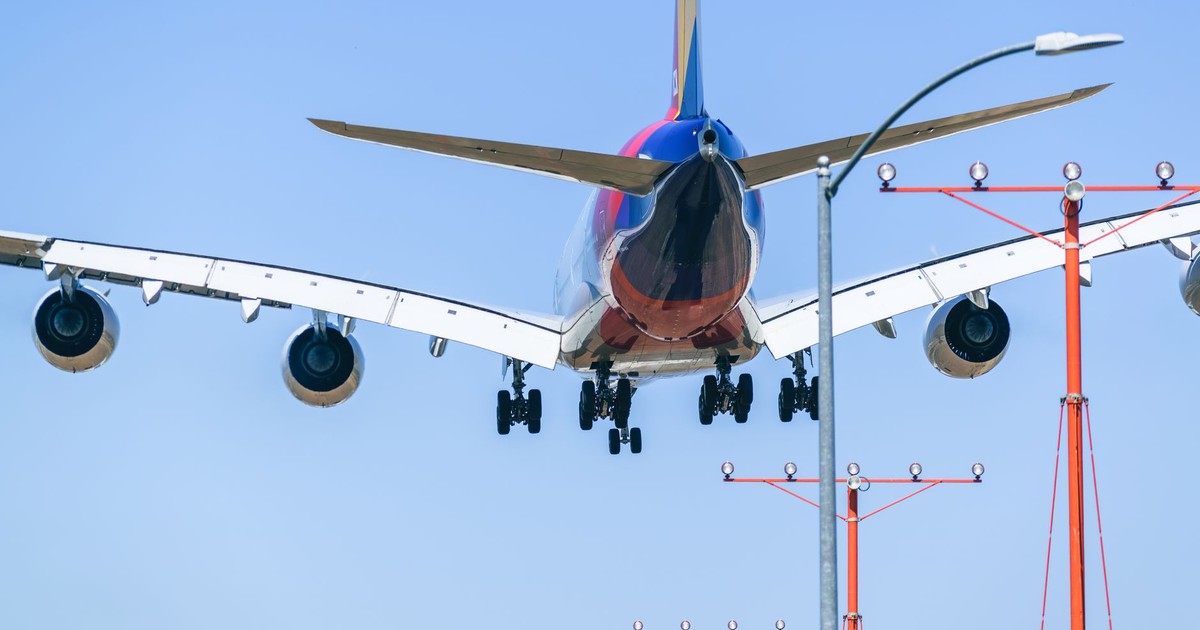
The River Visual approach to DCA’s runway 19 is identified by many airline pilots as the most captivating approach in the U.S., providing aerial views of the Capitol, the Washington Monument, the National Mall, and the Lincoln Memorial. Captivating, but demanding. It requires precise management of speed and altitude while closely following the river to avoid prohibited airspace.
A typical River Visual approach into runway 19 requires pilots to make a 40-degree right turn to line up with the landing strip. This takes place at an altitude of 424 feet off the ground, which gives little margin for error. At that altitude and in that configuration, a sudden, overwhelming glare source directly in the pilot’s line of sight is not an annoyance. It is a serious visibility event.
The approach corridor keeps aircraft out of Prohibited Areas P-56A and P-56B, overlaying the Naval Observatory, the National Mall, and the White House itself. The approach corridor and the South Lawn are in extremely close proximity by design. Aircraft on this approach routinely pass low and close to the White House grounds at night, relying on external visual references. Flooding those grounds with high-intensity broadcast lighting, without formally coordinating with aviation authorities on the glare profile, is a gap that the pilot’s complaint has now made impossible to ignore.
The Broader Context: Heightened Scrutiny After the January 2025 Crash
The January 29, 2025, collision that killed 67 people over the Potomac River near Ronald Reagan Washington National Airport was the deadliest commercial aviation accident in the United States in more than 20 years. That disaster, at the same airport, reshaped how regulators, lawmakers, and the public view safety decisions at DCA.
Any new safety complaint at DCA now arrives in an environment already operating under heightened scrutiny, where the FAA’s coordination failures and the airport’s operational complexity have been analyzed in minute detail. The FAA had collected reports of more than 80 serious close calls in recent years between helicopters and passenger aircraft, but the NTSB was the first to draw attention to those conflicts. Against that record, a response directing a pilot’s lighting complaint to the White House press office, rather than to an aviation safety review, carries a particular weight it might not have carried before January 2025.
The Physics of Glare: Why Broad Light Can Be Worse Than a Laser
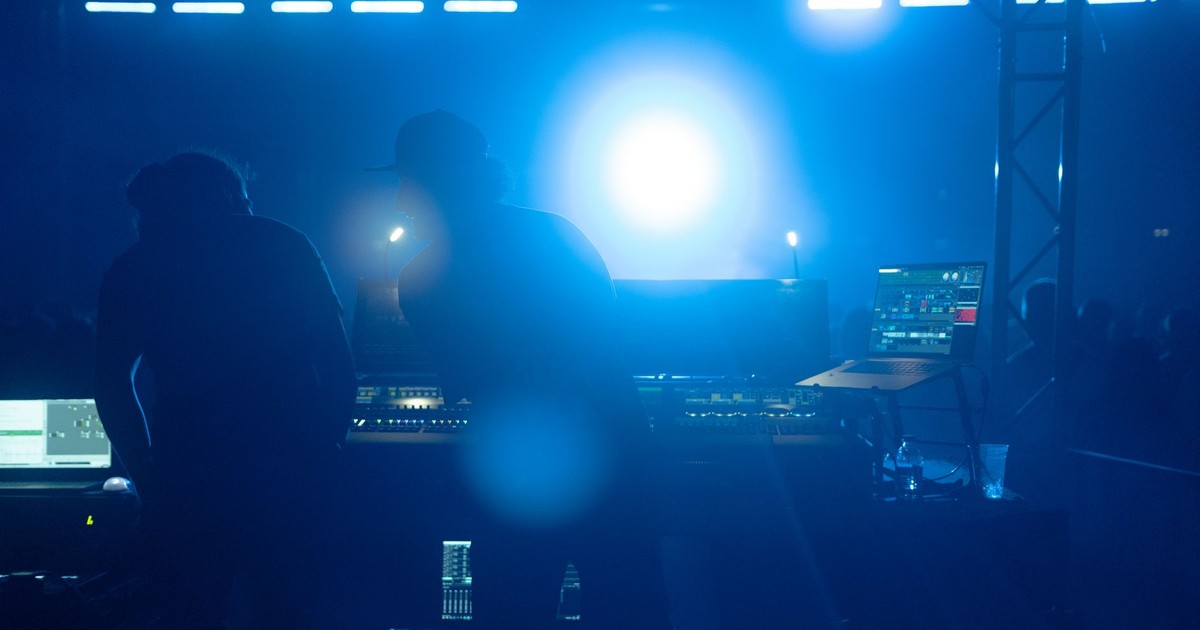
Under certain conditions, laser light or other bright lights, including spotlights and searchlights directed at aircraft, can be a hazard. This is a point that often gets lost in conversations that default to laser-versus-non-laser framing. The FAA’s own guidance treats all high-intensity directed light sources as potential safety concerns, not only the narrowly collimated beams of hand-held laser pointers.
Flash blindness is a temporary visual interference effect that persists after being exposed to a very bright light, similar to a camera flash. An afterimage is a distracting shadow left in the visual field after exposure that can last for several minutes. Glare occurs when an object in a pilot’s field of vision is obscured due to a bright light source near the same line of sight. All three of these effects can result from high-powered event lighting, not just lasers.
The “10 times worse” characterization the pilot used likely relates to the combination of proximity and power output. A laser pointer used from the ground against an aircraft at altitude produces a narrow beam that may illuminate a small area of the cockpit. A 90-foot-tall lighting rig designed to broadcast a professional sports event to thousands of live attendees and to cameras feeding a national streaming audience produces a far broader and more intense light field.
Pilots reported 10,994 laser strikes to the FAA in 2025, a 14 percent decrease from the year before but still, in the agency’s own words, too high. The White House UFC lighting complaint is not the first time event organizers near major airports have created this kind of risk. The annual New York City 9/11 Tribute in Light requires strict coordination with the FAA to prevent blinding flight crews and disorienting migratory birds. These cases demonstrate that large-scale event lighting near approach paths requires mitigation strategies, such as shielding or curfews, to maintain safety standards.
Legal Challenges and the White House Response
The pilot’s safety complaint was not the only challenge the event faced before it went ahead. The suit, filed by the Public Integrity Project in District of Columbia federal court, alleged that the Department of Interior and the National Park Service violated federal law by organizing a private sporting event on public property and failing to obtain congressional approval for the event’s multiple construction sites.
The event, scheduled for June 14, was conceived by President Trump and organized by UFC CEO Dana White, a close personal ally of Trump, and would benefit both men financially. The fight, they argued, would enrich Trump, who had purchased stock in UFC’s parent company.
The UFC fights at the White House proceeded after a federal judge denied the emergency injunction application. Judge Amit P. Mehta in the federal district court in the District of Columbia ruled that the injunction filed by the Public Integrity Project on behalf of two activists failed to establish irreparable harm or an aesthetic injury needed to create standing. A White House official called it “an obstructionist, baseless, and dilatory lawsuit brought simply to prevent President Trump from hosting what will undoubtedly go down as one of the most historic sporting events in our Nation’s history.”
On the specific question of aviation safety, the White House did not directly address the lighting concerns, and it remained unclear whether other flight crews reported similar disruptions or whether the FAA intended to formally review the lighting setup in relation to the DCA approach corridor.
Read More: Trump compares the White House UFC arena to the Eiffel Tower “Maybe we’ll never take it down”
The Coordination Gap at the Heart of This Story
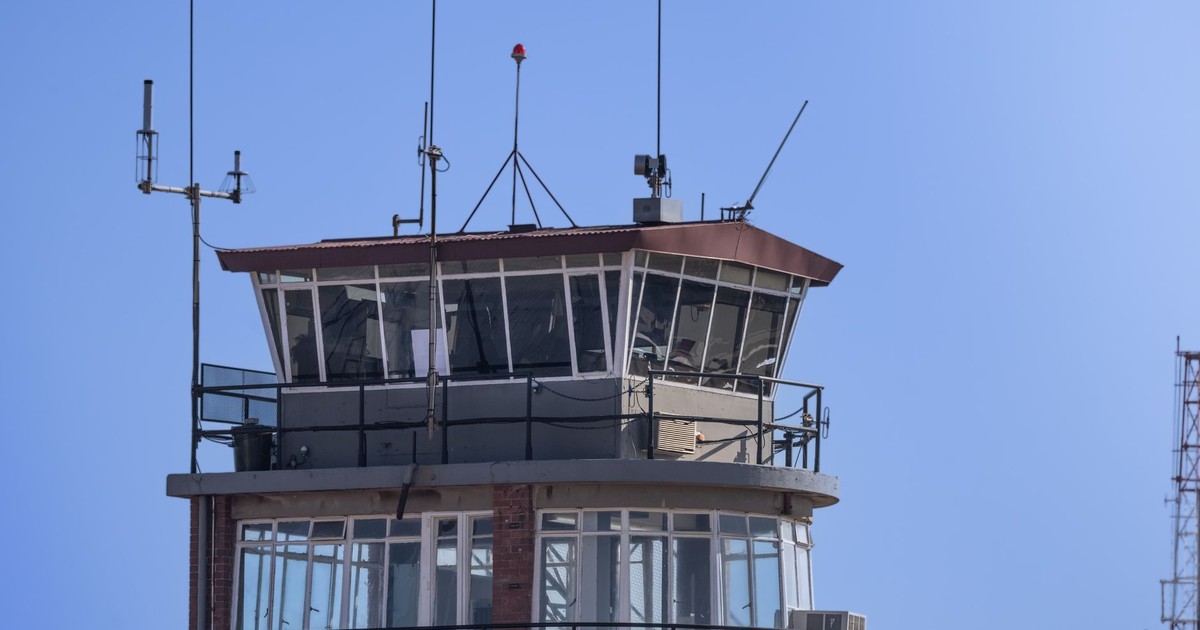
The central issue this incident exposes is not simply that the lights were bright. It is that no formal coordination process apparently existed, or was followed, to assess how a 90-foot broadcast lighting structure on the South Lawn would interact with the established approach corridors at one of America’s most operationally complex airports.
Aircraft approaching DCA routinely pass over Washington landmarks at relatively low altitudes during final approach, and the proximity of the South Lawn to that corridor is not an accident of geography. It is baked into the approach design. The FAA has established procedures for exactly this kind of situation. For outdoor laser operations, the agency requires notification, safety analysis, and in some cases formal letters of non-objection before a light show near an airspace corridor can proceed. Documentation after the fact is not the same as coordination before it.
The 9/11 Tribute in Light comparison is instructive precisely because that event has developed, over years of iteration with the FAA, a protocol for operating powerful lights in New York airspace. No comparable framework appears to have been established for a 90-foot event rig that went up in days on the White House lawn with a primary aim of delivering cinematic broadcast value.
The Question That Stays Open
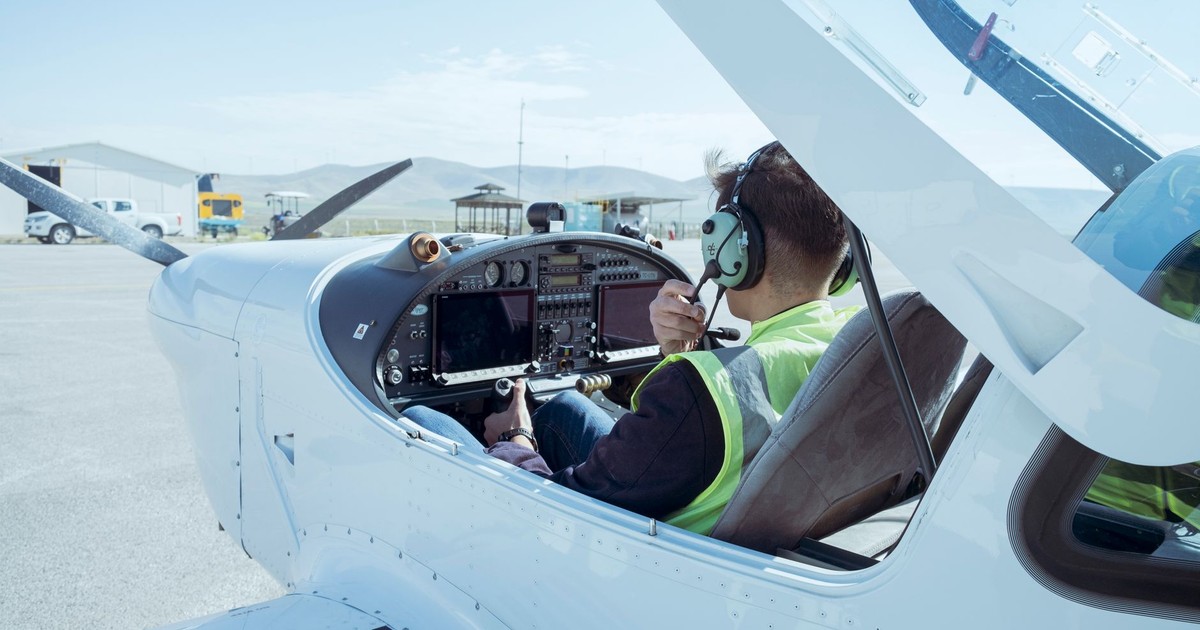
This story will likely be treated by some as a political footnote to an already controversial event. The safety question here stands entirely apart from the politics of the UFC event, the legal disputes over permitting, or the cost of the structure.
A commercial pilot filed formal reports with the FAA and NASA’s Aviation Safety Reporting System describing a visibility disruption during final approach at DCA that they characterized as the most severe of their career. The FAA, rather than opening a formal review, reportedly referred that pilot to the White House. At an airport where a fatal midair collision 17 months earlier killed 67 people, and where investigative findings confirmed a pattern of unaddressed near-misses, the response to a formal cockpit visibility complaint should not be “contact the White House.”
Federal authorities had not indicated whether a formal investigation would be opened, and it remained unknown if any other flight crews operating in the area during the lighting tests encountered similar visual disruptions. The broader lesson from incidents like the 9/11 Tribute in Light is that powerful event lighting near approach corridors is a manageable problem. Shielding, directional controls, and curfews during peak arrival windows are all established mitigation tools. The question this episode leaves open is not whether the lights were dangerous enough to cause a crash. It is why the coordination process that would have prevented the complaint from arising in the first place did not appear to happen at all. Some safety failures begin with a dramatic accident. Others begin with a complaint that nobody formally answered.
AI Disclaimer: This article was created with the assistance of AI tools and reviewed by a human editor.