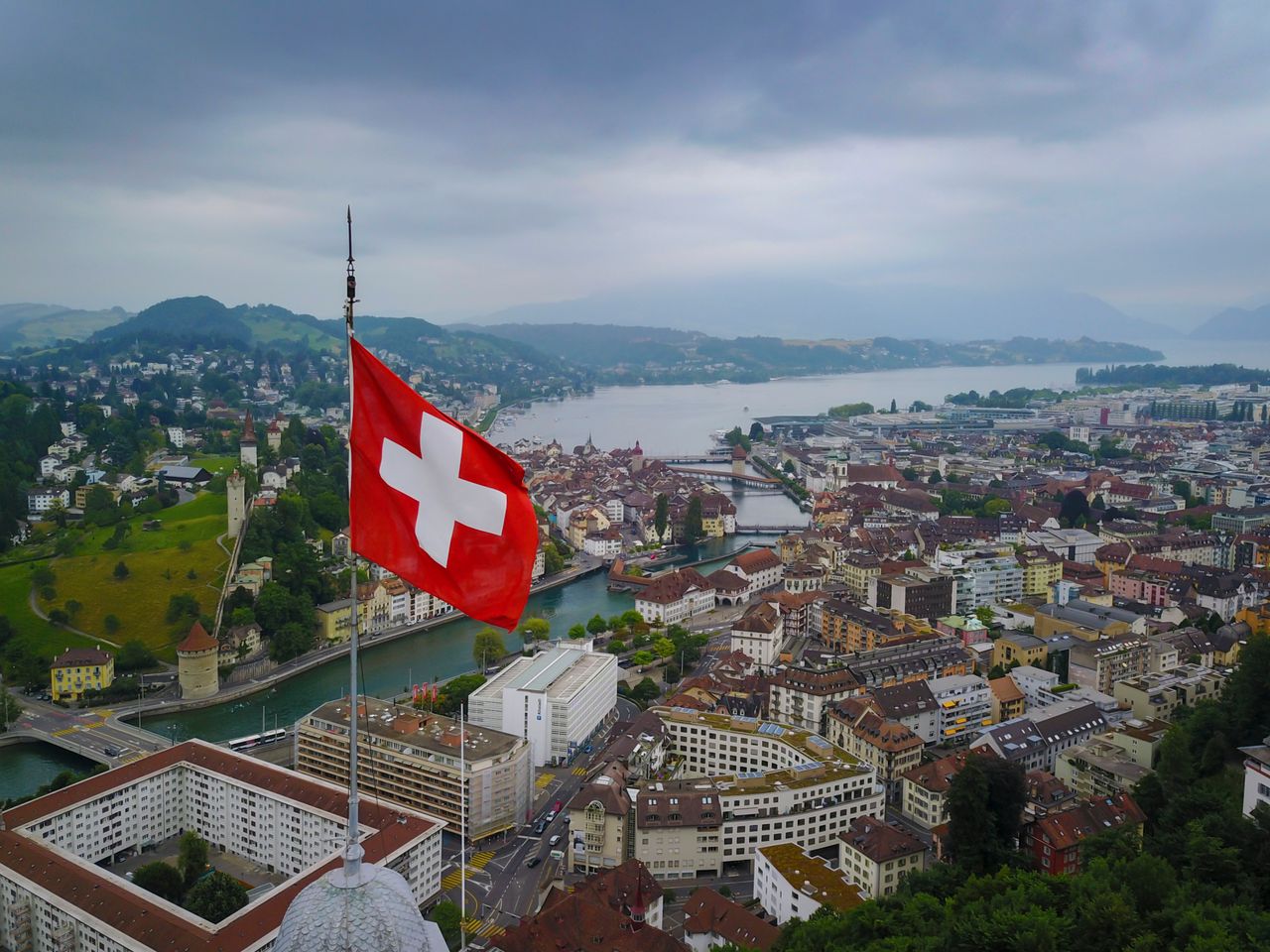

No democratic electorate has ever been formally asked to put a hard legal ceiling on how many people can live within its borders. That changed on June 14, 2026, when Swiss voters went to the polls on a proposal formally titled the “Sustainability Initiative.” The ballot measure carries implications that reach well beyond Switzerland’s 41,285 square kilometers, into the architecture of European trade law, the logic of demographic governance, and the future of free movement on a continent already wrestling with its own identity.
The comparison to Brexit that has circulated in European political commentary is not hyperbole. Like the 2016 British vote, this initiative would require unwinding decades of carefully negotiated bilateral agreements, demand that a government reverse the direction of an economy built on open borders, and ask a country to bet its long-term prosperity on a political calculation about national character.
What makes the Swiss version structurally different from anything tried elsewhere in Europe’s current wave of anti-immigration politics is the number itself. It does not tighten visa criteria or reduce refugee quotas. It sets a ceiling of 10 million people and writes it directly into the constitution.
Executive Summary
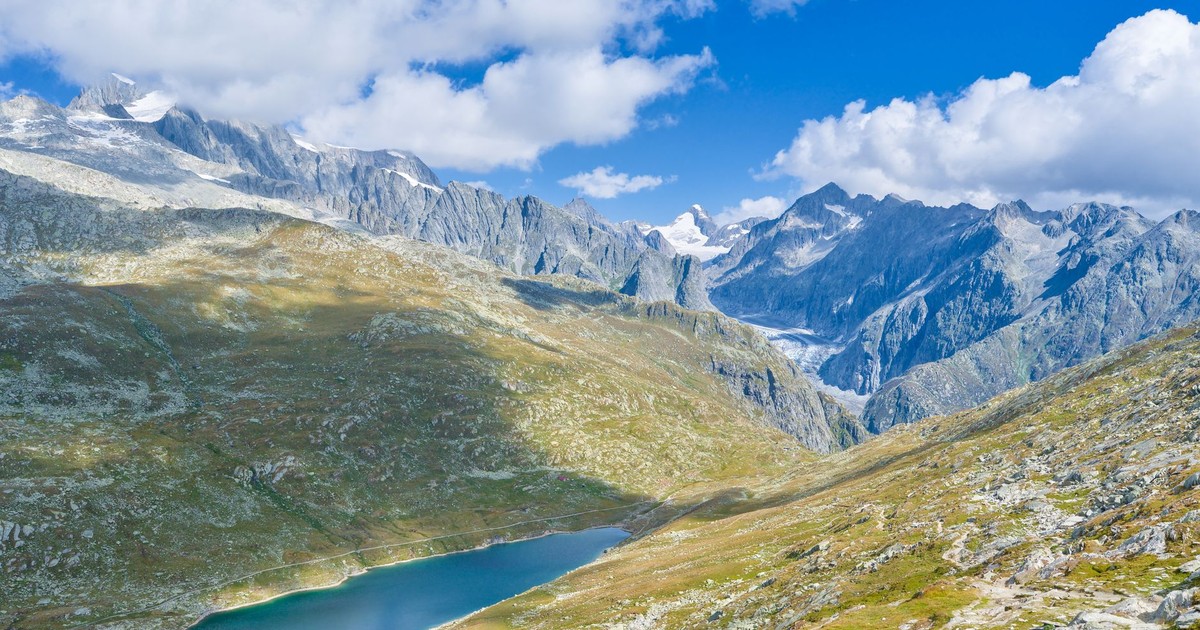
The proposal, “No to a Switzerland with 10 million! (Sustainability Initiative),” was backed by the right-wing Swiss People’s Party (SVP) and seeks to limit population growth by requiring the government to take corrective measures once the population reaches 9.5 million. If the population still exceeds 10 million before 2050, the proposal would require the government to withdraw from the country’s free movement agreement with the EU and end access to the EU single market. According to the latest opinion polls ahead of the vote, voters were marginally closer to a “no” vote, with 52 percent opposed and 45 percent in favor. The vote is being watched closely across Europe for what it signals about the limits of technocratic immigration management and the public appetite for population control as a formal policy instrument.
The Proposal in Detail: What the Switzerland Population Cap Actually Says
The proposal would enshrine into law the rule that Switzerland’s permanent resident population, including both Swiss citizens and foreigners with residency permits, must not exceed 10 million by 2050. The ceiling applies not only to foreign nationals but to the total resident count, meaning Swiss citizens returning from abroad would be counted alongside new arrivals.
The initiative operates in two stages. If voters back the population curb, the country’s Federal Council and parliament would have to roll out measures to limit population growth until 2050. Immigration systems would be tightened if the population exceeded 9.5 million at any point over the next 24 years, with asylum and family reunification programs first in line to face cuts. Those are the intermediate levers. The harder trigger comes at the ceiling itself.
The Federal Council would also need to invoke or negotiate exemptions and safeguard clauses in international agreements that contribute to population growth. If the 10-million threshold is exceeded, Switzerland would have to terminate these agreements, including the one with the EU on the free movement of persons, after two years. This would also render the other agreements under Bilateral Agreements I null and void. Switzerland’s participation in the EU’s Schengen and Dublin agreements would also be called into question, thereby jeopardising close cooperation in the areas of security and asylum.
Putting a hard limit on residents is not a measure any other country has tried, although China tried to slow growth through a one-child limit that it has since abandoned. China’s policy targeted births rather than borders. Switzerland’s proposal targets the total number of people within its territory, regardless of how they arrived.
Switzerland’s Demographic Trajectory: How It Got Here
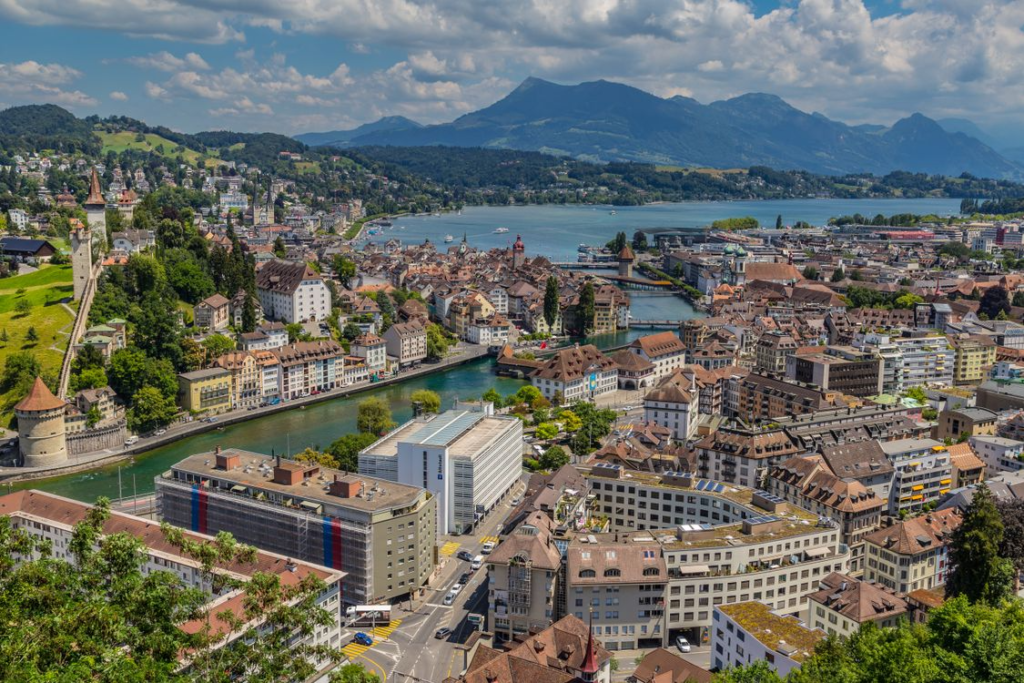
At the end of 2025, approximately 9.1 million people were living in Switzerland. Since the introduction of the free movement of persons in 2002, the population has grown by around 1.7 million, mainly due to immigration. The number of people immigrating depends primarily on the labour market.
The country’s population increased 10 percent in the ten years up to the end of 2025. For the first time, Switzerland had more people over 65 than under 20. More elderly residents than children means that even as the SVP argues Switzerland is too crowded, the actuarial math suggests it needs more working-age contributors, not fewer.
Despite the decline in fertility, the population of Switzerland is still increasing. The milestone of nine million inhabitants was reached in 2024, and the permanent resident population rose to 9.05 million at the start of 2025, an increase of nearly 89,000 people in a year. Of these, 83,000 (over 93 percent) came from immigration. Natural growth amounted to no more than 6,000 people. Switzerland’s native birth rate contributes almost nothing to its own growth. The population expands almost entirely because people choose to move there.
According to the reference scenario calculated by the Swiss Federal Statistical Office, Switzerland’s permanent resident population is expected to rise from 9.1 million at the end of 2025 to 10.5 million in 2055. This growth will be primarily attributable to migration. Under the initiative’s terms, that trajectory would become illegal.
The SVP’s Case: Sustainability or Anti-Immigration?
The measure was put forward by the SVP after securing the required 100,000 signatures. The country’s largest party in parliament calls it a “sustainability initiative,” arguing that uncontrolled immigration causes an unbearable strain on housing, public services and the environment.
The idea, proponents say, would be to help protect the environment, natural resources, infrastructure and the social safety net from strains of population growth. SVP lawmaker Thomas Matter made the argument in direct economic terms: Swiss gains in prosperity had not kept pace with overall immigration and the country needed to step on the brakes.
Even within the SVP, though, the stated ambition of the initiative is more modest than its legal consequences imply. Even some SVP figures say the proposal is not meant to stop free movement, but to serve as a wake-up call. “I don’t want freedom of movement ended,” said Heinz Taennler, an SVP politician and finance director of the canton of Zug. He added: “Another million people can still immigrate to Switzerland, but the government needs to take action.” His own position exposes the internal contradiction of the initiative: its proponents want the political signal without necessarily endorsing all of its legal consequences.
The party has for years sought to curb a rise in migration into the rich Alpine country with mixed results. In 2014, voters bucked expectations by narrowly passing an SVP-backed proposal to curb EU immigration, though its impact was later diluted in the legislative process.
The Housing and Infrastructure Pressure: Real Grievances Behind the Vote
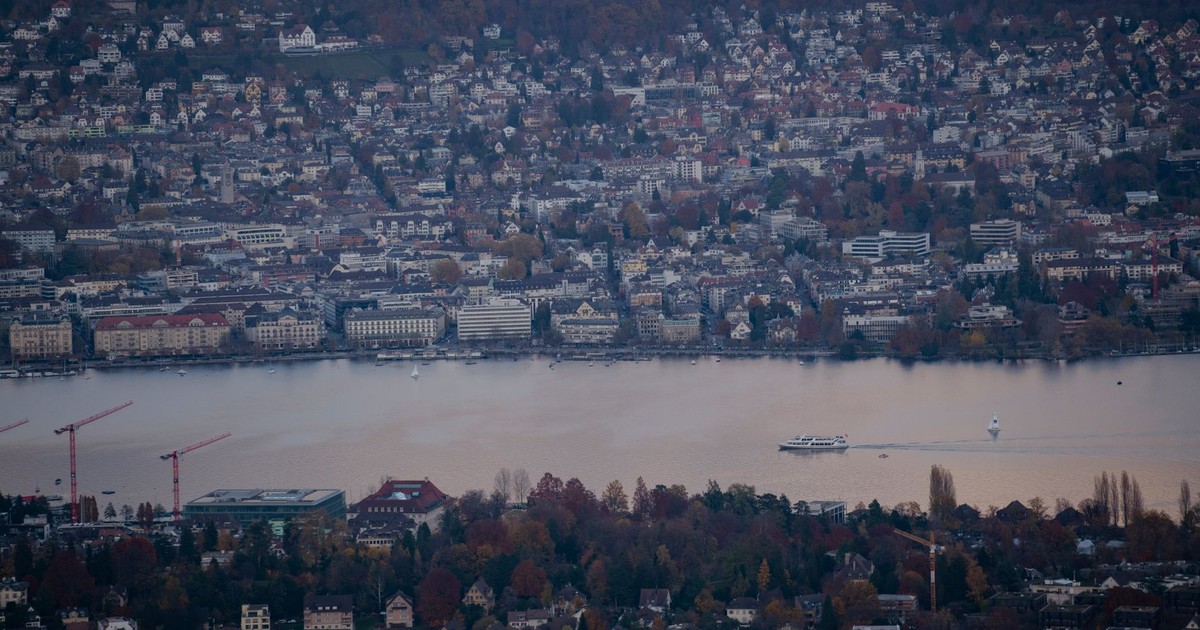
Switzerland’s housing market tells a story no economic argument can straightforwardly dismiss for the people living it. The Swiss Contractors’ Association warned that only 42,000 new flats would be built in 2025, whereas 50,000 would be needed according to the Federal Office for Housing. As a result, the vacancy rate was set to dip below 1 percent. In Zurich, the shortage is even starker: only seven out of 10,000 apartments are vacant on average, the lowest rate in Switzerland and probably in the Western world.
According to provisional Federal Statistical Office figures, Switzerland’s permanent resident population grew by 0.8 percent in 2025, compared with 1.0 percent in 2024 and 1.7 percent in 2023. Net international migration remained the main driver of population growth, declining from 82,800 people in 2024 to 77,300 in 2025, but still remaining above the roughly 65,000 long-term average.
The government itself has acknowledged the problem. Officials explained that the main causes of housing shortage are population growth, immigration, economic development, and a low number of houses being built, and that these “cannot be changed so quickly,” with the government unable to “solve this alone.” The debate has also highlighted concerns over the country’s ageing population, with more than one in five residents now aged over 65.
The Opposition Case: Economy, Labour, and EU Relations

Every major institution in Switzerland is against the initiative. The seven-member Swiss government, made up of ministers from Switzerland’s four biggest parties, including the SVP itself, is collectively against it, warning it could harm the country. Dubbing it a “chaos initiative,” the government, other political parties, business leaders and trade unions argue it will deprive hospitals and hotels of much needed staff, and damage hard-won relations with the European Union, leaving non-EU member Switzerland isolated in a very risky world.
When the economy is strong, companies struggle to find enough workers within Switzerland. Companies, as well as public institutions like hospitals and care homes, often recruit the skilled workers they need from the EU. That dependency is not trivial. In 2024, two out of every three newly created jobs went to people from abroad, especially from neighbouring countries.
The geopolitical timing compounds the concern. Last year, President Donald Trump slapped the highest US tariffs in Europe on Swiss goods, and the prospect of a population curb could complicate corporate planning. Switzerland is already absorbing the disruption of new American trade barriers; a simultaneous rupture with its largest trading partner would be an extraordinary self-inflicted wound.
Weeks before Trump returned to power, Switzerland sealed a deal with Brussels to deepen economic integration with the EU. That deal, and other agreements governing bilateral trade relations, could be cast into doubt by a population cap, with free movement a pillar of the EU single market. Economiesuisse, the country’s largest business federation, has been among the most vocal opponents. Its chief economist Rudolf Minsch warned that if the motion is passed, Switzerland “could face challenges in our relations with the European Union.”
The academic community has been equally skeptical. Marianna Griffini, assistant professor in international relations and anthropology at Northeastern University’s London campus, described the proposal as “quite peculiar in the European demographic and political context.”
Switzerland’s Direct Democracy: How This Vote Became Possible
The reason Switzerland is the only country in the world that could realistically hold this kind of vote is its system of direct democracy, which has no real parallel among developed nations. The popular initiative allows citizens to propose amendments to the Federal Constitution by collecting at least 100,000 valid signatures within 18 months, thus bringing issues deemed important by the population to public attention.
An initiative must be launched by a group of at least seven citizens and backed by 100,000 signatures within 18 months to push it to a referendum. A double majority of the people and the cantons is required for it to pass. That double-majority requirement is significant for the population cap vote. A proposal can win the popular vote nationally but still fail if it does not carry a majority of Switzerland’s 26 cantons. Urban cantons may vote differently from rural ones, and the geographic distribution of sentiment will be as important as the raw national total.
The popular initiative was introduced in 1891 and took some time to gain traction. From 1891 to 1930, only 25 popular initiatives were launched. Since the 1970s, more than 40 have been held in each decade. Between 1891 and 2024, only 26 popular initiatives were accepted, 14 of which took place in the 21st century. The success rate is low historically, but the trend is accelerating.
Although most popular initiatives historically fail to convince the electorate, these tools play a crucial role in the political agenda, often pushing the government and parliament to develop counterproposals that take popular demands into account, demonstrating how direct democracy can influence the decision-making process even when it fails to gain a majority. Even a failed population cap vote will likely force policy movement on immigration, housing, and infrastructure, which may be precisely what the SVP’s more pragmatic wing is counting on.
What a “Yes” Vote Would Actually Mean in Practice
The practical implementation of a yes vote would be anything but straightforward. If voters back the population curb, the country’s Federal Council and parliament would have to roll out measures to limit population growth until 2050. But those measures run directly into Switzerland’s treaty architecture.
Switzerland is part of the border-free Schengen travel zone, along with many large EU economies. The bloc and Switzerland also have an agreement to allow free movement of each other’s citizens, letting them live and work in each other’s territories provided they have a job or another source of income. Unwinding that agreement would be a two-year process under the initiative’s own terms, and the EU has been unambiguous about what follows.
Brussels has long warned non-EU members that they cannot simply cherry-pick the advantages of the EU’s single market and wriggle out of commitments like free movement of people. Switzerland already learned this lesson, at significant cost, in the aftermath of the 2014 immigration vote. Then as now, the EU made clear that bilateral market access and free movement are treated as a package.
Should the current initiative pass, parts of it, including the prospect of Switzerland terminating free movement with the EU, could face their own referendums, officials say in private. That safety valve suggests even the government believes the full legal consequences of the initiative would never be implemented as written, but that belief is itself a gamble.
Read More: 8 Notorious ‘History Facts’ Most People Believe to Be True But Are Completely Made Up
What This Actually Means
The Switzerland population cap referendum of June 14, 2026 is, on its surface, a domestic political event driven by a right-wing party’s long-running campaign against immigration. Beneath that surface, it is the first formal democratic attempt in history to constrain a nation’s population through constitutional law and a test case for whether the tools of direct democracy can be used to override the logic of an interconnected economy.
The conditions that produced the initiative are real. A vacancy rate below 1 percent in major cities, a housing construction shortfall of roughly 8,000 units per year, and the strain of adding nearly 90,000 net residents annually to a geographically constrained country are not manufactured grievances. They are the predictable consequences of decades of growth without adequate infrastructure investment. Economists note that migration has supported tax revenue growth, innovation, and consumer spending. But that argument lands differently at 11pm when you’ve lost three apartment bids in a month.
The cure proposed by the initiative, however, carries costs that dwarf the conditions it seeks to treat. Losing bilateral agreements with the EU, Switzerland’s largest trading partner, would cost the Swiss economy in ways that housing shortages, for all their frustration, do not. Swiss voters have often rejected measures deemed harmful to the long-term interests of the economy, but that tendency has become less predictable. Whatever the result of the June 14 vote, the population cap debate has already changed the terms of the conversation in Switzerland and, by extension, across Europe. No government on the continent can now claim it did not know that voters were willing to go this far. The initiative may fail at the ballot box. The pressure behind it will not.
AI Disclaimer: This article was created with the assistance of AI tools and reviewed by a human editor.