
The most popular stories about the past are often the ones that were never true. Not exaggerated, not simplified – actually invented, sometimes deliberately, usually for political or theatrical reasons that had nothing to do with the people they were supposedly about. A measurement gets mistranslated, a propaganda cartoonist needs a good joke, a 19th-century novelist wants to make a point, and suddenly a “fact” that has no basis in evidence embeds itself so deeply in the culture that even educated people repeat it without a second thought.
These stories resist correction in a way that genuine history rarely does. You can tell someone the truth about Napoleon’s height or the Great Wall and watch them nod, and then hear the same myth repeated three days later. The fiction sticks better. It’s more satisfying, more dramatic, easier to remember. Which is precisely why the real history is almost always more interesting than the invented version.
Here are eight history misconceptions that have been circulating as fact for decades, with what the actual record shows.
1. Napoleon Bonaparte Was Unusually Short

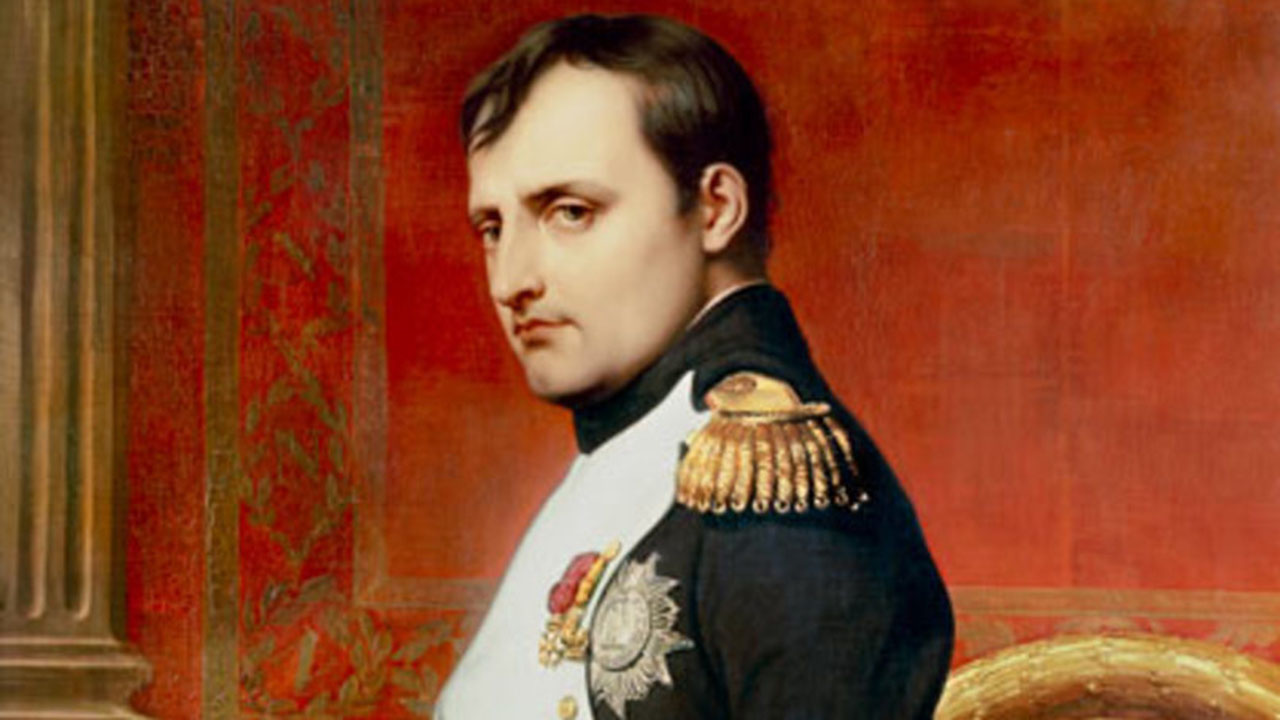
Few history misconceptions have had more staying power than this one. The image of a tiny, furious emperor strutting around in an oversized hat is practically branded onto Western culture. It gave us a term in psychology. It gets referenced in everything from cartoons to political commentary. The only real problem is that he was probably of average height. According to pre-metric French measures, he was recorded at 5’2″, but the French inch of the time was 2.7 centimeters, while the Imperial inch was shorter at 2.54 centimeters.
Once the conversion is properly applied, Napoleon was probably closer to 5’6″ or 5’7″ (1.68 or 1.7 meters) than to 5’2″ – at or slightly above average for a French man of his era. So where did the myth come from? A 1803 Gillray cartoon titled “Maniac Ravings – or – Little Boney in a Strong Fit” helped plant the image of Napoleon as a tiny, childish figure, even though the intention was to mock him politically, not describe his actual dimensions.
British political cartoonists repeatedly depicted Napoleon as short to undermine both him and his expansionist ambitions. The caricature spread, it stuck, and it eventually crossed the Channel and became received wisdom. His bodyguards also contributed: Bonaparte chose the tallest and most imposing guards he could find, making him appear smaller by comparison. His troops nicknamed him “Le Petit Caporal” – “The Little Corporal” – which was a term of affection for his willingness to engage personally with common soldiers, not a comment on his height. Two centuries of propaganda tend to win out over the historical record.
2. The Great Wall of China Is Visible from Space

This one gets repeated with such confidence that it feels almost like settled science. It shows up in classrooms, documentaries, and travel brochures. The idea is that the Great Wall is so vast, so magnificent, that astronauts gazing down from orbit can pick it out with the naked eye. Astronauts have repeatedly confirmed it cannot. The wall is only about 15 to 30 feet wide in most places, far too narrow to spot from orbit, and built from local stone that blends into the surrounding terrain.
According to Scientific American, the wall “is constructed from materials that make it difficult to discern from space” – and even under optimal conditions, only barely detectable from low Earth orbit with instruments, not the naked eye. Structures that show up from the International Space Station tend to have strong color contrast against their backgrounds: lit cities, reservoirs, cleared farmland. A long, narrow stone wall built from the same material as the mountains around it doesn’t make that list. The myth appears to date back to at least 1932, when a Ripley’s Believe It or Not! cartoon called the wall “the mightiest work of man, the only one that would be visible to the human eye from the moon” – decades before the space age made the claim testable. By the time humans reached orbit, the story was already too entrenched to dislodge easily.
Many other human-made structures are considerably more visible from space than the Great Wall. The myth had a four-hundred-year head start on anyone who could actually go up and check.
3. Vikings Wore Horned Helmets Into Battle
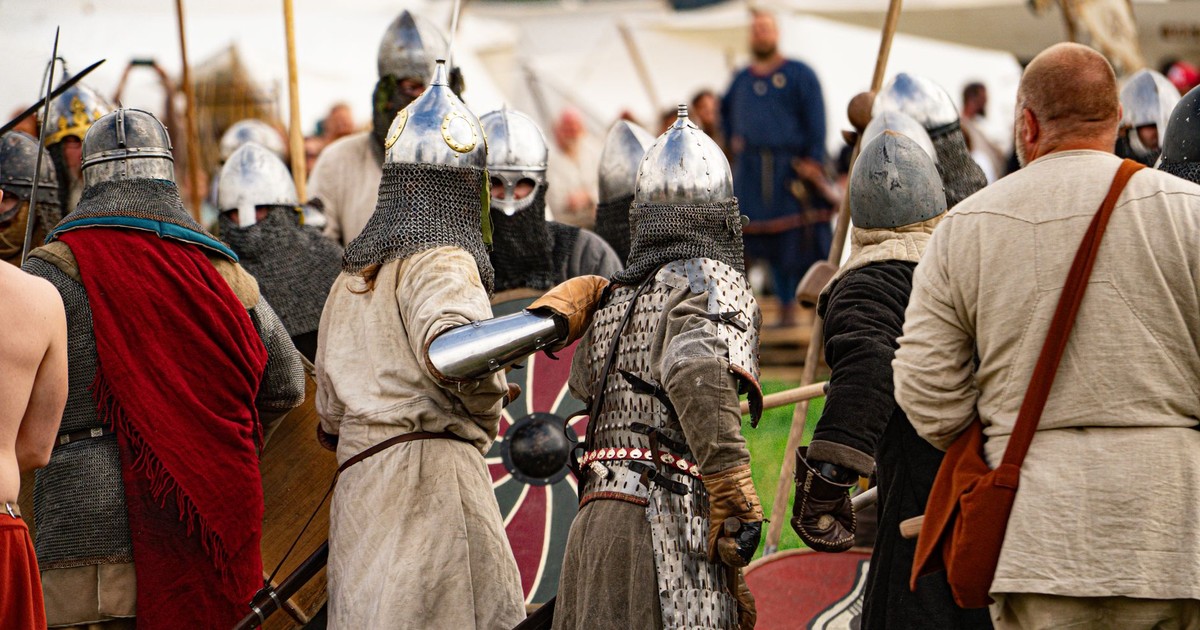
Ask someone to picture a Viking warrior, and the horned helmet appears almost immediately. It’s on sports logos, Halloween costumes, theme park merchandise, and theatrical productions worldwide. The one actual Viking helmet ever found, discovered in 1943, is a plain iron cap with a nose guard – a practical piece of equipment with no dramatic flourishes. The horned helmet was a 19th-century theatrical invention: costume designer Carl Emil Doepler created them for the 1876 premiere of Richard Wagner’s opera cycle Der Ring des Nibelungen, and the image spread far beyond the opera house from there.
Actual Viking helmets were conical, made of metal or leather, designed entirely for practicality. Horns would have been a significant liability in close combat – catching on a sword swing, on an opponent’s arm, or on your own shield – which is why no serious battle culture in recorded history ever used them for combat. The Viking Age Norse were no exception.
Horned helmets did exist in Scandinavia, but they predate the Viking Age by over a thousand years. They appear in Bronze Age ceremonial contexts, used in rituals rather than raids. By the time the Norse were sailing to England and North America, those horn-adorned pieces were ancient artifacts. The Wagner costumes collapsed this gap in the popular imagination, and the image proved too compelling to correct.
4. Medieval People Thought the Earth Was Flat

This may be the most widespread history misconception of them all, and it’s almost entirely a 19th-century invention. Historian Jeffrey Burton Russell, emeritus professor of history at the University of California, Santa Barbara, has documented that with “extraordinary few exceptions, no educated person in the history of Western Civilization from the third century BC onward believed that the Earth was flat.” Medieval scholars, sailors, and theologians almost universally understood the Earth to be a sphere.
The shape and size of the Earth had been calculated with notable precision by the ancient Greeks, and that knowledge carried through the Christian Middle Ages without interruption. The idea that medieval scholars believed the Earth was flat appears to date from the 17th century as part of a Protestant campaign against Catholic teaching, gaining serious traction in the 1800s through inaccurate historical retellings – including William Draper’s History of the Conflict Between Religion and Science, published in 1874, which helped cement the false narrative.
By 1492, educated Europeans already knew the Earth was spherical. What Columbus misjudged was the planet’s size. His voyage didn’t prove Earth’s shape – it revealed the Americas to Europeans. The flat-earth narrative was essentially a slander against medieval scholars, invented by later writers who wanted to make their own era look enlightened by contrast. It worked. The myth is still taught in schools.
5. The Pyramids Were Built by Slaves

The image has appeared in so many films, television series, and textbooks that it feels like settled history. Thousands of enslaved people, driven by whips under the Egyptian sun, hauling stone blocks for a god-king who cared nothing for their lives. The pyramids were not built by slaves. Archaeological discoveries at Giza unearthed workers’ villages showing that the laborers were skilled artisans and well-fed workers who received medical care and were buried with honor near the site. The misconception was significantly boosted by the Greek historian Herodotus, who visited Egypt two thousand years after the pyramids were built, and by later Western narratives that drew on his account without interrogating it.
Modern archaeological evidence points clearly toward a paid, permanent workforce operating in rotating shifts. The workers’ village at Giza, excavated from the 1990s onward, revealed bakeries, breweries, a hospital, and organized burial sites – none of which are features of a slave labor operation. The scale of the project was immense and logistically sophisticated, requiring a stable, skilled, and motivated workforce. The slave myth came primarily from a combination of misread ancient sources and Hollywood films, not from what the ground under Giza actually shows.
6. George Washington Had Wooden Teeth
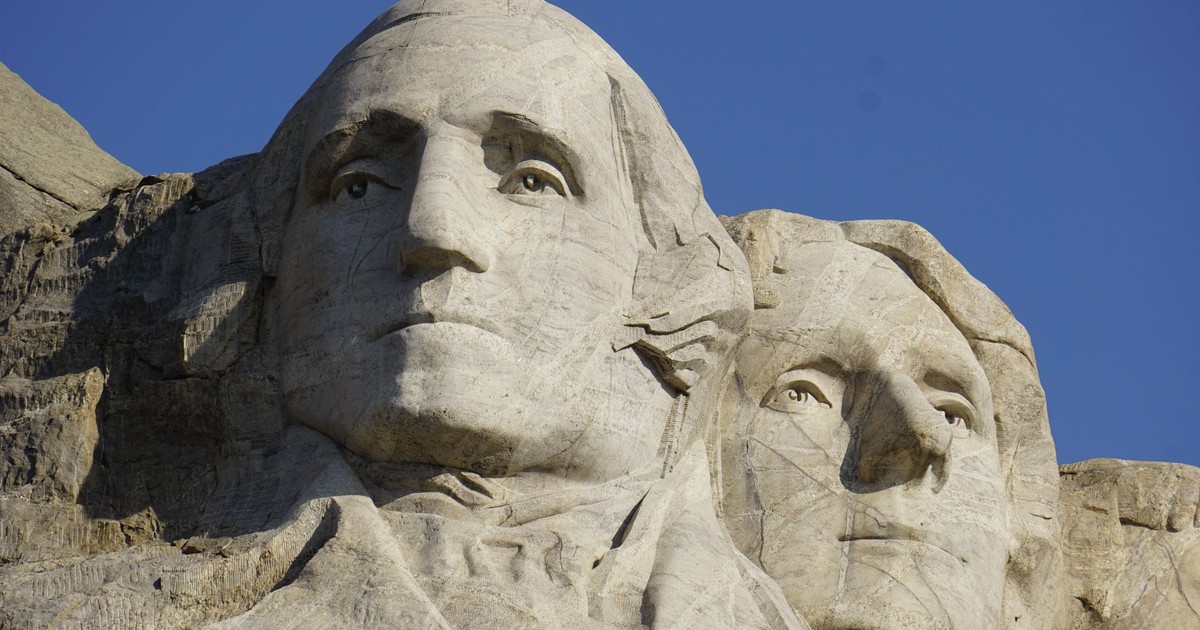
The first president of the United States is remembered for two things above all others: crossing the Delaware and having wooden teeth. One of those is accurate. When Washington took the oath of office, he had just one natural tooth remaining. What he actually wore was considerably more disturbing than wood: dentures made from a combination of human teeth, animal teeth, hippopotamus ivory, and metal alloy, which was standard practice for wealthy patients at the time.
The myth of wooden teeth likely arose because people mistook the discoloration of his ivory dentures for wood. Ivory stains and darkens significantly over time, and the dentures Washington wore late in life would have had a distinctly grim appearance. Wood, somehow, became the less alarming explanation, and it stuck. Washington’s dental suffering was genuinely severe and well-documented – he began losing teeth in his twenties and was largely toothless before he ever became president. His dentures were painful, ill-fitting, and altered the shape of his face, which is why many of his portraits show a tight-lipped, slightly puffed expression. The wooden teeth story sanitizes something that was actually quite grim.
Read More: Is Donald Trump Is the Most Corrupt President in US History?
7. Columbus Discovered America

This one has a federal holiday behind it, which makes it considerably harder to dislodge than most history misconceptions. Columbus never set foot on the mainland of what would become the United States, and Indigenous peoples had inhabited the Americas for somewhere between 15,000 and 30,000 years before his ships arrived. He landed in the Caribbean in 1492, made four voyages across the Atlantic, and reached parts of Central and South America – but to his dying day, he believed he had found a new route to Asia, not a new continent.
The Norse explorer Leif Eriksson reached the coast of North America around 1000 CE, roughly five centuries before Columbus. UNESCO’s World Heritage listing for L’Anse aux Meadows in Newfoundland confirms it as “the earliest evidence of Europeans in North America” – a complete 11th-century Viking settlement excavated at the tip of the Great Northern Peninsula. Columbus’s arrival in the Americas was consequential and transformative in its impact on the modern world. But discovery, in any meaningful sense, was not part of it.
8. Einstein Failed Math as a Child

The story gets told as inspiration, usually to students who are struggling: even Albert Einstein failed math at school. If the greatest physicist in history couldn’t pass his exams, there’s hope for everyone. It isn’t true. Not only did Einstein excel at mathematics and physics from a young age, he was years ahead of his peers in most subjects.
Einstein himself denied the story directly. By age twelve, he had taught himself algebra and Euclidean geometry over a single summer. He had mastered calculus by fifteen. The myth appears to trace back to a misreading of the Swiss grading system: in Switzerland, the scale ran in the opposite direction from most others, with 6 as the highest mark rather than the lowest. When someone unfamiliar with the system encountered Einstein’s grade of 6, they read it as failure. Decades of retelling amplified the confusion into legend.
What Einstein did struggle with was one entrance exam – to the Swiss Federal Polytechnic in Zurich, which he sat two years younger than the standard admission age, and he fell short on the French-language portion. He passed on the second attempt. That’s not failure. That’s a teenager sitting a university entrance exam at fourteen and almost making it. By any honest reading, Einstein’s academic record shows a mind that consistently ran ahead of the institutions designed to contain it.
What to Do With All of This
The strange thing about these myths isn’t that they exist – every culture generates legends about its past. What’s strange is how specific the origins are. A cartoonist’s political joke in 1803. An opera costume designer in 1876. A 19th-century historian who wanted to make medieval people look primitive. A grading scale that runs backward. In nearly every case, the myth didn’t emerge from the historical record. It emerged from outside it, for reasons that had nothing to do with what actually happened, and the actual record just never caught up.
Some of these stories have now been in circulation for two centuries. The facts about the pyramids’ builders, Napoleon’s height, Viking helmets – they’re not obscure. Archaeologists and historians have known them for decades. They’re in the scholarly record, in museum exhibits, in peer-reviewed papers. But a good story, once it’s attached to a face or a landmark or a holiday, takes on a kind of structural permanence that correction alone can’t undo. Knowing the truth doesn’t automatically replace the fiction. It just gives you something more accurate to reach for the next time someone brings up Napoleon’s height at a dinner party – and they will.
AI Disclaimer: This article was created with the assistance of AI tools and reviewed by a human editor.