

On a Wednesday morning in early June 2026, a reporter asked the President of the United States a straightforward question: was he concerned about the new inflation data? President Trump responded by saying the numbers were “great” and “I love the inflation,” even as the Consumer Price Index had just come in at an annual rate of 4.2%, up from 3.8% the previous month and the highest level since April 2023.
The answer landed like a dropped plate. Democrats pounced immediately, with Senate Minority Leader Chuck Schumer and Senator Elizabeth Warren accusing the president of not caring about the rising cost of living for Americans. Trump later tried to walk it back. Speaking with the New York Post, he claimed he’d been taken out of context, saying he loved “the inflation numbers” because they showed that despite being “in a war,” figures were “much lower than anticipated,” and would drop sharply once the conflict ended. Whether or not you buy that explanation, the number itself is not in dispute, and neither is where ordinary Americans are feeling it most.
The gap between what inflation looks like on a chart and what it feels like in a parking lot is wide. The 4.2% headline figure is an average. Behind that average are fuel oil bills, grocery receipts, electricity costs, and airfare prices that are moving in entirely different directions. Some categories are running twice the headline rate. Others have cooled. And which one hits you hardest depends almost entirely on how you live.
How the War in Iran Became Your Gas Bill
The Consumer Price Index rose at a faster rate in May for the third consecutive month this year, with the 4.2% annual increase representing the first time inflation had topped 4% since 2023. In all three months, the driver has been the same: energy.
Energy costs accounted for more than 60% of the increase in all items. Energy prices rose 3.9% in May, following a 10.9% surge in March and a 3.8% rise in April. The chain of events behind those numbers runs directly through the Strait of Hormuz. The spike is tied to a near-halt in energy shipments through the Strait, which handles roughly 20% of global oil supply.
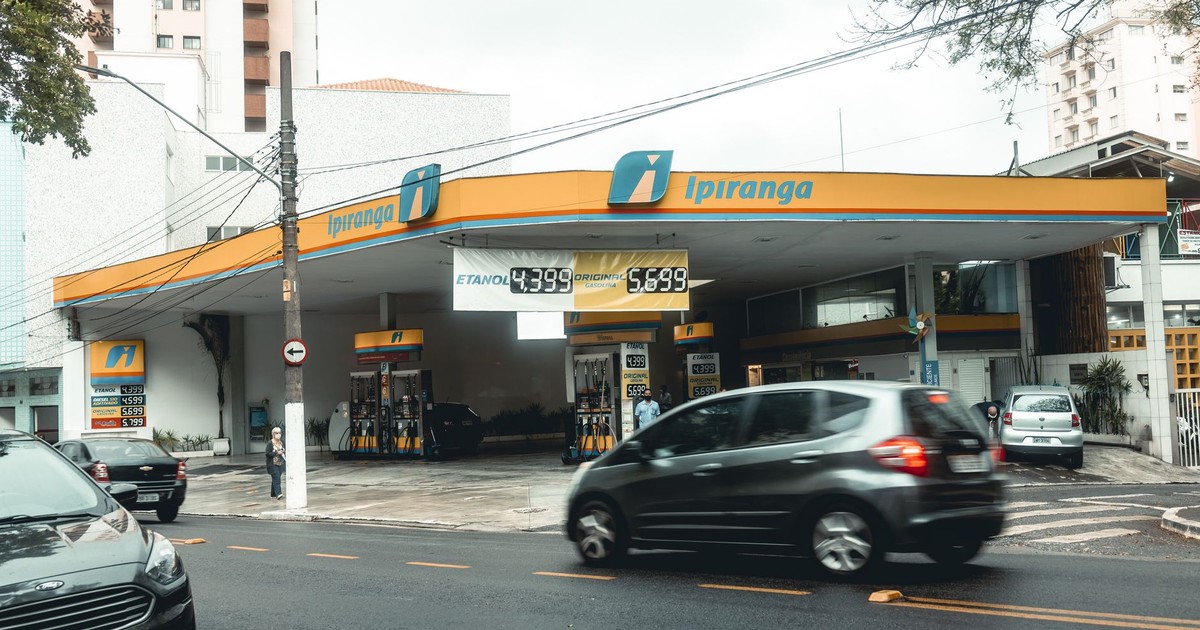
Heating oil has recorded the largest increase of any category tracked by the CPI, surging 45.1% since the start of the year. Gasoline prices have climbed sharply too, rising 39.8% over the same period. For anyone filling a tank in a rural county with no public transit option, that number isn’t a statistic. It’s a problem that comes up every few days.
The national average gas price has risen by $1.00 per gallon since late February 2026, roughly when the conflict began. That adds up to roughly $15 to $20 extra per fill-up for a standard sedan, every time. For households with longer commutes or larger vehicles, the math gets worse quickly.
The broader economic concern is that energy prices don’t stay in the energy category. They travel. Trucking companies pay more for diesel. That cost ends up in the price of the box of cereal on the shelf.
Groceries: The Pain That Compounds

In a CNBC-SurveyMonkey poll released in April, more than half of Americans said everyday life had become less affordable over the past year. Of those, 76% pointed to rising grocery prices as a leading cause, ahead of gasoline and transportation at 71%, healthcare at 37%, and housing at 32%.
People feel groceries more than gas. The CPI numbers track them differently, but the register doesn’t care about index methodology.
The food index increased 3.1% over the last 12 months. That’s roughly in line with the broader core number, but it conceals some wild variation inside individual categories. Tomatoes are up 31.1%, ranking among the year’s biggest price surges. Fresh vegetables overall are up 7.1%, while coffee prices have climbed 5.3%.
Since 2020, U.S. grocery prices have risen by almost one-third, outpacing inflation overall. That cumulative pressure matters more than any single month’s reading. A family that spent $800 a month on groceries six years ago is paying close to $1,050 for the same basket today, and wages haven’t kept pace with that math for most households.
The USDA’s March forecast projected that food costs could rise by 3.1% in 2026 compared with last year. That forecast was made before the war in Iran had fully filtered through to wholesale food prices. Fertilizer shortages stemming from the conflict could send food prices soaring further if the conflict is long-lasting, according to the OECD.
Electricity, Travel, and the Categories Nobody Expected

The data centers that underpin AI infrastructure are raising electricity demand, pushing U.S. electricity prices for households higher. Electricity prices are up about 6% over the past year. That’s a relatively new pressure source, one that runs parallel to the war-driven energy shock rather than because of it. AI isn’t a future problem for electricity bills. It’s already in the May 2026 CPI data.
Residential electricity costs have increased faster than earnings across much of the country, leaving customers paying about $40 more on average in December 2025 than they did in December 2017. That’s eight years of electricity bills steadily climbing, separate from any geopolitical shock.
Travel has been another unexpected pressure point. Airline fares are up 21.6% since the start of the year, hotel and motel prices have increased by 19.3%, and public transportation costs have risen by 13.5%. The summer of 2026 is shaping up to be an expensive one for anyone planning to fly anywhere.
Core inflation drivers include shelter at 3.4% annually, transportation services at 4.1%, medical care services at 3.6%, and apparel at 4.8%. Those are the sticky categories. Unlike gas prices, which can fall quickly when oil supply stabilizes, shelter and healthcare costs don’t retreat easily once they’ve risen. They tend to hold.
The Americans Feeling It Most

The headline rate is a national average, which means it smooths over some sharp local realities. Previously low-cost regions, including parts of Atlanta, Chicago, Louisville, Winston-Salem, Columbus, Nashville, western New York, south-central Wisconsin, and central Florida, are seeing costs for housing, healthcare, and groceries rise. Inflation no longer bites hardest in expensive coastal cities. It’s hitting the places that used to be the affordable alternative.
Low- and middle-income households, who allocate a greater proportion of their income to essentials like food, housing, and energy, are underweighted in how the CPI basket is constructed. Americans in the bottom income quintiles spend at least 33% of their income on food, compared to around 8% for the highest-income households. So when food prices rise 3%, the hit to a lower-income family’s budget is roughly four times larger in proportional terms than the same increase is to a wealthy household’s finances.
According to Heather Long, chief economist at Navy Federal Credit Union, “Americans are getting squeezed financially by inflation that’s back at a 3-year high.” She noted that gas, food, electricity, and medical care are “all clear pain points that are above 3% inflation.”
Where the U.S. Stands Globally
The American inflation picture doesn’t exist in isolation. The conflict in the Middle East will drive U.S. inflation to 4.2% this year, the highest rate among G7 nations, as surging energy prices ripple through the broader economy, the Organization for Economic Cooperation and Development said.
Among G7 countries, the projected 2026 inflation rates show the U.S. at 4.2%, the U.K. at 4%, Germany at 2.9%, Canada at 2.4%, Italy at 2.4%, Japan at 2.4%, and France at 1.8%. Every other major economy is dealing with inflation too, but none is dealing with it at the rate Americans currently are.
According to Yale’s Budget Lab, the U.S. currently has an effective tariff rate of 10.5%. Outside of Trump’s since-rescinded 2025 tariffs, that is the highest rate since World War II. When Trump took office in January 2025, the rate was about 2.3%. Tariffs and war-driven energy costs are layering on top of each other rather than taking turns.
The inflation surge has upended expectations for the Federal Reserve’s interest rate path. In January, economists had largely focused on when the Fed might next cut rates. Now, with prices surging and the labor market remaining strong, some analysts are predicting that the central bank’s next move could instead be a rate hike. A rate hike would make mortgages, car loans, and credit card debt more expensive, adding yet another pressure on household budgets already stretched by higher prices at the pump and the grocery store.
What the Number Actually Means
Mark Zandi, chief economist at Moody’s Analytics, put it plainly. “Inflation is painfully high,” he said. “And while it’s likely peaking given the recent decline in oil and gasoline prices, it’s not going to go back to anything we feel good about for a long time.” The current rate is roughly double the Federal Reserve’s 2% long-term target.
May could represent a 2026 peak for the inflation rate, with gas prices down sharply in early June. But even if headline CPI has peaked, core inflation has also likely peaked while remaining elevated, meaning the underlying price pressure isn’t going away quickly.
The categories that ease fastest are the ones that drove the spike: energy. When oil prices drop, gas drops within weeks, and that flows back through the headline number. The core inflation rate, which excludes food and energy, hit 2.9% year-over-year in May 2026, its highest level since September 2025. That number doesn’t benefit from cheaper oil. It reflects rent, medical care, transportation services, and clothing. Those costs move on their own schedule, and it’s a slower one.
The president’s “I love the inflation” comment may be the kind of thing that gets replayed in midterm ads for months. But the more durable question isn’t about the politics of the remark. It’s about who’s actually absorbing these price increases. Someone spending a third of their income on food doesn’t have much slack when tomatoes go up 31% and the electricity bill climbs another $40. The 4.2% figure sitting at the top of the news story is their life, broken down by category.
AI Disclaimer: This article was created with the assistance of AI tools and reviewed by a human editor.