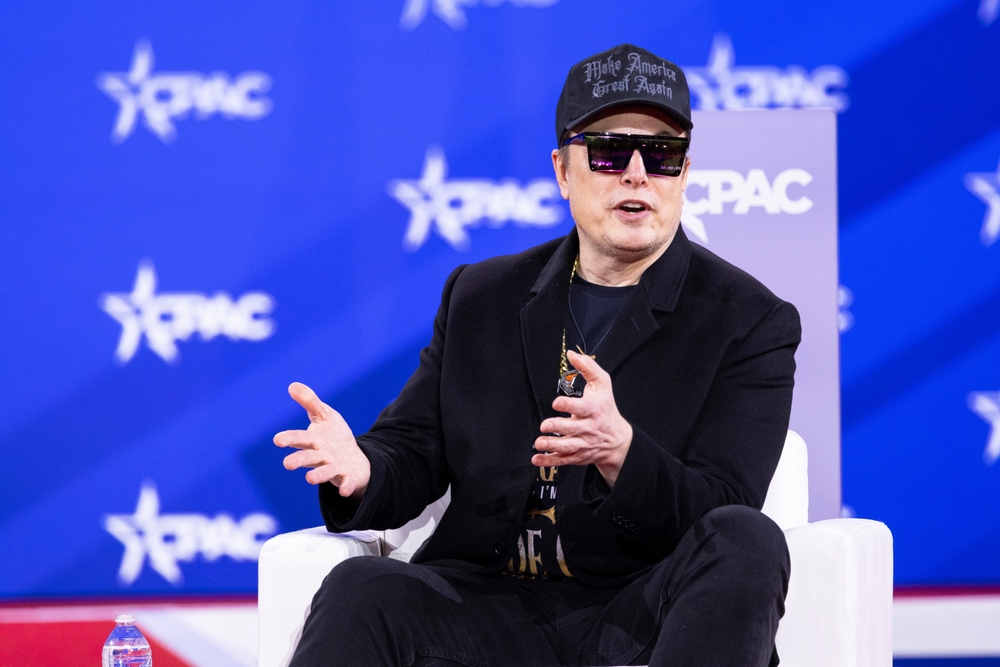

No human being had ever done it before June 12, 2026. Not the railroad barons of the Gilded Age, not the oil dynasties, not the tech founders of the dot-com era or the AI era that followed it. For all the centuries of concentrated wealth, the trillion-dollar mark had stayed theoretical. Then SpaceX went public, and Elon Musk crossed it before the closing bell.
The number that makes this genuinely hard to absorb is not $1 trillion. It’s the gap. Before Friday’s trading session, Musk was already worth an estimated $813 billion, a fortune more than twice the size of his nearest rival. The SpaceX IPO added roughly $274 billion to that in a single afternoon. The four next-richest people on the planet, combined, are now worth less than he is.
What got him here, and whether the market has it right, are two very different questions. Both are worth asking.
The IPO That Broke Every Record
SpaceX raised approximately $75 billion selling more than 555 million shares at its offer price of $135, making it the biggest IPO in history. SpaceX stock, listed on the Nasdaq under the ticker SPCX, rose 19% on its first day of trading to close at $160.95, and it became one of the world’s biggest listed companies on its first day on the market, valued above $2 trillion.
SpaceX formally setting its stock price at $135 boosted Musk’s fortune to just over $1 trillion. The stock hit a high of $176.52 during the session.
Before the IPO, Musk was worth an estimated $813 billion, a fortune more than twice as large as the planet’s second-richest person, Google co-founder Larry Page, who is worth an estimated $288 billion, according to Forbes. Musk is now worth more than the world’s next four richest people combined. That detail, perhaps more than the headline number, captures just how completely the shape of extreme wealth has been redrawn.
What SpaceX Actually Is Now
The company that went public on June 12 is not simply a rocket company anymore, and understanding the IPO requires understanding what SpaceX became after absorbing Musk’s other major ventures.
Musk, who became the world’s first trillionaire based on his combined stakes in SpaceX and Tesla, started the company as a reusable rocket maker, but the only profitable part of the business today is the Starlink satellite internet division. SpaceX acquired Musk’s startup, xAI, in February 2026. That merger was the defining corporate event preceding the listing, and it changed the company’s financial profile considerably.
SpaceX’s S-1 prospectus shows that Starlink subscribers grew from 2.3 million in 2023 to 4.4 million in 2024 to 8.9 million in 2025, a near-doubling every year. Revenue from the connectivity segment grew nearly 50% year-over-year to $11.4 billion in 2025, accounting for 61% of total company revenue. Launches contributed another 22%, while the AI division added 17%.
Starlink had 10.3 million subscribers at the end of the first quarter of 2026, more than double the 4.4 million it reported a year earlier. SpaceX also laid out expansive ambitions in its filing: growth strategies include the lunar economy, manufacturing on the moon, growing Starlink Mobile, and deploying orbital AI compute at scale, with future markets cited as space tourism, in-orbit manufacturing, and asteroid mining. The company estimated its total addressable market at $28.5 trillion, which it called “the largest actionable total addressable market in human history.”
That framing – SpaceX as an AI company as much as a space company – is central to understanding both the valuation and the debate surrounding it.
The Starlink Engine
Starlink accounted for $11.4 billion of revenue in 2025, up 48% from $7.7 billion in 2024, and generated $4.4 billion of operating profit, making it SpaceX’s core profit center even as the broader company reported a GAAP loss. That profit funds everything else: the Starship development program, the orbital AI infrastructure buildout, and the losses absorbed by the xAI segment after the merger.
SpaceX as a whole swung from a $791 million net profit in 2024 to a $4.94 billion net loss in 2025, driven by the costs of integrating xAI and expanding AI infrastructure. The profitable satellite internet business and the cash-hungry AI operation are now one corporate entity, which is precisely the story SpaceX told investors to justify its valuation.
One wrinkle in that story is the trajectory of Starlink’s revenue per subscriber. Average revenue per user fell to $66 per month in Q1 2026, down from $86 a year earlier and $99 in 2023. The decline is not accidental: Starlink has been expanding aggressively into price-sensitive markets across Africa, Southeast Asia, and Latin America, where monthly subscriptions are set well below U.S. rates to match local purchasing power. More customers, but each one paying less. Starlink still recorded an 86% increase in adjusted EBITDA between 2024 and 2025 as its total subscriber base doubled, but the pricing compression is something analysts are watching closely as the growth story matures.
For a broader look at how Starlink’s subscriber economics compare to other subscription-driven tech businesses, this breakdown of recurring revenue models is worth your time.
The Valuation Skeptics
Not everyone is convinced that $1.77 trillion is the right number. CFRA Research gave SpaceX a 12-month price target of $115, significantly below its offering price of $135. CFRA said SpaceX had “elevated valuation expectations.” The market capitalization of the company was $1.77 trillion at its initial offering price. To live up to its valuation, SpaceX will need to prove the viability of its Starship rocket, expand Starlink, generate returns from its AI infrastructure, and eventually produce consistent free cash flows. CFRA analyst Keith Snyder wrote that “SpaceX’s long-term strategy remains heavily dependent on Starship,” calling the rocket a potential “bottleneck” for various SpaceX initiatives, per CNBC.
The IPO valuation was roughly 94 times revenue, a multiple that Morningstar analysts noted compares sharply with Meta at 22 times and Amazon at 18 times. The valuation implied that the company’s 2035 earnings before interest and taxes would have to grow 75-fold from 2025 levels. Morningstar’s own analysis puts a fair-value estimate of $63 per share on the company, less than half the IPO price; only their most optimistic “Moonshot” scenario approaches the IPO offering price, and they give that scenario a 7% chance of happening.
The bull case rests on Starship. A Falcon 9 booster has demonstrated 34 reflights at $67 million per launch across 620 orbital launches with a 99%-plus mission success rate. Starship aims to extend reusability further still, with the potential for a 99%-plus reduction in launch costs relative to historical averages. If that rocket works at the cadence SpaceX is promising, the economics of putting things into orbit change so fundamentally that almost any current revenue projection becomes a floor, not a ceiling. SpaceX expects Starship to begin payload deliveries in the second half of 2026.
The bear case rests on the AI segment. In 2025, the xAI segment posted a $6.36 billion operating loss, versus a $1.56 billion loss a year earlier, on $3.2 billion in revenue. Of the $20.7 billion in total capital expenditure, 61% went to AI infrastructure. That is a company placing a very large bet on a future that has not yet arrived.
The Governance Question

One aspect of the IPO that received less attention than the wealth numbers deserves more. SpaceX’s IPO filing discloses super-voting Class B shares giving Musk and insiders permanent voting control, meaning public shareholders bear economic risk without commensurate governance rights. Investors who bought SPCX shares on Friday own a piece of the upside but no meaningful say in how the company is run. For a listing at this scale, that asymmetry between economic exposure and governance power is worth sitting with.
Chatter is also building that Musk’s ultimate goal is to combine SpaceX with Tesla, which would create a corporation spanning electric vehicles, energy storage, rocket launches, satellite internet, and AI at a scale that has no modern precedent. Whether that ambition resolves into something coherent or sprawls into something unmanageable is the question that hangs over everything.
What Happened to the Wealth Ladder

Musk’s net worth first reached $300 billion in 2021. It crossed $400 billion in December 2024, $500 billion in October 2025, $600 billion in mid-December 2025, $700 billion later that month, and $800 billion in February 2026. Each of those milestones, in its moment, seemed like an outer limit. None of them was.
The acceleration in the final six months is worth pausing on. From $800 billion in February to $1 trillion in June is a $200 billion increase in roughly four months, a figure larger than the entire net worth of nearly every other person alive. At a launch event with staffers on Friday at the company’s headquarters in Starbase, Texas, Musk said: “SpaceX wants to be able to take you to the Moon, take you to Mars and ultimately beyond.” The market, at least on Friday, took it seriously enough to price the company at nearly $2 trillion.
Read More: Doja Cat Called Elon Musk a ‘Barrel Chested Ewok’ and Says He ‘Looks Like He Eats Sand’
What the Number Can’t Tell You
A trillion dollars is, on one level, a score in a game that operates entirely on paper. Musk’s wealth doesn’t sit in a vault; it exists as a percentage of a company whose stock price will move in both directions from here. Analysts have already assigned a sell rating and a price target 15% below the IPO price. The xAI losses are real and growing. What the stock does from $161 over the next twelve months will say a great deal about whether Friday was the beginning of something or the peak of it.
What the number does tell you is something about the structure of this particular period in economic history. The gap between Musk and the next-richest person on the planet is now larger than most countries’ GDP. The gap between second and third is a rounding error by comparison. One person can now hold stakes in the reusable rocket industry, the satellite internet industry, electric vehicles, and AI simultaneously, and have all of them appreciate at once. That’s not a commentary on Musk specifically. It’s a description of what concentrated technological ownership looks like when several massive industries converge on the same balance sheet at the same time.
Some of the bets SpaceX is making – orbital AI compute, space-based data centers, a moon base – won’t resolve for years. When they do, those outcomes will show up in quarterly filings, with the results spread across a balance sheet that now belongs, in some small part, to every retail investor who bought SPCX before the closing bell.
AI Disclaimer: This article was created with the assistance of AI tools and reviewed by a human editor.