
The last person who claimed to have seen Jeffrey Epstein alive has now told Congress, under oath, that she has no idea who approached his cell in the final hours before his body was found. That admission, buried inside a transcript released June 5, 2026, by the House Oversight Committee, does not resolve the central question surrounding his August 2019 death. It deepens it.
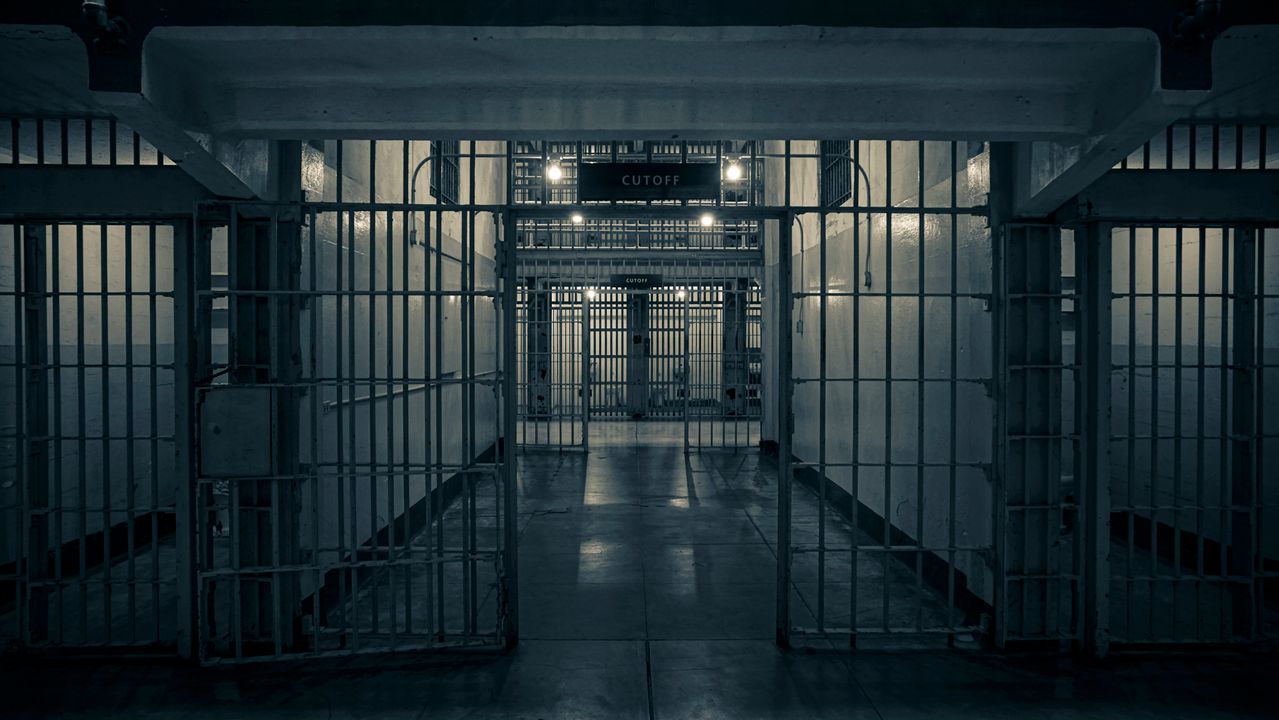
According to the transcript, committee members questioned Tova Noel on May 18 about surveillance footage showing an unidentified orange-colored figure moving up a staircase at approximately 10:39 p.m. on August 9, 2019, the night before Epstein was discovered dead in his cell in the Special Housing Unit of the Metropolitan Correctional Center in lower Manhattan. That figure on the stairs is the last documented approach to Epstein’s cell tier before guards found him hanging from a bedsheet the following morning.
In her testimony, Noel steadfastly denied being the individual in the footage and maintained that she was not present at that moment, offering no explanation for what the shape could be. “To be very honest, I don’t know what it is, who it is,” she told investigators, “because I never went back to the tier, and I was never carrying anything orange at all, and I never issued anything orange to anyone in the SHU.” A four-hour deposition, and the figure on the staircase remains unidentified.
Who Is Tova Noel
Noel is a former correctional officer at the Metropolitan Correctional Center in New York. Prior to her prison work, she served as a patient administrative specialist in the U.S. Army and was honorably discharged in 2014. She received a bachelor’s degree from the John Jay College of Criminal Justice in 2017 and started working for the federal Bureau of Prisons the following year.
A corrections officer who was on duty when Jeffrey Epstein died in August 2019, Noel told federal investigators in 2021 that she believes she was the last person to see the convicted sex offender alive at the Metropolitan Correctional Center. She is the only person who could plausibly account for that final stretch of time before Epstein was found, which is precisely why her congressional testimony drew the scrutiny it did.
Noel and Michael Thomas, the other corrections officer assigned to monitor Epstein that night, initially faced criminal charges for falsifying records related to their shift, but the charges were dropped after both reached deals with prosecutors in 2021. Both were fired from their jobs. The terms of the agreement required cooperation with government investigators, which eventually led to Noel’s appearance before the House Oversight Committee.
The Night Epstein Died: A Timeline of Failures
Noel and Thomas were supposed to be checking on Epstein, who was awaiting trial on sex-trafficking charges and had previously attempted suicide, every 30 minutes. Both admitted to not making those checks and were charged with falsifying records that said they had.
According to FBI forensic analysis of Bureau of Prisons computers, Noel entered the search term “latest on Epstein in jail” at 5:42 a.m. and repeated the query ten minutes later at 5:52 a.m. Her fellow officer Michael Thomas located Epstein hanging in his cell at 6:30 a.m., less than 40 minutes after her final search. Prosecutors stated that during the overnight shift, Noel browsed furniture websites and slept rather than performing the required half-hour checks, while Thomas spent time looking at motorcycle listings online.
During a count around 10 p.m. the night before, Epstein had asked Noel to plug in his CPAP machine, a common device used to treat sleep apnea. She nodded and plugged it in, noting that other prisoners “are not supposed to have” CPAP machines because of their long cords, but that exceptions were “being made for Epstein because it’s Epstein.” That exchange was the last she said she had with him.
Noel and another guard discovered Epstein unresponsive, hanging from a piece of a bedsheet in his cell. After prison guards reportedly performed CPR, he was transported in cardiac arrest to the New York Downtown Hospital, where he was pronounced dead at 6:39 a.m. Both the New York City medical examiner and the Justice Department Inspector General ruled that Epstein’s death was a suicide by hanging.
The Surveillance Footage Problem
The footage at the heart of the Epstein prison guard testimony inquiry is badly compromised. Most of the facility’s cameras were not recording that night due to a hard drive failure. The only available footage of Epstein’s housing unit came from a camera in the common area, which showed only a partial view of the staircase.
The Justice Department said the FBI seized the prison’s digital video recorder system containing the raw footage five days after Epstein’s death. When federal officials released the jail video, they attested that it was “raw footage,” but a CBS News investigation found that the presence of a cursor and an on-screen menu indicated the video was likely a screen recording rather than a direct DVR export. Video forensics experts who reviewed the footage for CBS News were also skeptical of the official conclusion that the orange figure on the stairs was Noel carrying linen, suggesting the shape could instead be a person in an orange prison jumpsuit.
An internal FBI memorandum described the figure as “possibly an inmate,” while a separate review by the DOJ Office of Inspector General concluded it may have been a corrections officer carrying orange linen or bedding. An internal FBI briefing went further, concluding that “at approximately 10:40 p.m., a correctional officer, believed to be Tova Noel, carried linen or inmate clothing up to the L-Tier, last time any correctional officer approached the only entrance to the SHU tier.” Investigators also determined that Epstein used strips of orange fabric to hang himself. Noel, under oath, denied all of that.
As members of the public pored over the footage, some discovered a one-minute gap in the video just before midnight, which fueled speculation that the footage had been altered to remove evidence of someone entering Epstein’s cell. Then-Attorney General Pam Bondi attributed the gap to a nightly system reset. Congress later released a fuller version of the video that included the missing minute, and it showed nothing apparently unusual during that interval. The master copy of the surveillance footage was a separate problem: an FBI agent sought and was granted authorization in June 2024 to destroy an evidence item described as the archive of jail video images, on the basis that it was “no longer pertinent” to the case.
The Cash Deposits and Unanswered Financial Questions
The surveillance footage is not the only unresolved line of questioning. Committee Chairman James Comer told Fox News in March that the committee would ask Noel about 12 cash deposits, made between November 2018 and July 2019, that had been flagged as suspicious by her bank. One of those deposits was $5,000, placed into Noel’s account just 10 days before Epstein’s death.
Those 12 deposits were never investigated by the Justice Department. That gap, in the context of one of the most scrutinized deaths in recent American legal history, became a focal point of the committee’s questioning.
When pressed about the deposits in her testimony, Noel refused to identify the source but denied any connection to Epstein. “Like, I deposited my money into my bank account,” she said.
When asked about an email released in Justice Department records alleging that she and Thomas were paid $6,500 to neglect their duties so that a man named Michael Rose could enter Epstein’s cell and kill him, Noel denied any knowledge of Rose and rejected the allegations. Throughout her testimony, she maintained that while procedural failures occurred, she had no role in any conspiracy related to Epstein’s death.
No evidence has surfaced to support those accusations. But the committee’s inability to establish the origin of the cash deposits means that thread remains open.
The Epstein Files: What the Documents Have Revealed
Noel’s testimony arrived in the context of a much broader, still-incomplete document release. The House of Representatives voted 427 to 1 to pass the Epstein Files Transparency Act on November 18, 2025. The Senate passed the bill the following day via unanimous consent, and President Trump signed it into law.
On January 30, 2026, the Department of Justice published over 3 million additional pages responsive to the Act, including more than 2,000 videos and 180,000 images. Combined with prior releases, the total production reached nearly 3.5 million pages.
The release process itself became a source of controversy. On December 19, 2025, the Department of Justice released the first batch of Epstein files while violating the law’s requirement to release all files by that date, drawing bipartisan criticism. Many documents contained extensive redactions, with hundreds of pages entirely blacked out. Attorneys for a group of survivors said the Justice Department failed to redact the identities of at least 31 people who were victimized as children.
A January 2026 CNN poll surveying 1,209 adult Americans found that only 6% said they were satisfied with what the federal government had so far released. Two-thirds of respondents said the government was intentionally withholding information, a view shared by nearly 9 in 10 Democrats, 72% of independents, and 42% of Republicans.
The Purported Suicide Note
Two weeks before Noel’s May 18 testimony, a separate document surfaced that injected new complexity into the official record. A federal judge unsealed a purported suicide note from Jeffrey Epstein on May 6, 2026. The unverified and undated document was placed on the court docket in the case of a former cellmate who claimed he had found it.
The cellmate said the note was from Epstein’s unsuccessful suicide attempt in July 2019, weeks before he was found dead in his cell while awaiting trial on sex trafficking charges.
Few people had known about the note until Nicholas Tartaglione, a former police officer serving a life sentence for killing four people, mentioned it on a podcast. Tartaglione claimed he discovered the note in a book after Epstein was found on the floor of their shared cell at the Manhattan federal jail on July 23, 2019, with a strip of bedding around his neck. He gave the note to his lawyers, who filed it under seal as part of his criminal case.
Epstein’s brother, Mark Epstein, said publicly that he does not believe the note is legitimate and had not seen it prior to its release. “Makes no sense,” he said. “We know the event in July was not a suicide attempt. Hence, there would not be a note from then.”
Read More: The Failed Trump 250 Concert Recruiter Is Named Jeff Epstein – Yes, Really
The Broader Congressional Investigation
Noel’s testimony is one thread in a months-long congressional probe that has pulled in a wide range of figures connected to Epstein. To date, the House Oversight and Government Reform Committee has conducted interviews with former Attorney General Bill Barr, former Labor Secretary Alex Acosta, Ghislaine Maxwell, Les Wexner, former President Bill Clinton, former Secretary of State Hillary Clinton, and Richard Kahn.
After Noel’s roughly four-hour testimony concluded, Rep. Stansbury told reporters most of it focused on “the details of what happened the night of Epstein’s death.” She noted that Noel felt her termination was unfair and that “had it not been Jeffrey Epstein, she would not have been fired.” Committee members also heard from Commerce Secretary Howard Lutnick, who downplayed his visits to Epstein’s homes and denied any wrongdoing.
No interview has produced an answer to who else, if anyone, was present at the MCC that night. As Rep. Walkinshaw put it before Noel testified, “I think we’re all hoping to understand why Epstein was unmonitored on the night that he died. His death allowed him to really avoid fully accounting for the crimes that he committed and denied the survivors their day in court.”
What’s Left When the Answers Don’t Come
The release of nearly 3.5 million files has given the public an enormous amount of new material to examine, but it has not dampened public skepticism. Joseph Uscinski, a professor at the University of Miami who has studied public opinion and conspiracy theories, put it plainly: “Information doesn’t always drive beliefs. This is a human way of thinking. People come to conclusions first, evidence will come later, if at all.”
That explains, at least partly, why a case built on documented institutional failures, missed checks, broken cameras, and guards browsing furniture websites during one of the most security-sensitive detentions in recent history, continues to attract accusations that go far beyond negligence. The official findings are not in dispute: two guards didn’t do their jobs, the surveillance system was failing, and the autopsy ruled it a suicide. What remains unresolved is whether those documented failures were simply failures, or something else.
Tova Noel’s congressional testimony adds one specific, stubborn fact to the official record: the person best positioned to account for what happened on that cell tier on the night of August 9, 2019, cannot account for it. She doesn’t know who was on that staircase. She says it wasn’t her. The FBI thought it was. The 12 unexplained cash deposits were never investigated. The master surveillance footage was destroyed. Some of these gaps were created by bureaucratic failure and some by deliberate inaction, and at this point the record doesn’t clearly separate the two. That is the condition the case will likely remain in for a long time.
AI Disclaimer: This article was created with the assistance of AI tools and reviewed by a human editor.