

The phrase “it’s unconstitutional” gets thrown around in American political life the way people invoke “the rules” in an argument they’re losing: with great confidence and very little specificity. Most Americans have a working sense of what the Constitution does. It protects rights, limits government, sets up three branches. But the gap between that general outline and what the document actually says, and crucially what it doesn’t say, is wider than most people realize.
Some of these gaps are understandable. The Constitution was written in 1787, ratified in 1788, and has been amended 27 times since. It’s a living framework that courts, congresses, and presidents have been interpreting and contesting for over two centuries. The version that exists in practice today is not entirely the version on the page, and the version in most people’s heads is not entirely the one in practice, either.
That disconnect has real consequences. Constitutional arguments show up in debates about voting, policing, religion, party politics, and presidential power. The people making those arguments are often working from a shared set of assumptions that the actual document doesn’t quite support. Here are ten of the most common constitutional misconceptions Americans carry around.
1. The Constitution Mentions Political Parties
Turn to any page of the original Constitution and look for the words “Democrat” or “Republican.” They aren’t there. Neither is the word “party” in any political sense. Political parties aren’t mentioned in the Constitution, but they continue to play an important role in U.S. government. The document assigns no official responsibilities to parties, gives them no formal role in government, and establishes no rules for how they should operate.
George Washington specifically warned against “the baneful effects of the spirit of party” in his 1796 Farewell Address. The framers viewed organized factions as a threat to the republic, not a feature of it. Parties began to emerge with disputes over the ratification of the Constitution, becoming known as the Federalists and the Anti-Federalists. Washington’s fears proved well-founded almost immediately after he retired. The two-party system that defines American politics today developed entirely outside the constitutional framework, shaped by history, election law, and political culture, not by anything the framers wrote down.
The practical consequence is significant. Everything Americans associate with party politics, including primaries, national conventions, party platforms, and congressional leadership structures, exists because of legislation, tradition, and court interpretation, not because the Constitution requires or even recognizes it. Because the Constitution did not specifically mention political parties, their regulation was left largely to the individual states. That remained the standard until the civil rights era forced federal involvement in voting rights. The party system feels constitutional. It isn’t.
2. The Filibuster Is a Constitutional Right
A Senate Minority Leader stands up and invokes the filibuster. Cable news treats it as a constitutional showdown. It isn’t. The filibuster is not enumerated in the U.S. Constitution. It only became theoretically possible with a change of Senate rules in 1806, and was not used until 1837. The word itself appears nowhere in the document. It is a procedure the Senate invented for itself, and like any Senate rule, it can be changed by the Senate.
Prior to 1917, the Senate rules did not provide for a way to end debate and force a vote on a measure. That year, the Senate adopted a rule to allow a two-thirds majority to end a filibuster, a procedure known as “cloture.” In 1975, the Senate reduced the number of votes required for cloture from two-thirds of senators voting to three-fifths of all senators duly chosen and sworn, or 60 of the 100-member Senate. That 60-vote threshold, the one that shapes almost every major piece of legislation today, is the product of a Senate procedural vote in 1975, not a constitutional requirement.
The specification of supermajority requirements elsewhere in the Constitution, such as for the ratification of treaties, indicates that the framers never envisioned a supermajority rule for regular legislation. They built in explicit supermajority requirements where they wanted them. For ordinary lawmaking, they left majority rule in place. The 60-vote threshold is a Senate invention that has come to feel permanent, but it has no constitutional foundation beneath it.
3. “Separation of Church and State” Is in the Constitution

The phrase is invoked constantly in debates about prayer in schools, religious displays on public property, and faith-based government programs. It is not in the Constitution. The First Amendment says Congress shall make no law “respecting an establishment of religion, or prohibiting the free exercise thereof.” The words “separation,” “church,” and “state” do not appear together anywhere in the document.
The phrase itself comes from a letter Thomas Jefferson wrote in 1802 to the Danbury Baptist Association in Connecticut, who had written to him with concerns about religious freedom. Jefferson used the phrase “wall of separation between church and state” as a way of explaining his interpretation of the First Amendment. It was private correspondence, not law. The Supreme Court has quoted it in rulings, which gave it legal weight, but the phrase’s constitutional authority derives entirely from those interpretations, not from any text the framers produced.
The actual First Amendment protection is narrower and more specific than the popular understanding. It bars the government from establishing an official national religion and from prohibiting religious practice. Courts have expanded those protections considerably over the decades, but the constitutional basis is the Establishment Clause and the Free Exercise Clause, not a wall of separation that exists only in a letter written 14 years after ratification.
4. The Supreme Court Has Always Had Nine Justices
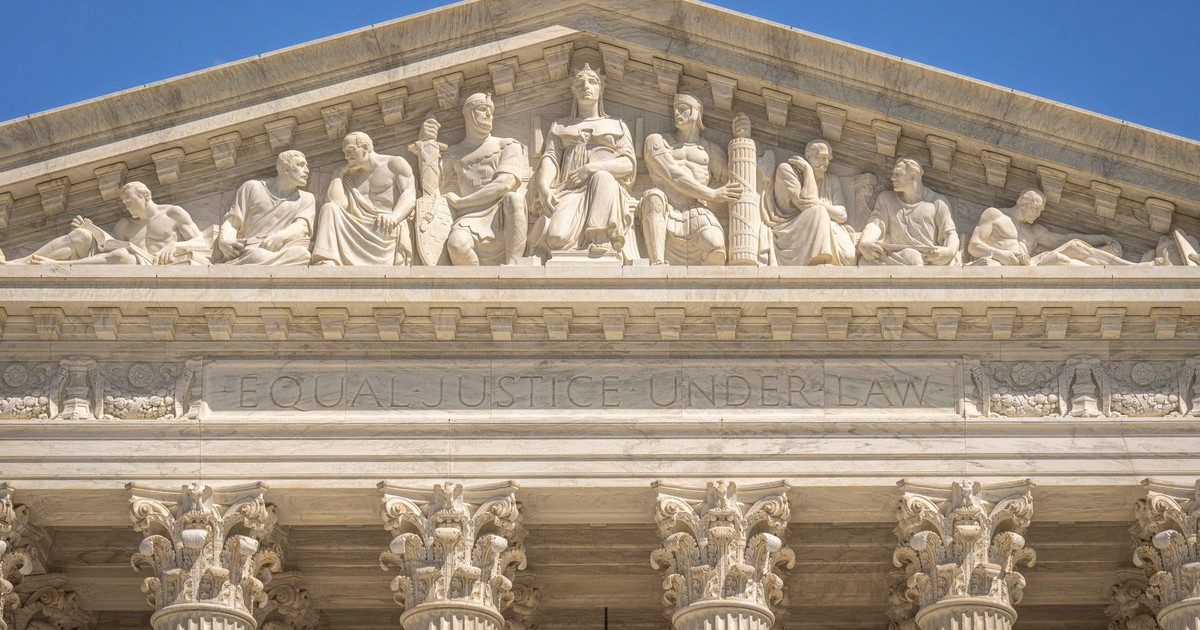
Many Americans treat the nine-justice Supreme Court the way they treat the three branches themselves: as a foundational, fixed feature of the constitutional design. It isn’t. Article III, which creates the Supreme Court, says almost nothing about its composition. It doesn’t specify any number of justices at all.
Congress sets the size of the Court through legislation. The first Supreme Court had six justices. The number changed several times in the 19th century, reaching a high of ten during the Civil War before Congress reduced it to seven and then settled on nine in 1869. Franklin Roosevelt’s famous, and failed, 1937 plan to add justices, the “court-packing” scheme, was controversial precisely because it was constitutionally permissible. Nothing in the text prevents it. The nine-justice court is the product of a law passed by Congress in 1869, not of any constitutional requirement.
5. Judicial Review Is in the Constitution
The idea that the Supreme Court can strike down laws passed by Congress as unconstitutional is so central to American government that most people assume it must be written into the founding document. It isn’t. According to the National Archives, the decision in Marbury v. Madison established the right of the courts to determine the constitutionality of the actions of the other two branches of government. The Constitution itself does not expressly grant that power. Instead, Chief Justice John Marshall claimed it in 1803 by reasoning that the Constitution, as the supreme law of the land, must override any act of Congress that conflicts with it.
Marbury v. Madison arose from a petty political dispute over undelivered judicial appointments during the presidential transition from John Adams to Thomas Jefferson. Marshall used it to establish a power the Court had never formally exercised before. The case is now considered one of the most consequential rulings in American constitutional law, yet the doctrine it created, judicial review, appears nowhere in the text the framers ratified. The framers did discuss the judiciary’s role in checking the other branches, and some clearly expected courts to exercise this kind of oversight. But Marshall’s 1803 decision was the moment it became settled doctrine, and the framers’ original intentions on this point remain genuinely debated by legal scholars.
6. The President Can Keep Secrets from Congress Under the Constitution
“Executive privilege,” the claim that a president can withhold information from Congress or the courts, is treated in political coverage as a constitutional bedrock, a right embedded in the separation of powers. Article II of the Constitution, which defines executive power, contains no mention of it. The phrase does not appear anywhere in the document.
The doctrine was named and used as far back as George Washington, who resisted a congressional request for documents related to a failed military expedition in 1792. Courts have since recognized a limited form of executive privilege, most famously in United States v. Nixon, the 1974 case in which the Supreme Court ruled unanimously that Nixon had to hand over the Watergate tapes. The Court acknowledged that a qualified privilege exists, rooted in the need for candid presidential deliberation. But it also made clear that the privilege is not absolute, and that it derives from the constitutional structure rather than from any explicit constitutional text. A president’s claim of executive confidentiality can be overridden when it conflicts with the demonstrated needs of a criminal proceeding.
In practice, executive privilege claims are asserted, challenged, litigated, and sometimes overridden. They occupy a legal space shaped entirely by case law and political negotiation, not by a provision that says presidents may keep things confidential. The line between legitimate executive confidentiality and obstruction of oversight is one courts draw case by case, without a constitutional map to guide them.
7. The Miranda Warning Is in the Constitution

“You have the right to remain silent. Anything you say can and will be used against you in a court of law.” Most Americans know those words, and most assume they are a direct quotation from, or at least a direct requirement of, the Constitution. They are neither. According to the U.S. Courts, the Supreme Court’s 1966 ruling in Miranda v. Arizona addressed four separate cases in which defendants were questioned by police without being informed of their rights. The warning the Court required emerged as a practical safeguard to protect a Fifth Amendment right that is in the Constitution: the right not to be compelled to be a witness against yourself.
The Fifth Amendment says no person “shall be compelled in any criminal case to be a witness against himself.” That’s the constitutional protection. The Miranda warning is the Court’s solution to the problem of how to make that protection meaningful when someone is being interrogated in police custody, without a lawyer and without a clear understanding of their rights. The warning is a judicially created procedural rule, not a constitutional text.
The practical implication is that the warning’s requirements can be modified. Courts have ruled that minor deviations from the exact wording don’t necessarily invalidate a confession. The police aren’t reciting scripture. They’re complying with a Supreme Court-imposed rule about how to give suspects notice of a constitutional right that exists independently of any warning at all.
8. The Constitution Guarantees the Right to Vote
This one surprises almost everyone. The Constitution, as originally written, did not guarantee any citizen the right to vote. It left voting qualifications almost entirely to the states. The document has been amended to prevent specific forms of voting discrimination: the 15th Amendment (1870) banned denial of the vote based on race, the 19th (1920) on sex, the 24th (1964) abolished poll taxes in federal elections, and the 26th (1971) set the minimum voting age at 18. But no amendment has ever created a blanket affirmative right to vote for all citizens.
What the amendments do is prevent certain reasons for denial. They don’t affirmatively guarantee the vote to all eligible citizens in all circumstances. This distinction has concrete legal consequences. Courts interpreting the right to vote have had to work from the amendment-by-amendment framework rather than from a single unambiguous guarantee, which is why voting rights litigation is so complex and so often contested. The absence of an explicit affirmative right to vote has left the edges of that right perpetually up for legal argument.
9. The Constitution Requires the Pledge of Allegiance or Prayer in Schools
The assumption that the Constitution requires or at least permits compelled participation in patriotic rituals is widespread, particularly in conversations about schools. The opposite is true. In West Virginia State Board of Education v. Barnette (1943), the Supreme Court ruled that public school students cannot be compelled to salute the flag or recite the Pledge of Allegiance. The Court held that compelling a declaration of belief violates the First Amendment’s free speech protections.
Prayer in public schools is similarly constrained. The Court’s 1962 ruling in Engel v. Vitale held that government-sponsored prayer in public schools violates the Establishment Clause of the First Amendment. Students have always been free to pray privately and voluntarily. That is their First Amendment right. What schools and governments cannot do is organize or lead that prayer, or compel participation in it. The confusion often comes from conflating what students may do with what schools may organize. The Constitution protects the former and prohibits the latter.
10. The Constitution Sets Clear Term Limits for Congress
Presidential term limits are explicit: the 22nd Amendment, ratified in 1951, limits the president to two elected terms. Members of Congress have no equivalent limit in the constitutional text. Senators serve six-year terms and representatives serve two-year terms, but nothing in the original Constitution or any amendment caps the number of times they can be reelected.
The term limits question came to a head in 1995 when Arkansas passed a state law limiting how many terms its congressional representatives could serve. The Supreme Court struck it down in U.S. Term Limits, Inc. v. Thornton, ruling 5-4 that states cannot impose qualifications for federal office beyond those listed in the Constitution itself. The Court reasoned that allowing states to add qualifications would create a patchwork of varying standards, undermining the concept of a uniform national legislature. Congressional term limits, if they are ever to exist, would require a constitutional amendment. Despite their enduring popularity in polls, no such amendment has ever cleared Congress.
Read More: The Secret Presidential Powers That Could Suspend Your Constitutional Rights
The Words on the Page, and the Ones That Aren’t
The constitutional misconceptions covered here share a common thread: the assumption that the America we have is the America the framers wrote. In some cases, that’s true. In many others, what feels like bedrock constitutional law is actually the product of a Supreme Court ruling, a Senate procedural vote, a presidential precedent, or a centuries-old political habit that hardened into tradition.
That’s not a flaw in the system, exactly. It’s a feature of any living framework being applied to circumstances its authors couldn’t have imagined. But it does mean that arguments framed as “constitutional” are often really arguments about interpretation, precedent, and political power, not about what the document says. The Miranda warning, the filibuster, the nine-justice court, the wall of separation between church and state: none of these came from the text. They came from cases decided, rules adopted, and letters written by people who were themselves trying to figure out what the document meant. Knowing the difference between those things doesn’t resolve the arguments. It just makes them more honest.
AI Disclaimer: This article was created with the assistance of AI tools and reviewed by a human editor.