
On March 2, 1955, a 15-year-old named Claudette Colvin was arrested in Montgomery, Alabama, for refusing to give up her seat to a white woman on a crowded, segregated bus. It happened nine months before Rosa Parks did the same thing. Most textbooks have never mentioned her name.
The civil rights movement is often taught as a series of watershed moments built around a short list of towering figures. Martin Luther King at the Lincoln Memorial. Rosa Parks on the bus. The march. The acts. A clean arc from injustice to progress. But the actual history is messier, longer, and far more populated than that version suggests. The leaders who got written in were often chosen for their optics. The ones who got written out were sidelined for their sexuality, their age, their gender, or the discomfort their stories caused. Below are 12 facts from the civil rights untaught history that rarely make it into classrooms, but arguably should.
1. Claudette Colvin Refused to Give Up Her Bus Seat Nine Months Before Rosa Parks

On March 2, 1955, Colvin was arrested at the age of 15 in Montgomery, Alabama, for refusing to give up her seat to a white woman on a crowded, segregated bus. It occurred nine months before the similar, more widely known incident in which Rosa Parks helped spark the 1955 Montgomery bus boycott. Colvin wasn’t a strategic test case. She was a teenager who had been studying the Constitution in school and told the officers it was her constitutional right to stay seated.
Civil rights leaders dropped her case because she was unmarried and pregnant during the proceedings. Colvin recalled that Black leaders wanted someone “who could rally the adults,” and she was viewed as an “emotional” teenager. Additionally, soon after the arrest she found out she was pregnant, and the NAACP did not want a pregnant teenager to be the face of the cause. Rosa Parks herself reportedly acknowledged the political calculus involved. Parks said, “If the white press got ahold of that information, they would have had a field day. They’d call her a bad girl, and her case wouldn’t have a chance.” More than six decades after Colvin’s courageous act, an Alabama judge expunged her juvenile arrest record in 2021.
Colvin was one of four plaintiffs in the first federal court case filed by civil rights attorney Fred Gray on February 1, 1956, as Browder v. Gayle, to challenge bus segregation in the city. Colvin testified before the three-judge panel that heard the case. On June 13, 1956, the judges determined that the state and local laws requiring bus segregation in Alabama were unconstitutional. That ruling, which actually ended segregated buses in Alabama, had Claudette Colvin’s name on it. You may never have heard that before.
2. Rosa Parks Was a Trained Activist, Not a Tired Seamstress
The story most people know is that Rosa Parks refused to move on December 1, 1955, because her feet were tired after a long day’s work. It’s a human detail, easy to picture. It also isn’t true. Rosa Parks didn’t refuse to move from her bus seat because her feet were tired. “The only tired I was, was tired of giving in,” she said.
Parks joined the Montgomery chapter of the NAACP in 1943, serving as the organization’s secretary. Despite policies designed to disenfranchise Black citizens, she successfully registered to vote after three separate attempts between 1943 and 1945. She was not a woman who happened to sit down at the wrong time. She investigated cases and organized campaigns around cases of racial and sexual violence in her capacity as NAACP secretary, including those of Recy Taylor and Jeremiah Reeves, laying the groundwork for future civil rights campaigns.
The “tired seamstress” version turns a calculated act of defiance by a veteran organizer into a nice accident of fate. It’s easier to absorb. It also strips Parks of her agency, reduces her to exhaustion rather than intention, and conveniently removes the years of deliberate activism that preceded December 1955.
3. Bayard Rustin Organized the March on Washington and Was Nearly Erased from History
Rustin was the principal organizer of the March on Washington for Jobs and Freedom in 1963. The logistics alone were staggering. Rustin had less than two months to organize what was the largest demonstration the country had ever seen. The result drew an estimated 250,000 people to the National Mall, where King delivered the “I Have a Dream” speech.
In 1953, Rustin, who was homosexual, was arrested in California after he was discovered having sex with a man. He served 50 days in jail and was registered as a sex offender. While his sexual orientation resulted in him taking a less public role, he was hugely influential within the civil rights movement. His contribution to King’s philosophy went even deeper than logistics. King had read Gandhi, but at that point he hadn’t accepted pacifism as a way of life. It was Rustin who really encouraged King to accept nonviolent resistance as a way of life – arriving in Montgomery with practical knowledge and direct experience where King had only academic familiarity.
In 2013, Rustin was posthumously awarded the Presidential Medal of Freedom. “For decades, this great leader, often at Dr. King’s side, was denied his rightful place in history, because he was openly gay,” President Barack Obama said during the medal ceremony. That acknowledgment came 26 years after his death.
4. Freedom Summer’s Violence Was Far Worse Than Most History Books Describe
The summer of 1964, when civil rights organizers flooded Mississippi to register Black voters, is sometimes mentioned in textbooks as a major voter registration drive. The scale of the state’s violent response is mentioned far less. It is believed that 1,062 people were arrested, 80 Freedom Summer workers were beaten, 37 churches were bombed or burned, 30 Black homes or businesses were bombed or burned, four civil rights workers were killed, and at least three Mississippi African Americans were murdered because of their involvement in this movement.
Mississippi was chosen as the site of the Freedom Summer project due to its historically low levels of African American voter registration; in 1962 less than 7 percent of the state’s eligible Black voters were registered to vote. That context matters. This wasn’t voter apathy. These were people being systematically prevented from registering. Federal law prohibited interference with people trying to vote, but Black voters in Mississippi were required to complete a complex application process, pass questions about the state constitution, and then wait, usually only to be denied.
While 17,000 Black Mississippians attempted to register to vote that summer, only 1,200 were successful. That means more than 90 percent of people who walked through the bureaucratic gauntlet and risked their safety were still turned away.
5. The Mississippi Freedom Democratic Party Was Shut Out of the 1964 Democratic National Convention

Out of Freedom Summer grew the Mississippi Freedom Democratic Party, formed to challenge Mississippi’s all-white Democratic delegation at the 1964 DNC in Atlantic City. With participation in the regular Mississippi Democratic Party blocked by segregationists, COFO established the MFDP as a non-exclusionary rival to the regular party organization.
The Freedom Summer raised awareness for the Mississippi Freedom Democratic Party. But at the August 1964 Democratic National Convention held in Atlantic City, New Jersey, MFDP delegates were refused seats, dealing another blow to organizers who had risked their lives to make a change. Fannie Lou Hamer’s televised testimony about the beatings she endured while trying to register voters was so powerful that President Lyndon B. Johnson, who feared losing Southern support in the election, reportedly called an impromptu press conference to knock her off the broadcast. DNC leaders offered only two non-voting seats to the MFDP, with the official seating going to the regular segregationist Mississippi delegation.
The MFDP delegates rejected the deal. Many had risked their lives just to make it to Atlantic City. Two symbolic seats without voting rights, offered while the white supremacist delegation sat in theirs, was not a compromise they were willing to accept.
6. Freedom Schools Educated Over 3,000 Black Students During Freedom Summer
Alongside the voter registration work of Freedom Summer ran a parallel education project that almost never appears in standard accounts of the era. The Mississippi Project established more than 40 Freedom Schools serving a combined 3,000 students. In addition to math, reading, and other traditional courses, students were also taught Black history, the philosophy of the civil rights movement, and leadership skills that provided them with the intellectual and practical tools to carry on the struggle after the summer volunteers departed.
In 1964, Mississippi’s educational expenditures were as follows: $81.64 spent on every white student and only $21.77 spent on every Black student. The Freedom Schools weren’t a side project. They were a direct response to a system that had spent decades deliberately underfunding Black education as a tool of control. Teaching Black history in those schools was itself a form of political resistance.
7. Henrietta Lacks’ Cells Changed Modern Medicine Without Her Knowledge or Consent

In 1951, a young mother of five named Henrietta Lacks visited The Johns Hopkins Hospital complaining of vaginal bleeding. Upon examination, renowned gynecologist Dr. Howard Jones discovered a large, malignant tumor on her cervix. At the time, The Johns Hopkins Hospital was one of only a few hospitals to treat poor African Americans. During her treatments, two samples were taken from Lacks’s cervix without her permission or knowledge, and these samples were given to George Otto Gey, a physician and cancer researcher at Johns Hopkins.
Tissue taken from the Black woman’s tumor before she died of cervical cancer became the first human cells to continuously grow and reproduce in lab dishes. HeLa cells went on to become a cornerstone of modern medicine, enabling countless scientific and medical innovations, including the development of the polio vaccine, genetic mapping, and even COVID-19 vaccines. Her family remained unaware of the existence and use of HeLa cells for decades, and the ethical questions her story raised about medical research and race are still being worked through. On July 31, 2023, Thermo Fisher Scientific settled with the Lacks family on undisclosed terms. In February 2026, the Lacks family gained an out-of-court settlement with a second biotech company, Switzerland-based Novartis.
8. Sister Rosetta Tharpe Was the Godmother of Rock ‘n’ Roll
Before Chuck Berry. Before Elvis. Before Little Richard. There was Sister Rosetta Tharpe, a Black woman from Cotton Plant, Arkansas, who combined gospel vocals with electrified guitar playing in ways that nobody had heard before. She was rooted in a Pentecostal church and became the first great recording star of gospel music, and was among the first gospel musicians to appeal to rhythm and blues and rock and roll audiences, later being referred to as “the original soul sister” and “the Godmother of Rock and Roll.”
Born in 1915, Tharpe gained popularity in the 1930s and 1940s with her gospel recordings, characterized by a unique mixture of spiritual lyrics and electric guitar. She performed in nightclubs and churches, dragging both spaces into territory they didn’t expect. She influenced early rock-and-roll musicians, including Tina Turner, Little Richard, Chuck Berry, Johnny Cash, Carl Perkins, Elvis Presley, and Jerry Lee Lewis.
The reason Tharpe doesn’t appear in most accounts of the music that soundtracked the civil rights era, or of American music history generally, has a lot to do with how credit moves in the music industry. Rock ‘n’ roll got a white male face very quickly. It was then that young white men started taking over the rock ‘n’ roll scene and experimenting further with the sounds she had forged. The Black woman who built the template was left teaching credit to men who would go on to be considered its founders. She was finally elected to the Rock and Roll Hall of Fame in 2017.
9. The “Don’t Buy Where You Can’t Work” Boycotts Created Tens of Thousands of Jobs
During the Great Depression, when economic devastation hit Black communities especially hard, a grassroots economic protest movement emerged in cities across the country. The tactic was simple: refuse to spend money at businesses that refused to hire Black workers. The “Don’t Buy Where You Can’t Work” boycotts became one of the most effective labor rights campaigns in pre-World War II Black American history. Historians credit the movement with creating tens of thousands of jobs for Black workers at a time when they were being systematically excluded from employment by stores that took their money every day.
The movement predated the more widely taught sit-ins and freedom rides by decades, and it drew on an economic logic that would reappear throughout the civil rights movement: the purchasing power of Black communities was real, and withholding it was a form of power. The boycotts forced the hand of businesses from Chicago to Washington, D.C., and built organizational infrastructure that later activists would draw on. That lineage rarely makes it into accounts of how the civil rights movement developed its strategies.
10. Ella Baker Built the Organizational Foundation That Made Student Activism Possible
In 1954, Rustin worked alongside Ella Baker, a co-director of the Crusade for Citizenship. That one detail barely scratches the surface. Baker served as director of branches for the NAACP, helped found the Southern Christian Leadership Conference alongside King, and then, when she felt the SCLC was too top-heavy in its leadership model, helped the Student Nonviolent Coordinating Committee (SNCC) take shape.
Her philosophy ran directly against the dominant grain of civil rights mythology. She didn’t believe the movement rose or fell on great men. She believed it rose on organized, self-determining communities. She actively pushed back against the way King’s profile overshadowed the grassroots workers who made every march, every boycott, and every sit-in actually happen. “Strong people don’t need strong leaders,” she was known to say. The historian Septima Clark called her “the mother of SNCC.” The SNCC became the organizational home of some of the most consequential direct-action campaigns of the entire era, including Freedom Summer.
11. The March on Washington Had Demands That Never Got Fulfilled
The 1963 March on Washington for Jobs and Freedom is remembered for one speech. The demands that day included things far beyond what is usually recalled. Rustin was the principal organizer of the March on Washington for Jobs and Freedom in 1963, which drew about 250,000 people to the National Mall. The “and more” is the part that went quiet. The march’s official list of demands included a federal jobs program, a minimum wage increase, fair housing laws, and a federal prohibition on employment discrimination by companies with federal contracts.
The Civil Rights Act of 1964 and the Voting Rights Act of 1965 addressed legal segregation and voting rights. The economic demands, the ones addressing poverty, wages, and employment, were largely unmet. By the time the Voting Rights Act passed, King himself had grown increasingly vocal about economic inequality, connecting racism to poverty in ways that made him considerably less palatable to the white moderate audience that had embraced the early movement. That later King, who was publicly opposing the Vietnam War and calling for a Poor People’s Campaign, appears far less often in the standard curriculum than the King of 1963.
You can learn more about the civil rights movement’s forgotten voices and the organizers who shaped it from behind the scenes.
12. The Civil Rights Movement Did Not End in 1965
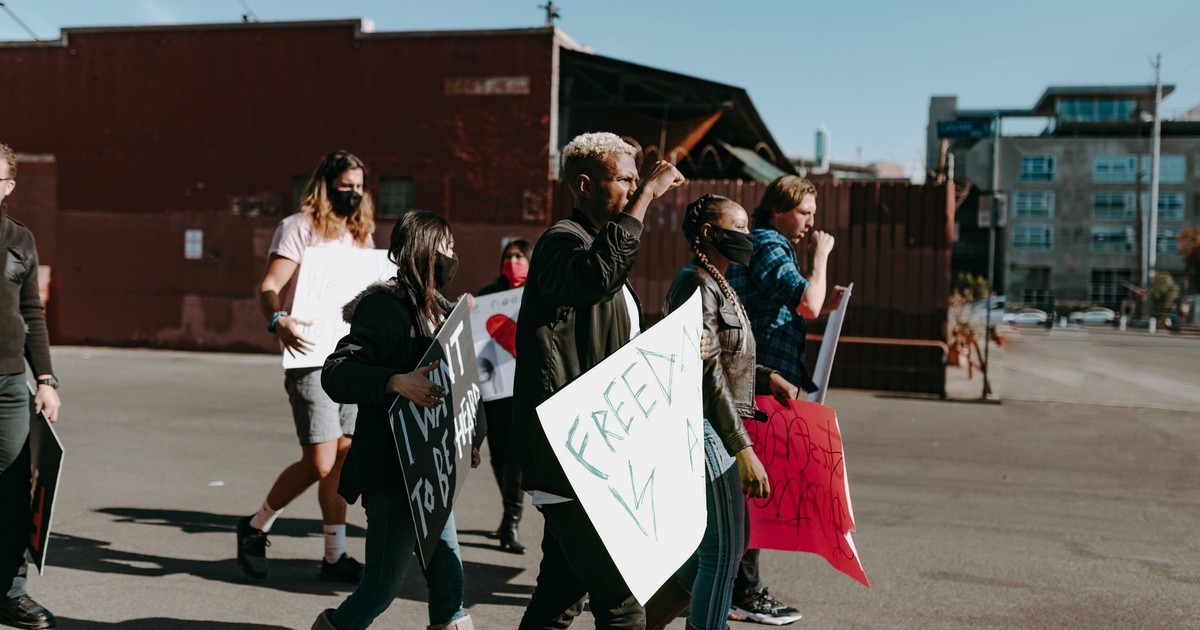
In 1965, Congress passed the federal Voting Rights Act, which provided for federal oversight and enforcement to facilitate registration and voting in areas of historically low turnout. Mississippi’s legislature then passed several laws to dilute the power of Black votes. Only with Supreme Court rulings and more than a decade of legal battles did Black voting become a reality in Mississippi. The passage of legislation was not the end of anything. It was often the beginning of the next set of tactics used to undermine the rights that legislation was meant to protect.
The standard narrative frames 1965 as a kind of finish line. Laws passed, progress secured. In practice, the fight over voting access, fair housing, economic inequality, and police violence continued without pause. The seeds planted during Freedom Summer’s voter registration campaigns bore fruit in the 1980s and 1990s, when Mississippi elected more Black officials than any other state. That’s a remarkable outcome, and it took twenty years to materialize, long after the moment most history books suggest the story ended.
Treating 1965 as the conclusion also quietly erases the continued activism of every organizer who kept working after the cameras moved on. The people who stayed in Mississippi. The lawyers who kept filing cases. The teachers who kept running Freedom Schools. The version of history that ends at the March on Washington and the Voting Rights Act is, in a very real sense, a story with its last chapter torn out.
Read More: 50 Photos From “Historyfeels” That Might Teach You More About Our Past
What the Gaps Are Actually Telling Us
History doesn’t get simplified by accident. A 15-year-old pregnant girl gets dropped from the story because she’s the wrong kind of symbol. A gay Black man who built the machinery of the March on Washington gets pushed to the margins because his presence would make others uncomfortable. A tobacco farmer from Virginia has her cells taken and commercialized while her family goes without healthcare, and the story doesn’t reach them for decades. These aren’t random omissions. They follow a pattern.
The compression is the problem. The cleaned-up version of history is easier to teach and easier to celebrate, but it turns a sustained, brutal, massively collective struggle into a story about a handful of inspired individuals. That version can be honored without being continued. The real version, the one with Claudette Colvin and Bayard Rustin and Ella Baker and Henrietta Lacks, is harder to finish. Some of these omissions go back further than any single law or landmark moment. Naming that isn’t nostalgia – it’s where an honest accounting of the movement actually begins.
AI Disclaimer: This article was created with the assistance of AI tools and reviewed by a human editor.