

Money worries have a specific weight to them. Not the dramatic, crisis-level kind that comes with a stock market crash or a sudden job loss, but the slower, more persistent kind, the kind that shows up when you’re in the grocery store and realize the cart is fuller than last month but the total is higher than ever. The kind that surfaces at 2am when you’re doing math in your head about whether you can actually retire someday, or whether your kids will ever be able to afford a home. That’s the flavor of financial anxiety that’s been building steadily across the country for several years now.
It isn’t concentrated in any one income bracket or generation. It cuts across demographics in a way that makes it feel less like a personal failure and more like a shared condition. The people who grew up being told that hard work leads to financial stability are looking at the math and finding it doesn’t quite add up anymore. Groceries cost more. Housing has moved out of reach for most people. Retirement, once a given for anyone who worked and saved, now feels like a distant moving target.
So what, specifically, are Americans most worried about right now? The data from 2025 and 2026 tells a clear, consistent story, and it’s worth understanding it clearly rather than in the abstract.
The Depth of American Financial Anxieties Right Now

A record 55% of Americans now say their financial situation is getting worse, according to the Gallup 2026 survey on Economy and Personal Finance, conducted in April with 1,001 adults. That’s up from 47% in 2024, and it marks the fifth consecutive year in which more Americans say their finances are worsening rather than improving. The only comparable stretch in Gallup’s tracking history was the Great Recession.
Five straight years of majority pessimism about personal finances isn’t a mood. It’s a structural shift in how Americans experience their economic lives. The same survey found that majorities worry about not having enough money for retirement (62%) and about being unable to cover medical costs in the event of a serious illness or accident (60%). Just over half worry about their investment returns and about maintaining their current standard of living.
A separate nationwide poll by the National Endowment for Financial Education, conducted at the end of 2025, found that 88% of Americans reported feeling some form of financial stress heading into 2026, and 77% said they experienced a financial setback in 2025. Both figures rank among the highest the organization has recorded across years of tracking financial well-being.
These aren’t fringe numbers. The breadth of the anxiety, spanning income levels, generations, and political affiliations, is what makes this moment different.
The Cost of Living: Still the Biggest Issue by Far

The high cost of living remains at the top of Americans’ list of most important financial problems, cited by 31% of respondents in an open-ended Gallup question. That’s below the 41% peak in 2024, but still among the highest readings in Gallup’s more than 20-year trend. Energy costs have jumped sharply, now mentioned by 13% of Americans, up 10 percentage points from the previous year and the highest level since 2008, effectively tying housing costs as the second-biggest concern. Healthcare ranks fourth.
The reason people feel this way isn’t hard to see. Inflation has cooled from its 2022 peaks, but that’s cold comfort when the cumulative price increases of the past four years haven’t reversed. The groceries that cost $120 in 2021 didn’t return to $120 when inflation slowed. They stayed expensive. For tens of millions of households, wages simply didn’t keep pace with the climb, and the gap between what things cost and what paychecks cover has become a permanent feature of daily life rather than a temporary squeeze.
That gap is especially sharp for younger workers, who entered the workforce or established their households during the years of fastest price growth. The math that their parents used to plan their financial lives – save a fixed percentage, buy a home in your late twenties, retire around 65 – depends on an income-to-cost ratio that no longer exists in most of the country.
Housing: The Dream That Got More Expensive
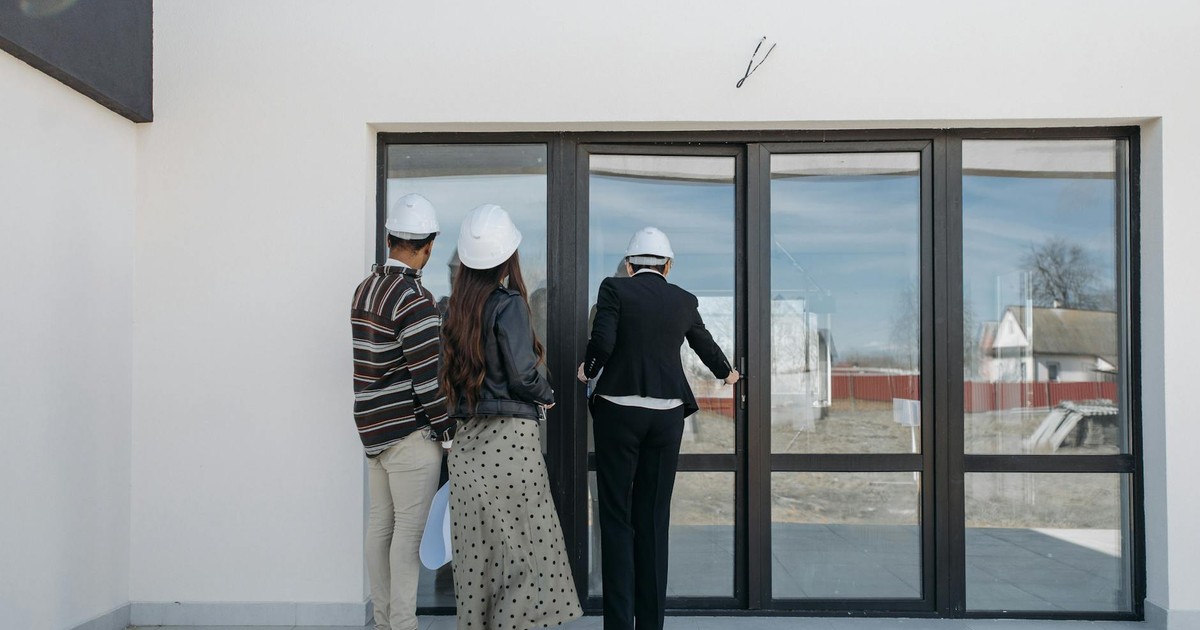
If there’s one place where american financial anxieties have hardened into something that feels permanent, it’s housing. According to a 2025 analysis by the National Association of Home Builders, nearly 75% of U.S. households cannot afford a median-priced new home. With a median price of $459,826 and a 30-year mortgage rate of 6.5%, around 100.6 million households are priced out.
For younger Americans, the numbers are even starker. Only about a third of adults believe they can afford to buy a home right now, while roughly two-thirds say they cannot. Among Gen Z specifically, the proportion who say buying is out of reach this year is close to 80%. These aren’t people who’ve given up on homeownership as a concept. They still believe in its long-term value. They just can’t get there from where they’re standing.
Renting isn’t providing much relief either. Since 2017, average earnings have grown about 43% nationwide. Over the same period, home sale prices have increased 81% and rents 54%. The gap between income growth and housing cost growth is the mathematical reason so many people feel like they’re running in place. You can work harder, earn more, spend carefully, and still find that the gap between you and a down payment keeps widening. For millions of families, this isn’t a temporary detour before homeownership. It’s starting to look like the road itself.
Retirement: The Fear of Running Out of Time (and Money)

Retirement worry is not new, but it has sharpened considerably. Rising costs are driving new fears about outliving savings, and the numbers capture just how serious those fears have become. Two in three Americans (67%) say they are more worried about running out of money than they are about dying, up 10 percentage points from 2022. Gen Xers are the most anxious at 73%, followed by Millennials at 69% and Boomers at 59%.
Dying is less frightening to most Americans right now than reaching old age without enough money. Near-retirement Gen Xers, the generation that watched pensions disappear and was handed a 401(k) in their place, are carrying the heaviest load of this fear. Only 14% of Gen X workers hold a traditional pension, compared to 56% of Boomers, which means they have far less guaranteed income waiting for them regardless of how their savings perform.
The planning gap underneath this fear is also significant. Nearly half of Americans (48%) don’t have a written financial plan. For people in their thirties and forties, the retirement they were told to plan for may require an income and a savings rate that today’s wages and costs don’t support. That’s not irrational worry. It’s arithmetic.
Jobs: The Fear Nobody Talks About Enough

Job anxiety has grown steadily over the past two years and deserves more attention than it gets in conversations about financial stress. Many workers are staying in jobs they’d otherwise want to leave, a pattern some analysts have started calling “job hugging.” The logic is straightforward: in an uncertain economy with record household debt, leaving a stable paycheck feels like a risk most people can’t afford to take.
This isn’t just about being afraid of losing a job. It’s about the quality and stability of the work people currently have. Workers who feel financially squeezed at home are more likely to stay put even when a role isn’t growing, isn’t fulfilling, or isn’t well-compensated enough for what it demands. The job market’s cooling isn’t catastrophic by historical measures, but it’s happening in a context where household debt has reached record levels. When the safety net of job security feels thin, that debt becomes much harder to carry.
For younger workers especially, this calculus plays out in specific ways. Gen Z and Millennials entered the workforce or hit their prime earning years during an unusually turbulent stretch, combining a pandemic, inflation, a cooling job market, and a housing crisis into a single formative financial experience. The anxiety about employment isn’t abstract for them. It’s the difference between making rent and not.
The Decisions People Are Postponing

One of the clearest signals that financial anxiety is a force reshaping real lives, not just a feeling, is how many Americans are delaying major milestones. Buying a home, having children, changing careers, pursuing further education: all of these decisions are being pushed back, not because people don’t want them but because the financial math doesn’t currently support them.
The calculus around college has shifted notably among younger Americans. Cost-of-living concerns are now a primary reason many high school graduates are rethinking whether a four-year degree makes financial sense, even when they want the education. That’s a significant shift from previous generations, for whom the financial case for college was largely settled. Today, the debt-to-income math on certain degrees is less clear, and more families are doing that math out loud before committing.
The decisions being pushed back aren’t small lifestyle choices. They’re foundational ones: where to live, whether to have a family, what kind of future to build. When financial stress starts reshaping those choices, the downstream effects extend well beyond any household budget. They affect relationship timelines, family formation, and the sense of forward momentum that most people need to feel okay about where their life is going.
What People Are Actually Doing About It

A slim majority of Americans (53%) have set a budget for 2026, up from 46% in 2025. Among those expecting their finances to worsen this year, 66% plan to cut back on eating or drinking out. The restaurant that used to be a weekly habit has become, for many families, a deliberate decision rather than a default.
The most common financial goals heading into 2026 center on paying down debt, setting and following a budget, and improving credit scores. Those same households also list paying down debt as one of their largest anticipated non-housing expenses. Holding both of those things at once, debt as a goal to eliminate and a cost that keeps coming due, is the financial trap that defines this moment for a large share of American households.
Growing numbers of adults have been dipping into savings over recent months, reducing how much they save, or leaning more heavily on credit cards to cover ordinary expenses. None of that is a sign of reckless behavior. In most cases, it’s evidence of people doing what it takes to get through a month when prices are up and wages haven’t fully caught up.
The Numbers Make Sense
The data above doesn’t tell a story of Americans catastrophizing or failing to appreciate a strong economy. It tells a story of people experiencing a genuine, sustained erosion in their financial cushion and responding accordingly.
What makes this particular stretch of american financial anxieties unusual is that it arrived without a dramatic headline event. No single market crash, no overnight unemployment spike. Instead, prices climbed, wages didn’t fully follow, housing locked a generation out, and the slow realization settled in that the financial life most people were raised to plan for requires an income and a cost-of-living ratio that the current economy doesn’t reliably deliver. That’s a harder thing to name than a recession, and it doesn’t come with a clear recovery date.
Feeling worried about retirement when 62% of your neighbors share the same fear isn’t dysfunction. Feeling uncertain about buying a home when 75% of households are technically priced out of the median isn’t paranoia. At a certain scale, individual financial anxiety becomes a collective experience, and what the data suggests is that the U.S. is well past that threshold.
What’s also true is that people are adapting. More Americans are budgeting, more are paying down debt, more are making deliberate choices about spending rather than defaulting into old habits. None of that makes the underlying pressures disappear. But it’s something real, happening inside millions of households, quietly and without fanfare: people choosing to pay attention, because they’ve realized that not paying attention is no longer an option.
AI Disclaimer: This article was created with the assistance of AI tools and reviewed by a human editor.