

The company didn’t exist five years ago. It barely registered outside research circles three years ago. And yet, on June 1, 2026, Anthropic filed confidential IPO paperwork with the U.S. Securities and Exchange Commission, setting in motion what could be one of the most consequential stock market debuts in a generation. The number attached to the filing – a post-money valuation of $965 billion – sits just a rounding error away from a full trillion dollars.
Anthropic’s rise from a little-known research laboratory to one of the leading AI companies valued at $965 billion has a speed to it that the usual vocabulary simply can’t keep up with. “Fast-growing startup” and “promising tech company” don’t quite cover a lab that went from obscurity to near-trillion-dollar status in under five years. And the people paying closest attention – investors, analysts, and rival executives – are saying very different things about what it all means.
Anthropic was founded in 2021 by Dario Amodei, his sister Daniela Amodei, and a group of researchers who left OpenAI over concerns about that company’s direction. The founding premise was that building powerful AI and building safe AI didn’t have to be in tension. That pitch was once considered idealistic. The revenue trajectory now suggests it was also commercially shrewd.
What Just Happened, and Why It Matters
The AI lab behind Claude filed confidentially for a US initial public offering on June 1, 2026, just days after Anthropic closed a $65 billion Series H funding round at a $965 billion post-money valuation, leapfrogging OpenAI’s $852 billion mark. The timing was deliberate.
Confidential filings are standard for large pre-IPO companies. They let the SEC review documents privately before the company faces public scrutiny. Anthropic’s confidential filing landed in an already white-hot IPO season, and the company will evaluate the IPO privately and without the critical eye of the public. What it has chosen to share publicly, though, is enough to generate serious debate.
Back in December 2025, CNBC reported that Anthropic had hired the law firm Wilson Sonsini Goodrich & Rosati to begin preparing for a potential listing, citing the Financial Times. Preliminary conversations with investment banks followed, though no underwriting lineup had been chosen. Goldman Sachs, JPMorgan Chase, and Morgan Stanley are widely expected to compete for lead underwriting roles.
The company’s official statement was characteristically understated. Anthropic said the move “gives us the option to go public after the SEC completes its review,” stopping short of committing to a firm date or price. Seven words of hedging attached to a filing that has Wall Street rearranging its entire schedule for fall 2026.
The Revenue Story – Extraordinary, With an Asterisk

The numbers Anthropic has released to private investors are genuinely hard to process at first read. Anthropic’s revenue trajectory has been steep: $87 million run rate in January 2024, $1 billion by December 2024, $9 billion by the end of 2025, $14 billion in February 2026, $19 billion in March, $30 billion in April. By the time of the Series H announcement, run-rate revenue had crossed $47 billion.
To put that in context: Anthropic employs approximately 2,500 people and has become one of the fastest-growing technology companies ever to exist, with its run-rate revenue ballooning from roughly $10 billion in annual revenue at the end of 2025 to an extraordinary $47 billion run rate by May 2026 – an 80x growth trajectory that CEO Dario Amodei himself described as “crazy.”
The engine behind that growth is Claude Code. Claude Code, Anthropic’s agentic coding tool, launched publicly in mid-2025 and became the fastest-growing product in the company’s history, hitting $1 billion in annualized revenue within six months of launch and generating over $2.5 billion in run-rate revenue by February 2026. Over 1,000 customers now spend over $1 million annually on Claude, doubling from 500 in under two months as of April 2026, and up from a dozen two years ago.
Here’s where analysts start asking harder questions, though. These figures are not directly comparable to the revenue numbers most public software companies report. Anthropic reports revenue from its cloud partners AWS, Microsoft Azure, and Google Cloud on a gross basis, booking the full amount billed through those channels – including the cloud providers’ share – as its top-line revenue. The cloud partners’ portions are then listed as sales and marketing costs on the expense side. Even on a net basis, Anthropic’s growth rate is exceptional by any historical comparison in enterprise software. The gap between the disclosed run-rate figure and what the audited GAAP income statement will show is, however, likely to be the single most-discussed line in the S-1 when it becomes public.
In plain terms: the $47 billion figure is real growth, but it’s measured differently than what investors are used to seeing from public software companies. The full S-1 will force a reckoning with what the number actually looks like under standard accounting rules.
The Profitability Question
For all the attention on revenue, the more interesting story may be what’s happening at the bottom line. Anthropic has told investors it projects its first-ever quarterly operating profit of $559 million in Q2 2026 on revenue of $10.9 billion, which would represent a 130% increase from the $4.8 billion it reported in Q1. That would make Anthropic the first frontier AI lab to post a quarterly operating profit.
Anthropic projects positive cash flow by 2027 to 2028, in contrast to OpenAI’s more extended burn trajectory. For public market investors – who have been burned by money-losing tech companies before – a credible path to profitability changes the valuation conversation considerably. An AI lab that can demonstrate it earns more from deploying intelligence than it spends building it is a fundamentally different investment than one still running purely on venture capital hope.
Anthropic’s biggest difference, though, is its governance. Unlike a normal company built mainly to maximize shareholder value, Anthropic is incorporated as a Public Benefit Corporation, meaning it must balance profits with its mission of building AI safely and responsibly. It also has a Long-Term Benefit Trust designed to protect this mission even as the company grows. How public markets respond to that structure – whether they price it as a feature or a constraint on returns – is one of the genuinely open questions about the listing.
The Infrastructure Underpinning the IPO Case
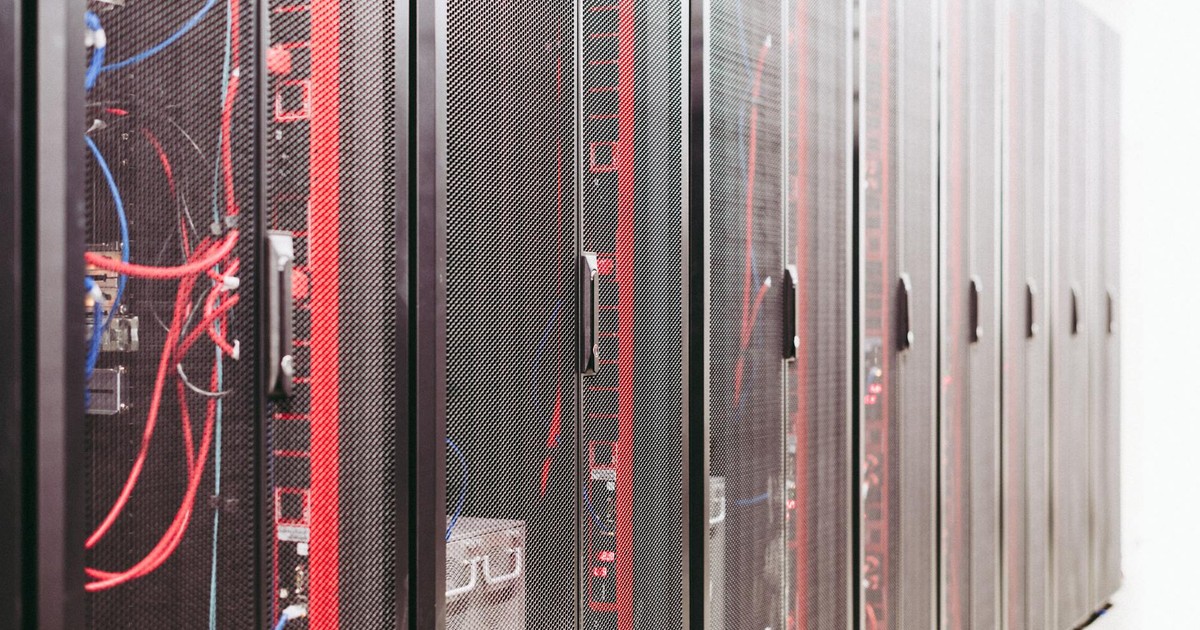
Valuations at this scale don’t survive on software revenue alone. Anthropic has built a compute infrastructure position that is also part of the investment thesis, and the breadth of it is striking. In November 2025, Anthropic committed to purchase $30 billion of Azure compute capacity, while NVIDIA and Microsoft committed to invest up to $10 billion and $5 billion respectively in Anthropic. More recently, it struck an agreement with SpaceX to use available compute at the Colossus 1 data center in Memphis, Tennessee, paying SpaceX $1.25 billion per month through May 2029.
Claude now runs across AWS Trainium, Google TPUs, and NVIDIA GPUs. Relying on a single cloud provider would be a real vulnerability for an IPO candidate. Having multiple compute sources gives Anthropic more negotiating leverage and reduces the risk of a single vendor becoming a bottleneck.
For investors trying to model the business, this diversification is actually a signal. A company locked into a single cloud provider at trillion-dollar scale has a very different risk profile than one that can route workloads across three competing infrastructure giants. It also suggests that Anthropic’s relationships with AWS, Google, and Microsoft are not just financial – they’re structural dependencies that go both ways.
Anthropic’s Snowflake partnership added another enterprise route: a multi-year $200 million agreement to make Claude models available through Snowflake’s platform and support agentic AI deployments for large customers. These partnerships matter because they put Claude inside existing enterprise software stacks, where switching costs are high and revenue compounds.
The Race With OpenAI and What Analysts Are Actually Saying
With the filing on Monday, Anthropic is poised to potentially beat OpenAI to the public market, setting itself up to attract more attention and capital from a greater pool of investors. The timing is deliberate in ways that go beyond simply wanting to list first.
PitchBook’s senior analyst Harrison Rolfes put the strategic stakes plainly, saying the filing “starts the clock on what will be the most scrutinized public offering in tech history.” His argument was that Anthropic’s hard financial data will “either validate or collapse the entire narrative the private markets have been pricing for three years.” He also framed the competitive dynamic this way: Anthropic seized the narrative advantage by filing first, but OpenAI may have gotten something valuable in return – a free option to watch how institutional investors react to audited frontier AI financials before committing to its own price.
The broader IPO window is what makes sequencing so important. Anthropic’s IPO filing, combined with OpenAI’s expected filing and SpaceX’s already-submitted paperwork, means the fall 2026 IPO window could see more than $200 billion in new public market value from three companies alone.
Analysis from TradingKey captured the split opinion on Wall Street neatly. Bank of America framed the situation as a large-scale transfer of accumulated risk from early investors to the public market. That’s a skeptic’s reading, and it’s not wrong. Active investors such as PIMCO and BlackRock, meanwhile, have said the AI infrastructure capital expenditure cycle is still accelerating with no fundamental disruption expected. That’s the bull’s reading, and it’s not wrong either. Both can be simultaneously true.
The IPO market has genuine momentum behind it. According to Reuters via U.S. News, companies raised $87.5 billion through May 26, the highest year-to-date global total since 2021. That’s real liquidity. Whether it can absorb Anthropic, OpenAI, and SpaceX in the same season is the question nobody can answer with certainty yet.
What financial advisors are telling their clients in the meantime is revealing. Before letting a client get involved with pre-IPO shares, parties need to understand rights of first refusal, consent rights, board approval requirements, pre-approved buyer lists, clawbacks, dilution clauses, ratchets, tag-along rights, and confidentiality provisions. The enthusiasm for Anthropic’s story is genuine. The complexity of getting actual ownership of shares – before the public listing – is considerable.
The Real Question Underneath All of This
A confidential S-1 is not an IPO. A confidential S-1 submission opens a regulatory review window. The actual decision to list will depend on market conditions, the SEC’s review timeline, and whether the company’s audited financials withstand the level of scrutiny public markets demand. Coverage that treats the filing as a done deal is getting ahead of what’s actually been confirmed. It isn’t done yet.
A successful Anthropic IPO would give it access to public capital markets, make acquisitions easier, and provide a liquidity event for the many investors who have backed it since 2021. It would also send a signal about what the public markets think AI companies are actually worth – not just what private investors believe in a room. That last part is what makes the listing genuinely important beyond Anthropic’s own story. Private valuations are negotiations. Public prices are verdicts.
The smart observers aren’t really arguing about whether Anthropic is a remarkable company. They mostly agree it is. What they’re debating is whether remarkable, at this scale, at this speed, justifies a market cap that would immediately put it among the most valuable companies on Earth – and whether the public markets, absorbing this alongside OpenAI and SpaceX in the same fall season, have the appetite to say yes.
The answer to that question will tell us something about where the AI investment cycle actually is. Not where it was. Not where the private market narratives say it should be. Where it actually, verifiably, auditably is. That number is coming. Probably by October. And a lot of very smart people are placing very large bets on what it will be.
AI Disclaimer: This article was created with the assistance of AI tools and reviewed by a human editor.