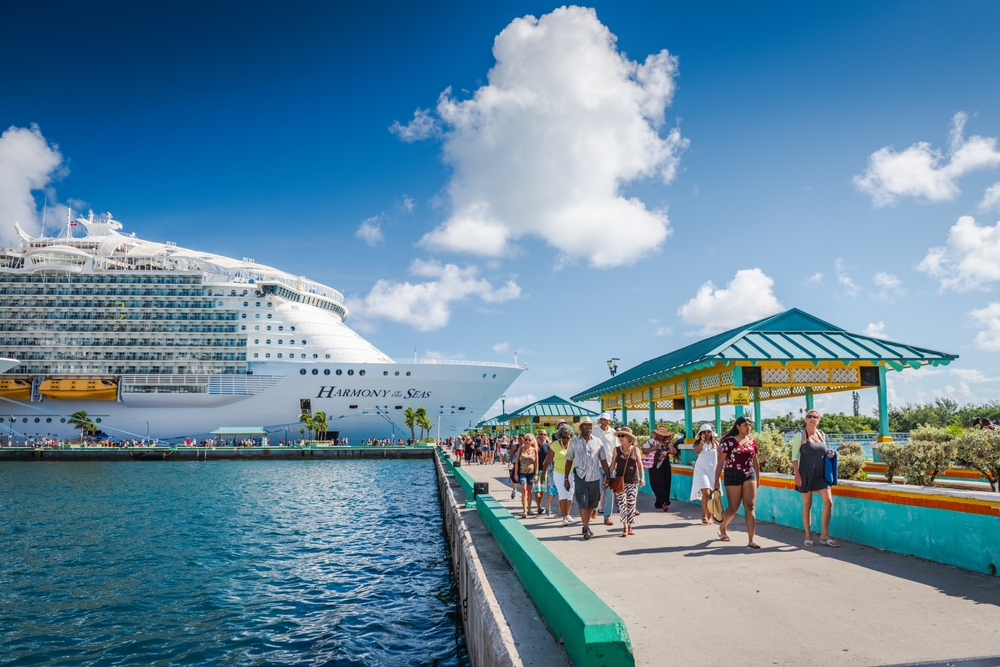

Most retirement planning conversations in America eventually circle back to the same math: will the money last? Social Security payments that felt comfortable at 62 look thinner by 70, and for millions of Americans the answer isn’t a better budget app or a part-time job in their sixties. It’s a different country.
The Caribbean has always pulled at that idea. Blue water, year-round warmth, short flights home. But the part that’s driven real interest lately is the tax picture. Several Caribbean islands impose zero income tax, zero capital gains tax, and zero tax on pension income at the local level. For a retiree drawing down a 401(k), collecting Social Security, and living on investment dividends, that local tax bill alone can represent a significant shift in how far the money goes. The key phrase is “at the local level” – more on that caveat shortly.
What separates the islands that actually work for American retirees from those that just photograph well is whether the numbers hold up once you look past the tax headline. Residency requirements, cost of living, healthcare access, proximity to the US, and the practical ease of getting legal residency all factor in. These four Caribbean tax havens for retirement are the ones that hold up under that scrutiny.
1. Dominican Republic
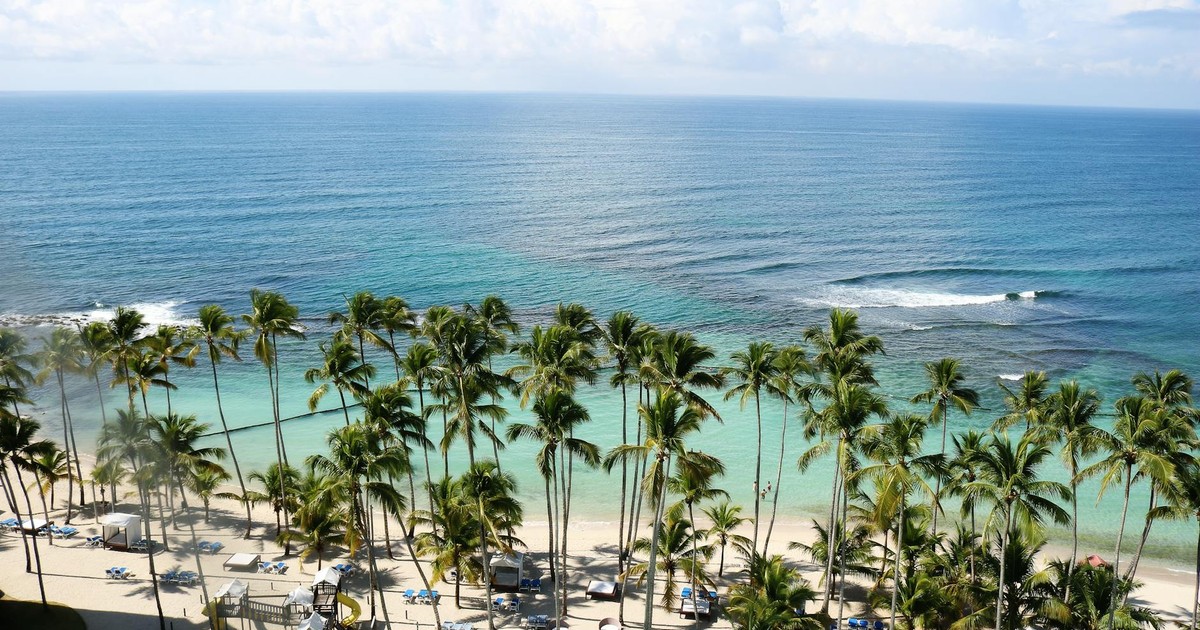
The Dominican Republic has become one of the most talked-about destinations among American expats, and the reasons aren’t hard to see. According to Live and Invest Overseas, the pensionado visa requires just $1,500 per month in pension income, plus $250 per dependent. That threshold is within reach of a retiree drawing an average Social Security benefit plus a modest private pension, and there is no requirement to purchase real estate or lock capital into government bonds to qualify.
Pensionado applicants can obtain permanent residency immediately under a fast-track program, bypassing the five-year wait that standard residents face. The program is governed by Law 171-07, which provides a range of tax incentives – including significant tax breaks – specifically to encourage retirees to make the Dominican Republic their home. In practical terms, that means foreign-sourced pension income, Social Security payments, and overseas investment income are not taxed locally. A retiree whose entire income originates in the US pays nothing to the Dominican tax authority on it.
The cost-of-living savings are substantial. The Dominican Republic runs roughly 42 percent below US average living costs, and rent in popular expat towns like Las Terrenas or Santiago is a fraction of what the same square footage would cost stateside. Healthcare has improved considerably; Santo Domingo has private hospitals staffed with US-trained specialists, and medical costs are low by American standards. Live and Invest Overseas also notes that while getting a second passport through residency can take up to 10 years or longer in some countries, in the Dominican Republic you can apply for citizenship after just two years of permanent residency – making it one of the fastest naturalization tracks in the region. The main practical challenge is paperwork: documents must be apostilled, translated into Spanish, and processed through the immigration authority in Santo Domingo, so hiring a local immigration attorney is strongly advised.
2. The Bahamas
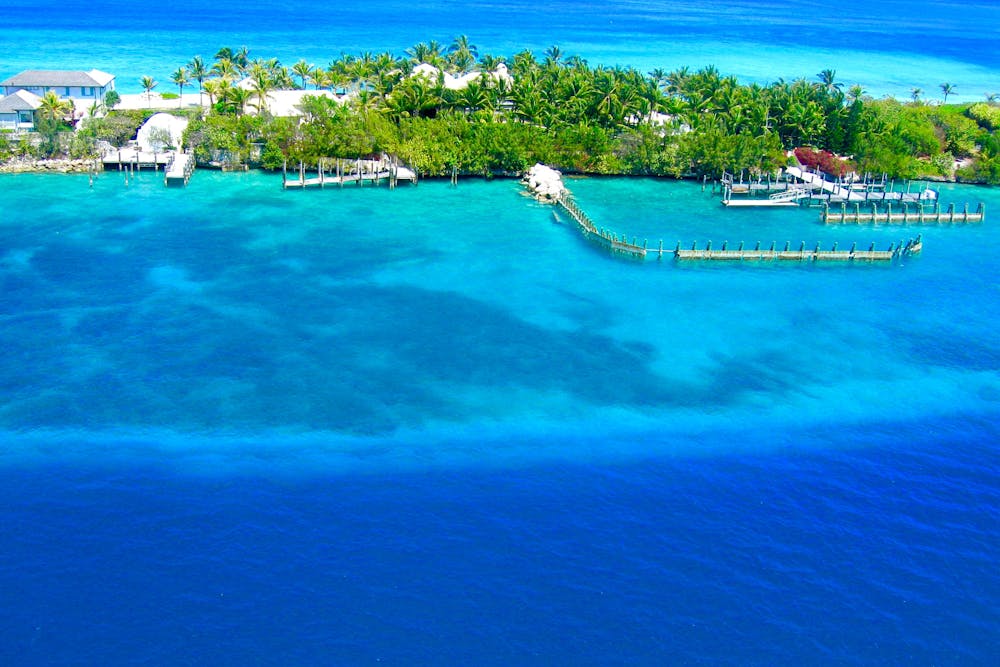
No list of Caribbean tax havens for retirement would be complete without the Bahamas, because the tax elimination here is total. As Sebastian Sauerborn’s Bahamas tax guide makes clear, the Bahamas is “a zero-income-tax jurisdiction, but it is not a low-cost jurisdiction.” There is no personal income tax, no capital gains tax, no inheritance tax, no wealth tax, and no general corporate income tax. That applies to pension income, Social Security, dividends, and investment returns equally.
The catch is that the Bahamas is not a cheap place to live. Almost everything is imported, property and insurance are expensive, and Nassau or the better islands require a serious budget. Rent in Nassau and Paradise Island exceeds Miami pricing for comparable properties, and import duties push grocery, fuel, and consumer goods costs well above US mainland benchmarks. Retirees who move here looking for savings on the tax bill and savings on living expenses tend to find only the former. Monthly costs for a single professional living comfortably in the Bahamas run between $6,000 and $10,000, according to that same guide’s 2026 planning estimates.
The residency pathway reflects that premium positioning. The primary route for high-net-worth individuals is Economic Permanent Residence, which requires a minimum qualifying investment of $1,000,000 in either approved residential real estate or zero-coupon bonds. Applications above $1.5 million qualify for accelerated processing, typically three weeks to three months, versus the standard six to eighteen months. For retirees who can’t meet the million-dollar threshold immediately, an annual residence permit is available for $1,000 per year with proof of financial self-sufficiency – a flexible entry point that allows people to establish life there before committing to the larger investment. The Bahamas’ geographic position matters, too: Nassau sits roughly one hour by air from Miami, which means maintaining US medical specialists, banking relationships, and family ties is more practical from here than from almost anywhere else in the Caribbean.
3. Antigua and Barbuda

Antigua and Barbuda offers something the other islands on this list don’t: a direct route to full citizenship – and a second passport – rather than just residency. According to Get Golden Visa, the citizenship-by-investment program has been running since 2013, with a minimum investment starting at $230,000. That investment can take several forms: a non-refundable contribution to the National Development Fund, a real estate purchase of at least $300,000, or a contribution to the University of the West Indies Fund. The program processes in as little as six months, and dependent family members – including a spouse, children, parents, and grandparents – qualify for citizenship alongside the main applicant.
On the tax side, the picture is also compelling. Personal income tax was abolished entirely in 2016, and Immigrant Invest’s Antigua tax residency guide confirms that tax residents who spend more than 183 days per year in Antigua and Barbuda pay no taxes on personal income, dividends, interest, or royalties. There is also no capital gains tax, inheritance tax, or wealth tax. For retirees who establish genuine tax residency by spending those 183-plus days on the island each year, foreign-sourced income is effectively untaxed at the local level. It’s worth noting that citizenship alone doesn’t automatically confer tax residency – the 183-day presence requirement still applies.
The islands themselves reward the investment lifestyle. Antigua has 365 beaches – one for every day of the year, the locals like to say – and the standard of living for residents with international income is genuinely high. Healthcare is anchored by Sir Lester Bird Medical Centre, which ranks among the Eastern Caribbean’s stronger public facilities, alongside private clinics that handle most routine and specialist care. The real trade-off is scale: Antigua is a small island, and while that means low crime, a relaxed pace, and a close expat community, it also means limited infrastructure compared to the DR or Jamaica.
4. Jamaica
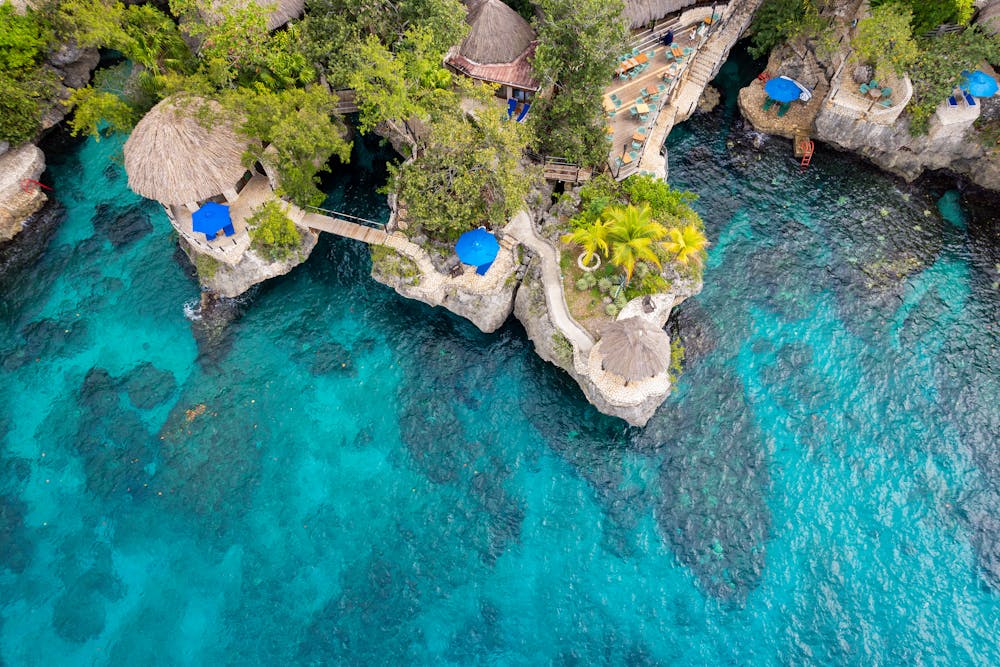
Jamaica is the most accessible of these four destinations in the straightforward sense: no large investment required, English-speaking, a well-developed expat infrastructure, and a cost of living that represents the steepest discount of any island on this list. Living costs run roughly 27 percent below US averages overall, and rent can run 49 percent lower than comparable US accommodation – a two-bedroom apartment in a comfortable Montego Bay neighborhood can be had for well under $1,000 a month.
Like the Bahamas and Antigua, Jamaica imposes no tax on foreign-sourced income for non-resident individuals. A retiree collecting US pension income and Social Security while living in Jamaica does not pay Jamaican income tax on those earnings. The residency process is more straightforward than in many Caribbean nations: retirees can enter on a tourist visa and apply for annual extensions, with longer-term residency available through a relatively simple permit process that doesn’t require million-dollar investments or citizenship applications. Kingston and Montego Bay both have private hospitals with US-trained physicians, and medical costs are low enough that out-of-pocket treatment for routine and even specialist care is affordable compared to US rates.
The honest trade-off with Jamaica is safety. Crime rates in certain urban areas – particularly parts of Kingston – are elevated, and this is something prospective retirees should factor in seriously rather than dismiss. The expat community tends to concentrate in Montego Bay, Negril, and the north coast, where the picture is considerably calmer, but it remains a real consideration. The infrastructure also varies sharply: world-class in tourist and expat areas, patchy everywhere else. Jamaica works best for retirees who do their research on specific communities rather than assuming the island is uniformly safe and developed.
For a broader look at the financial and lifestyle questions that come with relocating abroad – from managing banking access to understanding how overseas residency affects your US accounts – retiring abroad financial planning is worth working through before any decisions get made.
The One Rule That Applies to All Four

Here is the thing that every American considering Caribbean tax havens for retirement needs to keep front of mind: the US is one of only two countries in the world that taxes its citizens on worldwide income regardless of where they live. Moving to Nassau, Antigua, Santo Domingo, or Montego Bay does not make your IRS filing obligations disappear. As Taxes for Expats explains it plainly: “a US citizen in Nassau for part of the year still reports worldwide income on a US return and may still need FBAR or FATCA reporting.” The local tax headline in a country like the Bahamas is attractive, but the US filing calendar still needs to be managed carefully. In a no-tax jurisdiction, the best US relief tool is often the Foreign Earned Income Exclusion rather than the foreign tax credit, because there may be little or no local income tax to credit against US tax.
That doesn’t make the move pointless – far from it. The saving on local taxes in these zero-tax jurisdictions is real and substantial for most retirees drawing pension income, Social Security, and investment returns. None of those income streams will be taxed by the Dominican Republic, the Bahamas, Antigua, or Jamaica at the local level. What remains is the US side of the equation, and that’s where the work lives. The gap between “zero local income tax” and “zero tax altogether” is smaller than people fear once you have competent international tax advice in place – but it needs to be in place before you pack anything, not after. The islands listed here genuinely deliver what they advertise locally. Getting the full picture of what that means for your specific US filing situation is the one step that turns a promising idea into a genuinely transformed retirement.
AI Disclaimer: This article was created with the assistance of AI tools and reviewed by a human editor.