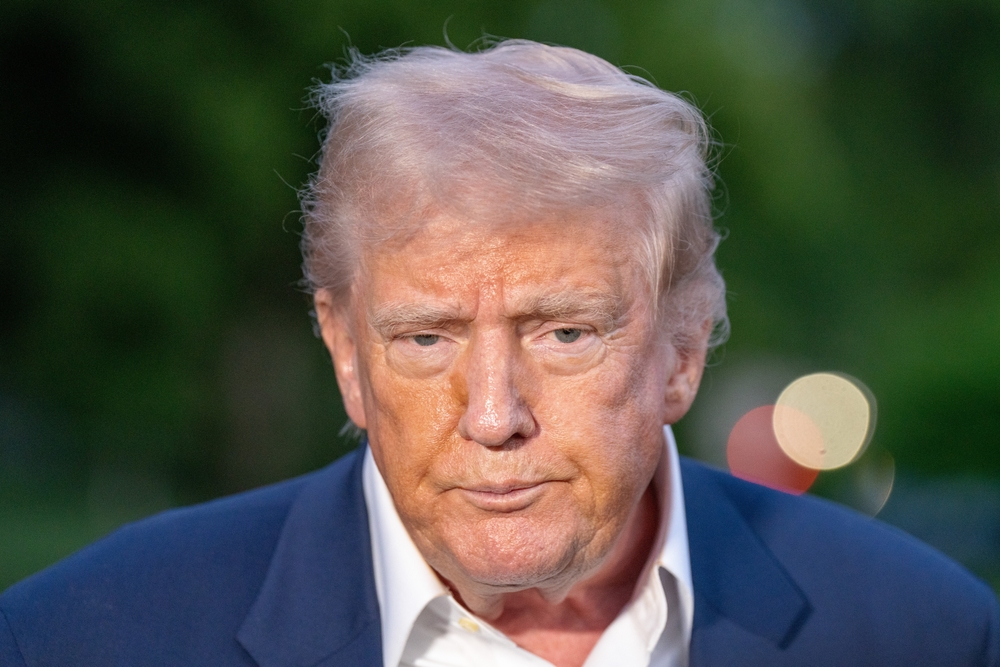

What happens when you try to book Vanilla Ice, Milli Vanilli, and Flo Rida as the headliners for a national birthday party and call it nonpartisan? You find out pretty quickly that artists read the fine print, and that the president is standing by, ready to step in himself.
That is, more or less, what played out in the final days of May 2026, when the Trump Freedom 250 festival – the administration-backed celebration meant to mark America’s 250th birthday with a 16-day extravaganza on Washington’s National Mall – collapsed into something nobody in a PR department would have planned. More than half the announced musical acts withdrew within 48 hours of the lineup going public, each one saying some version of the same thing: they had no idea this was a political event. Then the president, in a pair of Truth Social posts, first suggested he might perform himself, then said the whole thing should be canceled, and then, by the end of the day, was confirmed as the headline act anyway.
It’s a story about America’s birthday, but it’s also a story about what happens when “nonpartisan” is used as a word that does a lot of work it can’t actually do.
What Freedom 250 Actually Is
Freedom 250 is billed as a nonpartisan organization, but it was launched by President Donald Trump and is headed by Keith Krach, a businessman and philanthropist who served as a State Department appointee during Trump’s first term. According to the Washingtonian, Freedom 250 was officially created as the “White House Task Force on Celebrating America’s 250th Birthday,” run by a Trump appointee, which the president said would “give America the most spectacular birthday party the world has ever seen.” Freedom 250 is distinct from the America250 commission, which was originally established by Congress in 2016. One body was created by an act of Congress to plan for the country’s 250th birthday regardless of who held office. The other was created by an executive order and run by a Trump appointee.
The Great American State Fair is a planned 16-day festival running from June 25 through July 10 on the National Mall, which organizers describe as a World’s Fair-style gathering bringing together representatives from all U.S. states and territories. Freedom 250 is also sponsoring several other marquee events in Washington this summer, including a FIFA World Cup 2026 Fan Zone in June, a Salute to America 250 Celebration and Fireworks on July 4, and a Patriot Games national fitness competition in August. On paper, it reads as a sweeping, all-American celebration. The trouble started the moment the concert lineup was announced.
The Lineup That Lasted Less Than 48 Hours
The Great American State Fair’s lineup was announced on Wednesday, May 27, by Freedom 250. It initially named Martina McBride, Flo Rida, Vanilla Ice, Young MC, C+C Music Factory, Milli Vanilli, the Commodores, and Bret Michaels as performers. Some of them were slated for an “I Love the ’90s” themed show on June 26. It was, by any measure, an unusual collection of acts for a presidential showcase – a mix of country, hip-hop, and artists most associated with a specific window of time that ended around 1994.
The fallout was almost immediate. By that evening, Morris Day and the Time denied that they would be playing at the event. On Thursday, Martina McBride took to social media to “clear the air” and said she would not be performing at the Great American State Fair on June 25th, saying that while she was “presented with an opportunity to perform at a nonpartisan event,” it “turned out to be misleading.”
McBride said she had asked a lot of questions and was assured the event was a nonpartisan event meant to celebrate ALL 50 states. “Yesterday, things started changing and what we were told is not, in fact, what is happening,” she wrote. That sequence – yes to the celebration, no to what the celebration became – was echoed by nearly every act that followed her out the door.
By Friday morning, Bret Michaels announced he was also dropping out. Michaels, the frontman of Poison, had initially understood the event as a chance to honor veterans, active military members, first responders, teachers, and working Americans, but said in a statement – reported by Variety – that the show had “evolved into something much more divisive” than what he had agreed to be a part of, and cited unspecified safety concerns for himself, his crew, and his fans.
Young MC, Morris Day and the Time, C+C Music Factory, and the Commodores each shared statements online announcing they would not perform at the concert. A singer from Milli Vanilli told the Associated Press she was “shocked” to see the group’s name listed as one of the fair’s performers. Young MC wrote that he had informed his agents he would not be performing at the Freedom 250 event, adding, per CBS News, “The artists were never told about any political involvement with the event. And despite the claims by the organizers that the event is non-partisan, SPIN magazine describes it as ‘Trump-backed’. I hope to perform in D.C. in the near future at an event that is not so politically charged.”
C+C Music Factory’s status became particularly complicated, with vocalist Freedom Williams suggesting he would participate, while co-founder Robert Clivillés publicly distanced the group from Williams’ comments and said the group would not perform. Milli Vanilli’s participation was also disputed, with one of the original vocalists saying the group was not even contacted to participate, while Fab Morvan said he planned to perform.
After the initial announcement of nine headliners, more than half of the artists pulled out and stated they would not be performing.
The President Responds – In Several Directions At Once
What happened next unfolded over the course of a single Saturday in a way that showed, fairly efficiently, how the Trump White House handles a PR setback.
In a social media post on Saturday, Trump called the performers who backed away from the event “Third Rate” and said he would give a speech that would rally the U.S. “forward.” Then, in a separate post later the same day, Trump wrote that the event should be canceled and replaced with a rally, posting, “We should have a giant MAKE AMERICA GREAT AGAIN RALLY, for 250, instead of having overpriced singers, who nobody wants to hear, whose music is boring, and yet who do nothing but complain.”
He also took aim at a federal judge who on Friday had ordered that his name be removed from the Kennedy Center for the Performing Arts. That ruling was not incidental to the Freedom 250 story. After Trump ousted the leadership at the Kennedy Center and had his own name placed on the building’s facade, numerous artists including Bela Fleck, Renée Fleming, and Philip Glass called off scheduled appearances. The Freedom 250 situation was, in some ways, a replay of that pattern – artists booked for something that sounded like one thing and turned out to be another.
By the end of Saturday, though, “cancel it” had given way to a more familiar outcome. Freedom 250 confirmed the new billing in a statement, writing, “we are excited to announce that President Trump will personally kick off this historic celebration on Wednesday, June 24.” The opening ceremony is scheduled for June 24, one day before the Great American State Fair officially opens on the National Mall.
Who’s Still On the Bill
As of Friday, Flo Rida and Vanilla Ice appeared to be among the few major musical acts still expected to perform. Vanilla Ice’s team was publicly enthusiastic. Vanilla Ice said he would not drop out of the event, writing on social media, “This is not a political platform. This is celebrating America’s birthday.”
Freedom 250 spokesperson Danielle Alvarez emphasized that the broader fair scheduled from June 25 through July 10 includes an array of exhibits, family-friendly attractions, musical performances, flyovers, and more. The organization continued to push back on the characterization that the event was partisan. Freedom 250 spokesperson Rachel Reisner told ABC News that the Great American State Fair is “a celebration of all Americans” and that the organization remains committed to delivering an event that brings the country together on the National Mall.
The argument that a Trump-launched, Trump-appointee-led event is also a nonpartisan one is doing considerable heavy lifting. And whether audiences accept that framing will likely depend less on the press releases and more on who ends up on stage.
Why Artists Keep Finding Themselves in This Position
The Freedom 250 walkouts did not happen in isolation. They are part of a longer pattern that has made the question of performing at Trump-adjacent events genuinely complicated for artists who want to avoid taking sides.
The celebrity PR industry has watched all of this unfold with some clarity about what’s actually happening. Artists today are acutely aware of anything that could be viewed as politically divisive or potentially damaging to their personal brand. A number of artists involved in the Freedom 250 situation seem to have been either unclear on the nature of the event or uncomfortable with how closely it became associated with Donald Trump after the lineup was announced.
The problem isn’t just the event itself. Increasingly, artists look beyond the event and pay closer attention to who is funding, backing, or financially benefiting from it. Per Axios, Freedom 250 organizers had already carried out a mostly Christian religious service on the National Mall that included Secretary of State Marco Rubio and Defense Secretary Pete Hegseth – an early sign that the “nonpartisan” label was being stretched. In an era where audiences scrutinize every affiliation, many performers won’t risk being portrayed as promoting something that could strengthen Trump’s wider brand association.
The pitch was “nonpartisan birthday party.” The artists who walked away from Freedom 250 weren’t refusing to celebrate America. They were, as several of them said explicitly, refusing to perform at an event that was something different from what they’d been told it was. The Rock This Country tour earlier this year, fronted by Kid Rock, showed a similar split: artists including Ludacris and Shinedown dropped out after fans flagged the tour’s apparent ties to MAGA boosterism, even though no explicit political connection was advertised.
The Bigger Picture
America’s 250th birthday is, on its own terms, a genuine milestone. The country’s semiquincentennial is a once-in-a-lifetime occasion, and there are serious, congressionally established bodies doing serious work to mark it. Freedom 250 is separate from that – and that distinction has gotten lost in the noise, which is part of the problem for everyone involved, including the artists who got caught in the middle of it.
The Freedom 250 situation makes one thing plain that has been true for years but keeps getting proven again: performing at a presidential event, any presidential event, is no longer a neutral act. The calculation used to be simpler. You played the White House Christmas concert, kept your head down, and nobody read too much into it. Now every booking comes loaded with the question of what the association says about you – not just what the performance does for you. The Kennedy Center cancellations proved it. Freedom 250 proved it again, faster and more publicly than anyone involved probably anticipated.
The artists who pulled out of the Trump Freedom 250 festival weren’t making a grand statement. Most of them said explicitly that they weren’t doing politics. They just didn’t want to be drafted into someone else’s political story. The remaining performers – Vanilla Ice included – have clearly decided they can live with that association. Whether the audiences who show up on the National Mall in late June feel the same way is, at this point, still an open question. But the fact that the president himself ended up as the headline act tells you something about how the event was always going to be read, whatever the press releases said.
AI Disclaimer: This article was created with the assistance of AI tools and reviewed by a human editor.