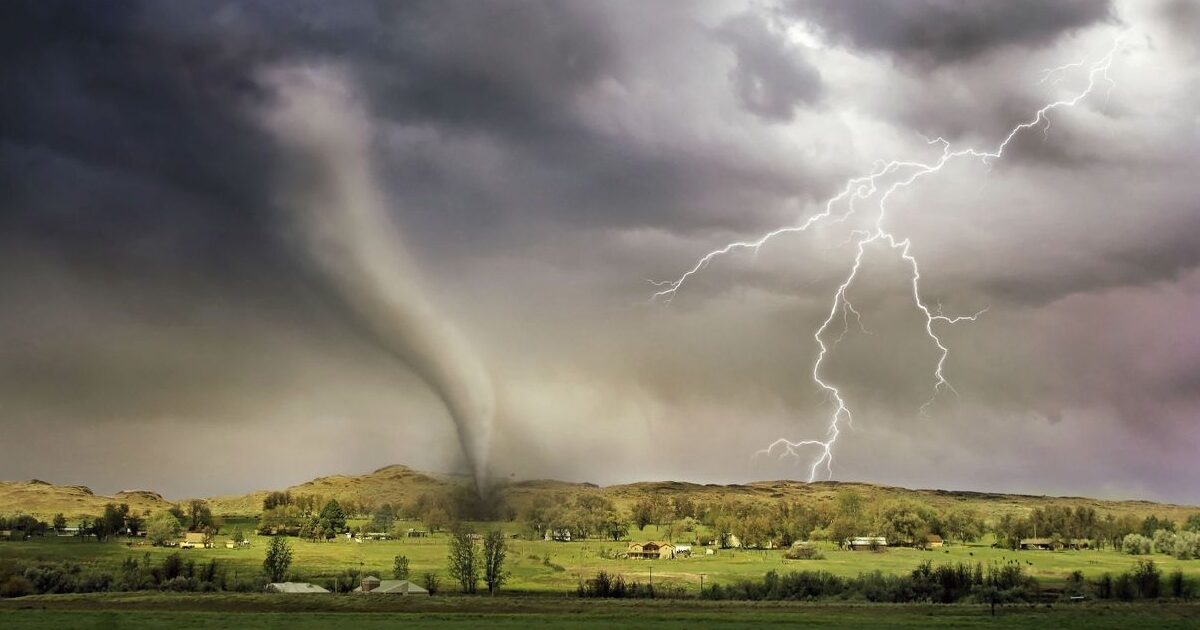

Most people book a trip to escape the weather at home. What they don’t always reckon with is that the weather at their destination might be in a category of its own entirely. Not “unusually warm for this time of year” weather. Weather that has taken off its suit jacket and started throwing furniture.
The world contains places where the ordinary rules simply don’t apply, where tourists land assuming the worst will be a cloudy afternoon and then stand slack-jawed at a sky that has other plans. Some of these extreme weather destinations are famous for exactly this. Others catch visitors cold (sometimes literally). What they share is an atmosphere, in every sense, that stops you mid-step. Below are nine destinations where the weather isn’t just a backdrop. It’s the whole show.
Mawsynram, India: 467 Inches of Rain a Year
Before you ask: yes, that number is correct. NASA recognizes Mawsynram, India, as the current world record holder for the wettest place on Earth, with an average annual rainfall of 11.87 meters, or about 467 inches. That’s close to 39 feet of rain every year, falling on a cluster of villages tucked into the East Khasi Hills of Meghalaya in northeastern India.
The mechanism behind this is almost elegant in its brutality. The extraordinary rainfall at Mawsynram results from a phenomenon called orographic rainfall, driven by a collision between moist monsoon winds and the Khasi Hills. The process begins in the Bay of Bengal, where warm moisture-laden winds are funneled northward into a narrow depression in the hills. When those winds hit the steep slopes and are forced upward, they cool rapidly and release everything they’ve been carrying, directly over the village below.
In 2022, Mawsynram broke its own record by receiving more than 1,000 millimeters of rain in a single 24-hour period, more rain in one day than Delhi receives in an entire year. For context, the average annual rainfall in most parts of the world sits below 40 inches. Mawsynram gets more than ten times that figure on an average year, not a record one.
Travelers who visit during monsoon season, roughly June through September, should be prepared for the kind of rain that makes an umbrella feel beside the point. Residents have developed living root bridges woven from tree roots, which grow stronger over time and provide safe passage during floods and landslides. Some of those bridges are centuries old and still holding. The best time to arrive, if you want to actually move around, is the post-monsoon window from October through May.
Death Valley, California: Where Rescue Helicopters Can’t Fly
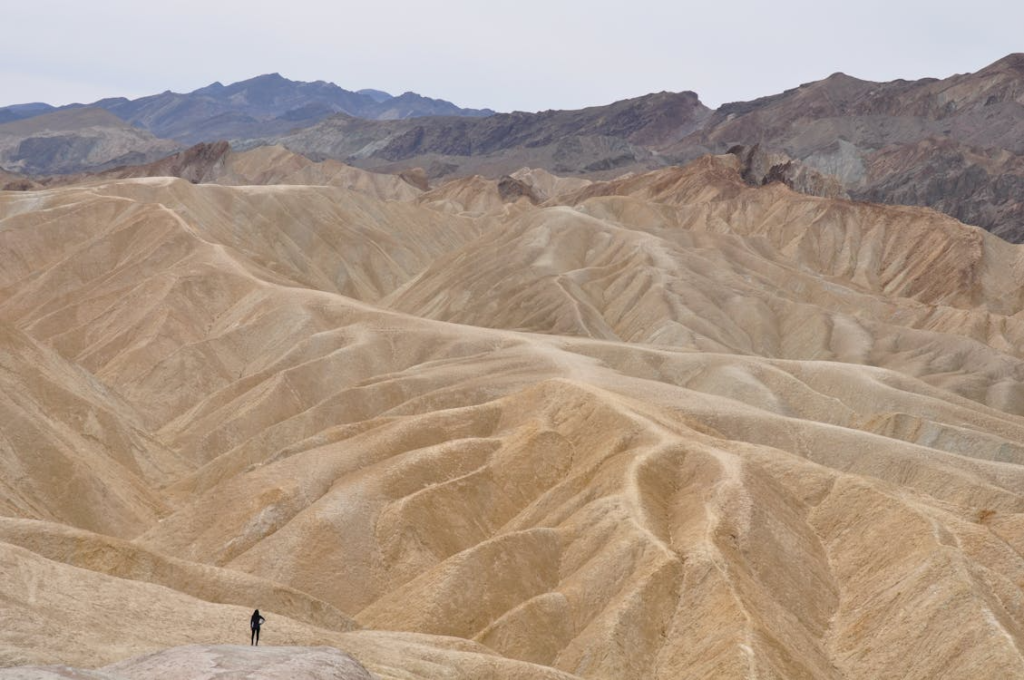
Death Valley, in the U.S. West, is the hottest, driest, and lowest of all the U.S. national parks. That phrasing, “hottest, driest, lowest,” does a lot of work, but still undersells what July looks and feels like there.
July 2024 was the region’s warmest month on record, with an average temperature of 108.5 degrees Fahrenheit. The key word there is average. According to the National Weather Service, the monthly average high for July 2024 was 121.9 degrees, while the average overnight low was 95.2 degrees. The nights barely cool. There is almost no relief.
The park holds two of the most extreme temperature readings ever documented on the planet. A temperature of 134 degrees Fahrenheit was recorded at Furnace Creek in July 1913, though many meteorologists dispute that measurement. The readings of 130 degrees recorded in both 2020 and 2021 are often cited as the highest reliably measured temperatures in history.
The heat creates genuinely surreal practical consequences. Park staff have noted that rescue helicopters will not fly when temperatures exceed 120 degrees, because warm air doesn’t have enough lift to support the aircraft. In July 2024, park staff reported that a visitor suffered full-thickness third-degree burns simply from walking barefoot on the sand dunes. Despite all of this, the park draws over a million visitors a year. Curiosity is apparently a powerful thing.
The Philippines: Six Typhoons in Thirty Days
Few places on earth are more routinely targeted by extreme weather than the Philippine archipelago. More tropical cyclones enter the Philippine Area of Responsibility than anywhere else in the world, with an average of 20 storms tracked in the region each year and about 8 or 9 of those crossing the islands directly.
Then came 2024, which by any historical measure was different. Six typhoons struck the Philippines within a span of just 30 days in November, a clustering of storms never previously witnessed in the basin, affecting more than 13 million people and putting enormous strain on infrastructure and emergency resources. Super Typhoon Man-Yi capped the sequence on November 16 with maximum sustained winds of 195 km/h. It was the 24th named storm of the season and the sixth typhoon to hit the Philippines in a single month.
All storms during that sequence made landfall on Luzon, the northern island. According to a December 2024 rapid attribution study, the series of storms displaced more than half a million people, caused hundreds of fatalities, and left economic losses estimated at nearly half a billion USD, based on figures from the National Disaster Risk Reduction and Management Council. The same study described the record-breaking typhoon season as “supercharged” by climate change. The Philippines is considered one of the most weather-vulnerable countries in the world, and the peak season of July through October is when travelers need to check advisories most carefully. The window from December to May is generally safer, though “safe” remains a relative term.
Oymyakon, Russia: Coldest Town on Earth
On February 6, 1933, a temperature of minus 90 degrees Fahrenheit was measured in Oymyakon, Russia. That’s 10 degrees colder than America’s all-time record low in Alaska, and Oymyakon is considered the coldest permanently inhabited town on Earth.
Oymyakon is a small rural settlement in the Sakha Republic of Russia, located in the Yana-Oymyakon Highlands in the far northeast of Siberia. Getting there involves a two-day drive from Yakutsk, the nearest city of significant size. The village is ringed by mountains that function like a cold-air trap, funneling frigid air into the valley and preventing it from escaping during winter months.
Average minimum temperatures in December, January, and February sometimes fall below minus 50 degrees Celsius, and in the record coldest month of January 1931 the monthly mean was minus 54.1 degrees Celsius. Cars left outside need to be kept running continuously, because if they stop they won’t restart. At temperatures below minus 58 degrees, ice crystals in the air make a swishing sound, and truck drivers sometimes have to light fires under their vehicles to unfreeze the engine blocks.
What makes Oymyakon stranger still is the summer. On July 28, 2010, Oymyakon recorded a high of 34.6 degrees Celsius, which means the village has a recorded temperature range of more than 102 degrees Celsius between its coldest and hottest days. The same place. The same village. A range that wide exists nowhere else on earth that people call home year-round.
Dubai, UAE: When the Desert Floods
Dubai is engineered for heat. It is not, and was not, engineered for biblical rain. In April 2024, the United Arab Emirates experienced extreme downpours that flooded major highways and Dubai International Airport, stranding travelers with major delays and disruptions. The rainfall was the heaviest the country had experienced in 75 years.
Dubai’s airport runways were submerged, prompting widespread flight cancellations and leaving hundreds stranded for hours. Major roads became parking lots. Some travelers abandoned their vehicles and walked. Certain areas remained flooded for days after the rain stopped.
It is a genuinely disorienting sight: one of the world’s most gleaming, climate-controlled cities, built to resist desert conditions, overwhelmed by water. The UAE averages around 100 millimeters of annual rainfall in its wettest areas, and many desert regions receive far less. When that amount falls in a few hours, infrastructure built around the assumption of constant sunshine simply doesn’t cope. The April 2024 event wasn’t just striking because of the flooding. It was striking because of where it happened, and because the city had no framework for it.
For travelers, the summer months in Dubai still mean one of the most extreme heat environments on earth, with temperatures regularly topping 40 degrees Celsius with humidity that makes shade feel like a suggestion rather than a solution. The city is extraordinary to visit, but requires understanding that the weather is always the variable it pretends to have solved.
Yakutsk, Russia: The Coldest City on Earth
If Oymyakon is the coldest village, Yakutsk holds the distinction of being the coldest city with a substantial urban population. A record low of minus 64.4 degrees Celsius was recorded there in February 1891, and during January the average low temperature sits around minus 42 degrees Celsius, with the city receiving fewer than four hours of sunlight per day. It has a population of around 355,000 people.
The city functions year-round despite conditions that make the concept of “stepping outside” feel genuinely threatening. Buildings are constructed on stilts driven into the permafrost to prevent them from sinking as the frozen ground shifts. Exposed skin can develop frostbite within minutes in January. Eyelashes freeze. Breath becomes visible clouds before it fully leaves the mouth.
Surprisingly, Yakutsk summers can reach average highs of 26 degrees Celsius in July, which is warmer than London at the same time of year. The same city that hits minus 64 degrees in winter sees temperatures that would count as a pleasant summer day in northern Europe. The swing is a reminder that some of these extreme weather destinations aren’t defined by a single extreme. They’re defined by relentless contrast.
Tornado Alley, United States: The World’s Most Active Extreme Weather Zone
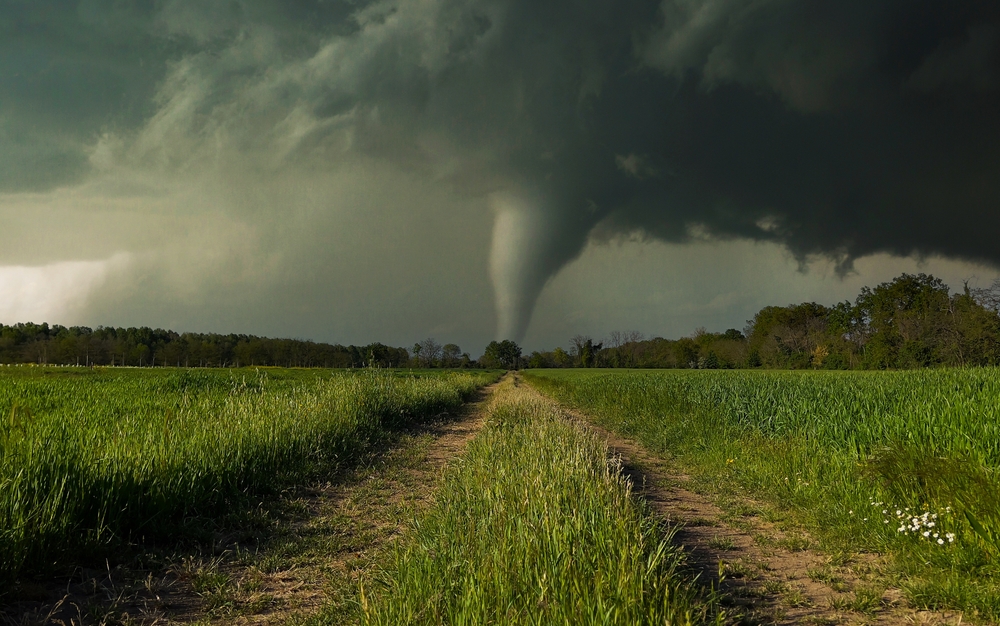
The central United States, particularly the corridor running from northern Texas through Oklahoma, Kansas, and Nebraska, produces more tornadoes than anywhere else on earth. The combination of cold dry air from the Rockies, warm moist air from the Gulf of Mexico, and the flat, unobstructed topography of the Great Plains creates ideal conditions for violent rotating storms to form with speed and without warning.
The World Meteorological Organization’s State of the Global Climate 2024 report listed 151 “unprecedented” extreme weather events globally in 2024 alone, the warmest year on record, with severe convective storms among the most frequently cited. Tornado Alley sits at the center of that pattern season after season. In an average year, the United States records approximately 1,200 tornadoes, more than any other country. A significant portion of those form within this corridor between March and June.
Travelers who find themselves in this region during spring storm season will encounter the peculiar tension of sky-watching that locals know well: clouds that build on a clear afternoon, a greenish tint to the light, and the sudden sound of sirens. The storm-chasing tourism industry has grown up specifically around this weather, with thousands of visitors every year following meteorologists and guided tour operators across the plains in pursuit of supercell thunderstorms. The weather here is a spectacle that happens to carry life-threatening consequences if you miscalculate the distance.
The Atacama Desert, Chile: Where Rain Hasn’t Fallen in Centuries
The Atacama is the driest non-polar desert on earth. That phrasing is important. It’s not technically the driest place on the planet in absolute terms (Antarctica’s Dry Valleys claim that title), but for any inhabited, accessible, traveler-facing environment, nothing else comes close. In some parts of the Atacama, rain has not fallen for 500 years. The nearby city of Arica in Chile is considered the driest city on earth, averaging just 0.761 millimeters of rainfall per year.
To put that number in context, London receives around 600 millimeters annually. Arica receives less than one millimeter. In some interior zones of the Atacama, rain gauges have recorded literally zero precipitation for decades at a stretch, and the soil in parts of the desert is so chemically arid that researchers have used it as an analog for Martian surface conditions.
The Atacama runs roughly 1,000 kilometers along the Pacific coast of South America, bordered by the Andes to the east and the Chilean Coast Range to the west. Both mountain ranges block moisture from reaching the interior, and the cold Humboldt Current running along the Pacific coast suppresses rainfall further. The result is a place where the air itself feels reduced, thin, dry, almost sterile.
For travelers, the Atacama is among the most visually arresting places on the planet: salt flats, pink flamingos in mineral lagoons, geysers, and an astronomical darkness at night that has made it home to some of the world’s most powerful telescopes. The extreme weather here isn’t violent. It’s an absence, which turns out to be its own kind of force.
Vanuatu, South Pacific: Where Cyclones Come Standard
Life in Vanuatu means living with rising ocean levels year after year, while stronger cyclones batter its 83 islands. The island nation, spread across the southwest Pacific, sits directly in a cyclone corridor and has earned a reputation as one of the most exposed small-island states in the world when it comes to extreme weather.
Vanuatu sits in a region where warm sea surface temperatures and favorable wind patterns generate intense tropical cyclones on a regular basis. In March 2015, Tropical Cyclone Pam struck the islands as a Category 5 storm with winds exceeding 250 km/h, causing catastrophic damage to nearly all infrastructure across the main islands. Recovery took years. The population, which numbers fewer than 350,000 spread across dozens of islands, has limited resources to rebuild each time a major storm makes landfall, and major storms arrive with regularity.
What makes Vanuatu remarkable to visit, in between storms, is precisely how extraordinary that natural environment is. Active volcanoes, extraordinary coral reefs, and a culture rich in tradition make it a destination that draws travelers willing to understand the bargain they’re accepting. The cyclone season runs officially from November through April, with peak intensity typically in February and March.
What to Know Before Booking a Trip During Extreme Weather Season
The WMO documented 151 unprecedented extreme weather events in 2024, and 2025 continued that trend without meaningful pause. Every destination on this list was shaped by conditions that existed before climate change became a headline, but several of them, particularly the Philippines, the UAE, and Vanuatu, are seeing those conditions intensify in ways that historical travel advice didn’t anticipate.
None of that means don’t go. In many cases it means go with considerably more preparation than you’d bring to a beach vacation in a temperate zone. It means buying comprehensive travel insurance that explicitly covers weather disruptions. It means reading the seasonal patterns carefully rather than assuming the travel calendar you find online reflects current conditions. It means understanding that a “low season” price at certain extreme weather destinations exists because that’s when storms arrive, not because the destination becomes less interesting.
Some of the most influential travel experiences on earth are attached to these places: the alien silence of the Atacama at 3 a.m., the sheer force of a monsoon shower in Meghalaya, the way the horizon in Tornado Alley can look entirely ordinary for two hours and then turn into something you’ll describe for the rest of your life. The weather isn’t a complication to be managed. It’s the thing you came for.
AI Disclaimer: This article was created with the assistance of AI tools and reviewed by a human editor.