
Every time a restaurant makes a restaurant menu change to something people love, someone on the internet takes it personally. Not mildly annoyed, not mildly disappointed – actually personally. The kind of personal where they write complaint letters, start petitions, call customer hotlines six times in a week, and tell anyone who will listen that the thing they once loved is “not the same anymore.” And the thing is? They’re usually right. It really isn’t the same.
Food companies change recipes constantly, and most of those changes slip by unnoticed. A slightly different oil. A cheaper thickener. A formula adjusted to hit a lower cost target. But every so often, a restaurant tinkers with something so central to why people showed up in the first place that the whole enterprise backfires spectacularly. Customers notice. Then they complain. Then they get loud about it. And sometimes, to their own disbelief, they win.
The six stories below are those wins, or at least the cases where the customers’ feelings were loud enough to force a response. Some companies reversed course entirely. Others made partial repairs and hoped nobody noticed the rest. A couple of them actually ended up better off because of the chaos. What they all share is a moment when a boardroom decision ran headfirst into the reality that people’s relationships with food aren’t really about food.
1. McDonald’s French Fries: The Original Recipe Crime
If you grew up eating McDonald’s before 1990, and someone asks you whether the fries taste different now, you don’t hesitate. They do. And it’s not nostalgia doing the heavy lifting.
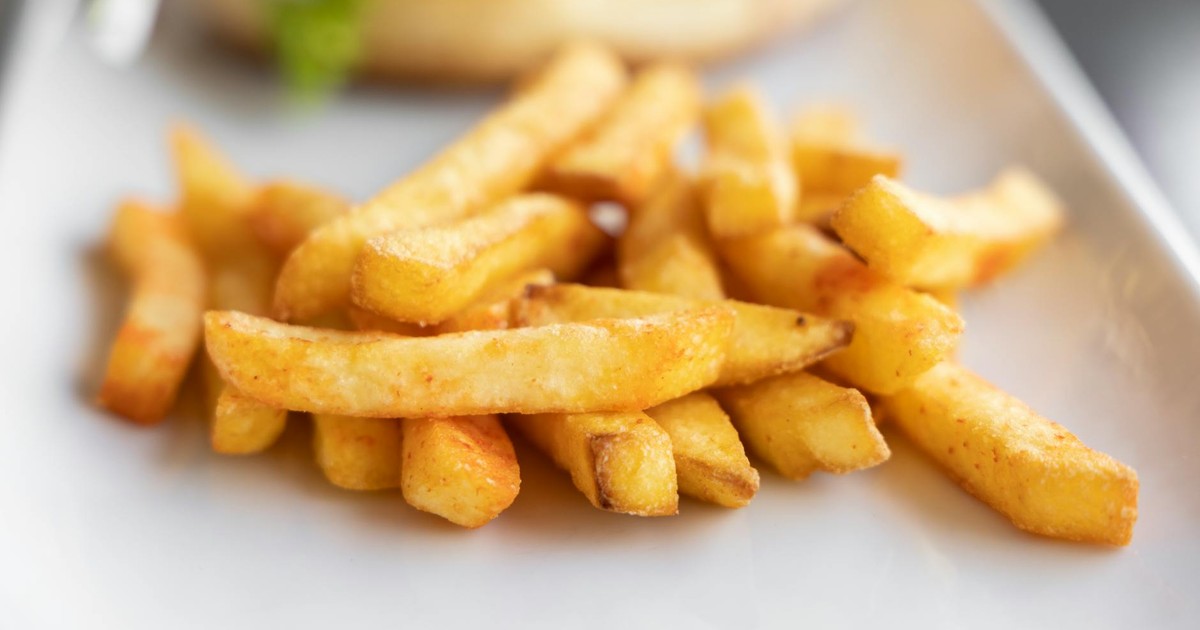
In the 1990s, as health concerns over saturated fat reached an all-time high, a Taste of Home investigation confirmed that McDonald’s faced pressure over its use of beef tallow, and worried about losing customers, the chain switched to vegetable oil. What made the original fries so distinctive was the cooking fat itself. The classic McDonald’s fries were cooked in a combination of cottonseed oil and beef tallow, which gave them their uniquely rich flavor. The switch to vegetable oil was framed as a health improvement, but many customers said the new texture and taste weren’t up to the mark, so the company tried to win them back by adding natural beef flavoring to the recipe – using vegetarian hydrolyzed wheat and milk proteins, which was, unsurprisingly, a poor replacement for the original flavor.
The patch job didn’t hold. Vegetable oil was later found to be unhealthy too, and McDonald’s changed its oil twice more – first to a soy-corn oil in 2002, then to a trans-fat-free oil in 2007, which is still in use today. Each successive change moved the fries further from what people remembered. Every generation of fry fans since 1990 has essentially been eating a different product while being told it’s the same one. The company never reversed the original switch. The beef tallow is gone for good, and the fries, whatever they are now, remain a running sore point for anyone old enough to remember what they were.
2. McDonald’s Apple Pie: Baked Into Obscurity
Less famous than the fry saga but just as consistent in its capacity to irritate, McDonald’s apple pie went through its own demolition in the same era.
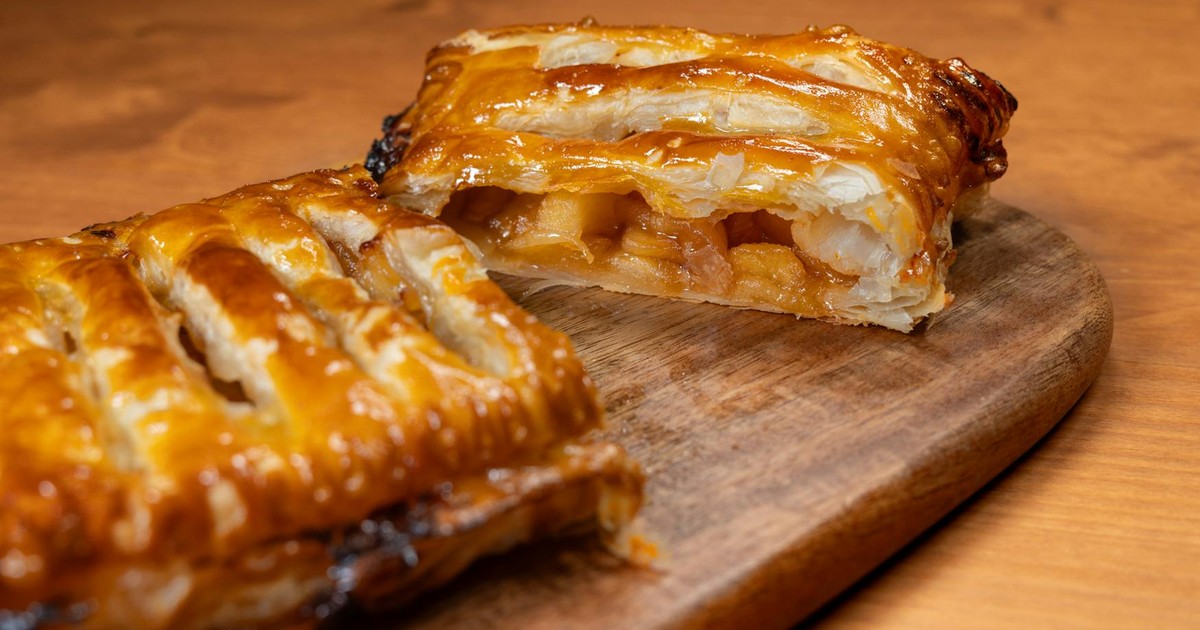
For years, McDonald’s deep-fried apple pies were a customer favorite. According to this 2026 piece from Mashed, the pies had been a dessert staple since 1968, but in 1992, McDonald’s made a controversial change: at most U.S. locations, employees started baking apple pies instead of frying them, a move meant to provide healthier menu items. Fans specifically missed the contrast of textures – the shattering crunch of the fried shell against the molten cinnamon filling – that the baked version simply couldn’t replicate.
Fans of the original pies lamented the loss of the crispy exterior and piping-hot filling. McDonald’s has since reformulated the baked pie multiple times, tweaking the crust design and adjusting the filling, but none of the revisions have stopped the complaints. Downey, California, is now the last McDonald’s location in the continental U.S. serving fried apple pies, while Hawaii’s locations were permitted to keep the original method because customers there bought more apple pies than anywhere else in the country. That one Downey location has essentially become a pilgrimage site for people who want to eat what McDonald’s used to sell everywhere. You can learn more about how comfort food nostalgia shapes the way we feel about the brands we grew up with.
3. Coca-Cola’s New Coke: The Worst 79 Days in Soda History
The Coca-Cola New Coke disaster of 1985 is the benchmark against which all other restaurant menu changes get measured. Every company that has ever quietly adjusted a recipe has at some point been warned by someone in the meeting room: “Remember New Coke.”
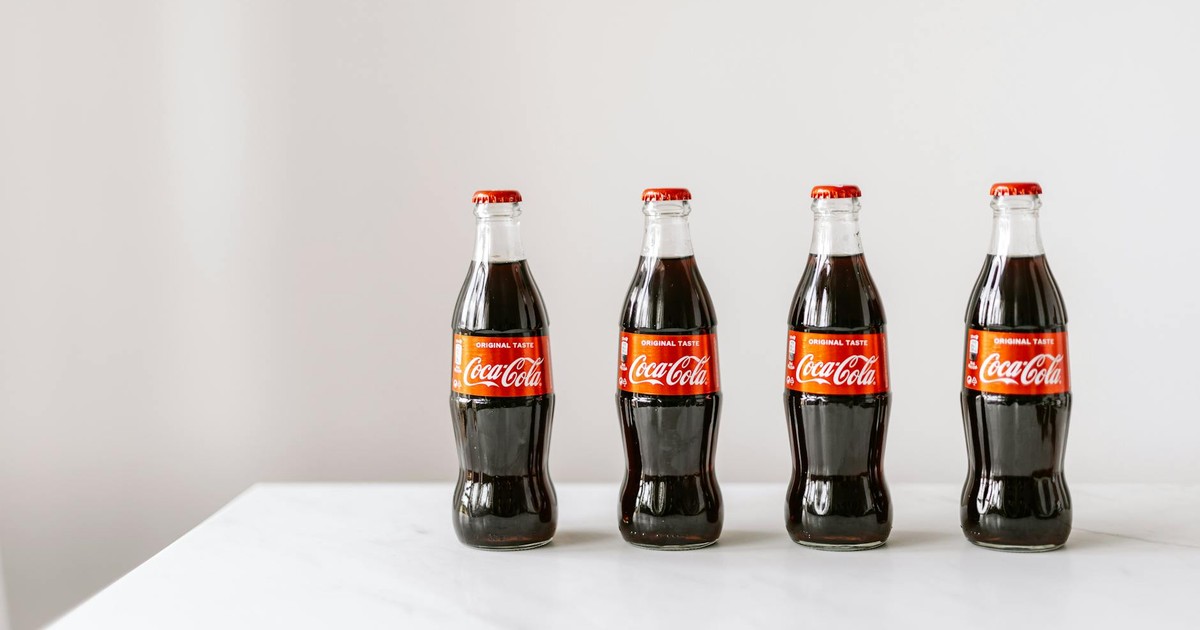
On April 23, 1985, the Coca-Cola Company’s own account of the story records that the company took what it called arguably the biggest risk in consumer goods history, announcing that it was changing the formula for the world’s most popular soft drink – marking the first formula change in 99 years. The company had done its homework, or thought it had. The new formula was adopted after taste tests involving nearly 200,000 consumers. What those tests didn’t show was the bond consumers felt with their Coca-Cola – something they didn’t want anyone, including the Coca-Cola Company, tampering with.
The response was immediate and, by corporate standards, alarming. Calls flooded in not just to the consumer hotline, but to Coca-Cola offices across the United States. By June 1985, the company was getting 1,500 calls a day on its consumer hotline, compared with 400 a day before the taste change. People stockpiled the original, formed protest groups, and wrote letters addressed to the company’s chairman calling him, in one memorable piece of correspondence, “Chief Dodo.” The firestorm ended with the return of the original formula – now called Coca-Cola Classic – just 79 days after the new version launched. The postscript is one of the stranger footnotes in marketing history: sales of Coca-Cola Classic actually surged after the reversal, leading some observers to speculate the whole thing had been a calculated play. The Coca-Cola Company has consistently disputed that interpretation.
4. Burger King’s Satisfries: A Health Kick Nobody Asked For
Fast food customers are under no illusions about what they’re ordering. They know it’s not salad. So when Burger King decided to rebrand its fries as a health-forward product, the mismatch between what the chain is and what it was suddenly claiming to be was hard to miss.
Reporting from Chowhound confirms that in 2013, Burger King attempted a pivot toward a healthier menu by switching its original fries to its new Satisfries – crinkle-cut fries made with a special batter meant to absorb less oil when frying, advertised as containing 40% less fat and 20% fewer calories than the old recipe. On paper, that sounds like progress. In practice, fewer people wanted them. While there was initially some excitement for the new product, it faded quickly due to lackluster customer reviews. Many people complained the new fries just didn’t taste as good as the old ones, and they were also baffled as to why a place like Burger King was trying to focus on healthier options – especially when the new fries came with a price hike.
The Satisfries were pulled from most locations by 2014, barely a year after launch. The lesson buried in the wreckage was that fast food customers aren’t asking for healthy alternatives to the thing they specifically came for. They want the thing. If they wanted something with 40% less fat, they probably wouldn’t be at Burger King in the first place. The company had essentially told its customers their preferences were wrong, and its customers responded in the clearest possible way: by not ordering the fries.
5. Subway Bread: The Yoga Mat Ingredient That Broke the Internet
Subway built its entire identity around the idea that you were making a healthier choice – fresher, customizable, better for you than the burger place next door. That identity took a significant hit when customers discovered the bread underpinning all of it contained an industrial chemical also used in yoga mats.
The chain’s bread had been at the center of several controversies over the years. One of the most well-known came in the mid-2010s, when customers learned it contained the chemical compound azodicarbonamide – a dough conditioner that makes bread light and spongy but is also used in products like yoga mats. It’s one of many additives banned in Europe but legal in the U.S., and there was significant outrage from customers who didn’t want the same chemicals found in yoga mats in their bread. A food blogger’s petition gathered hundreds of thousands of signatures before the company responded. In 2014, Subway announced it was adjusting its recipe to exclude the compound.
The yoga mat comparison was never particularly fair as a science argument – the compound was used in both products in very different concentrations for very different purposes. But fairness wasn’t the point. The point was that Subway’s value proposition was healthfulness, and a headline about yoga mat chemicals and sandwich bread is catastrophic for a brand built on exactly that promise. The company took another hit in 2020 when an Irish court ruled that Subway’s bread contained too much sugar to legally be considered bread. When your bread is legally not bread, the freshness messaging faces some headwinds.
Read More: Why Fast Food Tastes Worse Than It Did in the ’90s
6. Domino’s Pizza: The Brand That Admitted Its Product Was Terrible
Most companies, when customers say their food tastes like cardboard, issue a press release about their commitment to quality and hope the news cycle moves on. Domino’s, in 2009, did something categorically different.
For years, Domino’s pizza was considered objectively bad, with phrases like “cardboard” and “bland” used to describe elements of its pie. The chain wasn’t doing well around 2009, and flagging revenue and poor customer feedback pushed the company to embark on a complete brand and recipe overhaul from the ground up. What followed was one of the restaurant industry’s most dramatic turnarounds, not just in terms of menu offerings but in how well the changes were received.
The overhaul was total. The new crust was seasoned with garlic and parsley, and the updated cheese was 100% mozzarella flavored with a hint of provolone for additional sharpness and complexity. The sauce was made richer, sweeter, and with punchier notes of herb and red pepper. These changes were finalized after thousands of trials and tested against competitors like Pizza Hut and Papa John’s. But what made the Domino’s story different from every other entry on this list was the marketing campaign that accompanied it. Rather than quietly rolling out the new recipe and hoping customers assumed nothing had changed, the company aired a national ad showing executives and chefs sitting in a room watching real customer complaints – people calling their pizza cardboard, people saying the sauce tasted like ketchup – and agreeing with every word of it. Domino’s CEO at the time, Patrick Doyle, was quoted by Time as saying, “I’d be lying if I told you I didn’t have a knot in my stomach the day that advertising launched.”
It worked. In the first quarter of 2010, same-store sales in the U.S. rose by 14.3% – a record-breaking number for Domino’s, with revenue hitting $381.1 million for the quarter, representing an 18.4% year-over-year increase. Domino’s turned customer complaints into the engine of its comeback, which makes it arguably the only company on this list that not only listened to what people hated but turned that listening into a genuinely better product.
What This Actually Means
There’s a pattern running through all six of these stories that goes beyond taste tests and corporate missteps. Every single one of these backlashes was really about trust – specifically, the trust that a familiar product will still be the thing you expect when you reach for it. Food companies tend to understand this in the abstract while consistently underestimating it in practice. They run the taste tests, crunch the numbers, conclude that most people can’t actually tell the difference in a blind comparison, and then proceed as if the emotional attachment customers feel is a variable that doesn’t show up in the data. New Coke passed blind taste tests with nearly 200,000 people. It still nearly destroyed one of the most recognizable brands on earth in under three months.
The Domino’s case stands apart because it demonstrates what happens when a company decides to close the gap between what customers actually think and what the company wants to believe they think. Most brands manage the perception of their product. Domino’s let the reality in, in full, and rebuilt from there. That’s not a communications strategy. That’s just honesty treated as a business decision. It turns out to be a more durable foundation than any amount of brand management – and it’s the reason a company that once made pizza people compared to cardboard now operates more than 20,000 locations around the world.
AI Disclaimer: This article was created with the assistance of AI tools and reviewed by a human editor.