

Double standards in society are one of those things almost everyone recognizes the moment someone names them, but rarely stops to examine. They live in the background of ordinary life: in how a man’s directness reads as confidence while the same tone from a woman reads as aggression, in how a teenager sneaking out is “being a kid” if he’s a boy and “worrying” if she’s a girl, in how we accept certain behavior from one group as totally unremarkable while branding the same behavior in another group as inappropriate, concerning, or worth discussing at length.
What makes double standards in society so stubborn is that they’re not usually driven by overt malice. They develop because of things like confirmation bias, the desire to justify our own actions, and the very human tendency to twist facts to support what we already believe. We apply one standard to people we identify with and a harsher one to people we don’t. That cognitive wiring is old and deep, which is why double standards persist even in people who would sincerely describe themselves as fair.
The ten examples below cut across gender, age, class, race, and social life. Some you’ll recognize immediately. Others you may have accepted so long they’ve started to feel like facts of nature. They aren’t.
1. Assertiveness at Work: Confidence for Men, “Difficult” for Women

Walk into almost any office and you’ll find this one running at full volume. Female bosses have a much harder time than male bosses in the workplace. While men are often praised for being assertive and strong when making decisions, women who approach decision-making in the same way are perceived as “bossy” and “difficult.” The behavior is identical. The label changes depending on who’s doing it.
In workplace evaluations, double standards often result in women facing stricter scrutiny than their male counterparts. Women may receive feedback that emphasizes their demeanor rather than their performance or results, while men might be recognized solely for their achievements. So a man who pushes back in a meeting is showing leadership. A woman who pushes back in the same meeting gets a note in her performance review about “tone.”
The data behind this is consistent. In 2024, women earned an average of 85% of what men earned, according to a Pew Research Center analysis of median hourly earnings. Women’s share of managerial occupations has risen to 40%, yet they are still underrepresented in managerial and STEM roles relative to their share of the overall workforce. The assertiveness double standard is part of what keeps those numbers stuck.
2. Aging: Distinguished for Him, Past Her Prime for Her

The effects of aging are not perceived equally, especially as they relate to gender. Age enhances a man’s overall image but older women are seen as outdated. Older men are “silver foxes” while older women with silver hair are dismissed. A man’s graying temples signal authority. A woman’s signal that she has simply gotten older.
This plays out in industries where visibility matters. Broadcasting is the clearest example: a male anchor can stay on screen into his 60s and 70s while his female co-anchor is quietly replaced in her 40s. The same dynamic turns up in entertainment, politics, and virtually any profession where how a person looks is part of the job. The man who looks older is “distinguished.” The woman who looks older is told, gently or not, that her time has passed.
Across age groups, men consistently believe they earn more than women because their jobs are more demanding, a perception far less shared by women, particularly young women. In 2024, nearly half of men and over a third of women still believed a man’s most important role is to be the primary earner. That belief system feeds directly into the age double standard. If a man’s value is tied to what he produces economically, age just means more experience. If a woman’s value has ever been partially tied to her appearance or reproductive role, age becomes something to apologize for.
3. Physical History: A Score for Him, a Red Flag for Her

This is one of the oldest double standards in Western culture, and while attitudes have shifted, the underlying judgment hasn’t fully gone away. Research published in Demographic Research found clear evidence of a double standard: men are more judgmental toward women than toward men who have casual connections, and men appear to over-report that kind of activity while women under-report it, suggesting men see these acts as enhancing their status while women see them as diminishing it. A man’s physical history tends to be treated as evidence of desirability. A woman’s tends to be treated as evidence of something else entirely.
When individuals face different expectations based on their gender, the fallout isn’t just social. It creates real stress and anxiety. Women face harsher societal pressure around reproductive and relationship choices, and that pressure contributes to higher levels of mental distress among those on the receiving end of it.
What’s frustrating about this particular double standard is how thoroughly it persists even among people who consider themselves progressive. The judgment doesn’t always come from strangers. It comes from friends, from family, sometimes from partners. And it arrives in the form of a question asked or not asked, in the way a story gets told, in the pause before someone changes the subject.
4. Parenting Standards: Dads Are Heroes for Doing the Basics

When a father takes his kids to the park on a Saturday, someone will probably tell him what a great dad he is. When a mother does the same thing, it’s just called Saturday. In the realm of parenting and family, mothers and fathers are held to entirely different expectations. Mothers are expected to manage the mental load of running a household, remember the doctor’s appointments, coordinate the birthday parties, and still hold down a career without anyone treating any of that as remarkable. Fathers who do a fraction of the same tasks are praised for being hands-on.
The domestic labor gap sits underneath all of this. Among employed parents, mothers spend 81% more time than fathers on household chores on work days, and working mothers devote 62% more time to childcare than working fathers. Calling a father “babysitting” his own children is the linguistic version of this gap in action. It implies that childcare is the mother’s default responsibility and the father’s optional contribution.
The emotional toll of this imbalance is significant. When the invisible work is attributed to one parent while the other gets credit for showing up, resentment accumulates slowly until it becomes impossible to ignore.
5. Emotional Expression: He’s Passionate, She’s Hysterical

Men who show emotion, especially through crying, are seen as weak and not acting “like a man” in the way society expects. But the double standard cuts in both directions, and the version aimed at women is arguably more immediately damaging in professional and public life. When a man raises his voice in a meeting, he’s passionate about the subject. When a woman does the same, the conversation shifts from what she said to how she said it.
The sharpest version of this turns up in politics. A male politician who gets visibly angry during a debate is described as “fired up” or “fighting for his constituents.” A female politician who shows the same level of emotional intensity is asked if she can handle the pressure. The emotion itself is identical. The interpretation is gendered.
Women are expected to be confident yet not arrogant, take pride in themselves yet stay humble, compliant yet not too passive, assertive yet not too bold. The list of simultaneous and contradictory demands on women’s emotional presentation is exhausting in itself, before anyone even attempts to live up to it. Men face their own version of this, particularly the pressure not to express vulnerability, which carries its own serious costs. Either way, the standard being applied is different for each.
6. Wealth and Class: Celebrated Rich, Suspected Poor

Social class divisions are made worse by double standards in how people are evaluated, with marginalized communities often bearing the brunt of the negative outcomes. Lower-income groups may face more scrutiny and less privacy protection, reinforcing the economic divide and perpetuating class discrimination.
When a wealthy person makes a questionable financial decision, it’s framed as an eccentric choice or a bold risk. When someone struggling financially makes the same category of decision, it becomes evidence of poor judgment, a character flaw, or proof that they don’t deserve help. The rich man who blows money on a yacht is interesting. The poor woman who buys something nonessential is irresponsible. The behavior isn’t evaluated on its own terms. It’s evaluated through the lens of who’s doing it.
This has a research basis. A review published in the Annual Review of Sociology found that status characteristics such as gender, ethnicity, and socioeconomic class become the basis for stricter standards applied to people perceived to be of lower status. The person with fewer resources starts every interaction already under suspicion. The person with more resources gets the benefit of the doubt before they’ve said a word.
7. Media Coverage and Racial Framing
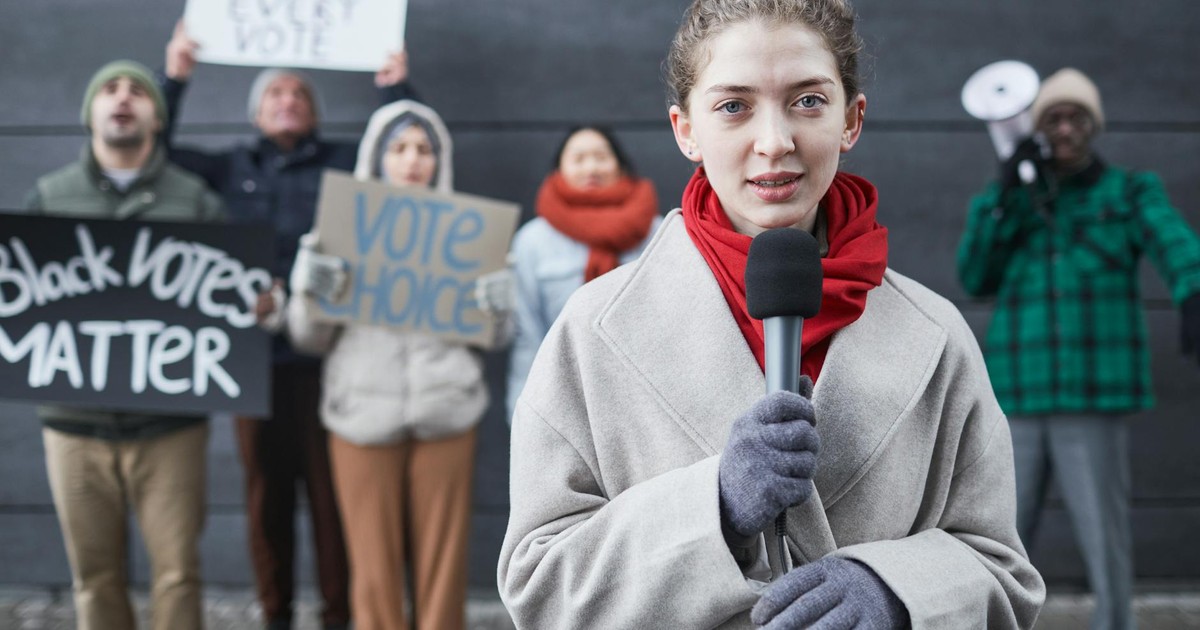
Media shares information from a particular perspective based on the motivations and political ideologies it identifies with, which produces double standards in news reporting. Protests and social movements are framed differently depending on who is directly involved with them. Events tend to be described as rallies rather than riots if the news organization supports the protesters’ point of view. Similar events initiated by those on the opposite side are condemned as radical and problematic, although their purpose is the same: to voice opinions and concerns.
The racial dimension of this is real and well-documented. Groups historically associated with positions of power have been held to different standards than marginalized groups, with coverage, language, and moral framing shifting based on who the participants are. Two groups can do the same thing. The words used to describe it are not the same.
This isn’t an obscure finding. It’s something many people experience directly: watching the same event reported twice, with different vocabulary and different moral weight, depending on the race of the people involved. The framing isn’t neutral. It never was.
8. Gendered Professions: Who’s Supposed to Be Where

A man who wants to be a nurse may face ridicule while a woman who makes the same choice is encouraged, and similar logic applies in reverse for other fields. The double standard in professional expectations cuts both ways, but the consequences aren’t symmetrical. Women who enter male-dominated fields face a long process of proving they belong. Men who enter female-dominated fields often get fast-tracked into management rather than staying in the frontline roles women occupy.
A male nurse who moves into hospital administration is “showing leadership potential.” A female surgeon is still asked, decades into her career, how she manages her family. The person whose presence is treated as unusual has to justify it. The person whose presence is treated as default doesn’t.
Workplace norms can hold women’s careers back in ways that feel structural rather than deliberate. When senior leadership positions are held exclusively by men, it reinforces what researchers call the “think-manager-think-male” mental shortcut, which associates leadership with being male by default. That association is what keeps the pattern in place: you see only men in the role, so you assume the role requires being a man, so you keep hiring men into the role.
You can see how that mental shortcut shapes the numbers. Research summarized by the Rotman School of Management at the University of Toronto found that even in competitive financial market settings, evaluators used gender to rank candidates, giving average-quality men the benefit of the doubt while average-quality women were penalized in their judgments.
9. The Body and Appearance: Rules That Only Apply to Women
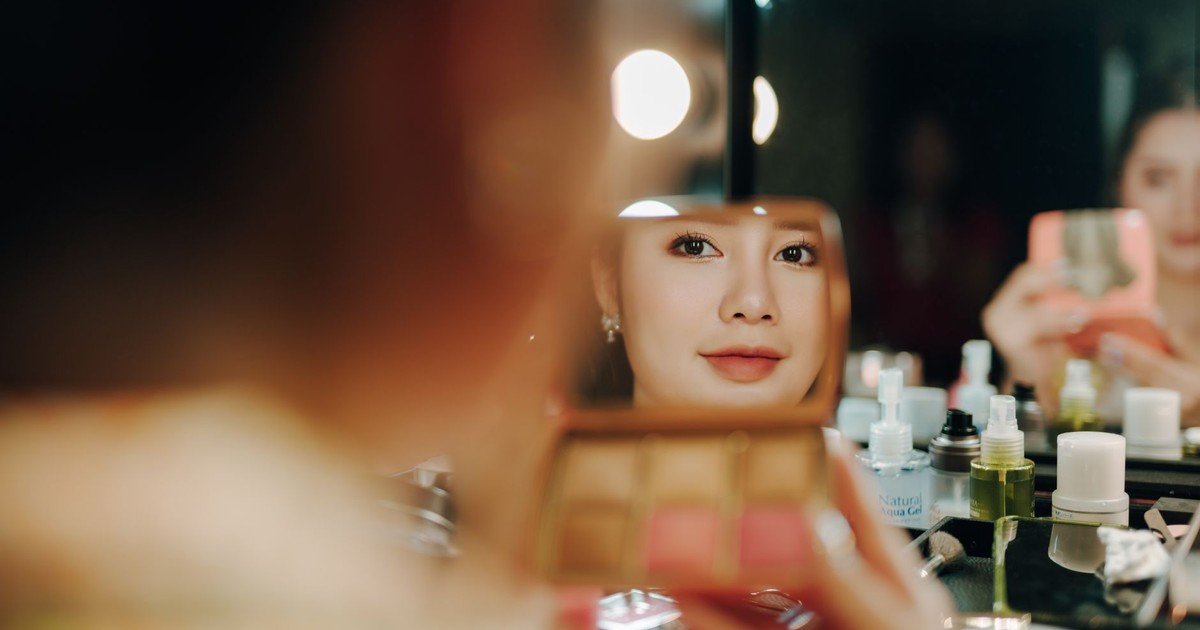
The double standard on physical appearance between men and women is so embedded in everyday culture that it barely registers as a standard at all. It’s just assumed. Gender-based outfit expectations trace back to traditional patriarchal values, and research has found that appearance-based content online generates harsher criticism in comment sections for women. A man who wears the same outfit every day is a person with a streamlined morning routine. A woman who repeats an outfit is noticed.
The appearance standard extends well beyond clothing. Women are expected to wear makeup to appear “professional” in many workplaces, yet any woman who spends time on her appearance risks being dismissed as superficial. The conflicting demands make it nearly impossible to stay within socially acceptable norms without compromise. The standard isn’t actually achievable because it’s contradictory by design. Whatever a woman does with her appearance, there’s a critique waiting.
Men face appearance pressure too, particularly around body image and social standards, but the scrutiny doesn’t carry the same professional consequences or social volume. A man who gains weight isn’t asked in a job interview how he plans to manage his health.
10. Ambition: A Virtue for Men, a Warning Sign for Women

In Fortune 500 companies, women hold only about 8.2% of CEO positions. Societal expectations and gender stereotypes often lead to women being overlooked for leadership roles, which keeps the pipeline narrow before it ever reaches the top.
The EU’s Gender Equality Index 2025 scored gender equality across member states at just 63.4 out of 100. Even in the most progressive economies in the world, equality is still barely passing. Ambition, and who gets to have it without being penalized for it, sits at the center of that gap.
In practical terms, a man who wants to rise is just being driven. A woman who wants the same thing faces an extra layer of evaluation: is she too ambitious? Is she putting career ahead of family? Will she be difficult to work with? The ambition itself is neutral. The response to it is not.
Read More: 50 Reasons the World Still Loves the United States
What We’re Really Accepting When We Accept These

The thing about double standards in society is that they don’t usually announce themselves. They arrive wrapped in cultural habit, in things that feel like common sense, in rules nobody made official but everyone somehow knows. You don’t accept them because you sat down and decided they were right. You accept them because everyone around you accepted them, and because pushing back has a cost that accepting them doesn’t.
But the cost of accepting them isn’t zero either. It’s just distributed unevenly. These differing norms and expectations lead to discrimination with real consequences for mental health, socio-economic status, and educational opportunities. The person on the receiving end of a double standard carries the weight of knowing the rules don’t apply equally to them, which is a specific and exhausting kind of unfairness to sit with day after day.
None of these ten are fixed features of human nature. Double standards develop through confirmation bias, emotions clouding judgment, and the very human tendency to twist evidence to fit existing beliefs. That tendency can be interrupted. It takes noticing first, then naming it, then refusing to let the habit of acceptance pass for agreement. That’s where every change of this kind starts, and it’s smaller than it sounds.
AI Disclaimer: This article was created with the assistance of AI tools and reviewed by a human editor.