

American problems are everywhere once you start paying attention. Not the dramatic, headline-grabbing kind, but the daily friction that most Americans have absorbed so completely they stopped questioning it years ago. The things that only register as strange when a friend from another country visits and stands staring at the checkout counter, confused about why the price on the tag and the price they actually pay are two completely different numbers.
The United States is, by almost any measure, an extraordinary place. But extraordinary is a double-edged word. Some of the systems, habits, and structural quirks that define everyday American life are genuinely baffling to the rest of the developed world – and, frankly, to a growing number of Americans who’ve had enough time to compare notes. These aren’t political complaints or partisan talking points. They’re just things that happen here and almost nowhere else. Twenty-two of them, to be exact.
1. Medical bills that can bankrupt you – one of the defining american problems
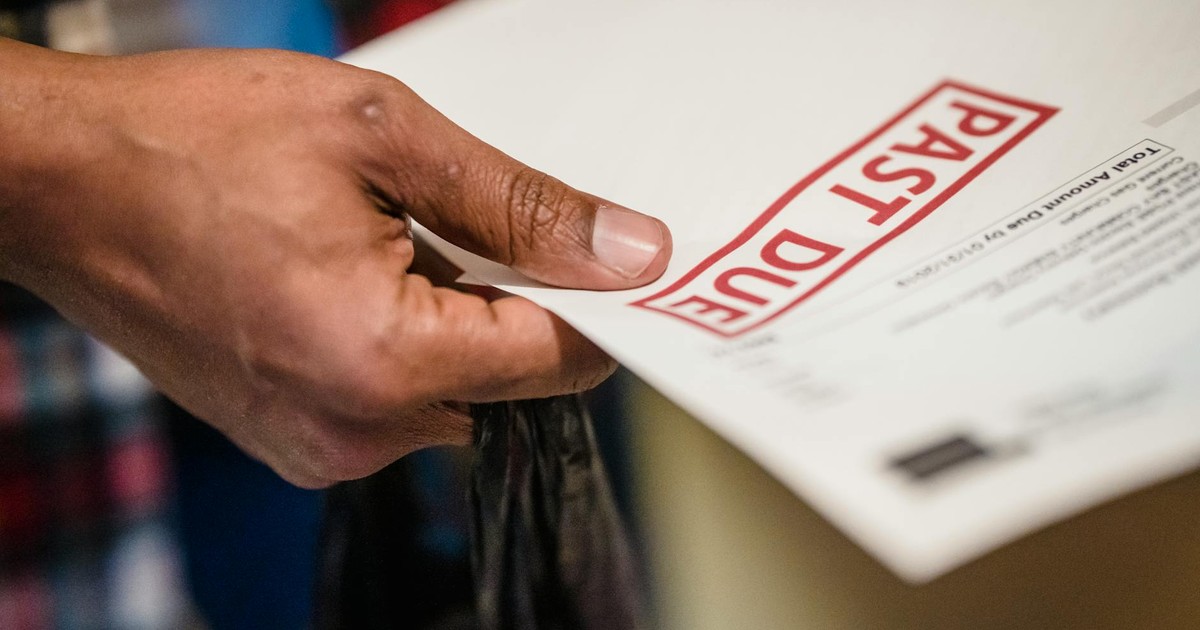
Most Americans know the anxiety of opening a medical bill. It arrives a few weeks after a hospital visit, sometimes a few months, and the number printed on it bears almost no relationship to anything you could have predicted. According to a 2026 analysis from The World Data, 38% of U.S. adults report having skipped, delayed, or gone without recommended medical care in the past 12 months because of cost concerns. That’s not a figure from a developing nation. That’s from a country that spends more on healthcare per person than any other on earth.
Medical debt is also among the leading causes of personal bankruptcy in the U.S., with studies estimating it contributes to approximately 66.5% of personal bankruptcy filings. In France, the number of medical-related bankruptcies in a comparable year was essentially zero, because a hospital visit doesn’t come with a bill that could wipe out a family’s savings. Delayed care leads to worsened conditions, which generate larger bills, which create more debt-related avoidance behavior. The loop runs itself, and there’s no federal mechanism to break it.
2. No guaranteed paid vacation – by law
Employers are not legally required to provide paid vacation in the United States. This makes America the only “advanced” economy that does not oblige employers to give employees paid vacation days or holidays. Not one day. Not legally, anyway.
Austria and France consistently rank among the countries with the most generous statutory minimums. France requires 30 working days – six weeks – of annual leave. Meanwhile, data from Justworks confirms that despite the lax legal requirements, many U.S. employers still choose to give their employees between 10 and 15 days off per year. That’s if you’re lucky enough to have an employer who feels like it. The number is not a right. It’s a favor.
3. The price tag is never the actual price
You’re standing at a register. The sign said $4.99. The total comes up as $5.43. Welcome to American retail, where the price displayed is a fiction and the real number only appears after a mysterious percentage is added at checkout. In countries like Spain, prices already include sales tax, so there are no surprises at the register. In America, you literally cannot budget a shopping trip without doing mental math or being prepared for a number that doesn’t match what you thought you were agreeing to.
Europeans find this baffling. So do most travelers the first time they land here. Americans just accept it. The receipt tells the truth. The price tag does not.
4. Tipping for everything
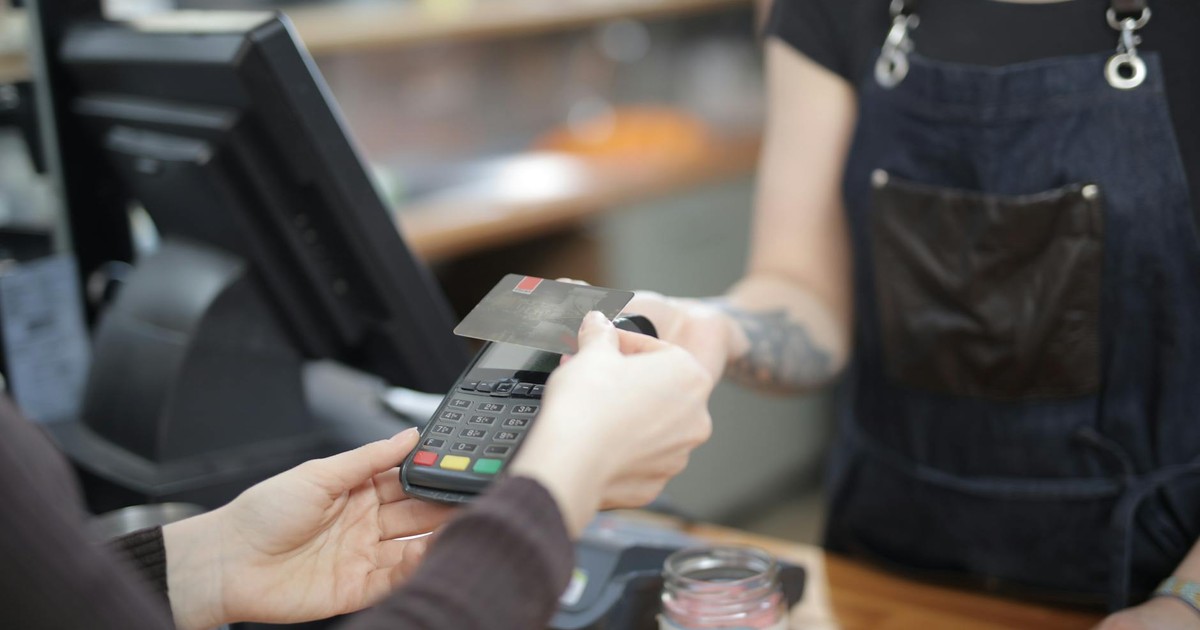
Tipping is deeply ingrained in American culture, particularly in the restaurant and service industries. Americans often tip between 15 and 25 percent, and in some places, tipping less than 20 percent is considered rude. But that used to at least have a boundary. Restaurants, sure. Taxis, fine.
It’s not just restaurants, either. Hairdressers, taxi drivers, hotel staff, delivery drivers, and coffee shop baristas all rely on tips as part of their income – a wage system where employers often pay below minimum wage with the expectation that tips will make up the difference. Now the tablet at a self-checkout kiosk rotates to face you with a tip screen. The coffee counter spins around asking for 20% on a $3.50 drip coffee. The moral math of tipping has expanded so far beyond its original purpose that Americans are now genuinely confused about when it’s acceptable to tap “no tip” without feeling like a bad person.
5. Prescription drug ads on television
TV advertisements for prescription drugs create immediate culture shock for many foreign visitors. In most other countries, doctors are the only audience for pharmaceutical companies wishing to sell prescription medications. The United States and New Zealand are the only two developed countries in the world where direct-to-consumer prescription drug advertising is legal.
The format is its own kind of theater: two minutes of cheerful visuals of people riding horses or laughing at picnics, followed by 45 seconds of a voice reading side effects at high speed. “May cause nausea, dizziness, sudden vision loss, thoughts of self-harm, and in rare cases, fatal skin conditions.” Then: “Ask your doctor about Lumivax.” It’s jarring enough to stop a first-time visitor in their tracks, let alone someone from Germany or Japan, where advertising medication directly to patients who cannot prescribe it to themselves would seem, at minimum, deeply strange.
6. Paying for an ambulance ride
You call 911. You’re taken to a hospital in an ambulance. A few weeks later, a bill arrives for the ambulance. This is an experience that is uniquely, specifically American. Many Americans have never understood why police and firefighters are covered by taxes but ambulance rides generate a separate bill – especially since all three involve calling 911.
In Germany and Norway, ambulance services are covered. In the UK, they’re part of the NHS. In Japan, they’re free. In the U.S., an ambulance ride can run anywhere from $1,000 to well over $3,000 depending on the distance, the provider, and your insurance. Calling for help in a medical emergency and then receiving an invoice for that help is one of the genuinely strangest features of American life when viewed from outside.
7. School shooter drills
Active shooter drills are a routine part of the American school calendar. Children as young as five practice locking classroom doors, hiding under desks, and staying silent in the dark. Some drills involve actors playing the role of an armed intruder. Parents receive after-action notices in their email inboxes. No equivalent practice exists at this scale in any other developed nation, because no other developed nation has mass shootings at schools at anything close to the frequency that occurs here.
An entire generation of American children has grown up practicing how to survive a gunman. That reality has no parallel in Canada, Australia, Germany, France, or Japan, where this particular preparation is simply not part of childhood.
8. “How are you?” as punctuation
Ask someone how they are in most countries and they’ll tell you. Ask someone how they are in America and you’ll get “good, thanks” before you’ve even finished the question, followed by a reciprocal “how are you?” that doesn’t require an answer either. Americans can – and do – talk to strangers freely, about things many cultures around the world would reserve for friends and family. But the greeting itself is ceremonial, not informational.
International visitors find this disorienting in both directions. Americans seem warm and open, then somehow aren’t available for an actual conversation. The friendliness is real, but it operates at the surface by design. It’s a social lubricant, not an invitation. Americans don’t notice this gap. Everyone else does, immediately, and it shapes hundreds of daily interactions.
9. Wearing shoes indoors
Many cultures around the world remove shoes before entering a home as a matter of course. Japanese, Korean, and many European households treat the removal of shoes at the door as something so obvious it barely requires thinking about. American homes have carpet in the bedroom and shoes that have walked across parking lots and public restrooms. Friends and acquaintances from around the world consistently name this as one of the first things that strikes them as genuinely odd about visiting an American home.
Once it’s been pointed out, it’s difficult to un-see. Yet most Americans have gone their entire lives without a second thought about it.
10. The date format that only Americans understand
MM/DD/YYYY. The month comes first, then the day, then the year. This format is the standard only in the United States. Every other country on earth either puts the day first (DD/MM/YYYY) or, in the case of international standards and most of Asia, the year first (YYYY/MM/DD). Neither of those is the American way.
The practical consequence is that 04/05/2025 means April 5th to an American and the 4th of May to most of the rest of the world. International documents, contracts, and schedules get misread constantly because of this. It’s a small thing, but it is a problem that is exclusively American – or affects anyone trying to work with Americans.
11. Obsessive coffee sizes
In the U.S., coffee is consumed in large portions, often carried around in 20-ounce or 30-ounce travel mugs. Coffee shops offer multiple size options, and Americans drink coffee throughout the day, not just in the morning, treating it as a functional beverage rather than a ritual. This contrasts sharply with countries where small, strong cups like espresso are sipped slowly in cafés.
The language of American coffee ordering has also become its own dialect. A “small” is a “tall.” A medium is a “grande.” A large – which is genuinely large – is a “venti.” Ask for a large coffee in Rome and you will get a very small cup. Ask for a “venti” and you’ll get a look. In most other countries, a 12-ounce coffee would be considered a larger size; servings of eight ounces or less are more common outside the U.S.
12. Massive portion sizes
Exchange students from Spain and elsewhere consistently remark on the same things after a year in the USA: big houses, big streets, huge distances, very large food, humongous portions, gigantic soft drinks. The default American restaurant serving is simply larger than almost anywhere else on earth – and the concept of a to-go box for leftovers, a completely normal American behavior, barely exists as a concept in most European countries.
This doesn’t make the food worse. But it does make the American relationship with food portions different in a way that visitors notice within about 48 hours of arrival. The idea that a restaurant meal might be designed to serve one person across two sittings is genuinely foreign to most of the world.
13. Car dependency with almost no alternative
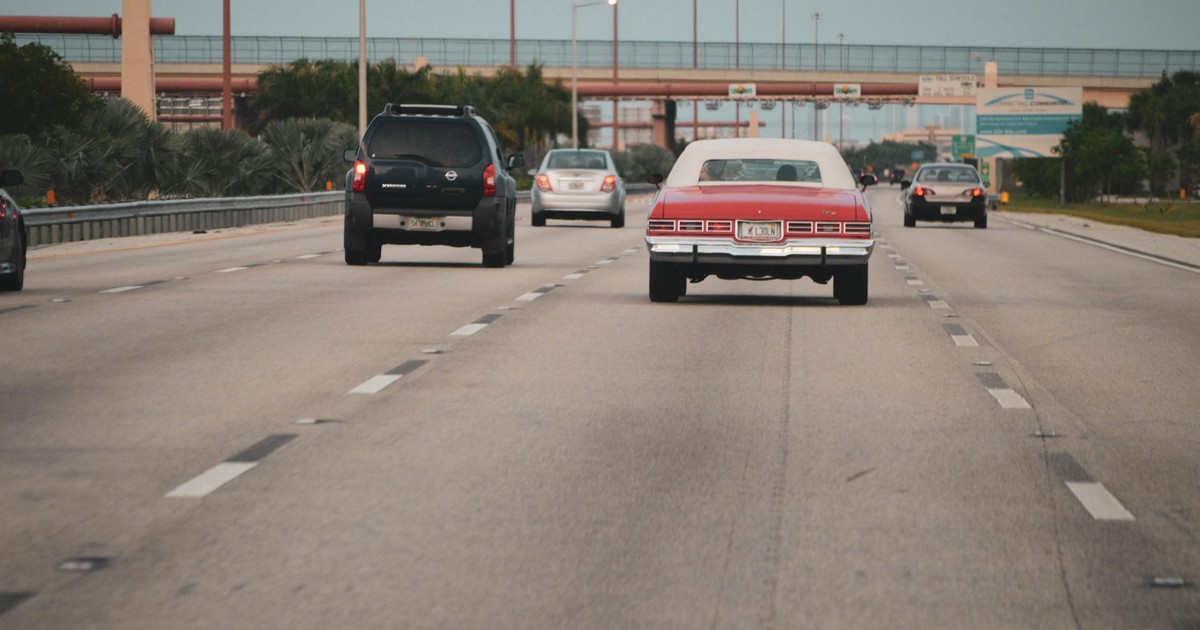
The U.S. has normalized car dependency to an almost comical level. Why walk to the store if it’s only 10 or 15 minutes away on foot? In most American cities, even for the shortest trips, taking the car is the default. Public transit, where it exists at all outside a handful of major cities, is often too infrequent, too incomplete, or too slow to function as a practical option.
The consequences stack up: you can’t drink at dinner without arranging a designated driver or a cab. Moving to a new city means buying a car, not finding a subway line. The cost of car ownership – payments, insurance, gas, registration, maintenance – is effectively a tax on participating in daily life. In Tokyo, Paris, Berlin, or London, none of that is a given. In most of America, it is.
14. Student loan debt as a life sentence
Paying off a degree that ended a decade ago, or two decades ago, is so normal in American conversation that it barely registers as unusual. It should. In Germany, university tuition at public institutions is essentially free. In Norway, Denmark, and Sweden, higher education is heavily subsidized or free for citizens. In the U.K., there are caps and income-contingent repayment systems with eventual write-offs.
In the U.S., students regularly borrow six-figure sums for undergraduate degrees and spend their 30s and 40s still making monthly payments on them, accruing interest, sometimes unable to buy a home or start a family until the debt is cleared. The idea that access to higher education should come with a multi-decade financial penalty is not how most of the world handles this.
15. Free refills
Free refills are so embedded in American dining culture that Americans are surprised to discover other countries don’t do them. Order a Coke in France and you’ll receive one Coke. A small one. At a price that makes the experience feel slightly more intentional than a gulp between bites. Ask for a refill and the waiter will bring you another Coke and charge you for it. This feels like a scandal to Americans who grew up treating soft drinks as unlimited.
The free refill is a uniquely American hospitality convention, and it shapes how Americans think about value in dining. It also shapes how Americans consume: the bottomless drink has no natural stopping point. Visitors to the U.S. notice this quickly, often with admiration, occasionally with mild horror.
16. Checking into a hotel and having money frozen “for incidentals”
Every American knows the routine: you’ve paid for the room, but the hotel holds a separate deposit on your credit card – sometimes $100, sometimes $250 – that won’t be released for several business days after checkout. Called an “incidentals hold,” this practice is standard across American hospitality. In most European countries, a hotel’s terms of service handle damage liability differently, and the pre-authorization hold either doesn’t happen or is far smaller.
It’s not a huge deal in isolation, but it is the kind of friction – money you’ve budgeted for the trip, now temporarily frozen – that stacks up into the broader American financial experience of never quite knowing how much things will cost until after you’ve already agreed to them.
17. The Pledge of Allegiance in schools
In a seminar in Luxembourg about international education, a British professor once described this ritual as genuinely strange – and a fellow American who stood up to demonstrate it became the subject of immediate fascinated attention from the international cohort. Children in American schools stand every morning, face a flag, place a hand over their heart, and recite a pledge of allegiance to the country. This is not a practice that exists in this form in the UK, Germany, France, Japan, Australia, or most developed nations.
The routine is so normalized for Americans that many have never paused to consider how it looks from outside: a daily loyalty declaration, delivered by six-year-olds. It is not done with any malice. It is simply one of those things that is distinctly, specifically American in a way that takes an outsider to name.
18. Yellow school buses
You know the bus. The bright yellow, flat-front, stop-arm-swinging school bus that pulls up to every neighborhood curb every morning across the country. An Australian visitor once asked an American if kids in the U.S. really ride yellow school buses – genuinely believing it was a detail invented for American movies and television. It was not. It is a real, daily feature of American childhood that simply does not exist in the same form anywhere else in the world.
The school bus is a genuine piece of American infrastructure logic: a standardized, color-coded, legally protected vehicle with its own traffic laws that require all other traffic to stop when children are boarding or exiting. The rest of the world handles student transportation differently, and the iconic yellow bus is one of those American-specific things that, once pointed out, you can’t look at the same way again.
19. Homecoming, prom, and the graduation industrial complex
While education is valued globally, Americans take graduation celebrations to another level. Even kindergarten and elementary school students wear caps and gowns, walk across a stage, and receive certificates. By the time Americans graduate from high school or college, they have already participated in several formal ceremonies, often involving custom outfits, decorated caps, official photographers, and large family gatherings.
Prom is its own economy. The average American family spends hundreds of dollars on a single high school dance – the dress, the suit, the hair, the corsage, the limo, the photos, the dinner reservation. The concept doesn’t translate to most other countries, where a school dance is a school dance, not a formal event requiring months of planning and what amounts to a small loan. Homecoming, prom, and the multi-ceremony graduation circuit are genuinely American inventions with no real equivalent elsewhere.
20. Sales tax that varies by state, county, and city

It’s not just that the price on the shelf doesn’t include tax. It’s that the tax rate itself changes depending on where you’re standing. The sales tax rate in Oregon is zero. In California it can be over 10% depending on the city. In Chicago, the combined state and local rate reaches nearly 11%. Cross a county line and the number changes. Order online versus in-store and the number can change again.
This creates a system where the same product, bought in two different American cities, costs measurably different amounts – and figuring that out requires knowing the specific tax code for the municipality you’re standing in. No other developed country has anything quite like this patchwork. The EU has a standardized VAT system. Even in countries with complex tax structures, the price you see is generally the price you pay.
21. The gap under public bathroom stall doors
People from around the world visit a public restroom in the U.S. and find large gaps at the bottom of stall doors. For many international visitors, the lack of privacy is immediately noticeable – even Americans who’ve spent time abroad find it startling upon return. The gaps are large enough to make eye contact with someone walking past. The reason is partly cost, partly ventilation, partly historical convention – but it remains a design choice that baffles almost everyone who encounters it for the first time from outside.
European, Japanese, and Australian public restrooms typically have floor-to-ceiling or near-floor-to-ceiling stall enclosures. Some countries have fully enclosed single-room toilets as the standard. The American version, with its slatted doors and visible floor gap, is a cultural artifact that has never been seriously questioned by the people who use it daily, and is never not immediately flagged by everyone else.
22. Having to call your insurance company before going to the doctor
In most of the developed world, you feel sick, you go see a doctor. The appointment is covered. Maybe you pay a small co-pay. You find out what’s wrong. You go home. In the United States, the process often involves checking whether your doctor is “in-network,” calling your insurance company to verify coverage, potentially getting a referral before you can see a specialist, and then waiting to find out after the fact whether the specific service you received was covered under your specific plan.
The Commonwealth Fund’s 2024 Biennial Health Insurance Survey found that 23% of working-age adults in the U.S. with consistent insurance coverage were underinsured – meaning they had health plans with out-of-pocket costs high enough to make care effectively unaffordable. To make matters worse, individuals may not fully understand what their insurance covers, and may only discover they were underinsured after they receive the bill for a procedure. The system is complex enough that navigating it is essentially a part-time job, and getting it wrong can cost thousands of dollars. That is not a reality that most people in other wealthy countries ever have to contend with.
Read More: Top things the world detests about Americans
The Part That’s Hard to Shake
None of this is a denunciation of America. Most Americans love their country with a genuine, complicated affection – the kind that can hold frustration and pride in the same hand. What makes this list worth sitting with isn’t outrage. It’s recognition. The odd friction of daily American life is so familiar that it takes stepping outside it – literally or figuratively – to see how much of it is chosen, not inevitable.
Some of these things are funny. Some are genuinely costly. The medical debt system and the absence of guaranteed paid leave aren’t cultural quirks – they’re structural realities that shape whether someone can take a day off without guilt, or whether a health scare becomes a financial emergency. The rest – the shoes, the bathroom gaps, the date format – are the kind of thing that makes you laugh and then think. Both responses are valid.
The point isn’t to build a case against the country or to suggest every other nation has it figured out. It’s simpler than that: “normal” is just another word for “what everyone around me is doing.” And sometimes it takes 22 items on a list, or one confused friend staring at a checkout screen, to notice that some of the most normal things in American life are only normal here.
AI Disclaimer: This article was created with the assistance of AI tools and reviewed by a human editor.