When a sitting president builds a UFC arena on the South Lawn of the White House, invites the world’s most famous soccer player for a photo op, and accepts a specially created peace prize from a global sports federation – all in the same year a World Cup kicks off on home soil – it’s worth asking what’s actually going on. The optics of sport and power have always overlapped. But most experts who study the intersection of politics and athletics say what’s happening right now in the United States is different in degree, and possibly in kind, from anything that’s come before.
With the FIFA 2026 World Cup less than a month away, those questions have become impossible to ignore. Not just for American fans bracing for the tournament, but for observers worldwide watching how the most politically charged sporting event in decades is being stage-managed. And one expert, whose career has been spent tracking exactly this kind of thing, has drawn a comparison that cuts right to the heart of the matter – reaching back nearly a century to find the closest historical parallel. The name he landed on was Benito Mussolini.
The Mussolini Comparison – and Why It’s Being Made Now
Jules Boykoff is not the kind of academic who throws around comparisons to 20th-century fascists carelessly. He teaches political science at Pacific University and holds a PhD in political science from American University. He is also a former professional and Olympic soccer player – someone who has genuinely loved the game his entire life. That combination of insider love for the sport and rigorous scholarly analysis gives his warnings a particular weight.
In his new book Red Card, Boykoff explores how Trump has used this year’s World Cup to engage in “sportswashing” – a term referring to the phenomenon of a person or government using sports to launder their image. And when he needed a historical precedent for what he was seeing, he found one in the 1934 World Cup in Italy.
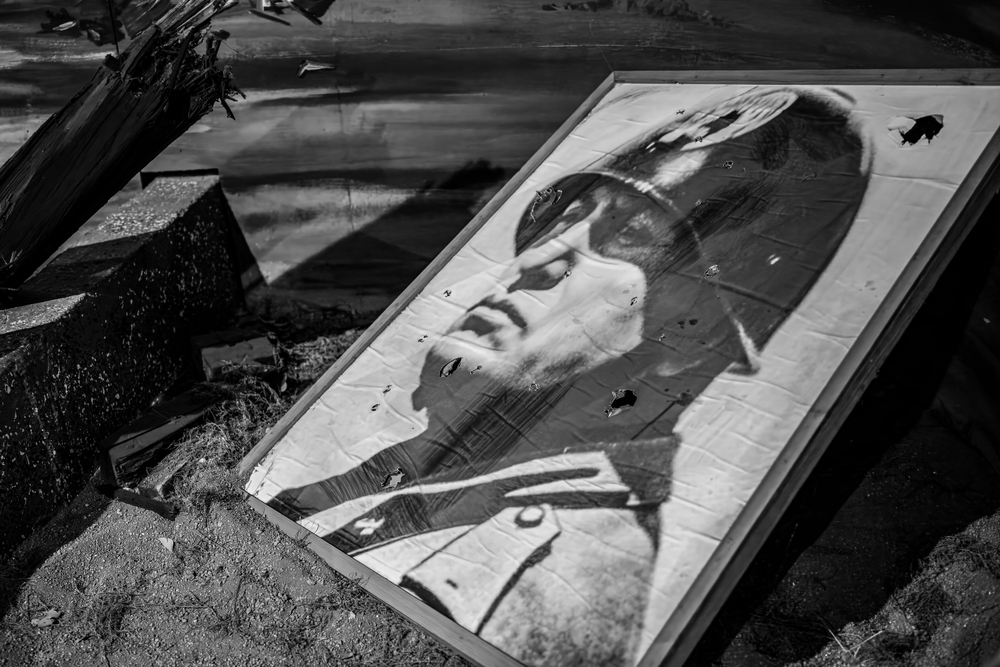
“If you look at the way Benito Mussolini cozied up to the athletes at the World Cup in 1934, he just wanted to be around these kinds of macho guys,” Boykoff told HuffPost. “Well, you can see the same kind of thing that Trump does all the time.”
Mussolini used the 1934 tournament to push fascism and introduced a prize of his own – the Coppa del Duce – for the winning Italian national team, one that was larger than the typical Jules Rimet Trophy awarded to victors at the time. At the 1934 World Cup final in Rome, Mussolini commissioned this unofficial trophy specifically to showcase Italian superiority and fascist power to the world.
The parallel Boykoff draws isn’t that Trump and Mussolini are ideologically identical. It’s that the mechanics of the maneuver – an authoritarian leader using the most-watched sporting event of his era to project strength, associate himself with athletic glory, and distract from domestic problems – are essentially the same playbook, adapted for the 21st century.
Boykoff notes that other examples from history include Hitler’s 1936 Berlin Olympics and the 1978 World Cup under Argentina’s military junta. Sportswashing, in other words, is not new. What makes 2026 different is the scale, the brazenness, and the specific context around the tournament being hosted on American soil.
What Trump Has Actually Done
To understand the argument, it helps to catalog what has actually taken place in the lead-up to this summer’s tournament. Trump has made a serious effort to use sports to his political advantage. Just this year, he invited Lionel Messi and his team to the White House for a photo opportunity, attended UFC matches, began constructing a UFC arena on the South Lawn, and shared plans to attend an NBA Finals game – all while his administration pursued military action in Iran.
The relationship with FIFA President Gianni Infantino has been particularly striking. Infantino has attended Trump’s inauguration, been a regular guest at Mar-a-Lago, and in July, FIFA opened an office in New York’s Trump Tower. Infantino donned a red MAGA hat and pledged FIFA money to Trump’s offensive Gaza redevelopment plan; two months later, he handed Trump the inaugural “FIFA Peace Prize.”
The Peace Prize episode is worth sitting with for a moment. The FIFA president has regularly been seen with Trump, and at the 2026 World Cup draw, Trump was awarded the first FIFA Peace Prize despite no information being provided about the format that decided how the prize was awarded. Boykoff called the prize the most blatant example of Trump trying to sportswash via the World Cup. “As ludicrous as the prize might sound to a lot of people, to him, he looks important,” Boykoff said.
Infantino committed FIFA to a strategic partnership with Trump’s Board of Peace in February 2026, and during the 2025 FIFA Club World Cup held in the US, Infantino watched with apparent indulgence as Trump gatecrashed the on-field celebrations of winners Chelsea.
For Trump, sports are not just entertainment or policy – they are political infrastructure, allowing him to amplify grievances, mobilize identity, and project a vision of America rooted in toughness, discipline, and global visibility on his terms.
The Tournament Russia and Qatar Didn’t Dare Host This Way
To appreciate how unusual the current situation is, it’s worth looking at the two most recent World Cup hosts. Both Russia in 2018 and Qatar in 2022 were authoritarian regimes by most standard political definitions. Both used the tournament as an opportunity to soften their international image – to present a welcoming face to the world and demonstrate that whatever critics said about them domestically, they could host a great party.
Even Russia and Qatar saw the World Cup as an opportunity to showcase idealized versions of their nations – to soften the global perception of their autocracies. It is clear that Trump and his administration see the 2026 installment as something quite different: an opportunity for the U.S. to flex its authoritarian muscles, to harden its image in the world’s eyes.
The U.S. is not yet Qatar, but it is a lot more authoritarian than it was when it won its co-host bid. For Trump and his administration, the World Cup is an opportunity not so much to launder his reputation as to embrace it: to take center stage as a global strongman.
The financial stakes are enormous. The tournament is expected to raise $3 billion from ticket sales and hospitality revenue alone – parking for the final in New Jersey starts at $175 – a figure more than three times higher than what Qatar generated in 2022. Overall, the 2026 World Cup should generate nearly $11 billion in revenue, more than double the amount generated in Russia in 2018.
That financial reality explains a lot about Infantino’s behavior. Infantino is going to such great lengths to placate Trump because the success of the 2026 World Cup is an existential imperative for FIFA – milking every last cent from each tournament is essential because they occur only every four years.
Immigration, ICE, and the Human Rights Dimension
The political theater around the tournament would be easier to dismiss if it were purely symbolic. But the human rights concerns attached to the 2026 World Cup are concrete and documented. A broad coalition of organizations – including Human Rights Watch, the ACLU, Amnesty International, and the NAACP – co-signed a letter warning FIFA about the risks facing international visitors, calling on the federation to use its influence to guarantee the fundamental rights of the millions of foreign fans who seek entry for the tournament, as well as the constitutional rights of immigrants who already live and work in the host cities.
The United States is due to co-host the tournament, but concerns have been raised over the nation’s ability to welcome millions of soccer fans given the current state of play under what the coalition letter calls Trump’s “increasingly authoritarian government.”
Trump has declared that co-host Canada should be incorporated as the 51st state and insulted Mexico. His administration has banned or imposed visa restrictions on fans from four participating nations and 15 additional countries.
Iran’s situation is particularly stark. Iran’s soccer team was set to play in group-stage games in Los Angeles and Seattle. Now they will almost certainly forfeit their matches. Iran’s top soccer official, Mehdi Taj, said after the U.S. joined Israel in military action against Iran that the team could not be expected to look forward to the World Cup with hope, and has since moved the squad’s base to Tijuana, Mexico.
On top of fans of teams from participating nations like Haiti and Iran being barred from traveling to the U.S. due to Trump’s travel ban, Boykoff fears the government could have “plenty of leeway to do all manner of things” as the matches carry high-level special event assessment ratings that could be used to beef up federal law enforcement’s presence at stadiums.
Boykoff has been direct about the contradiction at the heart of the tournament: “FIFA often says ‘football unites the world,’ but Trump is obviously putting lie to that by not allowing many people from countries that have qualified into the United States to even watch matches.”
A Different Kind of Approval Rating Problem
Boykoff’s analysis also includes a psychological dimension that’s harder to dismiss than pure politics. The worse things get domestically, the harder the pull toward the stadium. According to Boykoff, the worse Trump’s approval ratings get, the more incentive he has to “cling to sports as a sort of political life raft.”
That observation points to something real about the nature of sportswashing. It is not simply propaganda directed outward, at foreign audiences who might soften their view of a country. It is also directed inward, at domestic audiences who might be persuaded – by the sight of their president standing on a pitch, shaking hands with Messi, accepting a gleaming prize from a FIFA official – that things are going better than they feel.
Boykoff has noted that Trump is trying to achieve a “halo effect” from popular events like the upcoming 2028 Los Angeles Olympics and next month’s “Freedom 250” UFC fight card at the White House. The goal isn’t one tournament. It is a sustained campaign to wrap political power in the emotional language of sport – national pride, athletic excellence, collective glory – and make them inseparable in the public mind.
No previous U.S. president has embedded himself so deeply in the nation’s sporting life, especially to consolidate power, amplify culture-war narratives, and erode democratic norms.
What About the Game Itself?
It would be reductive to end there without acknowledging what makes this so uncomfortable for people who actually love soccer. The sport itself – the one that will be played inside those stadiums – is not diminished by the political machinery around it. The goals will still be real. The upsets will still land like a gut punch. The players from 48 nations who have spent their careers getting to this tournament didn’t sign up to be props in anybody’s political theater.
Boykoff has said that while he loves the sport, he’s concerned that FIFA, Infantino, and Trump are stealing the people’s game “right out from under us.” “Because I’ve seen the power of soccer, or football, in action, I’m of the belief that it can bring us together and it’s worth fighting for,” he said.
The 2026 FIFA World Cup kicks off in June, and it is already shaping up to be the most political soccer tournament of all time. From Iran’s possible non-participation amid Trump’s war, to the president’s close relationship with FIFA’s Infantino, to the simmering tensions between the U.S. and fellow host nations Mexico and Canada fueled by Trump’s tariffs and divisive rhetoric, the storylines are piling up fast.
The final will be held on July 19 at MetLife Stadium, temporarily rebranded as the New York/New Jersey Stadium for the competition. Whoever wins that final will lift the World Cup trophy. Whether it will still feel like the people’s game is a different question entirely.
What This Actually Means
The Mussolini comparison will make some people uncomfortable, and understandably so. Historical comparisons involving fascism are often overused, which makes it easy to dismiss them. But what Boykoff is pointing to isn’t an equivalence of ideology or outcome. It’s a specific, documented pattern: a leader who is struggling domestically, who sees in a major international sporting event an opportunity to look powerful and popular on a world stage, and who is willing to reshape the tournament around his own image rather than the other way around. That pattern has a history. It doesn’t require a mustache or a black shirt to recognize.
What’s different about 2026 is that the host country isn’t a small authoritarian state trying to signal that it belongs at the global table. It’s the United States – the country that spent most of the 20th century telling everyone else what democracy looks like. The fans arriving from around the world – the ones who can get visas, anyway – will walk into American stadiums where ICE may be present, where the president has already claimed a trophy that belongs to an English soccer club, and where the opening ceremony featured a peace prize that nobody voted for. The game will still be worth watching. But it won’t be possible to watch it without knowing all of that is in the room.
That’s the thing about sportswashing at this scale. It doesn’t actually clean anything. It just makes the stain more visible.
AI Disclaimer: This article was created with the assistance of AI tools and reviewed by a human editor.