
The word “feminist” has tripped up more celebrities than any other question in entertainment journalism. It’s a three-syllable test that keeps getting put to famous women, and for decades now, a surprising number of them have stumbled over the answer, sidestepped it entirely, or flat-out declined. Not because they’re against equal rights. Most of them explicitly say they believe in equal rights. It’s the label itself – what it conjures, what it implies, what it might mean to their fans – that makes them uncomfortable.
The celebrities feminism criticism debate is genuinely interesting not because these women are wrong (many of them clearly share feminist values) but because of what they’re actually running from. Most of them are reaching for the same thing: a way to say “I believe in equality” without the cultural baggage that the word has accumulated over decades of media caricature. Angry. Man-hating. Strident. Radical. These are the images behind the refusal, and the fact that so many high-profile women keep having this same reaction says something real about how the word lands in popular culture – regardless of what it actually means.
Some of the women on this list have since changed their positions entirely. Others have held firm. A few have tried to carve out a personal middle ground – “humanist,” “equalist,” “strong female.” What they share is that, at some point, they drew a line between themselves and the feminist label. Here’s who they are, what they actually said, and why the conversation still hasn’t gone away.
1. Kelly Clarkson
In a 2013 interview with TIME, Kelly Clarkson said she doesn’t consider herself a feminist. “I wouldn’t say [I’m a] feminist, that’s too strong,” she said. “I think when people hear feminist it’s just like, ‘Get out of my way I don’t need anyone.'” For the woman who made “Miss Independent” one of the defining pop anthems of the early 2000s, it was a jarring sentence.
She followed up with, “I love that I’m being taken care of, and I have a man that’s an actual leader. I’m not a feminist in that sense … but I’ve worked really hard since I was 19, when I first auditioned for Idol.” The statement set off a wave of criticism, largely because the reasoning mixed up feminism with man-hating – a conflation that critics pointed out was the whole problem.
When asked about the comments in a follow-up interview, Clarkson said her “opinion got a little misled” and clarified that she felt the word “feminist” had been distorted by society in a way similar to how the word “diva” was once a compliment and became an insult. Despite her issues with the word, Clarkson still valued its core meaning. “Obviously I believe in female equal rights,” she said. A messy situation, but an honest one.
2. Shailene Woodley
When TIME asked Shailene Woodley directly whether she considered herself a feminist, she replied: “No because I love men, and I think the idea of ‘raise women to power, take the men away from the power’ is never going to work out because you need balance.” The comment went viral and earned her a lot of criticism – partly for the reasoning, which conflated feminism with a power-grab against men, and partly because Woodley was the kind of visible, outspoken actress many people expected more from.
She later elaborated: “My biggest thing is really sisterhood more than feminism. I don’t know how we as women expect men to respect us because we don’t even seem to respect each other. There’s so much jealousy, so much comparison and envy.” The sisterhood framing had a certain appeal – the idea that women supporting each other matters more than political positioning – but critics argued it was a way of keeping the conversation small.
When promoting her film Insurgent in 2015, Woodley refined her position slightly for NYLON magazine: “The reason why I don’t like to say that I am a feminist or I am not a feminist is because to me it’s still a label. I do not want to be defined by one thing. Why do we have to have that label to divide us? We should all be able to embrace one another regardless of our belief system.” The label objection became her consistent line – though critics pointed out she accepted plenty of other labels without issue.
3. Katy Perry
In an early interview, Katy Perry said plainly, “I am not a feminist, but I do believe in the strength of women.” It was a sentence that perfectly captured the tension running through almost every entry on this list: a strong endorsement of women, paired with a clear rejection of the word attached to that cause.
Perry walked the line between “girl power” and “feminist” for years. She built a pop persona around female strength – fireworks, roaring tigers, never giving up – while keeping the political label at arm’s length. The discomfort seemed less ideological than aesthetic. Feminism felt like a movement with sharp edges. Perry’s brand was bright, party-colored, and built for radio. The two didn’t quite match, at least not to her.
She has softened her position over time. But for a chunk of the 2010s, when her cultural footprint was enormous and her songs were on every teenager’s playlist, she represented something telling: a woman fully committed to female empowerment who still couldn’t bring herself to say the word.
4. Carrie Underwood
Country star Carrie Underwood took a carefully diplomatic line: “I wouldn’t go so far as to say I am a feminist, that can come off as a negative connotation. But I am a strong female.” It was the kind of statement designed to offend no one, and critics argued that was exactly the problem. “Strong female” is a compliment without a cause. It doesn’t ask for anything from the world, doesn’t name a system, doesn’t commit to anything that could lose her a country radio slot.
Underwood’s hesitation sits in a particular cultural context. Country music has historically been an industry that rewards women who frame strength in personal rather than political terms – the resilient wife, the tough survivor, the woman who doesn’t need your pity but doesn’t make speeches either. Calling herself a feminist would have read as a provocation in that world. Calling herself a strong female was safe.
That’s not an accusation so much as an observation about how the industry shapes its artists. Underwood has built a genuine, decades-long career. But her feminist non-statement said as much about the music business as it did about her personal beliefs.
5. Lady Gaga
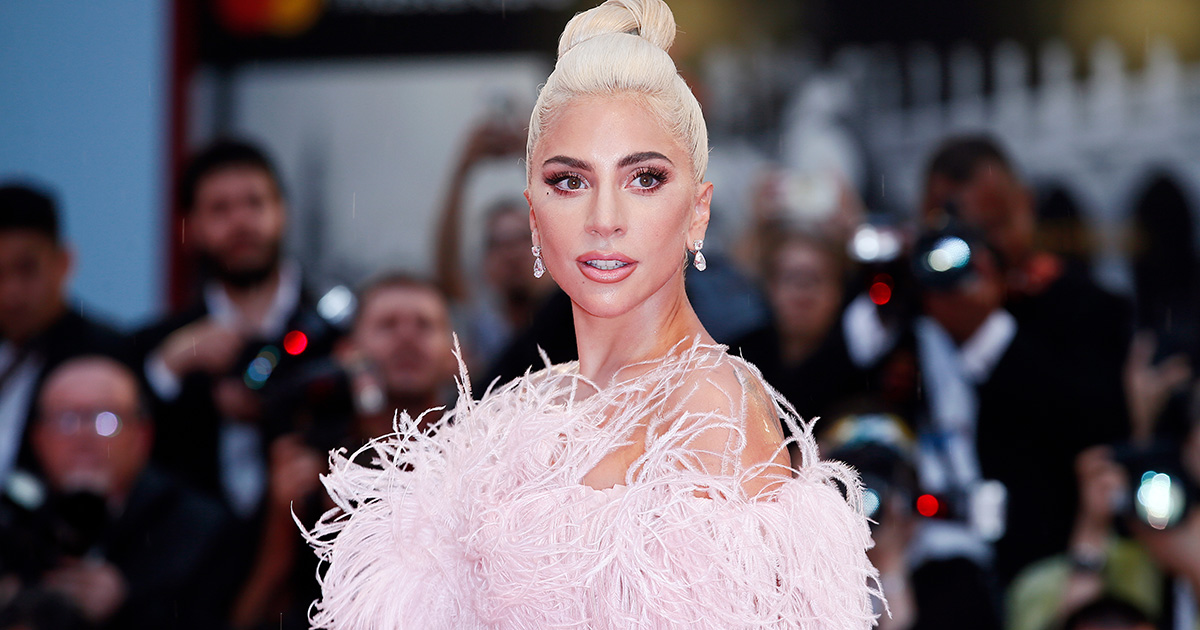
At one point in her career, Lady Gaga stated: “I’m not a feminist – I, I hail men, I love men. I celebrate American male culture, and beer, and bars and muscle cars….” The quote was splashed across feminist media immediately, partly for being startling coming from an artist who had built her identity around non-conformity and self-expression. It felt like a contradiction, and even her defenders acknowledged it as one.
Gaga later revised her thoughts on feminism. The reversal was pretty complete. By the mid-2010s, she was speaking about gender inequality in explicit terms and had clearly rethought the position. But the original quote stuck around, partly because it was so memorably phrased – “beer, and bars and muscle cars” – and partly because it showed how reflexive the rejection of the feminist label could be, even for someone whose entire artistic project was about refusing to fit expected molds.
Gaga’s evolution is probably the cleanest on this list. She said something she later clearly didn’t believe, reconsidered, and changed. Her first instinct – reaching for “I love men” as a distancing move – showed exactly how deep the cultural caricature had burrowed, even into someone who spent her whole career dismantling other people’s assumptions about what a woman could be.
6. Sarah Jessica Parker
Sarah Jessica Parker invoked playwright Wendy Wasserstein to explain her position: “I took a page from Wendy Wasserstein’s book. She said ‘I’m not a feminist, I’m a humanist.'” Coming from the actress who spent a decade playing Carrie Bradshaw – a woman whose independence, career, and intimate life were the whole premise of the show – the humanist rebrand generated considerable eyebrow-raising.
In a 2016 interview with Marie Claire, Parker expanded: “I am not a feminist. I don’t think I qualify. I believe in women and I believe in equality, but I think there is so much that needs to be done that I don’t even want to separate it anymore. I’m so tired of separation.” The fatigue she describes is real. The label debate had been generating hot takes for years, and she wasn’t wrong that it created division. But refusing to engage with the feminist label because it separates people is itself a way of separating yourself from the people doing the work.
The “humanist” response Parker reached for is one of the most common celebrity deflections in this conversation. It sounds inclusive, generous even. But it declines to name a specific problem, and naming problems is a large part of how they get fixed.
7. Madonna
Madonna kept her position brief: “I’m not a feminist, I’m a humanist.” In Madonna’s case, the humanist move lands a little differently than it does for others on this list, because her career was so visibly built on female agency, provocation, and refusing to let men or the music industry dictate what she could do or look like. She didn’t need the label; the work spoke for itself – or so the argument went.
Here’s what feminist critics noticed: the music industry didn’t come after Madonna for being a humanist. It came after her for being a woman who owned her allure. Gender was doing all the work in those confrontations. Calling it something else didn’t change what it was.
Madonna has never fully reversed this position, though her public statements on gender and equality have grown considerably sharper over the years, especially when defending herself against ageism in the entertainment industry. The humanist label was always more of a deflection than a philosophy.
8. Susan Sarandon
Susan Sarandon took the humanist line but fleshed it out further, explaining: “I think of myself as a humanist because I think it’s less alienating to people who think of feminism as being a load of strident b–ches and because you want everyone to have equal pay, equal rights, education, and health care. It’s a bit of an old-fashioned word. It’s used more in a way to minimize you. My daughter who is 28 doesn’t even relate to the word ‘feminist’ and she is definitely in control of her decisions and her body.”
Sarandon’s reasoning is the most strategically thought-through version of the humanist position. She’s not just saying she prefers inclusivity – she’s arguing that the word “feminist” is tactically counterproductive because it alienates potential allies. Whether you agree with the strategy or not, it’s a genuine argument rather than a reflexive dodge.
She has also called the term “self-limiting and old-fashioned,” preferring to be known as someone who cares about all people and social justice issues broadly. Sarandon has been critical of the way certain political figures use the feminist label to gain support, maintaining that the focus should always be on the specific policies and actions that actually help marginalized people. The catch, of course, is that the policies she’s describing are largely feminist policies – just traveling under a different name.
9. Demi Moore
Demi Moore offered a similar framing: “I am a great supporter of women, but I have never really thought of myself as a feminist, probably more of a humanist because I feel like that’s really where we need to be.” Like several women on this list, Moore reached for the broader label as a way to express universal values rather than a specific political allegiance.
Moore has been a trailblazer in Hollywood on questions of equal pay, but she prefers to frame those battles as part of a broader human story rather than a gendered one. She has maintained that the feminist label can feel restrictive or divisive. The word “restrictive” is telling. These are not the words of someone indifferent to women’s issues – they’re the words of someone who has experienced those issues directly, on set, in pay negotiations, in tabloid coverage, and who has decided the organizing framework of feminism doesn’t capture the full shape of what she wants to say.
Whether that’s a coherent distinction or a way of keeping the politics at a comfortable distance is something reasonable people disagree about. Moore herself has never claimed to have it fully figured out, which is at least honest.
10. Meryl Streep
During an interview promoting the film Suffragette, Meryl Streep told Time Out London: “I am a humanist, I am for nice easy balance.” The timing was what made it particularly jarring. Promoting a movie about feminist history while declining the feminist label generated headlines precisely because the contradiction was so visible.
Streep was not the first Oscar-winning actress to take this position. Marion Cotillard had recently done the same, telling a magazine: “For me it doesn’t create equality, it creates separation. I mean I don’t qualify myself as a feminist.” The two women arriving at nearly the same phrasing independently suggested something about how feminism was being understood – or misunderstood – in a particular cultural moment.
Streep has continued advocating for equal pay in Hollywood and supporting female-driven projects. What she did with her career consistently pointed toward feminist values. What she said in that interview pointed somewhere else. The gap between those two things is, in its own way, the whole conversation.
11. Marion Cotillard
Oscar-winning French actress Marion Cotillard told a magazine: “We need to fight for women’s rights but I don’t want to separate women from men… Sometimes in the word feminism there’s too much separation.” The separation objection is one of the most common in this list, and Cotillard frames it with a French cultural perspective that runs through her comments on the topic.
In other interviews, she has expressed skepticism about the role of feminism in the film industry, arguing that the term implies a struggle she does not wish to personally engage in. She instead advocates for a focus on individual talent and artistic merit regardless of gender.
The “individual merit” position is comfortable and appealing, especially in an industry that runs on talent. But it tends to work best for people whose talent is already being recognized, and the structural barriers affecting women in film don’t disappear just because everyone agrees to stop naming them.
12. Björk
Björk explained her position this way: “[I don’t identify as a feminist] because I think it would isolate me. I think it’s important to do positive stuff. It’s more important to be asking than complaining.” The framing is genuinely interesting coming from someone who has spent most of her career refusing categories of every kind. Björk has always resisted being classified – not just as a feminist, but as any kind of conventional artist.
She added a more personal dimension: “You could probably call my mother a feminist, and I watched her isolate herself all her life from men, and therefore from society.” When pushed on whether she believed feminism was equated with complaining, she said: “Obviously, I can’t take her as an example of all feminists, but I find for my generation, it’s important to do things instead of just complaining that things are not right. It’s important to collaborate with both males and females and to be positive.”
Björk’s objection is rooted in a specific personal history rather than a political calculation. Whatever you make of her conclusion, the reasoning is more individual than most. She’s not saying feminism is wrong – she’s saying her version of change requires a different approach.
13. Taylor Swift (Early Career)
In a 2012 interview with The Daily Beast, Taylor Swift said: “I don’t really think about things as guys versus girls. I never have. I was raised by parents who brought me up to think if you work as hard as guys, you can go far in life.” It was the quintessential early-Swift position: optimistic, parents-approved, and studiously apolitical. At the time she had one of the biggest fanbases in country-pop, and staying out of political debates was clearly part of the strategy.
Swift has since changed her tune. By 2014, she had publicly embraced feminism and become one of its more prominent pop culture advocates. The conversion was genuine enough – but the early discomfort with the label is worth noting because it was so widely shared among her generation of female artists. The pattern suggests something less about individual politics and more about an industry that quietly discouraged female artists from naming the problems they were living inside.
What changed for Swift, by her own account, was understanding what the word actually meant – not the caricature of it, but the definition. How pop culture shapes women’s beliefs about themselves is a thread that runs directly through this kind of story: the gap between what a label means and what people believe it means had always been the issue.
14. Miley Cyrus
In a 2014 interview with Elle, Miley Cyrus said: “I’m just about equality, period. It’s not like, ‘I’m a woman, women should be in charge!’ I just want there to be equality for everybody.” Like Taylor Swift’s early statement, Cyrus’s objection was based on a misreading of feminism as woman-first rather than equality-focused.
The timing of the Elle interview was particularly ironic: 2014 was roughly the period when Cyrus was generating the most intense public commentary of her career, much of it focused on her body, her choices, and whether she had permission to be as expressive as she was. The machinery analyzing and policing her was fundamentally gendered. And yet she couldn’t land on the word that described it.
Cyrus has moved through many public identities since then, and her position on feminism has evolved. But the 2014 moment captured something real about the generation of young women who grew up in entertainment in the 2000s – they’d benefited from decades of feminist work, absorbed the cultural skepticism of the label, and arrived at a confusing middle ground.
15. Lana Del Rey
Lana Del Rey made headlines when she said she was far more interested in scientific advancements – including space exploration – than in debates about feminism. It was a deeply Lana Del Rey answer: cinematic, mildly provocative, not quite political enough to be a statement but too pointed to be nothing.
She also stirred controversy with a lengthy Instagram post questioning modern feminism’s criticism of female artists, arguing that feminists attacked her for glamorizing domestic abuse in her lyrics while ignoring similar themes in other artists’ work. That’s a more substantive objection than it might first appear. Del Rey has consistently written about complicated, sometimes dark relationships, and the critical reception of that material has sometimes been explicitly gendered – the idea that a woman writing about wanting to be loved desperately is more problematic than a man writing about the same thing.
She maintains that art should explore complex emotions without being labeled as anti-feminist propaganda. The argument that art is being policed through an ideological lens is one that feminists have had among themselves for decades. Del Rey didn’t invent the conversation, but she landed in the middle of it in her own unmistakable way.
16. Salma Hayek
Salma Hayek told People magazine in November 2014 that she was not a feminist – a position that generated real surprise given her profile as a Mexican-American actress who had spent years fighting for better representation in Hollywood and who had spoken openly about the obstacles she faced in the industry.
By March 2015, she had reversed course completely, telling The Guardian: “I am a feminist because I love women and I am ready to fight for women.” The turnaround came within just a few months. What changed isn’t entirely clear from the public record, but the speed of the reversal suggests the initial position was either poorly considered or based on the same misconception – feminism as anti-male – that affected so many others on this list.
Hayek’s about-face is the most compressed example of the pattern this whole list illustrates: a woman who clearly cares deeply about gender equality, who initially recoils from the label, and who then works out that the label and the values are pointing at the same thing.
17. Lily Allen
Lily Allen took perhaps the most direct line of any celebrity on this topic. She called feminism a word she hates, arguing that if everyone is already equal, the conversation shouldn’t even need to happen. The position is interesting because it doesn’t reach for “humanist” or “I love men” or “I don’t like labels.” It argues that equality already exists, so the movement is already redundant. Critics found this the hardest version of the argument to accept, pointing out that the premise – that equality has been achieved – is the most contested claim in the whole debate.
Allen has always been outspoken, funny, and willing to court controversy, and her statements on feminism fit that pattern. She’s not dodging; she’s making a claim, even if it’s a disputable one. The directness is refreshing compared to some of the more evasive responses on this list, even if the underlying logic has a large hole in it. Saying the fight is over because you personally feel equal is like saying traffic jams don’t exist because you left before rush hour.
Her comments prompted a genuine back-and-forth in British media, where the debate around feminism has its own distinct character. Whether or not you agree with her, Allen at least had the honesty to say what she actually thought rather than recite the standard deflection.
The Label and the Thing It Points At
Merriam-Webster defines feminism as “the theory of the political, economic, and social equality of the sexes.” That’s it. No man-hating. No bra-burning. No requirement to be angry. Most of the women on this list would sign off on that definition without a second thought. The problem isn’t the concept – it’s the word, and what the word has come to represent in popular culture, media caricature, and the internal politics of the entertainment industry.
Read through these statements and the reasoning is almost identical across very different women in very different contexts. The image they’re all fleeing – strident, separatist, anti-male, unglamorous – was attached to the word through decades of hostile media coverage and lazy shorthand. These rejections suggest that negative feminist stereotypes became genuinely omnipresent in how the word gets processed publicly. The label became toxic enough that talented, successful women with real careers built partly on feminist gains couldn’t quite bring themselves to claim it.
That doesn’t mean their positions were correct. It means the cultural work of defining what a word actually means is harder and slower than anyone would like, and that pop stars and actresses are not always the best people to be doing it. Some of them changed their minds – Swift, Gaga, Hayek. Others held firm. A few settled into a nuance so intricate it stopped saying anything at all. None of them resolved the debate, but together they mapped out exactly where it lives.
What to Do With All of This
The consistent thread across all 17 of these women isn’t ignorance or bad faith. It’s the same collision, repeated over and over: a person who holds feminist values running headlong into a word that, in the popular imagination, means something else entirely. The word “feminist” arrived in these interviews carrying decades of caricature, and most of these women flinched. Some thought their way through it. Some didn’t.
What’s useful about this list isn’t the opportunity to grade each woman’s political consciousness. It’s the reminder that words do real work – and when a word gets successfully smeared, the people who need it most are often the first to drop it. The celebrities who eventually came back around to the label did so after working out that the definition and the caricature were two different things. That gap between the two is still there, still doing damage, and no amount of individual celebrity reckoning has closed it. You can’t solve that one with a good quote. But you can, at minimum, know it exists.
AI Disclaimer: This article was created with the assistance of AI tools and reviewed by a human editor.