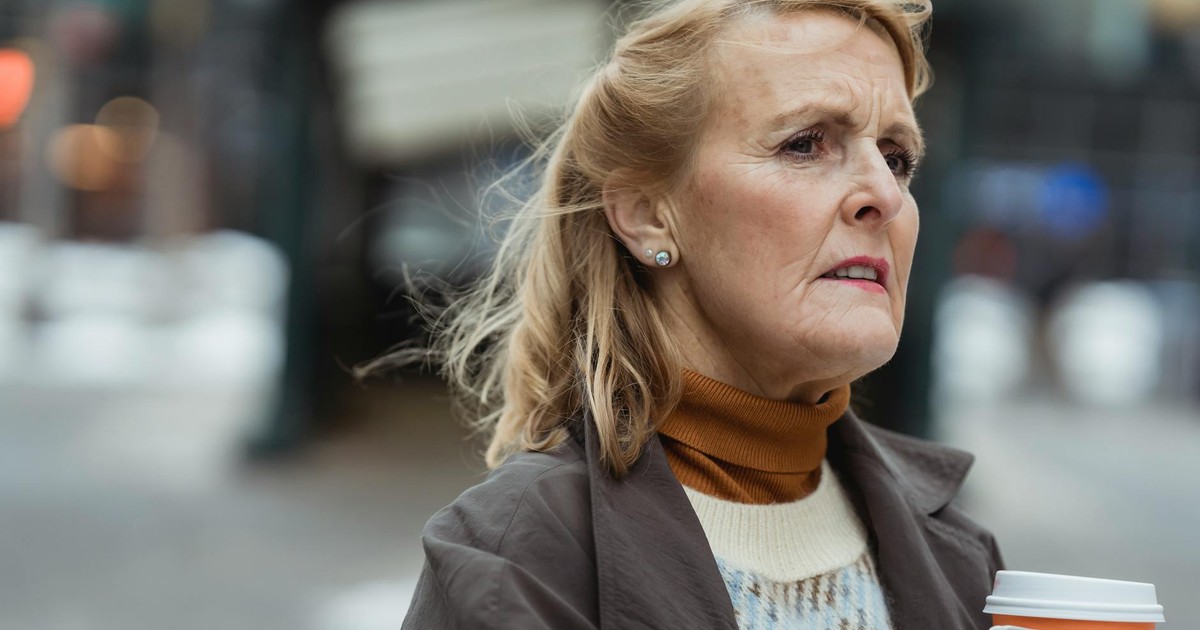

Most of what we think aging will feel like turns out to be wrong. Not catastrophically wrong, just quietly, stubbornly wrong in ways that only become obvious once you’ve actually lived through them. You imagined the hard part would be the body slowing down, or the shrinking social calendar, or the fact that you’re going to die eventually, which is not a small thing. And sure, all of that is real. But the part nobody really prepares you for isn’t the external stuff. It’s the internal realizations – the ones that arrive without warning, often in the middle of an otherwise ordinary afternoon, and rearrange how you understand yourself.
These realizations about aging don’t come from a book or a therapist or a well-meaning podcast. They come from experience. From having lived long enough to watch the gap close between who you thought you’d be and who you actually turned out to be. From realizing that some of the things you were bracing for aren’t as bad as you feared, and some of the things you never thought about at all are the ones that cost you.
There’s no such thing as aging gracefully, or at least not in any way that can be packaged into a list. This is just an honest accounting of what tends to hit people – hard, late, and with a specificity that makes you wonder how nobody mentioned it sooner.
1. Time really does speed up – and it’s not just a cliché

Everyone over 50 says it. Time flies. The years blur. You look at a photo from what feels like three years ago and it turns out to be fourteen. For most of your younger life, you probably heard this and figured it was just middle-aged people being dramatic. Then one day you blink and your decade is gone and you understand they were not being dramatic at all.
The reason isn’t mysterious, even if it feels like it should be. When you’re a child, every experience is new, and your brain stores rich, detailed memories because it has to encode everything from scratch. By the time you’re in your 50s and 60s, you have decades of established routines. The brain doesn’t bother to store what it already knows. Monday and Tuesday and the whole of March can pass without leaving much of an impression, because nothing about them required encoding. The result is that in memory, those weeks collapse to almost nothing.
The practical upshot is uncomfortable: if you want time to feel longer, you have to do more new things. Not bigger things, necessarily. A new walking route, a new skill, a conversation with someone you’ve never talked to before. The brain slows down and pays attention when it encounters something it hasn’t processed before, and that attention is what makes a week feel like a week rather than a smear.
2. The friends you expected to stay in your life have gone – and it’s not always dramatic
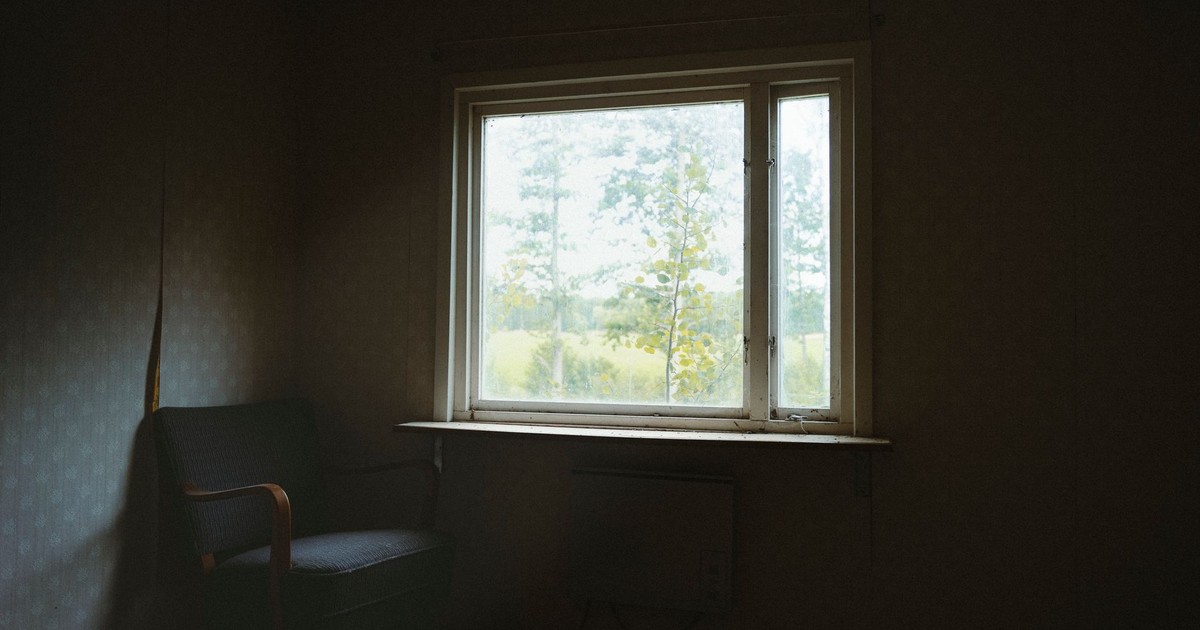
Nobody warns you that friendship loss in midlife and beyond is usually slow and undramatic. There’s rarely a fight. Nobody says goodbye. You just stop texting back with the same urgency, and then one of you moves, or retires, or gets sick, and six months later you realize the friendship has simply ended, not with a bang but with a trail of unanswered messages.
Research from Northwestern University, published in 2024, found that as people move through young adulthood into midlife, they tend to solidify their social networks and friendships – but that same process can make the social circle rigid and harder to maintain across major life transitions. The people you bonded with over shared circumstances – colleagues, school parents, neighbors – often don’t survive the loss of the circumstance that held you together.
What nobody tells you is how disorienting this is to grieve. You’re not crying at a funeral. You’re just sitting at your desk one afternoon realizing that the person you used to talk to every week now feels like a stranger, and you’re not quite sure when that happened. The realization that friendship requires maintenance, and that maintenance takes effort you may not have been supplying, tends to arrive a little too late.
3. Your relationship with your body becomes a negotiation

When you’re young, your body is mostly a vehicle. You push it, ignore it, abuse it with bad sleep and poor food and the general belief that you’ll sort it out eventually. Then at some point – often sometime in your 40s, sometimes later, sometimes shockingly earlier – the body starts talking back.
The negotiation isn’t the same for everyone. For some people it’s a chronic ache that becomes a background fact of life. For others it’s the first time a doctor mentions something and uses the phrase “at your age.” What they all share is the same basic shift: your body is no longer a given. It requires tending. What you eat, how you sleep, how much you move – all of it starts to matter in ways that are harder to ignore or defer.
The realization that lands hardest isn’t that the body declines. Everyone knows that intellectually. It’s that the decline is non-linear and personal. Your knees might be fine and your sleep might be wrecked. Your energy might be excellent and your memory occasionally unreliable. You don’t get to predict the exact form it takes, which means you can’t just follow someone else’s blueprint. You have to pay attention to the specific version of aging that is happening to you. That attentiveness, uncomfortable as it is, turns out to be one of the more useful things you can develop.
4. You stop being able to pretend that your parents are going to be fine

There’s a long phase of adult life when you know, technically, that your parents are aging, but you can still sort of hold it at arm’s length. They’re a little slower, sure. They call more. They need help with technology. But they’re basically fine, and you can proceed on that assumption most of the time.
Then something shifts, and you can’t anymore. It might be a fall, or a diagnosis, or a phone call that comes from a number you didn’t expect. Or it might just be the moment you look at one of them and realize, with sudden clarity, that they are old – genuinely old, in a way that can no longer be managed by describing them as “slowing down a little.” The person who seemed indestructible when you were seven is a person, with a body, and things are going to happen to that body.
This realization is one of the few that arrives with no upside, no silver lining, no practical framework for making it better. What it does do is change the terms of the relationship. Parents who were always the ones doing the worrying become the ones you worry about. The role reversal is gradual and disorienting and, for a lot of people, the first time they really understand what it means to be mortal, not in a philosophical sense but in the very specific sense of knowing someone they love is going to die.
5. Regret is not the simple thing you expected it to be

Most people assume regret is about the big things. The career path not taken. The relationship that ended badly. The city you left or stayed in. And yes, those regrets are real. But the realizations about aging that catch people most off-guard are the regrets about the ordinary things – the years spent anxious about things that never happened, the holidays you were half-present for because you were stressed about something that no longer matters, the weeks you blurred through because you were waiting for your real life to start.
The regret about the ordinary, unremarkable time you failed to actually inhabit is different from the regret about a specific decision. It doesn’t have a clear turning point. It doesn’t come with a lesson about what you should have done instead. It just arrives as a low, persistent awareness that a lot of life was going on while you were busy being elsewhere in your head.
The only productive move with this kind of regret is to let it redirect your attention to the present. Not in a motivational-poster way, but practically: the Tuesday you’re in right now is exactly the kind of day you’ll remember not paying attention to. That’s the lesson. Not a comfortable one, but a real one.
6. Solitude and loneliness are not the same thing – but one can slide into the other

Plenty of people discover, as they age, that they actually enjoy time alone in a way they didn’t when they were younger. The noise of social life that once felt necessary starts to feel like something that requires recovery. You stop feeling obligated to fill every weekend. You get better at your own company.
But there’s a version of that withdrawal that deserves watching, because solitude chosen is very different from isolation that accumulates by default. A 2025 study tracking adults aged 50 to 84 over a decade found that severe loneliness was associated with a 36% higher risk of dying before age 85. The study drew a dose-response relationship, meaning the more entrenched the loneliness, the higher the risk. This isn’t an argument for pretending to be more social than you want to be. It’s an argument for being honest about which one you’re actually experiencing.
The realization that gets people is how gradually one becomes the other. You’re not lonely when you turn down the party. You might not be lonely six months later. But somewhere along the line the social contacts have thinned and the world has narrowed, and by the time you notice, the habit of withdrawal has become the shape of your life. Keeping a few meaningful close relationships well-maintained is less about socializing for its own sake and more about leaving a door open that becomes harder to open the longer it stays shut.
7. The opinions of people you don’t respect stop mattering – and that’s a gift

This one takes a while. For most of your 20s and 30s, you’re managing other people’s perception of you with a degree of effort that, in hindsight, is exhausting to remember. You dress for the approval of people you barely like. You stay in jobs you hate partly because leaving would mean explaining yourself. You hold back your real opinions in rooms full of people whose judgment you don’t even particularly value.
Then at some point – for most people this starts to accelerate in the late 40s and 50s – the calculation changes. A 2025 Pew Research Center survey found that most Americans 65 and older rate their mental health as excellent or very good, and 66% say they feel optimistic about their life most of the time. That optimism has something to do with this particular shift: the pruning of people-pleasing that happens as you age, and the growing capacity to simply not care about the verdict of people who don’t matter to you.
The realization isn’t that other people stop mattering. It’s that a finer distinction emerges between the people whose judgment you actually trust and respect, and the much larger crowd whose approval you were pursuing out of habit or anxiety. Once you can see that distinction clearly, a significant amount of interior noise goes quiet.
8. Who you are and who you thought you’d be are two different people

At some point in early adulthood, most people carry a rough sketch of their future self. The version of you in your 40s or 50s who has figured things out, who lives in a certain kind of house, who has a certain kind of relationship, who has done the things you told yourself you would do. That future self is useful – it gives you something to work toward. But it also sets up a reckoning.
The reckoning doesn’t have to be devastating. Sometimes the gap between the person you planned to be and the person you actually became is interesting rather than painful. You ended up in a life that surprised you, or a relationship you couldn’t have predicted, or a version of yourself that is more specific and stranger and more your own than the generic future person you once imagined. Research published in JAMA Network Open found that adults with higher satisfaction with their own aging process showed reduced risk of depression and mortality, and were more likely to engage in physical activity – suggesting that how you frame the distance between expectation and reality has real health consequences.
The people who struggle most with this realization are the ones who hold the original sketch up against their actual life and only see the discrepancy. The ones who do better are not the ones who had smaller ambitions – they’re the ones who can look at what actually happened and find something worth claiming in it.
9. The hardest part isn’t being alone – it’s watching your world get smaller
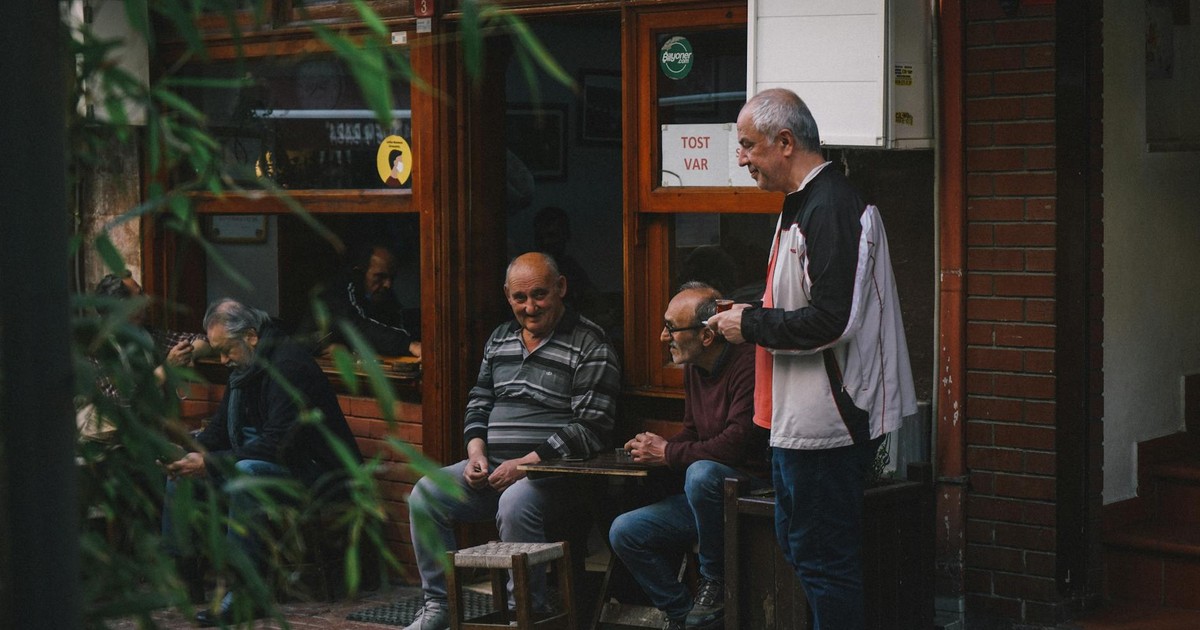
This is the realization that takes the longest to name, and often arrives without warning in a very ordinary moment. It might be the death of a contemporary, someone your age, someone who didn’t get the time they expected. Or it might be the first time you realize that the references you make to a younger colleague land as history rather than memory. Or the moment you notice that the neighborhood you grew up in has changed so completely that nothing anchors you to it anymore.
The smallness isn’t only social. It’s temporal, too. The future you once had an enormous amount of starts to feel finite in a very specific way. Not morbidly, necessarily, but concretely. Interestingly, the Pew Research Center found that older adults who have actually reached 65 and beyond are more confident and settled about aging than younger adults predicted they would feel – nearly half describe themselves as aging very or extremely well. The fear of the shrinking world, it turns out, is often worse in anticipation than in the living of it.
But the realization itself – that the world will get smaller and that you are already watching it happen – is still one that most people reach without preparation. The loss of a parent. The health shift that changes what you can do. The way the years start to contain fewer firsts. Each of those moments is its own small arrival, and none of them come with a map.
Read More: 11 reasons why life doesn’t really stop at a heartbeat
What to Do With All of This

The point of naming these realizations isn’t to make aging feel worse. Most of them, looked at squarely, are actually less terrifying than the vague dread that comes from not naming them at all. The realization that you’ve been performing for people whose opinion you don’t value is useful. The realization that time passes faster when your days are identical is actionable. The realization that solitude can drift into isolation without your noticing gives you something to watch for. Knowledge is almost always less frightening than the formless worry you carry around in its absence.
What’s harder is the category of realizations that don’t offer a next step. Your parents are aging. Some friendships have ended. The sketch of your future self is a draft that didn’t quite make it to publication. These aren’t problems to be solved – they’re facts to be absorbed, and absorbing them is slow, non-linear work. The most honest thing you can say is that it takes as long as it takes, that holding two contradictory feelings about the same reality is not a failure of processing, and that the people who seem most at peace with growing older are not the ones who have resolved any of it. They’re the ones who stopped waiting to.
Disclaimer: This information is not intended to be a substitute for professional medical advice, diagnosis, or treatment and is for information only. Always seek the advice of your physician or another qualified health provider with any questions about your medical condition and/or current medication. Do not disregard professional medical advice or delay seeking advice or treatment because of something you have read here.
AI Disclaimer: This article was created with the assistance of AI tools and reviewed by a human editor.