
Most of the $2 bills in circulation right now are worth exactly $2. Spend one at a coffee shop, get your change, move on. But somewhere in America, somebody is about to do exactly that with a bill that a serious collector would pay $4,500 for – or, in rare cases, considerably more. The gap between face value and collector value on rare $2 bills is one of the more quietly dramatic stories in American currency, and it’s entirely possible you’re holding one without knowing it.
The $2 bill has always occupied an odd corner of American life. The Bureau of Engraving and Printing still produces them, and there are well over a billion $2 notes in circulation today. The reason they seem scarce is that banks order them less frequently than $1 or $5 bills, so the average person encounters them less often. That unfamiliarity is what keeps people stuffing them in junk drawers, tucking them into birthday cards, or – crucially – spending them at face value without a second glance.
What actually separates a bill worth $2 from one worth thousands comes down to a handful of very specific details. Here are the seven signs your $2 bill belongs in a protective sleeve, not a cash register.
1. It Has a Red Seal
Flip over most modern $2 bills and you’ll find a green Treasury seal on the front. But some older bills carry a red seal instead, and that color difference is one of the most reliable indicators of collector value. One of the first things to check on any $2 bill is the color of the Treasury seal on the front. Red-seal $2 bills are no longer produced, so their supply only decreases as notes get damaged or lost.
The red-seal era covers several series, including the 1928, 1953, and 1963 issues. An uncirculated 1928 red seal $2 bill could be worth over $1,000, while a circulated version may only be worth $5 to $175. That’s a wide range, and where your bill falls within it depends on its condition. A 1928 note that’s been folded in half, faded, or worn at the corners isn’t going to fetch auction-house prices – but even a circulated red seal comfortably beats face value.
The 1953 red seal series is also worth checking carefully. The $2 U.S. Red Seal Note from 1953 to 1953-C is considered a rare small-denomination United States Note, highly collectible and increasingly scarce. Bills from that era were United States Notes rather than Federal Reserve Notes – a technical distinction that matters to serious collectors because it reflects an older monetary system. If you find a red seal in a grandfather’s desk or a childhood coin album, don’t spend it until you know what you have.
2. It’s a Star Note
Look carefully at the serial number on your $2 bill. If there’s a small star symbol (★) at the end of the serial number where you’d normally expect a letter, you’re holding a star note – and that’s significant. Star notes were printed as replacements for damaged sheets. They function as substitute bills printed to replace ones that were damaged or misprinted during production, and are marked with a ★ symbol in the serial number.
Because star notes are printed in much smaller quantities than standard runs, they’re inherently rarer. A circulated star note can sell for $10 to $50, while uncirculated star notes from 1953 have been seen going for up to $500 at smaller collector shows. The year and print run matter enormously here. A star note from a series where millions were printed is worth considerably less than one from a limited run in a specific Federal Reserve district.
Certain Federal Reserve Banks printed fewer $2 bills in specific years, making notes from those series much harder to find. A 1969 star note from the Atlanta or San Francisco district with a low serial number and an error could easily be worth over $100,000, and the rarest examples have been valued close to $290,000. That’s the extreme end of the spectrum, requiring a convergence of multiple rare features. But even a run-of-the-mill star note from a recent series will typically sell above face value to the right buyer.
3. It Has a Fancy or Rare Serial Number
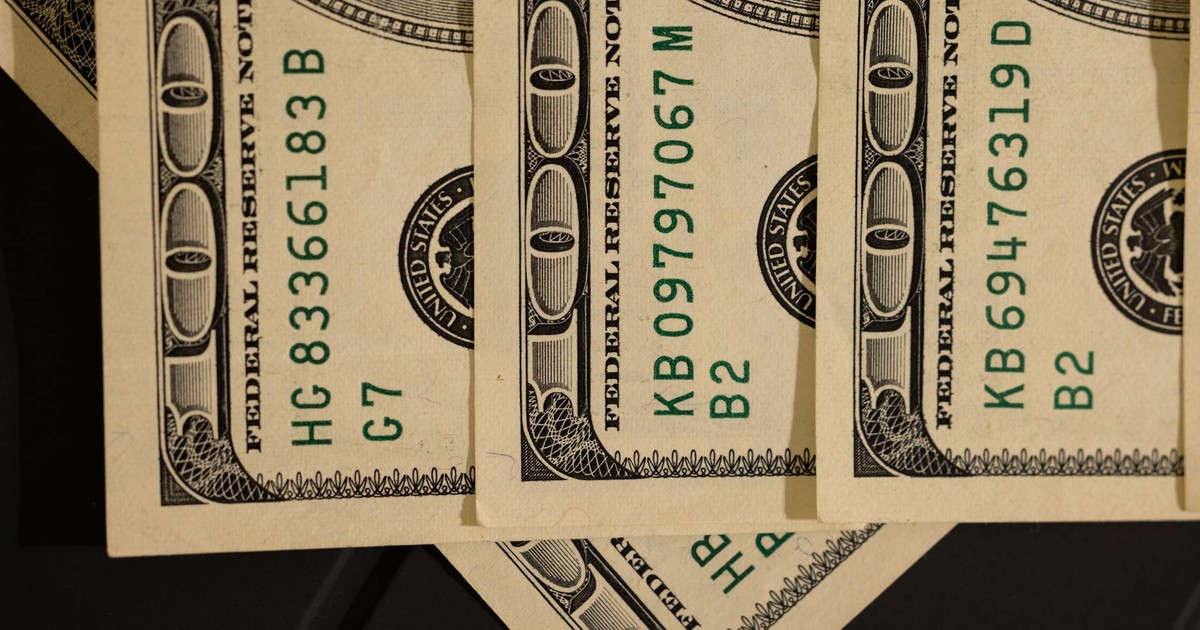
Serial numbers are where a lot of the excitement in rare $2 bill collecting lives, and the variety of patterns collectors prize is more extensive than most people realize. The broad category covering sought-after serial patterns is called “fancy serial numbers,” and it includes everything from mathematically elegant sequences to numbers that are simply striking to look at.
Among the most prized patterns are “ladder” serial numbers, which feature digits in sequential order, like 12345678 or 87654321. Finding a true ladder is exceptionally rare, making these notes highly desirable for serious collectors. Even a partial ladder, such as a sequence of four or five digits like 34567, can add a small premium to a bill’s value. A true ladder on a $2 bill in uncirculated condition can command hundreds of dollars at auction – not because the bill is old, but purely because of what the serial number looks like.
Other patterns collectors chase include “solid” numbers where all eight digits are the same (like 77777777), “radar” notes where the serial number reads the same forwards and backwards, and low serial numbers. A serial number like 00000001 to 00000009 is incredibly desirable to collectors. These “single-digit” notes are virtually unheard of in circulation and can command very high prices. If your $2 bill has a serial number that made you stop and look twice, trust that instinct and check it against a currency pricing guide before spending it.
4. It’s Uncirculated and Well-Preserved
Condition is one of the most powerful value multipliers in currency collecting, and it applies to $2 bills just as much as to rare coins or vintage baseball cards. The difference between an uncirculated bill and its circulated counterpart can be the difference between a curiosity and a serious collectible. Uncirculated bills have never been used in transactions, so they remain crisp, clean and free of folds or tears. They are far more valuable (and rare, especially the older they are) than circulated ones.
That premium compounds quickly when age enters the equation. Uncirculated or pristine bills from rare editions, such as the 1928 red seal and misprints, can fetch thousands, while circulated bills may still sell above face value depending on rarity. A bill that has been folded, rubber-banded, washed through a pocket, or stored loosely in a box will always sell for less than one that’s been kept flat in a protective sleeve from the day it was issued. The grade assigned by a professional currency grading service like PMG (Paper Money Guaranty) or PCGS Banknote makes a measurable difference in what buyers will pay – and what auction houses will accept.
For modern $2 bills, condition alone won’t make a standard note worth hundreds. But when condition combines with another feature on this list – a star note, a fancy serial, a rare series year – pristine preservation can dramatically increase the ceiling. An uncirculated 1976 $2 bill with a star note is worth considerably more than the exact same bill with a crease down the middle.
5. It’s a 1976 Bicentennial Issue With Special Features
The 1976 $2 bill holds a special place in American currency history. It was issued to celebrate the U.S. Bicentennial and reintroduced the denomination after it had been out of production for a decade, which meant people treated it more like a souvenir than spending money. Millions were saved unspent, which is actually part of what keeps most 1976 bills from being especially valuable on their own. But the right version of a 1976 bill is a different matter entirely.
The 1976 $2 bill was released to celebrate the U.S. bicentennial, and while most of them are only worth face value, some with special serial numbers, misprints, stamps or star notes can be worth $20 to $900. The postmarked versions are particularly interesting to collectors. Many people took their new 1976 Bicentennial $2 bills to the post office to have them stamped on the day of issue, April 13, 1976. While these postmarked bills are not official government issues, they have created a popular niche market. If you have a crisp 1976 note with a stamp, it could be worth $10 to $20.
A wave of excitement hit the world of paper money collectors in 2025 as star note misprints from the 1976 $2 series made headlines. These rare replacement notes, marked with a “★” symbol and featuring notable printing errors, became some of the most valuable and desirable collector items, with pristine examples fetching thousands of dollars at auctions and private sales. The 1976 issue is one where it genuinely pays to check every feature individually, because several different combinations can produce meaningful value.
6. It Has a Printing Error
Currency errors are exactly what they sound like: mistakes made during the production process that slipped through quality control and made it into circulation. While the government has a rigorous quality control process, mistakes occasionally happen. Bills with noticeable printing mistakes can be very valuable to collectors. These errors can include misaligned prints where the front and back are off-center, mismatched serial numbers, or “cutting errors” where part of an adjacent bill is visible.
The value of an error note rises with the drama and visibility of the mistake. A slightly off-center print is worth something; a note with a completely inverted back, a missing serial number, or a double impression is worth significantly more. Misprinted two dollar bills are especially popular with collectors. Two dollar bills are printed in smaller quantities than other denominations, which means there are fewer misprinted two dollar bills in existence than for other types of bills. That scarcity within a scarcity is what drives prices up.
You can spot valuable currency errors by looking closely at both sides under good light. Check whether the Treasury seal is where it should be, whether the serial numbers on both ends match, and whether the print appears sharp and properly aligned. An error that’s obvious to a casual glance is far more valuable than one requiring a magnifying glass to detect. If something looks genuinely wrong with your bill rather than just worn, that’s worth investigating before dismissing it.
7. It’s a Pre-1900 Large-Size Note
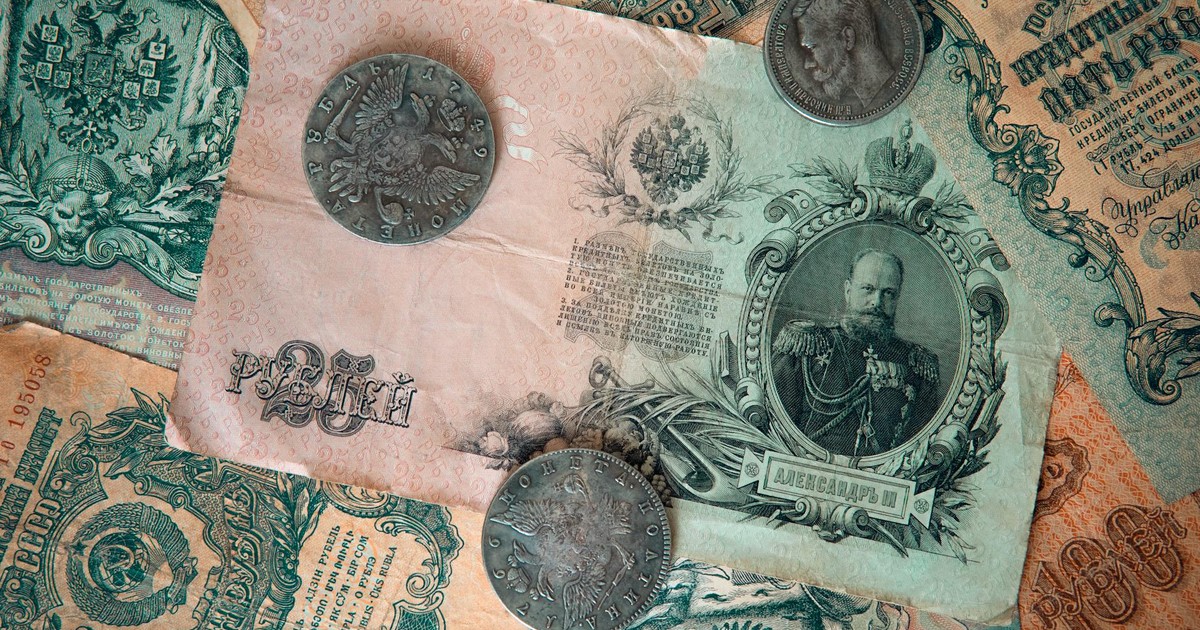
Notes printed before 1900 are a fundamentally different class of currency from modern bills – physically larger, printed using different techniques, and issued in far smaller quantities than anything produced in the 20th century. Many of them haven’t existed in large numbers for over a century, as notes get damaged, lost, or destroyed over time.
The 1896 “Educational” Silver Certificate, for example, is considered one of the most beautiful pieces of American paper currency ever produced and can sell for $15,000 or more in top condition. These large-format bills featured elaborate allegorical artwork across the entire face of the note – a level of design ambition that modern currency doesn’t come close to matching. Collectors prize them for historical significance and artistic craftsmanship as much as rarity.
Certain rare $2 bills can fetch $4,500 and up on the collectibles market, according to U.S. Currency Auctions. Just about all of the truly valuable ones were printed in the 19th century. But even bills printed within the last 30 years might be worth hundreds of dollars if you have the right one. If you come across a $2 bill that’s significantly larger than a modern note – roughly 7.5 by 3.5 inches compared to today’s 6.1 by 2.6 – you’re looking at a large-size note, and it needs to be properly evaluated before you do anything else with it.
What to Do If You Think You Have One
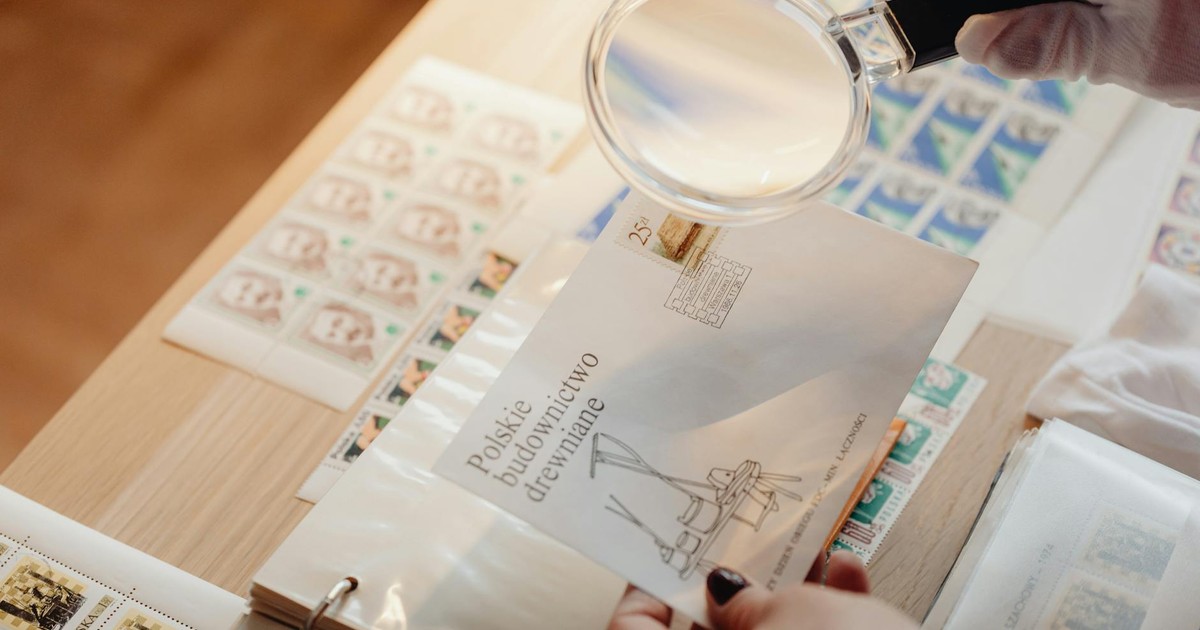
The first and most important move is to stop treating the bill like money. Put it flat in a clean, dry place away from other bills that might fold or crease it. Handling it repeatedly, folding it, or storing it loosely in a box will only reduce whatever value it has.
From there, do some basic research before paying anyone for an appraisal. The market for collectible $2 bills is quite active. Many $2 bills are traded via online marketplaces, including eBay, Heritage Auctions and currency dealer websites. Searching completed eBay sales for the specific series year, seal color, and any special features your bill has will give you a realistic baseline for what buyers are actually paying right now, not just asking. The gap between listed price and sold price in collector markets is often wide.
If the research suggests you have something genuinely valuable, professional grading is worth the investment. A grade from a recognized service like PMG locks in the condition at the time of submission and gives potential buyers confidence in what they’re getting. It also makes the bill significantly easier to sell at a fair price through an established auction house. Most bills tucked away in drawers won’t clear more than face value, and that’s fine. But the ones that do tend to reward the people who bothered to look closely.
That said, it’s worth keeping perspective about the whole enterprise. The vast majority of $2 bills you’ll ever encounter – the one in your wallet right now, the one your aunt gave you for your birthday in 1994, the one the cashier handed back as change last week – are worth $2. What makes the few genuinely valuable ones interesting isn’t just the money. It’s the fact that American currency has a longer, stranger, and more varied history than most people ever think to look at. A pre-1900 large-size note isn’t just a collectible. It’s a piece of paper that was printed when the Civil War was still a living memory, and somehow it survived long enough for you to hold it.
So the next time a $2 bill crosses your path, take five seconds before spending it. Check the seal color. Glance at the serial number. See whether there’s a star where a letter should be. You’re almost certainly holding something worth exactly $2. But occasionally, very occasionally, you’re holding something worth a great deal more.
Disclaimer: This information is not intended to be a substitute for professional medical advice, diagnosis, or treatment and is for information only. Always seek the advice of your physician or another qualified health provider with any questions about your medical condition and/or current medication. Do not disregard professional medical advice or delay seeking advice or treatment because of something you have read here.
AI Disclaimer: This article was created with the assistance of AI tools and reviewed by a human editor.