Some people spend years being the best in the room without anyone knowing their name. That’s not a complaint – it’s just how it goes in the music industry, where proximity to the spotlight and ownership of it are two entirely different things. The artists collected here all passed through that first stage, singing in someone else’s shadow, arranging someone else’s harmonies, making someone else’s record sound the way it did. Then they stepped out from behind the microphone and became, in several cases, the biggest names in pop music history.
The gap between where they started and where they ended up is the interesting part.
And in almost every case, the person they once stood behind was no small act. These weren’t obscure lounge singers or regional acts. The backup work was for some of the most significant names in the industry, which makes what followed all the more striking.
Whitney Houston and Chaka Khan
Houston’s professional career began when she joined her mother’s band as a background singer at fourteen, while Cissy performed at Manhattan cabaret clubs. She went on to work as a session vocalist backing up artists including Michael Zager, the Neville Brothers, Chaka Khan, and Lou Rawls. In 1978, at the age of 15, Whitney Houston was invited to sing background for the R&B singer Yvette Marie Stevens, better known as Chaka Khan.
Chaka Khan herself recalled it this way: “I had been working with Cissy for quite a while as a background singer and one day we were in the studio, and she said, ‘You know, I have a daughter who can sing.'” She told her to bring her daughter to the studio. “Whitney Houston was amazing, just amazing.” Khan, who had been a musical inspiration to Houston, went on to become her mentor and a lifelong friend.
According to ABC News, the connection between Houston and Khan was one of the defining relationships of Houston’s early career. One correction worth making, because the story has been told imprecisely for decades: contrary to popular belief, Houston did not perform backing vocals on Khan’s original 1978 version of “I’m Every Woman.” Chaka Khan confirmed this in an interview with Lester Holt in 2012. Houston did contribute background vocals to two Khan songs off her album Naughty during her early career as a session vocalist.
What happened next is one of the most documented ascents in pop music history. Houston signed to Arista Records at the age of 19. Her first two studio albums, Whitney Houston (1985) and Whitney (1987), topped the Billboard 200 for 14 and 11 weeks respectively. The former remains the best-selling debut album by a solo artist, while the latter made her the first woman to debut atop the US and UK charts simultaneously. She became the only artist to have seven consecutive number-one singles on the Billboard Hot 100, from “Saving All My Love for You” in 1985 to “Where Do Broken Hearts Go” in 1988. And when she covered “I’m Every Woman” for The Bodyguard soundtrack in 1992, she proclaimed Khan’s name towards the end of the song as a tribute. The woman who once stood behind Chaka Khan in a studio was paying homage on one of the best-selling soundtrack albums ever made.
Luther Vandross and David Bowie
Luther Vandross was a silky-voiced tenor who, by the time he was 24, had already become the go-to backup singer for Donny Hathaway and Roberta Flack. But it was a chance encounter in a Philadelphia studio in 1974 that changed the trajectory of his entire life. A childhood friend, guitarist Carlos Alomar, had landed a job backing David Bowie and invited Vandross to a recording session during the making of Young Americans. During the session, Bowie overheard Vandross suggesting background vocal arrangement ideas to Alomar. Bowie loved them and immediately hired Vandross to sing and arrange backup vocals for the album.
The collaboration went further than singing. The gospel and soul backing vocal arrangements in the refrains of the title track were constructed by Vandross with help from Robin Clark, and eagerly incorporated by Bowie. The two worked together so well that they also collaborated on the song “Fascination,” and after the album was released, Vandross sang backup on Bowie’s tour.
Vandross was direct about what those years gave him. Smooth Radio reported his own words: “No, David Bowie started my career. Flat out. Absolutely. I had never been out of New York City before Bowie took me on the road with him. I was still living with my mother before Bowie took me out on the road with him.”
While on tour with Bowie, Vandross met Bette Midler, who asked him to sing background vocals on her 1976 album Songs for the New Depression and on her corresponding tour. After working with these two performers, Vandross’ services were in high demand. He went on to sing backup on songs by Barbra Streisand, Chic, J. Geils Band, and Carly Simon. The session work kept multiplying. By the late 1970s, Vandross was one of the most recorded voices in New York, even if almost no one knew his name yet.
Vandross finally achieved stardom in his own right when his 1981 album Never Too Much sold over two million copies and became the first of seven number-one albums on the R&B charts. The boy from the Bronx who had once talked his way into a David Bowie session by offering vocal arrangement ideas became one of the defining voices of 1980s soul.
Darlene Love and Phil Spector
Darlene Love’s story is the kind that makes you reconsider everything you think you know about who actually makes the music you love. In 1962, the Blossoms were hired to sing on a session by producer Phil Spector. His girl group, the Crystals, could not make it to Los Angeles in time for the session, so Love was paid $5,000 to sing lead on “He’s a Rebel.” The single, credited to the Crystals, was hurriedly released by Spector on Philles Records to get his version of the Gene Pitney song to market before a competing recording.
The single reached number one on the Billboard Hot 100 in November 1962. Love’s voice was on a number-one record. Her name was not. As a member of the Blossoms, Love also contributed backing vocals behind many of the biggest hits of the 1960s, including the Ronettes’ “Be My Baby,” Shelley Fabares’ “Johnny Angel,” and the Crystals’ “Da Doo Ron Ron.”
Rolling Stone’s account of what followed is not easy reading. She struggled to launch a solo career but had little success, and in the early 1980s, her career hit an all-time low: she was forced to clean houses to help support her family. Spector, using his control of the copyrights, effectively blocked Love from singing the songs on which she’d built her career. The same set of lungs that Spector had used to build his Wall of Sound empire were, at one point, scrubbing floors in someone else’s home.
In 2011, Darlene Love was inducted into the Rock and Roll Hall of Fame, acknowledging her significant contributions to the music industry. Her story was also featured in the Oscar-winning documentary 20 Feet from Stardom (2013), which did for backup singers what decades of music journalism had failed to do: it made the people behind the hit records impossible to ignore.
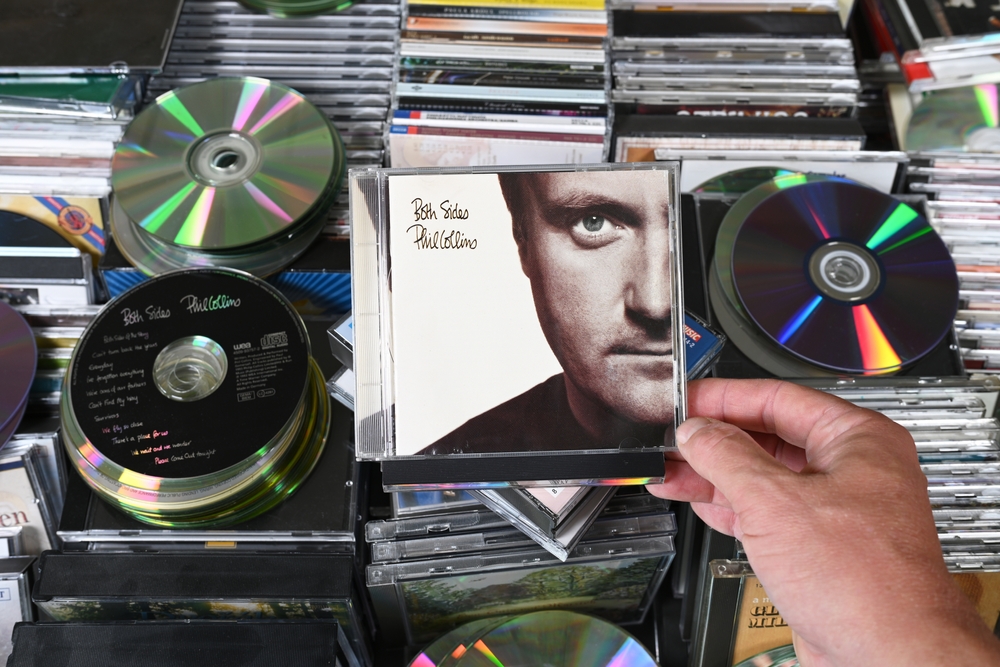
Phil Collins and Genesis
Phil Collins’ path from background to foreground is one of rock music’s most unlikely success stories, made more unlikely by the fact that it happened twice. His first big break came in 1970 when he answered a newspaper advertisement from a Surrey band named Genesis that needed a drummer and backup vocalist. The role was clearly defined: Collins provided rhythm and harmonies from behind his kit, while Peter Gabriel handled the mythology upfront, the elaborate costumes, the theatrical stage narratives, the whole spectacle that made Genesis famous.
In 1975, Collins became the face of Genesis when Gabriel left the band to pursue a solo career. The group had auditioned some 400 singers to replace their frontman before turning inward and handing the baton to Collins. A drummer stepping out from behind his kit to front a progressive rock band was not, to put it gently, the obvious call. Under his direction, the band slowly developed a more mainstream sound marked by a host of hit singles and the successful albums Duke (1980), Abacab (1981), and Invisible Touch (1986).
According to Britannica, what followed in his solo career was remarkable by any measure. Between 1984 and 1990, Collins released 13 US Top Ten hits, including “In the Air Tonight,” “You Can’t Hurry Love,” and “I Don’t Care Anymore.” He was the only artist among more than 70 acts to play both stages of Live Aid on the same day in 1985, and he won multiple Grammy Awards throughout his career, plus an Academy Award for Best Original Song for “You’ll Be in My Heart” in 1999. The man who started out answering a classified ad for a drummer and backup vocalist had, within a decade and a half, become one of the best-selling solo artists in history.
Mariah Carey and Brenda K. Starr
The story of how Mariah Carey got her first record deal is largely the story of another singer being too generous for her own immediate good. During the late 1980s, Mariah Carey sang background vocals for Brenda K. Starr, and Starr helped Carey secure a recording contract by giving a demo tape of Carey’s to Columbia Records executive Tommy Mottola at a party.
In her memoir, Mariah Carey reminisced about her time as a background singer for Brenda K. Starr during the height of “I Still Believe”‘s success. Mariah often provided backing vocals for the song during live performances. The two women grew close during those touring years. Carey later described the experience in vivid terms: “Traveling with Brenda, I was a young, struggling artist with no means, and she took me under her wing with such kindness. I auditioned to be her backup singer, and she not only hired me but also provided me with clothes and food, taking care of me like a big sister.”
The act of handing over that demo tape is one of the defining moments of 1990s pop music. When selecting tracks for her inaugural compilation album “#1’s,” Mariah chose to cover “I Still Believe” as a tribute to Brenda K. Starr. Wikipedia’s entry on Brenda K. Starr notes that Starr’s pivotal role in jump-starting Carey’s career, notably by presenting her demo tape to Mottola, who subsequently signed Carey, deeply influenced that decision. Carey’s cover of “I Still Believe” peaked at number four on the Billboard Hot 100 and was certified platinum by the RIAA.
Starr’s own career took a different route. She learned Spanish to help rejuvenate her career, successfully reinventing herself as a salsa, tropical, and Latin pop artist. Mariah Carey paid homage to her, acknowledging Brenda as one of her mentors on the mega-selling video Mariah Carey: Around The World. The acknowledgment was sincere and well-documented. The gap between their levels of global fame was, by then, enormous. And Starr, by most accounts, seems to have made peace with it.
Read More: 11 Signs Your Mind Works on a Deeper Level Than Most
What the Spotlight Misses
The thread running through all five of these stories isn’t just talent, though obviously these were not ordinary voices. What connects them is patience, proximity, and a particular kind of professional invisibility that the music industry imposes on people who haven’t yet been given a name. Whitney Houston learned studio discipline watching her mother perform in cabarets. Luther Vandross learned how arrangements could transform a record while standing in David Bowie’s sessions. Darlene Love discovered what her voice could carry in rooms full of musicians who needed exactly what she had. Mariah Carey found out what it meant to have an advocate in an industry that offers very few of them. Phil Collins spent five years behind a drum kit, harmonizing on other people’s songs, before reluctantly accepting that he might be the right person to sing them himself.
None of these careers followed a straight line from obscurity to fame. All of them passed through a period of being useful to someone else first, being essential to someone else’s success before their own arrived. That’s not a detour. For most of them, it was the education. Darlene Love cleaned houses in the 1980s while the songs she’d made famous kept selling under someone else’s name. Phil Collins sat behind a drum kit for five years while another man wore the costumes. Luther Vandross arranged the harmonies that made other people’s records into classics. The music industry is very good at making that kind of contribution invisible, and these five careers are as good a rebuttal as any.
The backup mic has produced more careers than the music industry would like to acknowledge. The next time a name takes the stage, it’s worth wondering who’s standing behind them, and what they’re planning next.
AI Disclaimer: This article was created with the assistance of AI tools and reviewed by a human editor.