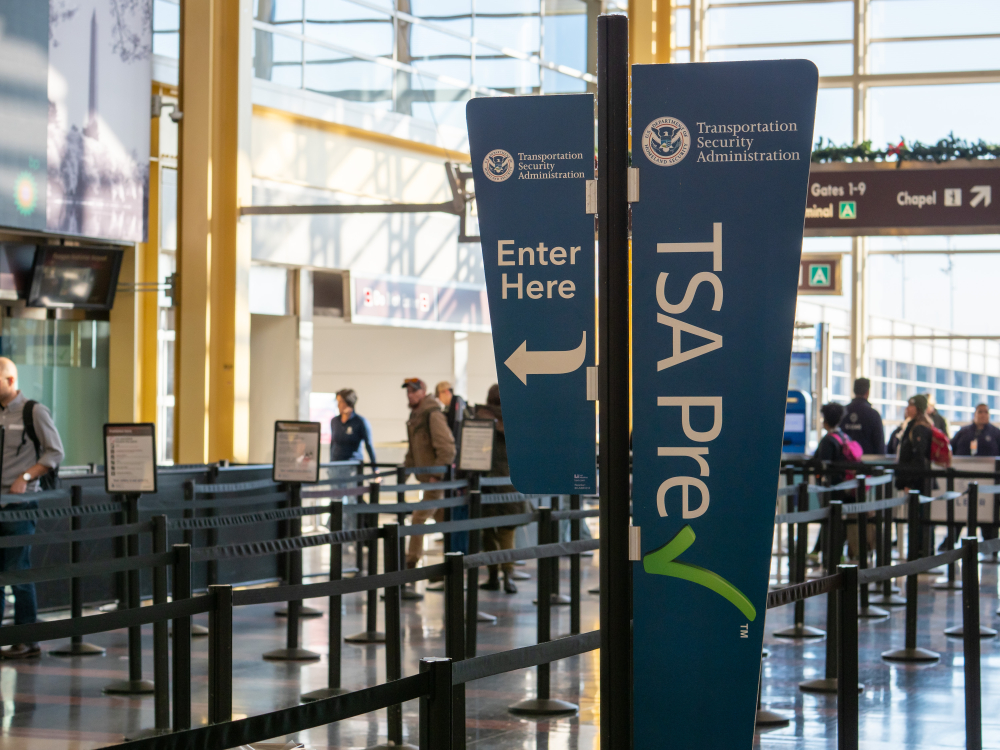

Airport security isn’t usually something you think about until you’re standing in a line that hasn’t moved in twenty minutes, watching someone’s carry-on get flagged for the third time, wondering if you’re going to make your flight. It’s one of those systems that most of us interact with regularly and think about almost never, right up until the moment it stops working. And after the chaos at American airports earlier this year, it stopped working in a very visible way.
What’s emerging from the fallout is something the TSA is calling TSA Gold+, and the name sounds like a loyalty program but it isn’t. It’s actually a fundamental rethinking of who runs airport security in the United States, who owns the technology doing the screening, and what happens to your checkpoint experience the next time Congress can’t agree on a budget. Whether that sounds reassuring or alarming probably depends on how much faith you have in private contractors to keep the skies safe.
Here’s what we actually know.
The Transportation Security Administration launched TSA Gold+ this week, expanding a decades-old program that already permits some airports to use private contractors to conduct screenings instead of federal TSA officers.
Under TSA Gold+, private companies would play a much larger role in airport security than they have in decades. Despite a name that echoes premium consumer memberships, TSA Gold+ is not a program directed toward travelers looking to expedite or otherwise ease their passage through airport security. It’s a public-private partnership that airports can choose to join, or not.
The TSA hosted officials from airports and security contractors at an “industry day” at its Springfield, Va., headquarters, as it looks to develop TSA Gold+, a public-private program that the agency calls “transformative.” The agency is billing the program as an update to the Screening Partnership Program, or SPP, in which 20 U.S. airports currently use private security screeners rather than federal workers.
What TSA Gold+ Actually Does
The program builds on the TSA’s existing Screening Partnership Program, under which private companies currently handle passenger and baggage screening at 20 airports nationwide. But while in that model the TSA has maintained operational authority and provided screening equipment, Gold+ would see private partners take on a broader role, including responsibility for managing equipment and introducing new technologies.
That’s the key shift. Under the existing Screening Partnership Program, TSA owns the screening equipment while private companies provide the workforce. Under Gold+, the contractor would handle both, including procurement, deployment, technology upgrades, and ongoing maintenance, while TSA continues setting security standards and maintaining regulatory oversight.
As NPR reported, a TSA spokesperson described it as: “the next evolution of the Screening Partnership Program (SPP), TSA Gold+ is a transformative upgrade to offer airports the opportunity to ‘opt in’ to a public-private screening model tailored to their unique needs, ensuring continuity and operational stability even during federal government shutdowns.”
The agency says airports that opt into the program would be able to tailor security systems for their facility, and avoid the TSA staffing shortages that became a public headache during the recent government shutdown over Homeland Security funding. It also says the program would bring “the latest technology” such as AI tools to airport screening operations, to increase capacity and cut wait times.
Under the program, “industry partners can manage equipment and introduce innovations, while travelers enjoy a smooth, predictable, and bespoke experience,” the TSA said as it unveiled TSA Gold+. The financial muscle, in other words, comes from the private sector rather than the federal budget.
The Crisis That Made This Happen
To understand why TSA Gold+ exists, you have to go back to the early months of 2026. The Department of Homeland Security had been shut down since mid-February, and the resulting lapse in paychecks prompted many TSA officers not to come to work, causing several weeks of major disruptions at multiple US airports.
The numbers were stark. In March, the weeks-long standoff in Congress caused security lines at some airports to exceed four hours, the longest in the TSA’s nearly 25-year history, as officers called out in higher numbers after not receiving a paycheck for weeks. CNN reported that more than 838 TSA officers quit since mid-February, according to TSA data.
Acting TSA Administrator Ha Nguyen McNeill told Congress in testimony on TSA.gov that “TSA employees have already worked 87 days without getting paid in FY 2026, and by this Friday, March 27, we will be at nearly $1 billion in payroll that has not been paid in a timely manner.” TSA employees work at over 430 commercial airports, living within communities, not getting paid for performing incredibly challenging and taxing jobs.
In her testimony, McNeill made the case that the existing model was structurally fragile and pointed to the Screening Partnership Program as a way of insulating airport security from legislative gridlock, noting that private screeners under SPP continued receiving pay throughout the shutdown because their contracts operate outside the congressional appropriations process.
Unlike the 20 US airports with private security services operating under TSA supervision, Atlanta was crippled by the record government shutdown. Over a third of TSA agents were missing work when their pay was suspended. Atlanta officials cited the uninterrupted operations at San Francisco International Airport as a vivid example of what private screening staff can offer during a federal funding lapse.
What’s Already Happening in Atlanta
The Atlanta story is worth watching closely, because it signals where this is going at a larger scale. The Atlanta City Council approved a resolution requesting a comprehensive study to evaluate switching Hartsfield-Jackson Atlanta International Airport security operations from federal workers to private contractors. The decision launches a formal assessment of the world’s busiest airport joining the federal Screening Partnership Program.
The Atlanta City Council voted 11-1 in favor of launching the study, where over a third of TSA agents walked out during the shutdown. An unusually decisive vote for a city not known for quick consensus on anything involving infrastructure.
Council sponsor Byron Amos framed it plainly: “This feasibility study is only asking about what it would look like if we can better serve grandmothers standing in line all day long because our federal government can’t get its act together to keep our TSA workers employed.”
Under the federal law that governs the SPP, the compensation, wages, and health benefits may not be less than what the federal agents currently receive if offered new positions. Hartsfield-Jackson has a TSA workforce estimated to cost between $140 million and $240 million annually to operate, which makes any transition a significant labor question, not just a security or logistics one.
There are also major obstacles. Atlanta Hartsfield is classified as a ‘Category X’ airport, which is the highest risk security category. Until now, no airport classed as Category X has transitioned to private security screening under the SPP program. That means there’s no direct comparison to draw on, no other airport this size that has already run this experiment.
The Opposition, and Why It’s Not Trivial
Not everyone is applauding. The pushback comes from both a predictable place and some less expected ones. Everett Kelley, president of the American Federation of Government Employees union, which represents TSA officers, said he opposes further privatization, warning that it would hamper accountability and transparency. Under the new program, Kelley said, contract workers would earn less than TSA officers. He added that the government would be “ceding direct operational control of the most sensitive technology in the aviation security enterprise to private vendors.”
The union’s concern about wages is pointed. If the incentive for private companies to win these contracts is profit, there’s a real question about where that margin gets found. Efficiency gains from better technology are one answer. Lower labor costs are another, and that’s not an abstract worry when you’re talking about the people responsible for keeping weapons off aircraft.
Calls for privatizing airport security screening have come from President Trump and Republicans in Congress, echoing a recommendation in the conservatives’ Project 2025 handbook for a second Trump term. The White House budget released last month promises to save some $52 million by privatizing airport screeners and requiring small airports to enroll in the SPP.
Officials at a hearing urged lawmakers to preserve airports’ ability to choose. There are also signs of bipartisan interest in some level of private control over airport security, as seen in Atlanta. Rep. Andrew Garbarino, chair of the House Committee on Homeland Security, touted that bipartisan interest during a hearing on TSA Modernization.
The bipartisan thread matters. This isn’t a program that will live or die based purely on who controls Washington. Airport executives who lived through the shutdown chaos have their own incentives to want a more resilient system, whatever their politics.
What It Actually Means If You’re a Traveler
If your airport opts into TSA Gold+, the honest answer for most people is: you probably won’t notice immediately. Under the program, airports can choose to partner with private security contractors to manage more of their screening operations, including staffing and certain screening technologies, while the TSA continues to oversee compliance with federal safety requirements. Security rules remain the same. Identification requirements remain the same. TSA PreCheck and other expedited screening programs will continue to operate as separate systems.
Travelers at SPP or Gold+ airports might notice different uniforms, but the screening process itself should feel largely similar. Where it gets more interesting, and more consequential, is over time. The agency also said the program could bring “the latest technology” to airports, including artificial intelligence tools, to help increase capacity and reduce wait times, though it did not detail how those gains would be achieved.
Airports currently using the private Screening Partnership Program range from San Francisco and Kansas City to Sarasota, Fla., and Atlantic City, N.J., along with smaller facilities in Montana, Wyoming, and other states. That means the template is already running at airports many Americans travel through regularly, without knowing it. No airports have publicly announced plans to join TSA Gold+ yet, though the Atlanta feasibility study and the industry day in Springfield suggest that won’t be the case for long.
Read More: 13 Unwritten Flying Rules No One Tells You, But Every Traveler Should Know
What This Actually Means
Here’s what the TSA Gold+ rollout doesn’t resolve, and what travelers would be reasonable to wonder about. Shifting equipment ownership to private contractors means the technology in your checkpoint, the scanners reading your bag, the AI flagging anomalies, will be owned and maintained by companies with shareholders and profit targets. Whether that creates better technology or more cutting corners is genuinely unknown. The TSA’s promise of outcome-based oversight is only as strong as the oversight itself, and the history of federal contractor accountability gives reasonable people pause.
The shutdown crisis gave real urgency to a long-running policy debate. Private screeners kept working when federal ones couldn’t pay their rent. That is not a small thing. But the argument that private is therefore better, in every dimension and in perpetuity, requires a level of faith in market incentives that airport security probably shouldn’t run on alone.
What you can take away practically: if you’re flying through a major hub in the next year or two, the checkpoint experience will likely look the same. What’s changing is who’s responsible behind the scenes and how quickly new technology can be deployed. If TSA Gold+ delivers genuinely faster lines and more modern screening tools, travelers will feel the benefit without ever seeing the contract that made it happen. If it doesn’t, the argument for it collapses rather quickly, because shorter security lines were the whole point.
For now, keep your liquids in a clear bag, know your REAL ID status before you fly, and know that TSA PreCheck remains a separate program that isn’t going anywhere. The people checking your passport may eventually wear a different uniform. Whether that makes flying better or just cheaper for someone else is the question still being worked out.
AI Disclaimer: This article was created with the assistance of AI tools and reviewed by a human editor.