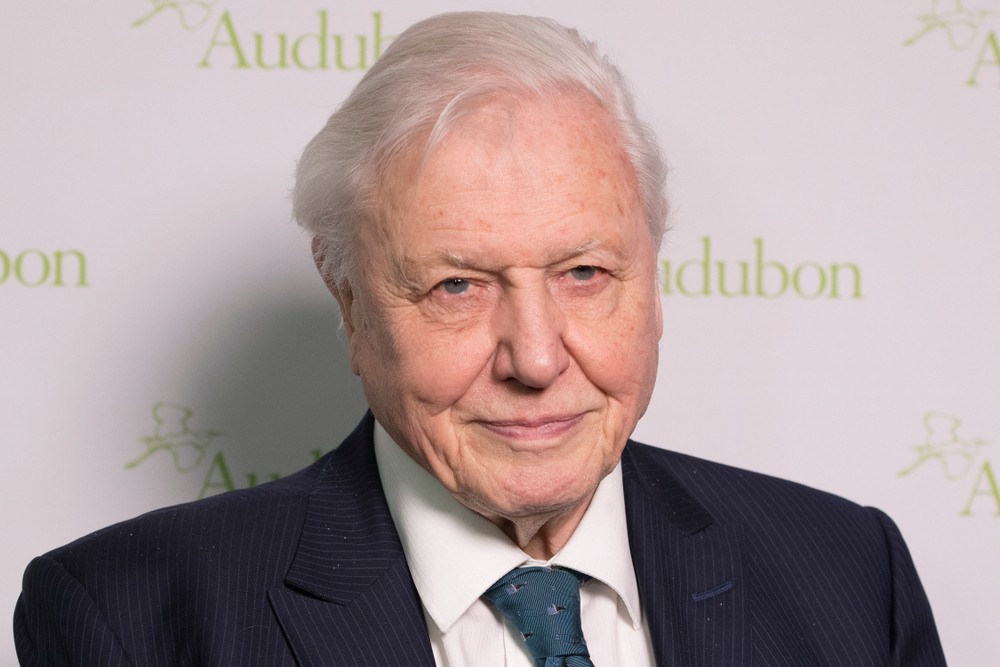

Some of the most anticipated television of the year was announced not with a trailer, not with a press release, but with a birthday. On May 8, 2026, as the world gathered to celebrate Sir David Attenborough turning 100, the BBC slipped in a piece of news that felt entirely fitting for the occasion: he would be returning to narrate Blue Planet III. The announcement landed with the quiet inevitability of something that was always going to happen, even if no one quite dared assume it.
Attenborough’s 100th birthday was marked by a gala concert at London’s Royal Albert Hall, which he attended alongside Prince William. The celebration was broadcast as a 90-minute BBC One program, with tributes from Hans Zimmer, Phoebe Waller-Bridge, and Camila Cabello, among others. And somewhere in the middle of all of it, the BBC confirmed what audiences had been quietly hoping for. The man who has narrated wildlife television for nearly eight decades wasn’t done yet.
For anyone who grew up watching Attenborough’s documentaries, there’s something almost difficult to hold in mind about this moment. A century of life. More than 70 years on television. A voice so familiar it sounds like home. And he’s still recording voiceovers. If you need a definition of the word “vocation,” that’s probably it.
A Franchise That Changed the Way We See the Ocean
The Blue Planet, a co-production between the BBC Natural History Unit and the Discovery Channel, premiered in the UK in September 2001. Described at the time as “the first ever comprehensive series on the natural history of the world’s oceans,” each of the eight 50-minute episodes examined a different aspect of marine life, and much of what viewers saw had never been captured on film before. The series went on to win multiple Emmy and BAFTA TV awards for its music and cinematography.
Then came Blue Planet II in 2017, and the cultural impact was harder to measure in awards. The sequel aired on BBC One to huge acclaim, registering the highest viewing figures of any television program in the UK that year, and brought serious attention to marine plastic pollution. The word “phenomenon” gets overused, but the show Blue Planet earned it. In the UK alone it was watched by 750 million people globally, having been exported to 30 other countries around the world. Of people surveyed in the UK, 88% said they had changed their behavior since watching, and 60% more people reported using reusable water bottles than they had in 2017.
The picture on behavior change is genuinely complicated, though. Research from Imperial College London and the University of Oxford found that while watching Blue Planet II increased environmental awareness in a group of volunteers, this did not translate into choosing to use fewer single-use plastics in practice. The same researchers noted, however, that the series may have had a wider impact by increasing conversations around ocean plastic pollution, “allowing the topic to become more politically palatable.” Whether it changed what people put in their shopping baskets is debatable. Whether it changed what politicians felt they had to talk about is less so.
What Blue Planet III Is Actually About
Blue Planet III will consist of six hour-long episodes, with filming taking four years. BBC Specialist Factual confirmed that the series is a BBC Studios Natural History Unit production in partnership with The Open University for BBC One, iPlayer, and BBC AMERICA, co-produced with ZDF and France Télévisions in association with Skai Greece.
Where Blue Planet II exposed the threats to the world’s oceans, Blue Planet III will explore stories of adaptation and resilience in this changing world, along with stories of hope and recovery. The series will focus on five key underwater habitats: Tropical Seas, Open Ocean, Seasonal Seas, Polar Waters, and The Deep. The sixth and final episode, titled Future Seas, will explore what we need to do to protect the world’s oceans going forward.
That last episode is the one worth watching for. The franchise has moved, over the course of two series, from wonder to warning. This time, the promise is something closer to honest reckoning: not just what is wrong, but where recovery is already happening. Blue Planet III will expose new and emerging pressures on the marine world, but will also highlight what executive producer Elizabeth White describes as “powerful positive stories of recovery.”
The Technology Behind the Footage
It is a quarter of a century since viewers first immersed themselves in the original Blue Planet, and a decade since its sequel. Blue Planet III has followed a four-year production cycle that has married cutting-edge camera technology with the latest developments in marine science.
Some of the gear involved gives a sense of how far underwater filmmaking has come. The production team used a new generation of camera technology, including splash drones, long-term remote underwater cameras, and a “mini dome,” to capture behaviors previously impossible to film or only recently discovered. The mini dome, in particular, allows cameras to sit at the waterline and film simultaneously above and below the surface, a shot type that didn’t exist in the original series’ toolkit. Splash drones follow marine animals at the surface from the air, capturing angles that would once have required a full helicopter rig.
The series was commissioned and first announced by the BBC in 2022, and by the time filming wrapped, it had been pre-ordered by broadcasters in Australia, Brazil, Canada, China, Denmark, New Zealand, and Spain. That kind of international interest, before a single episode has aired, tells you something about how much the Blue Planet brand still means to broadcasters and audiences worldwide.
A Hundred Years, and Still Recording
Born in 1926 in suburban London, Attenborough collected fossils as a child, studied zoology at Cambridge, and was drafted into the Royal Navy in 1947. His broadcasting career began in the early 1950s, and he has been a near-constant presence on British television screens ever since.
Life on Earth, released in 1979, alone has been watched by 500 million people worldwide, while dozens of documentaries and associated books have made him a household name. The series took three years to film and visited 40 countries. It was a gamble at a time when color television had only just arrived in most British living rooms, and it paid off on a scale no one fully anticipated.
What makes his continued work at 100 remarkable isn’t the milestone itself, it’s the consistency of engagement. Well into his nineties, he used his 2025 film Ocean to condemn the industrial fishing methods of wealthy nations, which he called “modern colonialism at sea.” He didn’t soften his message as he aged; if anything, the language got sharper. In Wild London, broadcast in early 2026, he turned his attention to the wildlife of the British capital, marveling at foxes, beavers, hedgehogs, and harvest mice in his own birthplace.
Jack Bootle, BBC Head of Specialist Factual Commissioning, said he was “thrilled” that Attenborough was returning, adding that “his extraordinary talent for storytelling has shaped the way generations of audiences understand and connect with the natural world.” That’s not flattery for a press release. It’s a plain description of what has happened across several decades of television.
British universities reported an increase in applications for marine biology courses following Blue Planet II, a detail that rarely makes the headlines but probably should. A television series that redirects a cohort of young scientists toward the ocean is doing something the educational system struggled to do on its own.
What to Make of This
Blue Planet III is expected to arrive toward the end of 2026 on BBC One and iPlayer, and the anticipation already feels different from most television launches. It’s not really about the drama of what new creature will be discovered, though there will almost certainly be something extraordinary in there. It’s about what the series chooses to do with its final episode, the one that looks forward rather than inward.
The first Blue Planet was about wonder. The second was about alarm. If this third installment genuinely delivers on the promise of stories about recovery and resilience, it will have done something harder than either of its predecessors: it will have made hope feel earned rather than performed.
Attenborough has been doing exactly that, quietly, across 70 years of television. Not by pretending everything is fine, and not by catastrophizing until the audience switches off. By showing people something real and trusting them to care. That’s a very particular skill. It apparently doesn’t require retirement.
Read More: The Countries Most People Are Relocating To
AI Disclaimer: This article was created with the assistance of AI tools and reviewed by a human editor.