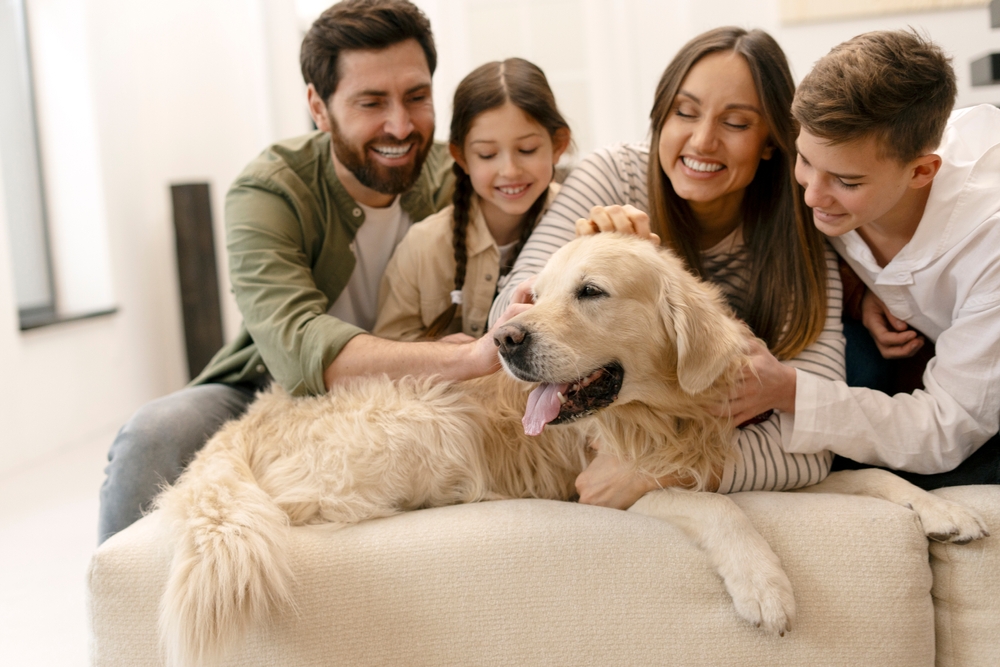

Ask any parent who finally caved to years of “please, please, please can we get a dog” begging, and they’ll tell you the same thing: the moment that dog walked through the front door, something shifted. The noise level went up. The chaos multiplied. And somehow, impossibly, the house felt more alive than it ever had before.
The funny part is that most families spend months agonizing over whether to get a dog at all, and almost no time thinking about which dog. And the which matters enormously. A dog that’s easily overwhelmed, high-strung around noise, or needs four hours of exercise a day isn’t going to thrive in a home full of kids doing homework at the kitchen table, running through the hallway, and bringing seven friends over on a Saturday afternoon.
The breeds below aren’t the kind that just survive a big, loud household. They’re the kind that were practically built for it.
1. Labrador Retriever
A 2024 study from NPR and researchers at the Telethon Kids Institute found that getting a family dog is linked with a significant jump in physical activity in younger kids, particularly young girls, adding almost an hour of daily movement. That’s before you factor in the emotional side: the child who finally opens up to someone, and that someone happens to have four legs.
When it comes to large families specifically, the Labrador leads the pack. According to breed data and owner reviews compiled by Woofz, the Labrador scores 94 out of 100 for child tolerance and carries the lowest bite risk of any breed over 50 pounds. Playful but patient, Labs are known to forgive the occasional accidental tail pull without missing a beat. In a house where a toddler is always at knee height and a preteen is barreling through the back door, that temperament is worth its weight.
Labs are also highly trainable, which means they respond well to the household rules that keep everyone safe. They need daily exercise, including walks and games of fetch, to prevent boredom and the destructive behavior that tends to follow in puppies. Give them that, and what you get is a dog that treats every family member, including visiting cousins and the neighbor’s kids, like a long-lost best friend.
2. Golden Retriever
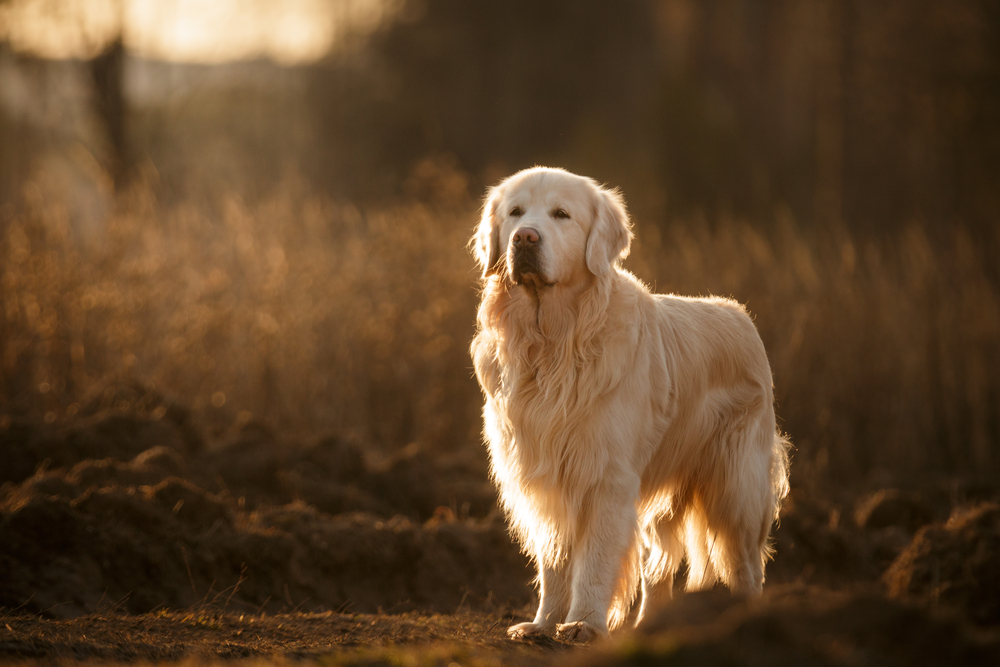
If the Labrador is the reliable team player, the Golden Retriever is the one that greets everyone warmly the moment they walk in. Goldens are intelligent, loyal, easy to train, and famously patient with children and other dogs. What sets them apart in a big household is how well they hold up during the peak chaos hours: the dinnertime sprinting around the kitchen, the slammed doors, the five competing voices asking for dinner at once.
These medium-to-large dogs thrive on activity and love nothing more than a job to do, whether that means a hike, a long fetch session in the yard, or just keeping tabs on whoever is doing something interesting. Their eagerness to please makes training feel more like a collaboration than a negotiation.
Goldens are generally healthy, but they can be prone to allergies, heart issues, and hip dysplasia as they age. If you’re considering one, researching which dogs have the shortest lifespans upfront lets you plan veterinary care from the start rather than being caught off guard later.
3. Beagle
Beagles often get overlooked in the family dog conversation because they’re not as glamorous as a Golden or as famously easygoing as a Lab. That’s a mistake. Beagles are compact, cheerful, and affectionate, with manageable energy levels that suit families who don’t have a half-acre yard but still want an active dog. They’re sturdy enough to handle rough-and-tumble play without being fragile, and sociable enough that the constant foot traffic of a large household suits them perfectly.
A Beagle left alone in a quiet house is a different story. In the middle of a bustling family, they’re in their element. They do require regular exercise and mental stimulation to satisfy their curious nature, and their nose can lead them astray on walks, so a secure yard helps. These aren’t major asks for a family that’s already busy and active.
4. Boxer
For families that need a silly yet protective friend, Boxers are hard to beat. They’re playful and energetic, with a gentle nature toward children that makes them a strong fit for noisy, all-out chaotic homes. That description probably sounds like a Tuesday for most big families.
Boxers have a reputation for acting like puppies well into adulthood, which has earned them the nickname “Peter Pan dogs.” That’s a selling point when the kids are school-aged and want a dog that will still play rather than just sleep by the fireplace. It does mean they need consistent training from a young age, so their enthusiasm doesn’t accidentally knock a five-year-old flat. With that groundwork in place, a Boxer in a big family is chaos and warmth in the best possible combination.
They’re also alert enough to notice when something is off, which adds a quiet layer of security to a home where the front door opens and closes twenty times a day.
5. Standard Poodle
People still associate Poodles with dog shows and elaborate haircuts, and that image does them a real disservice when it comes to family life. According to a Sniffspot community survey of nearly 10,000 Standard Poodle owners, the vast majority report that these dogs are friendly, affectionate, and highly trainable, with owners consistently citing strong family bonds as a key reason they’d choose the breed again.
For families where someone has allergies, the Standard Poodle becomes an even more compelling choice. Their coat doesn’t shed the way most breeds do, which makes them far easier on allergy sufferers without requiring you to downgrade to a smaller, lower-energy dog. The standard size, which generally runs between 40 and 70 pounds, is the best fit for a busy household. Big enough to keep up with older kids on hikes or at the park, settled enough to wind down when the day ends, and smart enough to learn household rules faster than most breeds you’ll consider.
6. Bernese Mountain Dog
If what your family wants is a dog that radiates warmth and calm in roughly equal measure, the Bernese Mountain Dog deserves a serious look. These gentle giants are known for their laid-back temperament and easy affection with children and other pets. Despite their size, they’re calm enough to lounge around with the family and enthusiastic enough to come along on hikes, trail walks, or a long afternoon in the yard.
The teenager who wants a running partner and the eight-year-old who wants to curl up on the couch will both find what they need in a Bernese. Their dense tricolor coats shed seasonally and require frequent brushing to keep loose hair under control, but in a large family, that’s usually a job someone actually wants to volunteer for.
7. German Shepherd
The German Shepherd’s reputation tends to run ahead of the reality. People see police dogs and assume they’re dealing with something fierce and high-maintenance. A well-socialized German Shepherd in a family home is one of the most devoted, perceptive dogs you’ll ever own.
German Shepherds do best when they feel useful, whether that means helping round up the kids, acting as a watchful presence at the front door, or keeping tabs on where everyone is in the yard. In a large family, there’s always something going on, always movement to track or a person to check on. That suits a German Shepherd perfectly. With proper early training and socialization, they’re gentle and trustworthy with children, loyal to the whole household rather than bonded to one person.
8. Cavalier King Charles Spaniel
Not every big family needs a big dog. The Cavalier King Charles Spaniel is one of the most underrated family dogs around, particularly for households where the youngest members are still toddlers, or where the family includes older adults who want a calmer companion alongside the general household energy.
Cavaliers are small, affectionate, and relaxed, which makes them great around kids of all ages and patient with unpredictable toddler behavior. They’re friendly with strangers, children, and other animals alike. In a large family, the Cavalier often becomes the dog that belongs to everyone but gravitates toward whoever needs a quiet moment. The child having a rough day. The parent who needs five minutes of sitting still. The grandparent who visits on weekends. They read a room well and position themselves accordingly, which makes them quietly useful emotional companions rather than just a pet that lives in the house.
Read More: 9 Of The Happiest Dog Breeds to Lift Your Spirits
What Actually Makes a Family Dog
The breed matters, but it’s not the whole story. Some breeds are patient with toddlers and less suited to older, rougher play. Others thrive with confident school-aged kids and find very young children’s unpredictability stressful. A Boxer trained and loved by a house of confident eight-year-olds is a fundamentally different experience than the same dog dropped into a home with three toddlers and no established routine. The American Kennel Club notes that the French Bulldog has held the number-one popularity spot for four consecutive years, having overtaken the Labrador’s 31-year reign back in 2022, which tells you something about shifting tastes. But popularity and family suitability are two different conversations entirely.
What all eight of these breeds share is a fundamental willingness to be part of the pack rather than tolerated by it. They don’t just endure family life. They seek it out, plant themselves in the middle of it, and usually improve it in ways that are hard to put into words until you’re living them.
The Part Nobody Tells You Upfront
Choosing a dog for a big family is really a question about what kind of energy you want in your home. Not just the dog’s energy, but what it adds to yours. The right breed doesn’t create extra work so much as it creates a different kind of presence, one that seems to absorb some of the noise and give back something steadier.
None of the eight breeds above will fix a chaotic household. But the muddy paw prints on the kitchen floor, the dog who somehow always knows which kid had the hard day, the specific kind of noise a house full of people and a happy dog makes at 6pm on a Friday: that’s the actual return on the investment. And it’s worth getting the breed right so you get all of it, rather than spending the first two years fighting a mismatch neither you nor the dog asked for.
AI Disclaimer: This article was created with the assistance of AI tools and reviewed by a human editor.