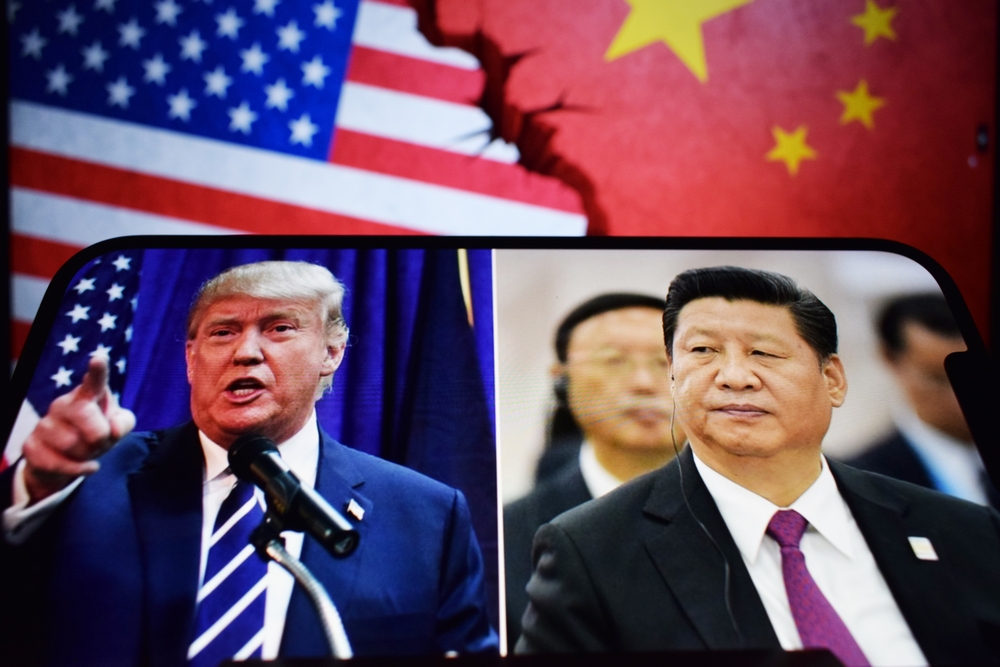
The cameras caught the handshakes, the honor guard, the children waving flags. The official photographs showed two presidents in agreement, toasting at a state dinner in the Great Hall of the People, smiling at the Temple of Heaven against a backdrop of ancient stone. From the outside, the U.S. and China appeared to forge more cooperative ties at their summit in Beijing, with both sides agreeing to develop a “constructive China-U.S. relationship of strategic stability.” It looked like diplomacy doing what diplomacy is supposed to do.
What the cameras didn’t show was happening just outside the frame. A White House aide on the ground. Armed agents locked in a shouting match with Chinese security. A press pool sprinting across temple grounds trying to reach the presidential motorcade before it left without them. The pageantry and the chaos existed about thirty feet apart from each other all day long.
The May 13 – 15 state visit was Trump’s second trip to China and the first by a sitting U.S. president in almost nine years. The stakes were real and the agenda was serious. But the story that unfolded behind the scenes on day one was something else entirely.
A Chaotic Morning at the Bilateral Meeting
The first disruption took place during Trump’s morning bilateral meeting with Xi Jinping, when a large group of Chinese journalists rushed into the area. In the commotion, a member of the White House advance team was knocked to the ground and stepped on. The aide suffered bruises and was left shaken.
Though not seriously injured, the incident caused her colleagues to loudly protest the Chinese media’s behavior. It was a rough introduction to what the day had in store. According to reporting from multiple outlets on the ground, the first day in Beijing was marked by a series of off-stage altercations, with Chinese officials reportedly trying to dictate coverage of the event and keep a tight hold on American guests.
Security was a paramount concern for the host nation, with surveillance cameras visible every few feet on street lights. To protect vital data from hackers, President Trump, administration staff, and reporters were all instructed to use burner phones and email addresses during the two-day summit. China controlled the environment. That much was clear before anyone set foot in the Temple of Heaven.
The Standoff at the Temple of Heaven
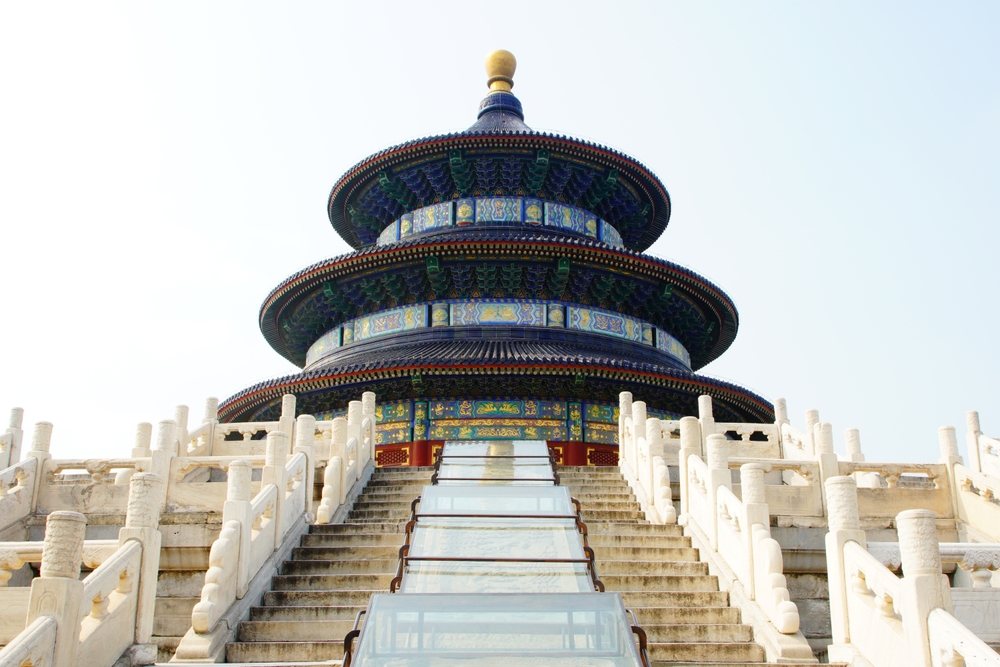
If the morning’s incident was messy, what happened at the Temple of Heaven that afternoon had the quality of a genuine diplomatic standoff, even if it involved bureaucratic rules more than anything else.
According to AFP correspondent Danny Kemp, who reported via the White House Press Pool account, a Secret Service agent accompanying the pool reporters was refused entrance to the Temple of Heaven compound because he was armed. As Kemp reported, the pool’s entry to the temple complex was delayed by nearly half an hour by a lengthy and increasingly intense discussion between U.S. and Chinese officials, after Chinese security refused to allow a Secret Service agent accompanying the pool to enter the temple compound with his weapon.
The disagreement led to a half-hour delay, with neither side backing down initially. American officials refused to move ahead without the agent, while Chinese authorities demanded the weapon be left behind. The agent’s job is literally to be armed. Asking him to disarm at the entrance to a secure venue where the U.S. president is present is not a procedural quirk – it’s a fundamental conflict over who controls security in that space.
The incident triggered what reporters on the scene described as an “intense standoff” that delayed entry to the venue for over a half-hour. According to Fox News, a Telegraph correspondent wrote on X: “We’ve seen several intense confrontations since being here.”
The situation was eventually resolved after a second Secret Service agent who had already been cleared came to escort the press group inside. A compromise of sorts – though one that essentially meant a senior protection officer had to wait outside while his colleagues went in without him.
Getting Out Was Just as Hard
The standoff on the way in would have been enough. But when Trump and Xi finished their temple visit and it was time to leave, the trouble started all over again.
A follow-up pool report noted that the group endured “another brief delay” as U.S. staff and reporters “had an even more spirited discussion with Chinese officials, who several times tried to stop them from leaving and joining the presidential motorcade.”
With Trump already in the motorcade and waiting, a White House staffer called the cue to move. That was the signal for the American contingent to push past the Chinese officials and run out the door. As the group crossed the temple grounds to catch the motorcade, another set of Chinese officials tried to stop them, running with their arms out toward the group. The Americans pressed on and reached the line of cars that made up the presidential convoy.
Another confrontation broke out when Chinese officials allegedly stopped reporters from returning to Trump’s motorcade. After loud exchanges between both sides, White House staffers led the American group through the crowd and toward the presidential convoy despite attempts to block them.
Hot mic audio captured by cameras in the room caught a voice shouting a profanity-laced order at the crowd during one of the earlier moments when Trump and Xi walked in together – the kind of raw, unfiltered footage that no amount of official readouts can explain away.
What Was Actually on the Table
None of this backstage disorder was incidental to a relaxed diplomatic visit. The agenda that Trump and Xi were working through was, by any measure, heavy.
According to CNBC, Xi warned Trump that the U.S. and China “will have clashes and even conflicts” if the long-standing issue of Taiwan’s independence is mishandled. At the summit, Xi placed Taiwan at the center of discussions, calling it “the most important issue” between the two countries.
The Taiwan question was not the only tension in the room. In an analysis published before the summit, the Council on Foreign Relations described the meeting as an effort to stabilize U.S.-China relations rather than resolve long-standing disputes, noting that simply restoring leader-level engagement allows both governments to claim stability without resolving the underlying sources of instability – including continuing disagreements over China’s economic policies, Taiwan, and Beijing’s relations with Russia, Iran, and North Korea.
Trade, predictably, was also front and center. The White House described the meeting as “good,” with discussions covering expanded economic cooperation and market access for U.S. businesses. The two sides discussed increasing Chinese purchases of American agriculture and addressing fentanyl precursor flows. Leaders also agreed the Strait of Hormuz must remain open to ensure global energy flows, while both sides agreed that Iran should not be allowed to obtain a nuclear weapon.
Given the frictions playing out just beyond the photo-ops, the public language of cooperation – Xi framing the relationship as “constructive, strategic and stable” – carried an interesting weight. You can sign a joint statement and still spend the day in a standoff over a sidearm.
For a deeper look at how presidential power and control get tested in moments of diplomatic and domestic pressure, the secret emergency powers built into the U.S. system offer a fascinating parallel on how much actually happens out of public view.
The Bigger Picture
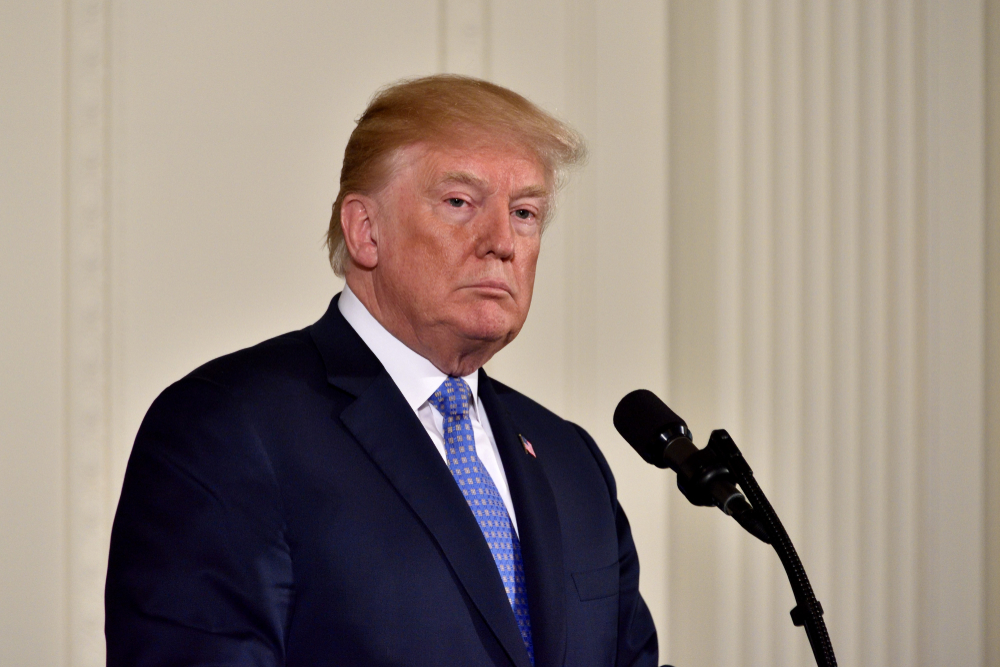
It would be easy to write off the shoving and shouting as logistical noise – the awkward friction that happens any time you compress a thousand journalists, two security teams, and the leaders of the world’s two largest economies into a series of historic buildings. And some of it probably was.
But security access is not a trivial issue. When Chinese officials block an armed Secret Service agent from entering the space where the U.S. president is located, that is not a scheduling mix-up. It’s a contest of control. According to the Daily Beast’s reporting from Beijing, Chinese officials were not simply following protocol – they were making a point about who runs the room. And on the substance of the summit, China now feels confident enough to hold firm on key issues: sanctions, technology controls, critical minerals, and the Iran question all went into Beijing’s favor in advance of these talks.
The bigger question around Trump’s return to China is whether this visit can yield more lasting progress than his 2017 trip, which featured major business announcements but was followed by a sharp deterioration in U.S.-China trade relations. That pattern – the warm ceremony, the signed agreements, the optimistic statements, the subsequent slide into friction – has played out before. The question is whether the physical confrontations that punctuated day one are a signal or just noise.
The Quiet Part
Here’s what doesn’t get smoothed over by official readouts: a White House aide was knocked down and stepped on at a bilateral meeting between two heads of state. A Secret Service agent was locked out of a venue where the president was present. The U.S. press corps had to sprint across an ancient temple courtyard to avoid being separated from the motorcade. These aren’t talking points. They’re things that happened.
The gap between what a summit looks like and what it actually is has never been tighter or stranger than it was on May 14 in Beijing. On camera: toasts, flags, handshakes. Off camera: shoving, shouting, a standoff over a gun. Both things are true at the same time. That’s not contradictory – that’s just what superpower diplomacy looks like in 2026, where the press pool can’t get to a bathroom and the Secret Service is running across cobblestones. The choreography holds. And the chaos right beside it holds too.
AI Disclaimer: This article was created with the assistance of AI tools and reviewed by a human editor.