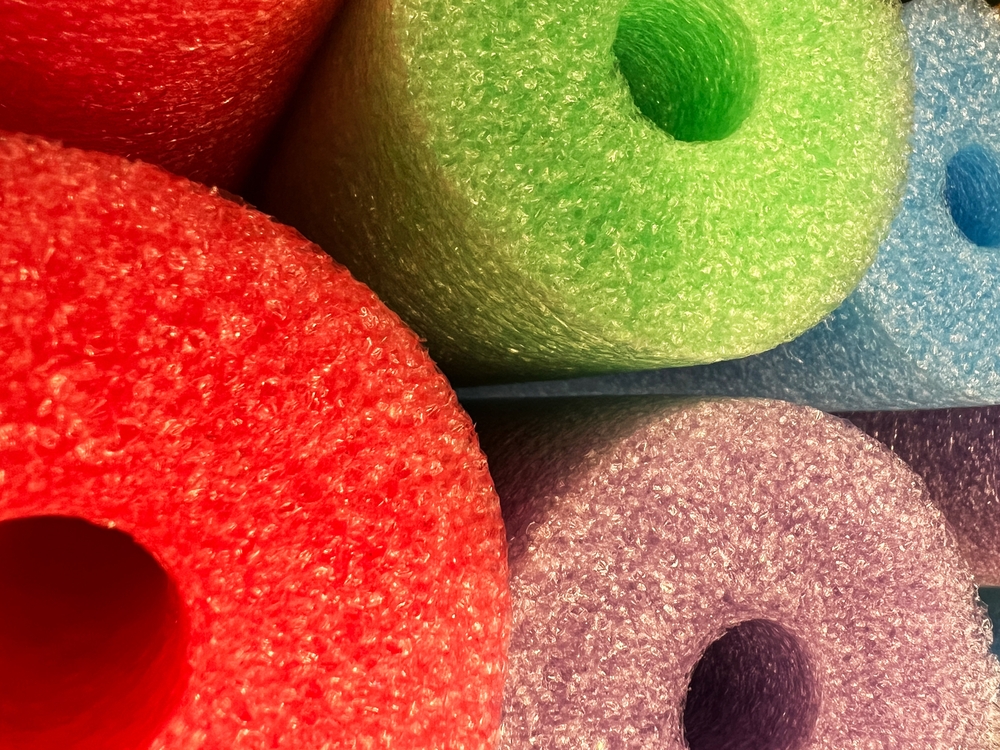

My freezer has always been optimistically half-stocked. There’s usually a bag of edamame from three months ago, some chicken thighs I froze with good intentions, and about four inches of dead air between everything. I never thought that empty space was the problem. I assumed a freezer just… froze things, regardless of how full or empty it was. Then a pool noodle ended up inside it, and now I’m rethinking some assumptions I’ve been carrying around since I first had my own kitchen.
The idea came from a friend, who had it from her mother, which is how the best household tips tend to travel. She kept a pool noodle and a few empty, lidded containers tucked into her freezer to fill the gaps when her stock ran low. I thought it was eccentric. She thought it was obvious. A few weeks after I tried it myself, I noticed the chicken I’d pulled out looked noticeably better than usual, and my electricity bill was a dollar or two lighter. Not life-changing money, but enough to wonder why no one had mentioned this before.
The answer, it turns out, is rooted in something pretty basic about how freezers actually work, which most of us never stopped to think about.
Why Your Freezer Hates Being Half-Empty

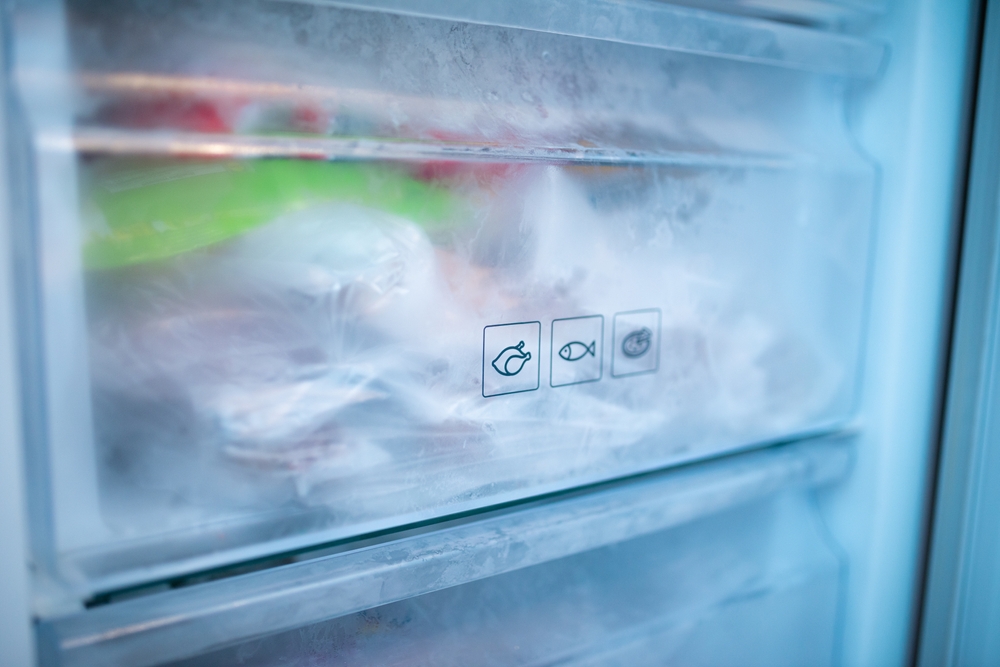
Every time you open the freezer door, cold air escapes and warm air rushes in – and the majority of the energy your freezer uses goes toward cooling down the air that comes in when you open the door. When the freezer is half-empty, there’s a lot more warm air to deal with every single time you open it.
When items in a freezer are fully frozen, they act to keep the freezer cool in much the same way ice keeps the interior of a cooler cold. When your freezer is full, there is less room for warmer air to take up, and the items in there help to cool down any air that does sneak in. A near-empty freezer, by contrast, has to work almost constantly, cycling its compressor more often just to hold steady at the same temperature. An empty freezer can lead to frequent compressor cycles, which increases energy usage – which is why it matters to keep the freezer neither too full nor too empty.
So what’s the sweet spot? According to America’s Test Kitchen, appliance manufacturer Whirlpool told them that “75-80% full as a best operating condition seems reasonable” – with the caveat that food shouldn’t be blocking the air vents, which allow cold air to circulate and keep everything frozen. That’s a more specific answer than most of us have ever aimed for, and it’s one that most of us, with our optimistic half-stocks of frozen soup and mystery meat, are probably missing.
A full freezer maintains its temperature better than an empty one, with lower temperature fluctuations when the door is opened, which matters more than it sounds. Those temperature fluctuations, even small ones, are the exact conditions that lead to freezer burn – which is what most people with a chronically half-empty freezer are quietly battling every time they defrost a chicken breast that looks more gray than it should.
What Freezer Burn Actually Is
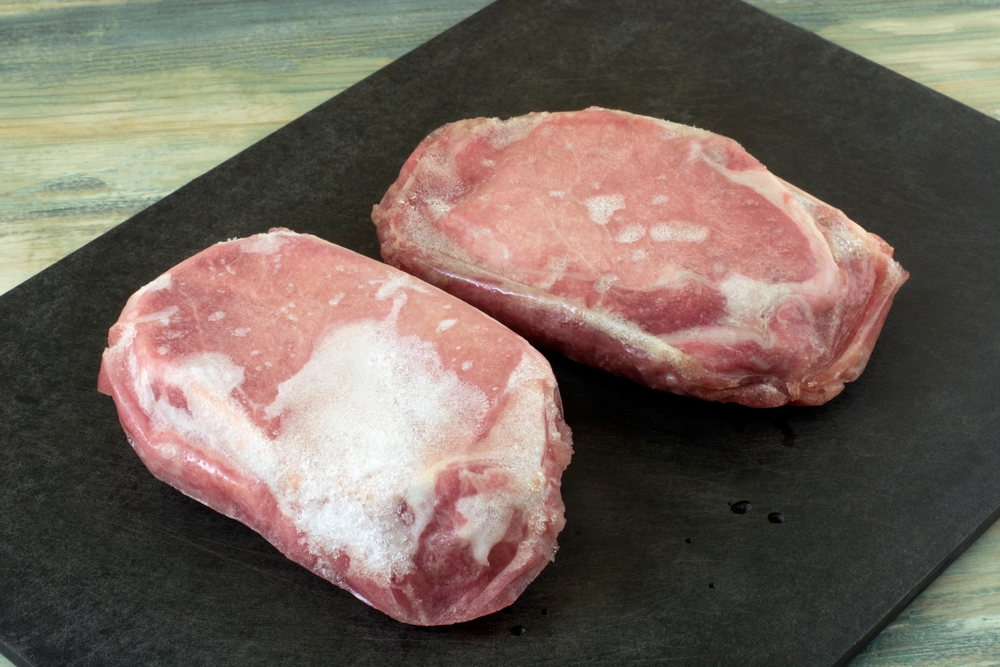
Most people treat freezer burn as a mystery: things go into the freezer fine, come out weeks later looking rough. According to Healthline, freezer burn is the result of moisture loss from storage in the freezer, and it leads to changes in the quality of your food, resulting in ice crystals, shriveled produce, and tough, leathery, and discolored meats.
The mechanism behind it is called sublimation – where ice skips the liquid phase entirely and converts straight into vapor. Freezer burn is the dehydration of food that results from moisture loss during freezing, it can happen to any food that’s been frozen for a long time, and as dehydration occurs, oxygen moves in to take its place. Those ice crystals migrate to the surface of food and eventually to the coldest part of your freezer through this process. What’s left behind on the food is a dehydrated, structurally compromised version of what went in. The gray-brown patch on your chicken breast isn’t a sign that something went wrong with the freezer. It’s a sign that the environment inside the freezer was unstable enough to pull moisture out of the food faster than it should have.
Any food stored in a freezer is subject to freezer burn – but because it’s caused by dehydration, foods with a higher water content like produce, meats, poultry, fish, and ice cream tend to be more affected than foods with a low water content, such as nuts, seeds, or flour. That’s why the shrimp always comes out looking worse than the bag of frozen peas, and why the peas eventually get there too.
Despite the quality changes, freezer-burned food is safe to eat – which is a useful thing to know, even if the cardboard texture of an over-burned salmon fillet doesn’t inspire much appetite.
The Pool Noodle Fix (and Why It Works)
The pool noodle hack is, at its core, a dead-space management strategy. The goal isn’t to fill the freezer with more frozen food – it’s to reduce the volume of air that the appliance has to fight against every time the door opens.
According to HowStuffWorks, there are handy non-food items you can use to take up space in your freezer so that it is more energy efficient – options like newspapers, bags of shipping peanuts, and containers filled with water. Pool noodles – made of foam, lightweight, easy to cut to size, and available for next to nothing – are a tidier, more practical version of that same idea. They compress into gaps, stay put, and don’t require any preparation. Unlike water-filled containers, they don’t add to the initial cooling load because there’s nothing in them that needs to be chilled. They just displace air. The practical approach is to strategically place food items for easy access and use non-food fillers to occupy the central spaces – while leaving enough air space for the thermostat to function properly.
The empty-but-closed containers serve a slightly different purpose. A lidded glass container or a sealed cardboard box from a package of frozen waffles takes up space without blocking airflow. The key word is “closed”: an open container just adds to the volume of accessible air the freezer has to cool, which is the opposite of helpful. Closed containers, like pool noodles, simply reduce the empty space the appliance has to manage.
The type of freezer also matters here. Chest freezers are typically more energy-efficient and better at maintaining cold air when the door is opened, potentially requiring less filler strategy than upright freezers. If you have an upright freezer – the kind most people have built into their refrigerator or standing alone in the garage – it loses cold air more readily when opened, which makes managing the empty space more important, not less.
A Word on Packaging (Because the Noodle Isn’t the Whole Story)
Filling dead space helps stabilize the environment inside the freezer, but it doesn’t seal the food itself. Foods to be frozen must be packaged in a way that protects them from the dry climate in the freezer and excludes as much air as possible – items that are improperly packaged are more likely to develop freezer burn, the grayish-brown discoloration caused by air reaching the food surface and causing moisture to evaporate. The pool noodle keeps the temperature steadier, which slows the rate of sublimation – but if the chicken breast is sitting in a loose grocery bag with half an inch of air inside it, the moisture is still going to migrate.
As Iowa State University Extension notes, all foods are susceptible to freezer burn, but with proper packaging and freezer management, the problem can largely be eliminated. Remove as much air as possible from packaging before freezing. Vacuum sealers do a wonderful job of removing air – though squeezing a freezer bag nearly flat before sealing it gets you most of the way there without any equipment. Small ice crystals are desirable in frozen food to preserve texture: large ice crystals rupture food cells and cause a soft, mushy texture, while small crystals form when food is frozen quickly and kept at a constant storage temperature of 0°F or lower. Foods stored near or in freezer doors, or at the top of a chest freezer, should be eaten first as these areas are suited only to short-term storage.
The combination of stable temperature (achieved by managing the air volume) and proper packaging (achieved by removing air from around the food) is what actually solves the freezer burn problem. The pool noodle handles the first half. Avoid packing the freezer too tightly either, since air must be able to flow freely around the food. It’s a balance, and it turns out the balance is less mysterious than it seemed.
What This Actually Means for You
The pool noodle thing is a little absurd, and that’s part of why it works so well as a tip – it’s memorable precisely because it sounds like something your aunt would tell you and you’d immediately dismiss. But the underlying logic is completely sound, and the results are real: a more stable internal temperature, less freezer burn, and a compressor that doesn’t have to cycle as hard, which adds up on the electricity bill over time. Not dramatically, but visibly.
If you’ve been throwing food away because it came out of the freezer looking ruined, or if you’ve been quietly accepting that the salmon always tastes a bit cardboard-y after a month, it’s worth trying this before assuming the freezer is broken. Grab a pool noodle – they cost a couple of dollars at most dollar stores – cut it to fit the gaps in your freezer, and tuck a few empty, lidded containers in alongside it. Check in a month. The improvement in the appearance and texture of what comes out is probably going to feel disproportionate to the effort involved.
And if nothing else, you’ll have the most interesting answer the next time someone opens your freezer looking for ice cream.
AI Disclaimer: This article was created with the assistance of AI tools and reviewed by a human editor.