
You can see a lot of America without ever truly seeing it. Fly into a famous city, hit the landmark you’ve heard about since childhood, take the photo, fly home. Repeat across a dozen states and you’ve technically “been everywhere” while missing almost everything that makes each place worth the trip. The most famous attractions in any country tend to be famous for complicated reasons: some because they’re genuinely extraordinary, some because enough people visited before you that the visit itself became the thing, and some because a marketing machine worked very hard to make you believe you needed to be there.
The six attractions below belong to all three categories, in varying proportions. None of them are frauds. But each one has a gap between what it promises and what it actually delivers, and knowing that gap exists before you book your flights changes everything about how you’d approach the trip.
1. The Four Corners Monument
The Four Corners Monument marks the only place in the United States where you can stand in four states at once: Colorado, Utah, Arizona, and New Mexico. On paper, that’s genuinely cool. In practice, you drive a long way into remote high-desert country, pay an $8 admission fee, wait in line behind other people also waiting in line, and crouch down onto a granite disc for a photo. Then you get up and look around. There isn’t much else.
A USA Today Blueprint study based on over 23 million Google reviews measured how frequently words like “tourist trap,” “overrated,” and “expensive” appeared in attraction reviews relative to total reviews. Four Corners landed near the very top of that list. The monument draws around 250,000 visitors a year according to a review of the site, with many travelers describing it as more of a tourist trap than a must-see, complaints centering on the long waits for a photo and the entrance fee. The biggest criticism is that the monument may not even mark the true geographical point where the four states converge, a detail that tends to land with a particular thud after a two-hour drive through the desert.
The surrounding Navajo Nation does offer stunning landscapes and genuine cultural significance for those exploring the region. That’s the actual pitch: if you’re already on a Southwest road trip through canyon country, swing by. But don’t let the novelty of four-states-at-once be the reason you go.
2. The Las Vegas Strip
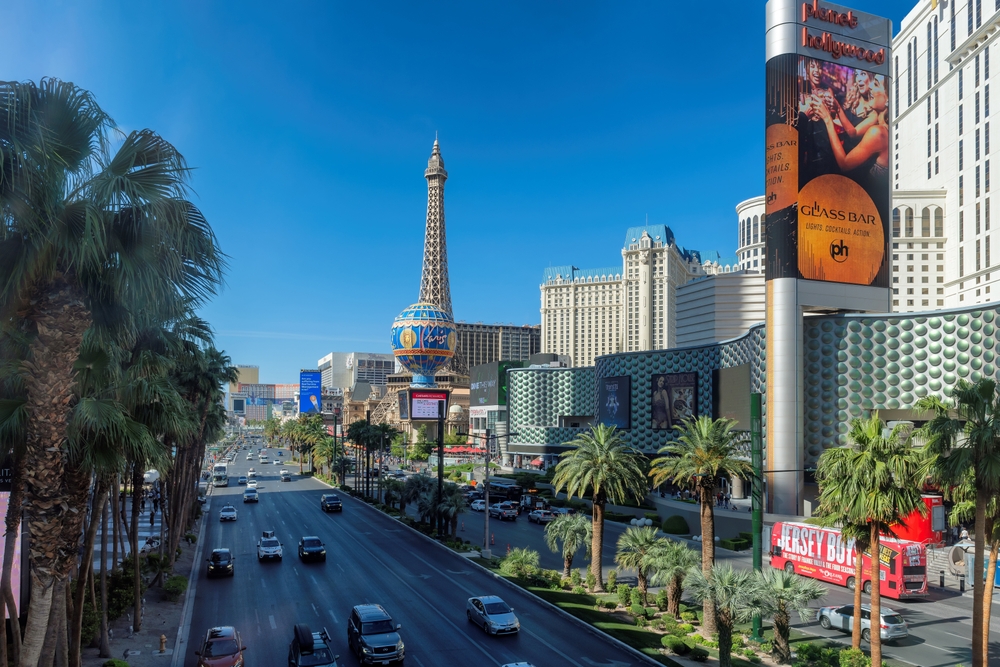
The Las Vegas Strip at night is, genuinely, unlike anything else on earth. The lights, the scale, the commitment to spectacle at every square inch – it’s a sight. The problem is that it is almost entirely a sight. Walk it once and you’ve walked it. The casinos blur together into the same carpeted, temperature-controlled fever dream, and the crowds make the simplest movements feel like a logistics challenge.
The more interesting version of Las Vegas sits about a mile down Fremont Street, where the original casinos have a grittier, more human energy, and where the overhead light show draws big crowds for free rather than charging for everything. Better still, drive twenty minutes west to Red Rock Canyon National Conservation Area, where the sandstone formations are extraordinary and the hiking ranges from easy to genuinely demanding. Las Vegas as a base for the Mojave Desert is a deeply underrated trip.
The Strip’s artificiality is the whole point, and for a night or two it delivers. But centering a multi-day trip around it – rather than using it as a launch pad for the remarkable landscapes that surround it – is a trade most experienced travelers come to regret.
3. Times Square, New York City
Times Square at midnight on New Year’s Eve is one of those images that lives so large in the cultural imagination that arriving there on a regular Tuesday in July feels almost disorienting. The real thing is loud, densely crowded, smells like a complicated cocktail of pretzels and exhaust, and is surrounded primarily by chain restaurants you could find at any American mall. New Yorkers almost never go there voluntarily.
This isn’t to say Times Square isn’t worth seeing at some point. It’s a tourist trap worth getting sucked into at least once, just for the experience – but it’s truly just the beginning. The city has layers that Times Square can’t access. Spend a morning in the West Village, an afternoon in Brooklyn’s Prospect Park neighborhood, or an evening wandering Chinatown and you’ll understand what people mean when they talk about the city having a soul.
The High Line, built on a former freight rail line, weaves through Manhattan’s West Side offering skyline views, art installations, and seasonal gardens. Little Island, one of New York City’s newest waterfront parks, extends between 13th and 14th Street, adding 2.4 acres of public outdoor space suspended above the Hudson River by striking tulip-shaped structures. Both are free. Both are genuinely worth your afternoon. Neither involves standing on a sidewalk looking up at an electronic billboard advertising something you’ve already seen a thousand times.
4. Salem, Massachusetts in October
Salem is a genuinely fascinating city. The history is dark and real, the architecture is beautiful, and the museums are better than people expect. The Peabody Essex Museum alone is worth a detour. If your primary reason for visiting is to admire the colonial architecture, explore the history and museums, take a walking tour, and just enjoy what the city has to offer, you can visit any time of the year and get a lot out of your trip – without the massive October crowds, according to New England Wanderlust.
The problem isn’t Salem. The problem is October. Salem Haunted Happenings welcomes more than a million visitors to its parties, parades, vendor fairs, walking tours, museums, attractions, and special events across the entire month, according to the official Salem Haunted Happenings website. What this means on the ground is that parking becomes a full-scale ordeal, restaurant waits stretch to hours, and the atmospheric narrow streets that make Salem special are so packed they’re barely navigable. Wandering without a plan, ducking into a quiet shop, standing in front of a 17th-century building without a crowd blocking your view – all of that evaporates in October.
November strips the crowds away while keeping most of the atmosphere. Crowds are vastly smaller, tables at restaurants are easy to get, and the overall vibe is far more peaceful. The city is entirely worth visiting. Just not in October, unless you’re a committed devotee of the Halloween experience and have planned months in advance.
5. Bourbon Street, New Orleans
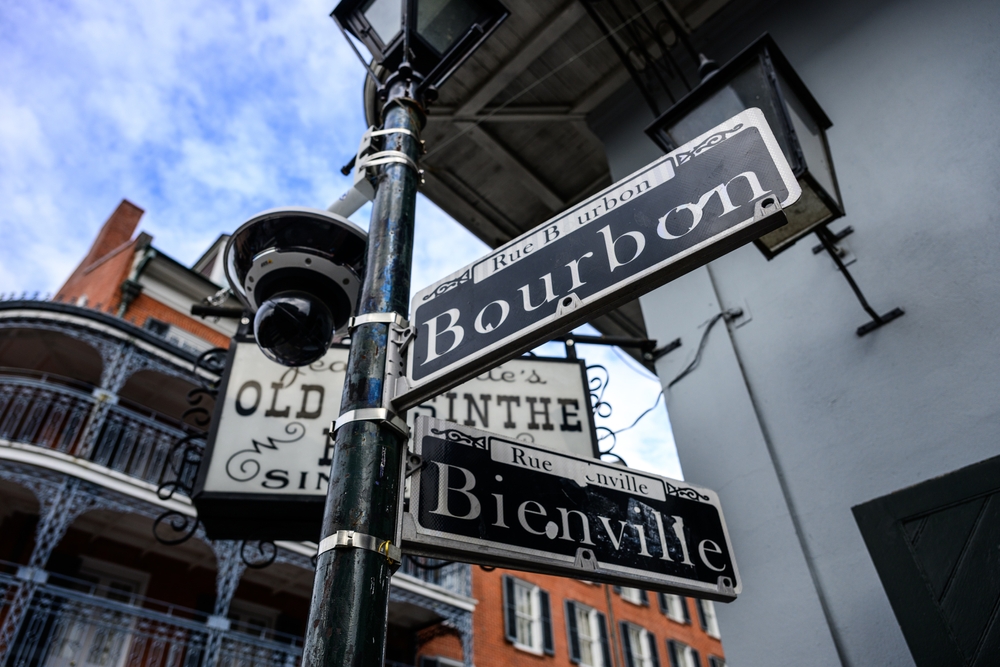
New Orleans is one of the most original cities in America. The food, the music, the iron-lace balconies catching afternoon light, the way every neighborhood sounds slightly different from the last – nowhere quite like it. Bourbon Street is also the version of the city that has been most thoroughly packaged for visitors, and in peak hours on a Saturday night, it can feel like very little of that actually survives the crowds.
Louisiana’s most famous street is a vibrant adult playground of music, booze, and massive crowds. Walking it in the morning, when it’s quiet and slightly surreal, is actually interesting. But at night on a weekend, the noise and the smell and the relentless press of people can make it feel less like New Orleans and more like a theme park version of something that used to be New Orleans.
Tour guides often describe Frenchmen Street as an off-the-beaten gem, “a local’s Bourbon Street” where real New Orleanians gather to listen to live music and grab a drink, according to frenchquarter.com. That locals-majority label may have rung true at the beginning of the twenty-teens, and the street really achieved a critical mass of popularity post-Katrina, with Frenchmen becoming tourist-central come evening, especially on weekends. But it still runs circles around Bourbon for anyone who actually wants to hear New Orleans music played well in a room where you can move your arms.
6. Mount Rushmore
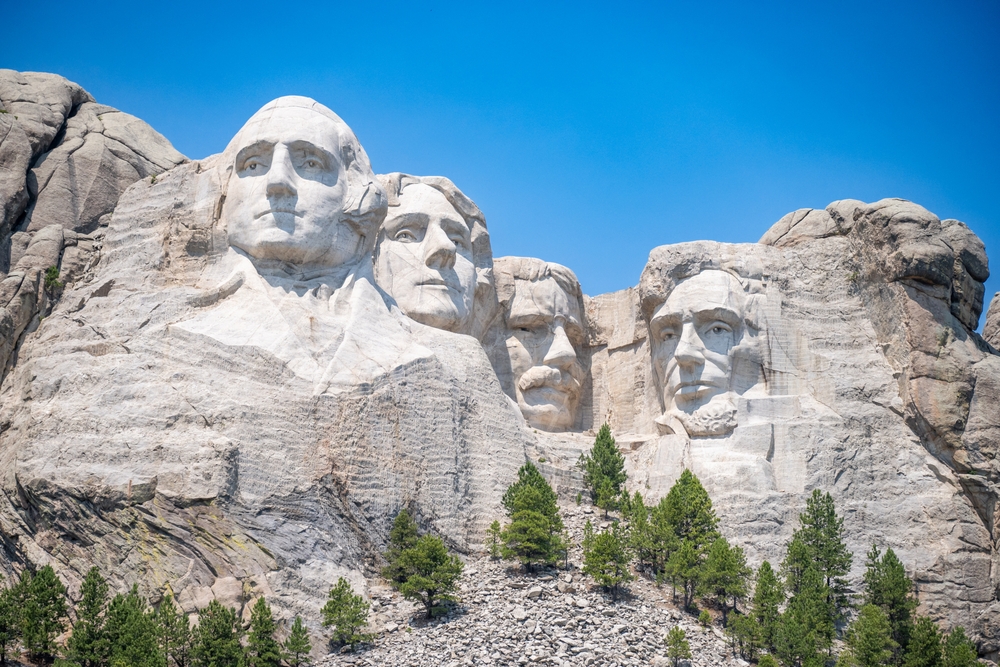
Mount Rushmore is impressive. Standing beneath four presidents carved into a granite mountain in the South Dakota hills is an experience that registers. The scale surprises you. The craftsmanship is extraordinary given the era. And then, after the short trails that lead to the viewing platforms, there isn’t much left to do.
The monument works best as one stop in a broader Black Hills itinerary rather than the destination itself. Tucked away in the Black Hills of South Dakota is an unexpectedly impressive state park. Custer State Park, with its scenic drives, short but thrilling hiking trails, lakes and rivers, and plentiful wildlife, offers something for everyone, according to Earth Trekkers. The hiking trails rival those in some US national parks, and with bison and elk, several scenic drives, and views of nearby Mount Rushmore, it makes for a remarkable getaway in South Dakota. Nearby, the Crazy Horse Memorial, started in 1948 to pay tribute to the legendary Lakota leader and the nation’s Native American heritage, is funded entirely by admissions and donations rather than the US government. When complete, it will be the world’s second tallest statue.
Rapid City’s proximity to Badlands National Park and the rest of the Black Hills makes it a worthwhile destination in its own right. Build a trip around the region – Badlands, Custer State Park, Crazy Horse, and Rushmore as one stop of several – and you’ll have one of the best road trips in the country. Build it around Rushmore alone, and you might find yourself back at your hotel by 2pm wondering what to do next.
Read More: 7 US Destinations That Will Make You Feel Like You Are in Another Country
What to Do With All of This
None of these places are without merit. Four Corners is a genuine geographical oddity sitting inside a Navajo landscape that is absolutely worth your time, even if the monument itself isn’t. The Las Vegas Strip is spectacle done at a scale that has to be seen at least once. Times Square is iconic for a reason. Salem’s history is dark, real, and worth knowing. New Orleans is an extraordinary city that happens to contain Bourbon Street. And Mount Rushmore is, when you’re standing beneath it, undeniably something.
The case against each of them is really a case for spending your limited time and money more deliberately. The gap between what a famous attraction promises and what it delivers is almost always a function of expectations and crowds, not the place itself. Knowing that beforehand – knowing that the Four Corners photo op takes about twelve minutes, that Salem in October is a crowd-management exercise, that Frenchmen Street exists two blocks from Bourbon – doesn’t ruin these destinations. It just lets you enjoy them for what they are rather than mourning what you expected them to be.
Travel is rarely ruined by going somewhere. It’s usually ruined by going somewhere with the wrong idea of what you’ll find there.
AI Disclaimer: This article was created with the assistance of AI tools and reviewed by a human editor.