
There’s one thing most of us do before a trip that we never think twice about: check into a hotel, set our bags down, and immediately assume the room is clean. The bed looks crisp. The glasses on the bathroom shelf gleam under the vanity lighting. The safe in the closet feels like a vault. And yet, the people who have actually worked in these places – front-desk staff, housekeepers, night managers – tend to stay at hotels a little differently than the rest of us. They bring their own pillowcases. They never touch the TV remote with bare hands. They book a certain way, at a certain time, and they know exactly who to be nice to.
None of this means hotels are secretly terrible. Most are clean enough, most of the time. But behind the polished lobby and the carefully made beds, there’s a whole operating logic that guests rarely see. And some of it changes how you’d want to behave, ask, and prepare before your next stay. Here’s what the industry actually doesn’t shout from the rooftops.
1. The TV Remote Is One of the Dirtiest Objects in Your Room
It sounds almost cliché at this point, and yet people still pick up the remote without a second thought the moment they walk in. A study by Travelmath, which swabbed surfaces in nine hotels across three star ratings, found the remote control came in with an average of over 1.2 million colony-forming units (bacteria clusters) per square inch. Among five-star hotels specifically, the remote control was the germiest surface of all. The irony being that the more you’re spending on the room, the worse it gets.
Hundreds of hands have touched the device, and it’s not high on the housekeeping team’s list of things to clean. Hotel remotes are awkward to wipe down properly – all those buttons and crevices – and they’re rarely, if ever, sanitized between guests. One practical solution: seal the remote in a clear plastic sandwich bag before using it. It sounds excessive until you think about what’s actually on it.
According to the Travelmath study, the average hotel room appears to be dirtier than a typical home, an airplane, and even a school. The good news is that most of these surfaces are easy to deal with. A pack of antibacterial wipes in your carry-on takes up almost no space and gets you through the first ten minutes in any room with considerably less dread.
2. The In-Room Safe Is Not as Secure as You Think
There’s something reassuring about clicking your passport and credit cards into the hotel room safe and hearing that satisfying electronic lock sound. That reassurance may be somewhat misplaced. Most electronic hotel safes work on two layers: your personal code, and a master access method reserved for staff – which can be a physical override key, a digital master code, or sometimes both.
The more pressing issue is that many hotels never update the factory-default master code when they install safes. Default master codes are typically very simple sequences – 000000, 111111, 123456 for six-digit safes, or 0000, 1111, 1234 for four-digit models – and these generic codes are public knowledge. A thief who gains access to your room could try a common default code and open the safe in one quick attempt, and unfortunately, many hotels inadvertently skip changing these factory codes, often due to oversight – leaving guests’ valuables at risk.
Hotels often purchase safes in bulk, frequently prioritizing cost over security. These aren’t high-end vaults; they’re generic locks with predictable vulnerabilities. For anything genuinely irreplaceable – a passport before a morning flight, expensive jewelry, serious cash – keeping it locked in your suitcase or carried on your person is a more reliable approach than the in-room safe.
3. Booking Directly With the Hotel Almost Always Pays Off
Most travelers find the hotel they want on a third-party comparison site, which is a perfectly reasonable way to shop. The mistake is booking there too. If you’re using a site like Expedia or Booking.com and see a “sold out” notification, it’s worth checking the hotel’s website directly or calling them – hotels typically release only a certain number of rooms to third-party sites, and once those are reserved, it will show as sold out even if it isn’t.
Hotels often provide discounted rates to loyalty members that aren’t available on third-party platforms, and these member-only rates can save 5 – 10% off the standard nightly rate, sometimes with added perks. The bigger advantage, though, is what happens at check-in. Hotels typically can’t modify reservations booked on third-party sites – even to give upgrades. When a room upgrade becomes available, front-desk staff assign it to guests whose reservation they can actually touch.
Direct bookings cost hotels roughly 4 to 4.5 percent in payment processing and website fees, versus far higher OTA (online travel agency) commissions – and that gap has made hotels increasingly creative about steering guests toward their own sites with real incentives. The smartest approach: browse third-party sites for price comparisons, then book on the hotel’s own website or call the front desk directly and ask them to match the lowest rate you found.
4. Being Nice to Staff Is an Actual Strategy
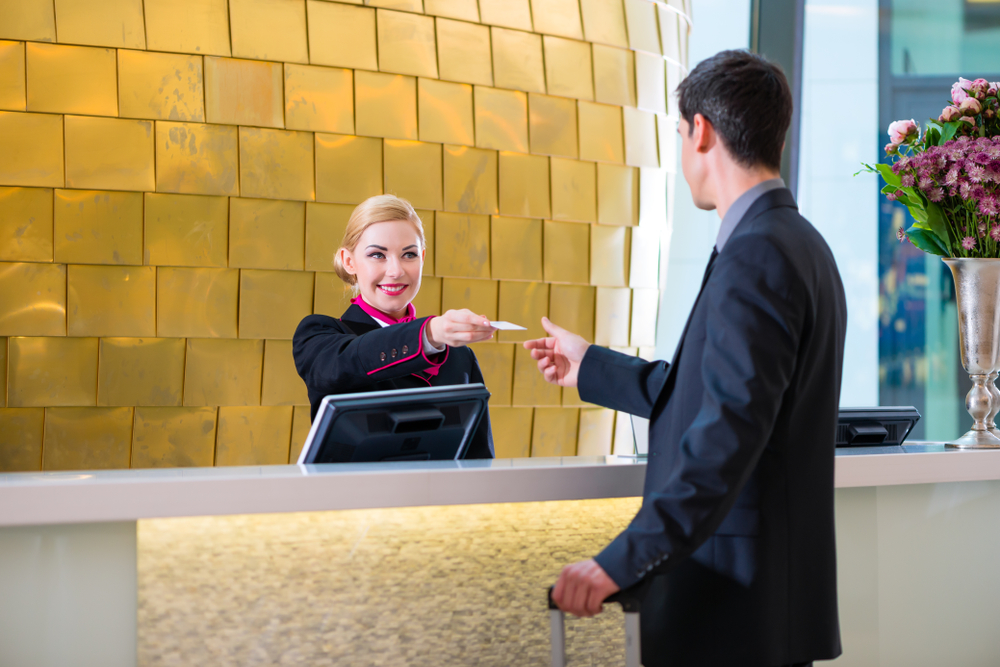
This isn’t just good manners advice. Front-desk employees have more discretion than most guests realize – over room assignments, complimentary upgrades, late checkouts, and small perks that never appear on any rate card. Many employees have the ability to share discounted and often free perks if they feel inclined to, and employees will often recognize repeat visitors and reward their loyalty with free upgrades and complimentary services.
Front-desk personnel deal with dozens of guests every day who engage in the same boring small talk or treat staff like robots. Being personable, telling jokes, and just treating them like a regular human can put the agent in a much better mood – and a better mood equals higher chances of an upgrade. This is not manipulation. It’s just being a decent person in a place where most people forget to try.
The specific ask matters too. At check-in, being friendly, asking politely and directly, and mentioning if you’re celebrating a special occasion can all tip things in your favor. Mentioning an anniversary or a birthday isn’t manipulation – hotels genuinely like having a reason to make a stay memorable, and it gives staff a hook to work with.
5. Loyalty Programs Track More Than Just Your Nights
When you sign up for a hotel loyalty program, you probably assume the hotel is keeping track of your stay count, your point balance, and maybe your room preferences. That’s the visible layer. The invisible layer is considerably more detailed. According to former hotel employees, some luxury hotel brands keep track of more personal information – your favorite cocktail, your anniversary date, how many extra towels you requested – and that information can work both ways. They can also keep track of bad behavior, including broken items or rude encounters.
For guests who use these records well, the results can be genuinely impressive. If a loyalty guest requests a room away from the elevator bank, that preference can be attached to their profile for future stays – so the next time they arrive, the front desk automatically places them at the end of the hall. It’s the kind of thing that makes a hotel feel like it actually remembers you, because it does.
Joining loyalty programs like Hilton Honors, Marriott Bonvoy, or World of Hyatt is free and gives you access to members-only perks, which may include complimentary upgrades based on availability. Even without elite status, loyalty membership alone signals to the hotel that you’re more likely to be a repeat guest – which can help during check-in. Even occasional travelers benefit from signing up before the stay, not after.
6. Comforters Are Washed Far Less Often Than You’d Expect
The sheets on a hotel bed are almost certainly washed between guests. The decorative throw pillow propped against them almost certainly is not. According to physicians, unwashed sheets, blankets and pillowcases can harbor harmful organisms – and decorative throw pillows, which are rarely cleaned, can harbor bacteria and allergens. The advice from people who know: remove the throw pillows as soon as you arrive and set them on a chair or the floor.
Former hotel employees have confirmed that while sheets are washed between stays, comforters and bedspreads are usually not. How often “usually” means varies from property to property, but the consensus from people who have worked housekeeping is that the fluffy duvet you’re pulling up around your shoulders has likely been on that bed for multiple guest stays without being laundered. Asking housekeeping for a spare set of freshly cleaned pillowcases – a simple, polite request – is a low-effort way to feel a lot better about this.
7. The Coffee Maker in Your Room Should Give You Pause
For a lot of travelers, the in-room coffee maker is a small luxury – a reason not to drag yourself down to the lobby before you’re ready to be seen in public. The problem is that coffee makers in hotel rooms are exactly the kind of appliance that gets cleaned inconsistently. Coffee makers can harbor mold and respiratory viruses, and researchers at the University of Valencia found bacteria in nine Nespresso machines after just one year of use, in a study published in Scientific Reports.
Microwaves, mini-fridges, and coffee makers are items that are very easy to miss during a room clean, because they’re appliances rather than surfaces, and the time allotted for turning over a room doesn’t always allow for thorough internal cleaning. If you want to use the coffee maker, look for machines that require a single-use pod and use a disposable cup – and if the maker contains an old pod or shows signs of mold inside, request a replacement unit from the hotel.
For most stays, the simplest move is just getting your morning coffee from the hotel restaurant or lobby, where the equipment is cleaned far more regularly than anything sitting in your room.
8. “Sold Out” Doesn’t Always Mean What You Think It Means
This one sits at the intersection of hotel economics and the way booking platforms work, and it’s worth understanding before your next trip. When you see a property marked as fully booked on Expedia, Booking.com, or a similar platform, you might assume the hotel is genuinely at capacity. Hotels typically release only a certain number of rooms to third-party booking sites, and once those are reserved, the site will show the property as sold out – even if the hotel itself still has availability.
The workaround is straightforward: call the hotel directly, or visit their own website. Hotels also tend to keep their best rooms off third-party sites, reserving them for direct bookings where they don’t have to pay a middleman commission. If you’ve already found the hotel you want on a comparison site, there’s nothing wrong with using that information – just don’t make the final decision based solely on what the aggregator is showing you.
Most people also don’t check the promotions tab on hotel websites directly – clicking on Hilton’s promotion page, for example, reveals a long list of deals that don’t appear anywhere on third-party platforms. A few extra minutes of direct research can change both what you pay and what room you end up in.
Read More: 15 All-Inclusive Resort Mistakes to Avoid
What to Do With All of This
None of the above is meant to make staying in hotels feel grim. Hotels are still one of the great conveniences of modern travel – someone else makes the bed, the towels appear, and the minibar exists for a reason. But the gap between what a hotel looks like and how it actually operates is worth knowing about, because once you do, the adjustments are genuinely small.
Pack a handful of disinfectant wipes. Join the loyalty program before you check in. Book directly where possible, and when you arrive, be the guest who actually talks to the front-desk staff like they’re human. Don’t assume the in-room safe is a vault. Skip the room coffee maker. Check the hotel’s own site before concluding that it’s fully booked.
These aren’t drastic habits. Most of them take no time at all. And they stack up quickly into a version of hotel travel that’s quieter, cheaper, and cleaner than the one most people are running on autopilot.
AI Disclaimer: This article was created with the assistance of AI tools and reviewed by a human editor.