
There’s a particular kind of exhaustion that has nothing to do with sleep. It comes from the accumulation of everything: the cost of staying put, the daily grind that no longer feels worth the squeeze, the nagging sense that life could be arranged differently if only you had the space to arrange it. Millions of Americans are feeling it right now. Some are acting on it.
The story of American migration has followed the same script for years. People leave the cold, expensive North for the sunnier, cheaper South. They move to Texas. They move to Florida. They talk about Nashville and Raleigh like they’re mythical places where money goes further and time moves slower. And those places do deliver, to a point. But they’re no longer secrets. The affordability advantage in some of the most hyped destinations has already narrowed considerably, and a new generation of movers is starting to look at the map differently.
What follows is a genuine look at twelve states worth considering if you’re ready for a real reset. Not the states that top every trending list, but the ones that reward people who do their homework before they pack the truck.
1. Tennessee
Tennessee pulls in relocators through Nashville’s status as a genuine music industry hub, combined with zero state income tax, a financial incentive that matches what Texas and Florida offer. That last point matters more than people realize. Tennessee’s 2026 cost of living runs about 10% below the U.S. national average, and living costs for a single person sit around $2,228 per month.
Tennessee has no state income tax, which means your paycheck simply goes further from day one. The state isn’t without trade-offs: combined sales taxes can push to 9.5% or more in some areas, so what you save on income tax you’ll notice slightly at the register. Still, among Tennessee cities, Johnson City, Kingsport, and Jackson have the lowest cost of living – smaller, quieter places that feel nothing like the Nashville boom, but offer a genuinely uncomplicated daily life with access to the outdoors.
LaFollette, Rockwood, and Kingsport are among the most affordable cities in the state, offering steady job markets and a cost of living around 15% below the national norm. If the idea of a simpler life in the mountains appeals to you, East Tennessee is worth a serious look.
2. North Carolina
What North Carolina offers relocators is genuine balance between career opportunity and quality of life. You can achieve homeownership on professional salaries, find excellent schools for your children, and enjoy active outdoor recreation plus vibrant urban culture without having to sacrifice one for the other.
The tax picture has been improving steadily. North Carolina’s income tax rate dropped to 3.99% in 2026, down from 5.25% in 2021, with legislation in place targeting an eventual rate of 3.49% by 2030, contingent on state revenue targets. That trajectory makes it increasingly competitive with the no-income-tax states people usually chase. Against Florida, North Carolina offers meaningfully lower housing costs, with the statewide median about 15% below Florida’s, and without the steep homeowners insurance premiums that affect much of South Florida.
North Carolina had around 257,000 job openings in July 2025, according to the U.S. Bureau of Labor Statistics, reflecting strong demand especially in manufacturing, healthcare, and logistics. Raleigh in particular has become a destination for people rebuilding careers, with tech, research, and government roles spread across many different employers rather than concentrated in a single industry.
3. West Virginia
West Virginia doesn’t get nearly enough credit. It is the most affordable state to live in 2026, with a cost of living index of 84.1, well below the national average. For anyone doing the math on what a reset might cost, that number is hard to ignore. With a cost of living index of 84.3 and a median home price of $256,800, housing here is significantly cheaper than most of the country.
Its location near major East Coast cities like Philadelphia, Baltimore, and Washington D.C. makes it an ideal choice for those seeking both tranquility and accessibility. You’re not trading proximity to civilization – you’re trading congestion and expense for space and quiet. The Ascend West Virginia program offers $12,000 to qualifying remote workers who relocate to the state, plus free outdoor recreation access and coworking space, making the total value of the package considerably higher.
The case for West Virginia isn’t about settling. It’s about recognizing that some of the most beautiful, least crowded terrain on the East Coast has been undervalued for decades, and that the window to take advantage of that may not stay open forever.
4. South Carolina
South Carolina offers coastal regions and year-round activities for outdoor enthusiasts, and it ranks among the five states with the strongest inbound domestic migration, all of which are low-to-moderate tax states. The state draws everyone from retirees seeking warm weather and a slower pace to remote workers who want genuine community without metropolitan pricing.
The practical takeaway here is to research specific communities carefully. Coastal towns and the area around Charleston have been getting more expensive as demand has surged. The better value lies inland, in smaller cities that offer the same quality of life without the premium that comes with proximity to the beach.
5. Idaho
Idaho has quickly become a favorite for remote workers seeking affordability and a high quality of life, with WalletHub ranking it the #2 best state to live in, citing low taxes, safety, and steady growth in median household income. With one of the lowest property tax rates in the country and a cost of living well below the U.S. average, Idaho gives remote workers considerable financial breathing room.
Idaho offers stunning geography with the Rocky Mountains, less densely populated areas and lots of outdoor recreation like fishing, hunting, skiing, and hiking. It’s the kind of place where the scenery is built into the daily routine, not reserved for vacations. Air quality is cleaner than in many states, roads are well-maintained, and Idaho has the lowest property crime rate in the nation.
One honest caveat: Idaho and Montana’s rapid price increases since 2020 threaten their affordability advantages, so acting sooner rather than later matters if this is where you’re pointing.
6. Oregon
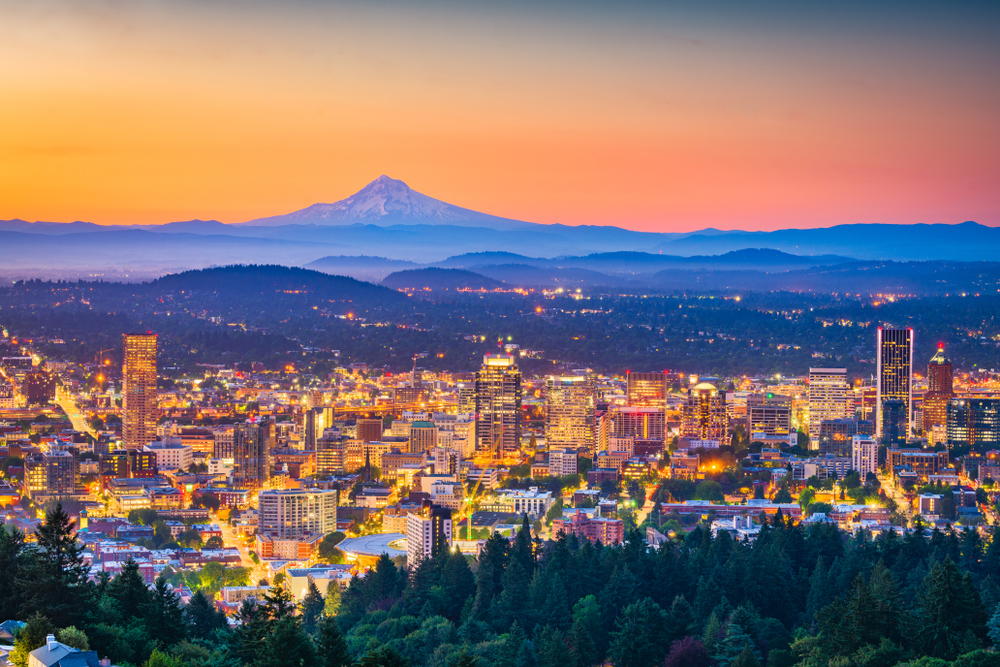
Oregon’s recent surge in migration caught even industry analysts off guard. Oregon shocked relocation analysts by jumping from 8th place in 2024 to the top inbound destination in 2025 with a 65% net migration ratio, driven by tech and healthcare jobs, Pacific Northwest outdoor lifestyle, and no state sales tax. Portland and surrounding areas are attracting tech professionals migrating from expensive Silicon Valley.

Oregon offers progressive policies with a lower cost of living than Washington, a strong craft and creative economy, and access to both coast and mountains, though it does have a state income tax. That income tax is worth factoring in, but for people coming from California or the Northeast, the overall picture still represents a meaningful financial improvement. The draw here is less about pure affordability and more about quality of life at a price that doesn’t require sacrificing everything else.
The state rewards a particular kind of mover: someone who values outdoor access, creative community, and a different pace of living. If that’s you, the window of relative affordability compared to California may not last.
7. Minnesota
Wisconsin saw a 79% increase and Minnesota a 40% increase in net inbound migration searches in 2025 compared to 2024. Minnesota experienced the largest year-over-year jump in migration interest of any state, climbing dramatically in national rankings. That kind of momentum usually means something real is happening.
Minnesota has a quality of life score of 189 out of a maximum 250 and sits in the top ten states for business based on CNBC’s ranking. Well over a dozen Fortune 500 companies are headquartered there. Minnesota ranks among the highest in the U.S. for happiness, largely due to strong healthcare, education, and community support systems, and 72.3% of the state’s homes are owner-occupied.

Yes, the winters are real. But locals praise the quality of life, culture, and beautiful nature in the North Star State in a way that suggests people who move there tend to stay. For anyone who wants a genuine community, strong schools, and a stable economy without a coastal price tag, Minnesota keeps delivering.
8. Georgia
Savannah offers Georgia’s appeal through historic coastal charm, a smaller city feel, and growing remote work communities. The state’s diversity means different Georgia locations appeal to different people, from urban professionals seeking metropolitan energy to remote workers wanting small-city character with adequate infrastructure.
Georgia consistently ranks as affordable while offering a strong job market, good infrastructure, outdoor access, and growing metropolitan areas that attract significant inbound migration year over year. Atlanta and its surrounding suburbs remain strong for anyone who wants career options alongside a lower cost of living than most major coastal cities. For retirees, Georgia offers tax-friendly benefits while maintaining affordability.
The practical move here is to look beyond Atlanta. Cities like Savannah, Augusta, and Columbus offer a slower pace, real community character, and housing prices that still feel like a different era compared to what the same money buys on the coasts.
9. South Dakota
South Dakota stands out as one of the cheapest states to live in 2026, with U.S. News ranking it 8th overall and 4th for affordability. The cost-of-living index sits well below the national average, and typical homes sell for around $289,000, far under the U.S. median of $377,367.
What really sets South Dakota apart is how stable those costs remain. Research found that the income needed to live comfortably barely budged over the past year, even as many states saw sharp jumps. That kind of stability is rare right now, and for anyone planning a life reset on a fixed income or a tighter budget, it’s arguably the most important data point of all. South Dakota also levies no state income tax, which in combination with that cost stability makes it one of the more underrated financial environments in the country.
Sioux Falls is the obvious anchor city, offering genuine amenities without big-city prices. But Rapid City, on the western edge of the state near the Badlands and Black Hills, suits people who want dramatic scenery as part of their daily backdrop.
10. New Hampshire
Like its neighbor Vermont, New Hampshire is one of the safest places to live in the nation. U.S. News ranks the Granite State #1 in public safety and #2 for best states overall. Crime rates are exceptionally low, with just 110 violent crimes per 100,000 residents, far below the national rate of 359, and both violent and property crime have dropped sharply over the past two decades.
New Hampshire levies no state income tax on wages, and the state ranks high in pre-K through 12 education, offers wide healthcare access, and benefits from low pollution levels. The cost of living runs slightly above the national average, but so does the median household income.
New Hampshire shows net inbound migration as remote workers and retirees discover its affordability relative to major Northeast metros, combined with quality of life advantages. If you’re tired of paying New York or Boston prices and want to stay in the Northeast without the Northeast bill, New Hampshire is one of the cleaner answers.
11. Maine
Maine is known for its natural beauty, with 3,500 miles of rugged coastline and over 2,000 coastal islands. It’s also less populated and more affordable than other New England states like Rhode Island and Massachusetts. Maine supports relocation through a statewide initiative focused on helping new residents build both a career and a connected life.
The lifestyle Maine offers is specific, and that’s actually the point. Working remotely in Maine means keeping your job and upgrading your surroundings, with accessible coworking spaces, young professionals’ groups, and year-round access to wide-open outdoor spaces. It’s a state that rewards the kind of deliberate, slower living that’s hard to find when you’re surrounded by a city that doesn’t pause.
Maine ranks among the states with the lowest crime rates in 2026, and the combination of safety, natural beauty, and genuine community culture makes it one of the more compelling choices for anyone who has decided that pace of life matters as much as price of life.
12. Nebraska
It surprises people, and that’s exactly why it belongs on this list. Nebraska has a quality of life score tied with Massachusetts and offers big city fun in Omaha and Lincoln alongside affordable cost-of-living options, especially in its mid-size cities and rural communities. If you’re looking for a relaxed pace of life, Nebraska ranked as the least stressed state in 2025.
Lincoln, the state capital, offers an appealing balance between a low cost of living and amenities like a water park, zoo, and science museum. It’s a city that functions well without making you feel like you’re giving something up. Families with teenagers may be especially pleased with life in Lincoln, which is recognized as a strong choice for raising adolescents, offering extra-curricular activities, quality schools, and safe streets.
For anyone who has been quietly exhausted by the noise and expense of big-city life and isn’t sure where else to look, Nebraska tends to be the answer that keeps getting overlooked. That’s probably its biggest advantage.
Read More: This Dreamy Seaside Community In Florida Is Like Santorini Without The Crowds
What to Do Now
The most useful thing to take away from any list like this is that no state solves everything. Within each state, researching specific communities matters, since affordability can vary dramatically between expensive metros and more affordable rural areas, and job market strength in a particular field should always be checked using local employment data.
A record 32.6% of Redfin users in 2025 searched for homes in a metro area different from where they currently lived. Research found that remote work disproportionately enables migration among high-income, highly educated workers – the demographic with the most location flexibility. If you have that flexibility, the decision is less about finding the “right” state and more about deciding what you’re actually optimizing for. Safety? Lower taxes? Outdoor access? A smaller community where people know each other? The states on this list each answer one of those questions well, and several answer more than one.
The work is figuring out which question matters most to you, and then going to visit before you commit. No amount of data replaces a weekend spent walking the streets of a city you’re considering, talking to people at the local coffee shop, and getting a feel for whether the pace of daily life actually fits you. The reset you’re imagining is possible. It just takes a little more than a list.
AI Disclaimer: This article was created with the assistance of AI tools and reviewed by a human editor.